Students
Aerospace Expands at Columbia
Columbia Engineering takes major steps to formalize and advance its aerospace programming.
Columbia Engineering is all-in on aerospace.
Last year, the School of Engineering launched its much-anticipated aerospace minor, with the first students under the minor graduating in May. This fall, the newly renamed Guggenheim Initiative for Aerospace Structures is pushing forward with its mission to introduce more engineering students to future career and research possibilities in the aerospace world.
Both efforts are part of the School’s broader push to capitalize on the widespread interest Columbia students, both undergraduate and graduate, have expressed in aerospace — and they’re just the beginning of Columbia’s moves in the field.
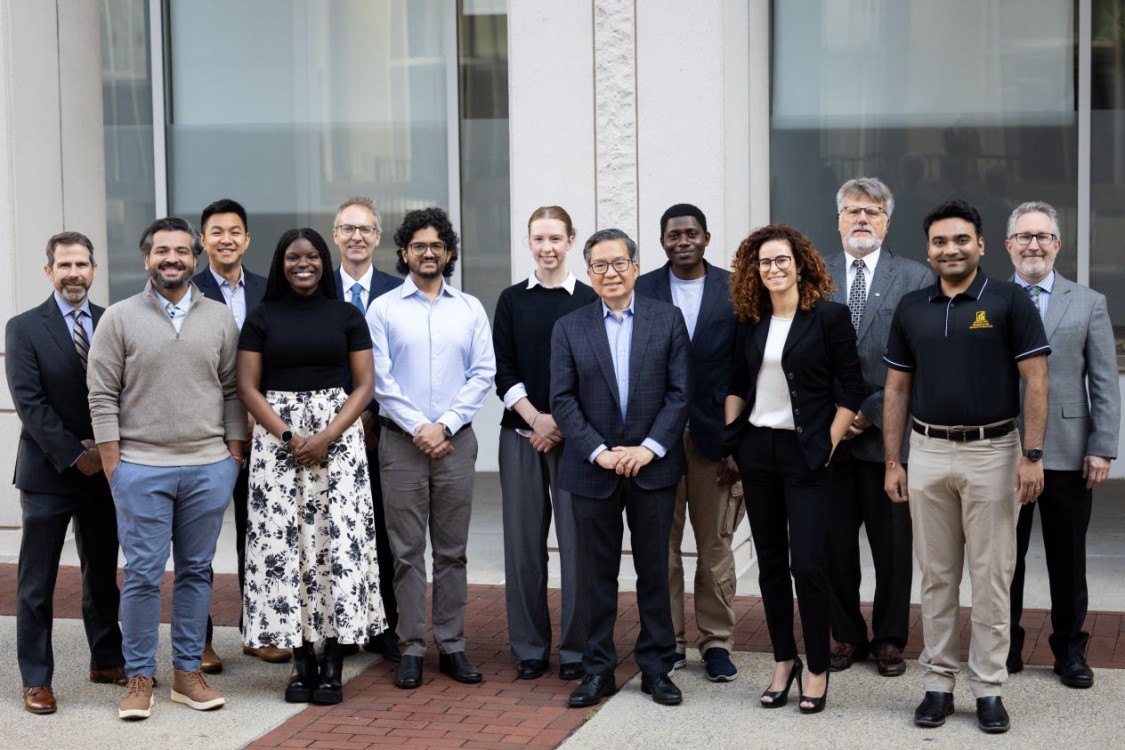
“Over the years, we have seen increasing interest from our students in space and aerospace engineering,” said Shih-Fu Chang, Dean of Columbia Engineering. “We know that many of our students go on to pursue careers in aerospace, including at companies like Boeing, SpaceX, NASA/JPL, Blue Origin, and various startups across the industry. Going forward, we will continue to explore possibilities of extending the initiative to include a new major, a new graduate program, as well as new faculty members dedicated to aerospace engineering.”
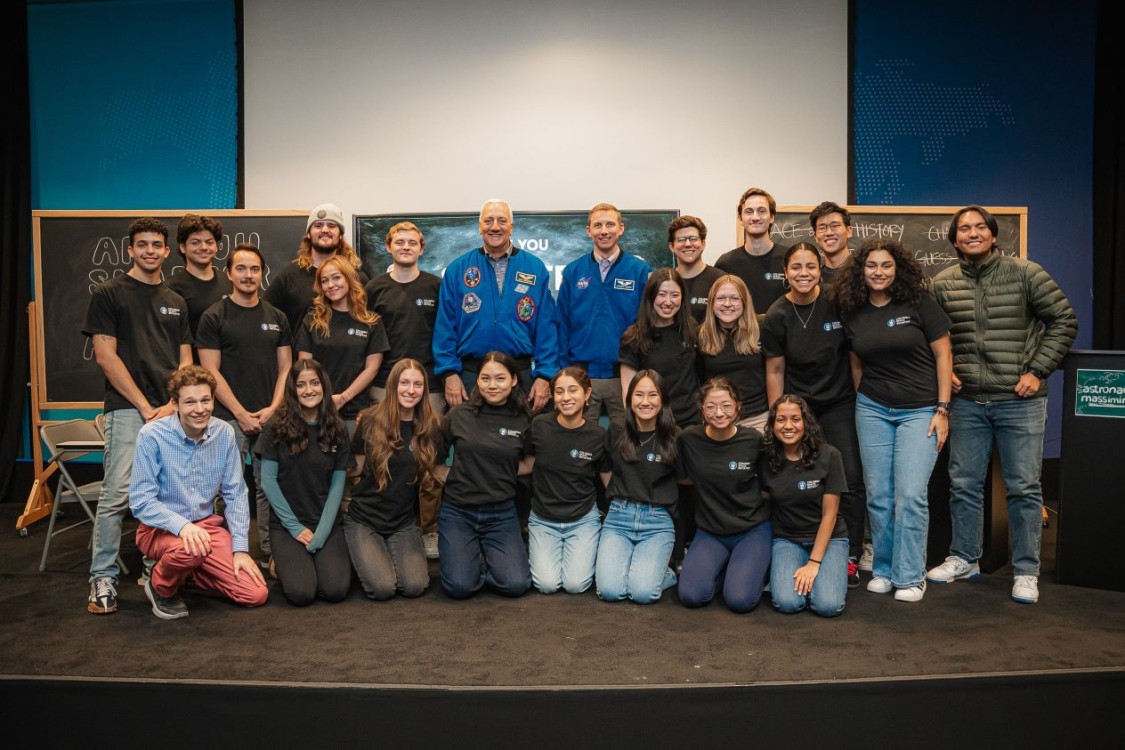
Mike Massimino, professor of professional practice in the Department of Mechanical Engineering, said having an academic recognition of the School’s aerospace expertise puts Columbia on par with its fellow universities — and gives students formal recognition of their work.
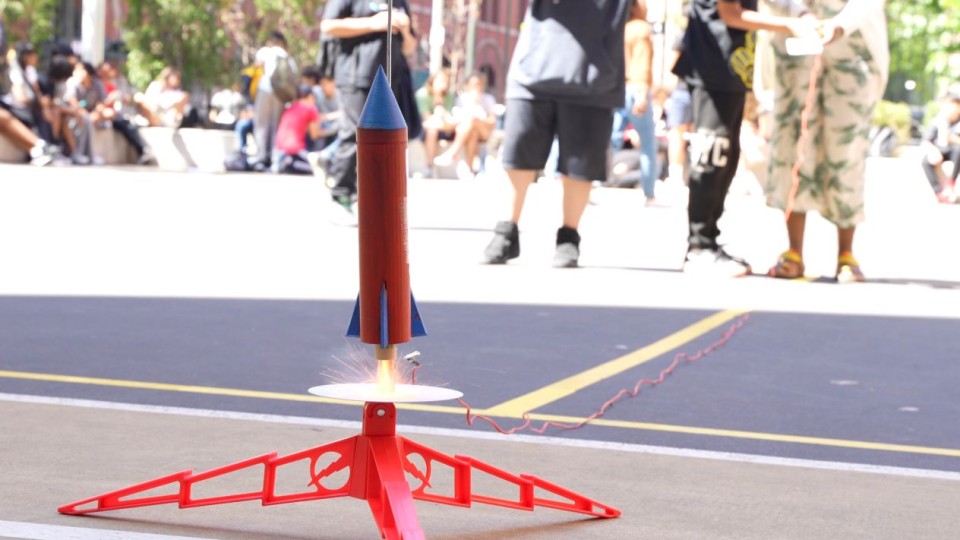
“Students who were interested in aerospace would still come to Columbia, and were well-qualified to get jobs in the industry for aircraft or spacecraft, but they didn’t have anything official on their resume. The other Ivys have a certificate program or a minor or major,” Massimino said. “We have an active club [Columbia Space Initiative] that wins great awards and wins competitions flying experiments in space, and the activities and projects they work on in the club are outstanding in quality and also a lot of fun!”
Students wishing to minor in aerospace will take two foundational courses from fluid mechanics, thermodynamics, controls, and signal processing, as well as four exploratory electives drawn from both classical aerospace topics like aerodynamics and propulsion, as well as other relevant subjects, including robotics, composites and structures, and human-centered aerospace design.
To support the minor, two new tenure-track faculty candidates have been hired: Cody Paige, director of the Space Exploration Initiative at MIT Media Lab, will join in January, and Julia Di BS'18 (one of the student founders of the Columbia Space Initiative (CSI)) is slated to start in 2027. In addition, Massimino said, a lineup of truly impressive adjunct professors will be teaching classes this year.
“We’ve had an overwhelming number of extremely qualified people wanting to come teach these classes,” said Massimino, who also serves as the faculty adviser to CSI.
Adding additional weight to Columbia’s push into aerospace is the Guggenheim Initiative for Aerospace Structures, which held a launch event Sept. 9 at Davis Auditorium. The engaging day included keynote talks, panel discussions, and networking sessions with industry and government. Formerly known as the Guggenheim Institute of Flight Structures, the Institute was founded in 1954 at Columbia as a center for advanced education and research in aeronautical and aerospace applications. Today, under its director, Marianna Maiaru, a specialist in aerospace structures and advanced materials and associate professor in the civil engineering and engineering mechanics department, the Initiative is working to, as Maiaru put it, “advance research in aerospace structures and serve as a hub of innovation,” centered on research and education. Maiaru has expanded the Initiative’s focus to include hands-on student engagement through seminars, internships, and collaborative projects, while driving forward critical research on structures for extreme environments.
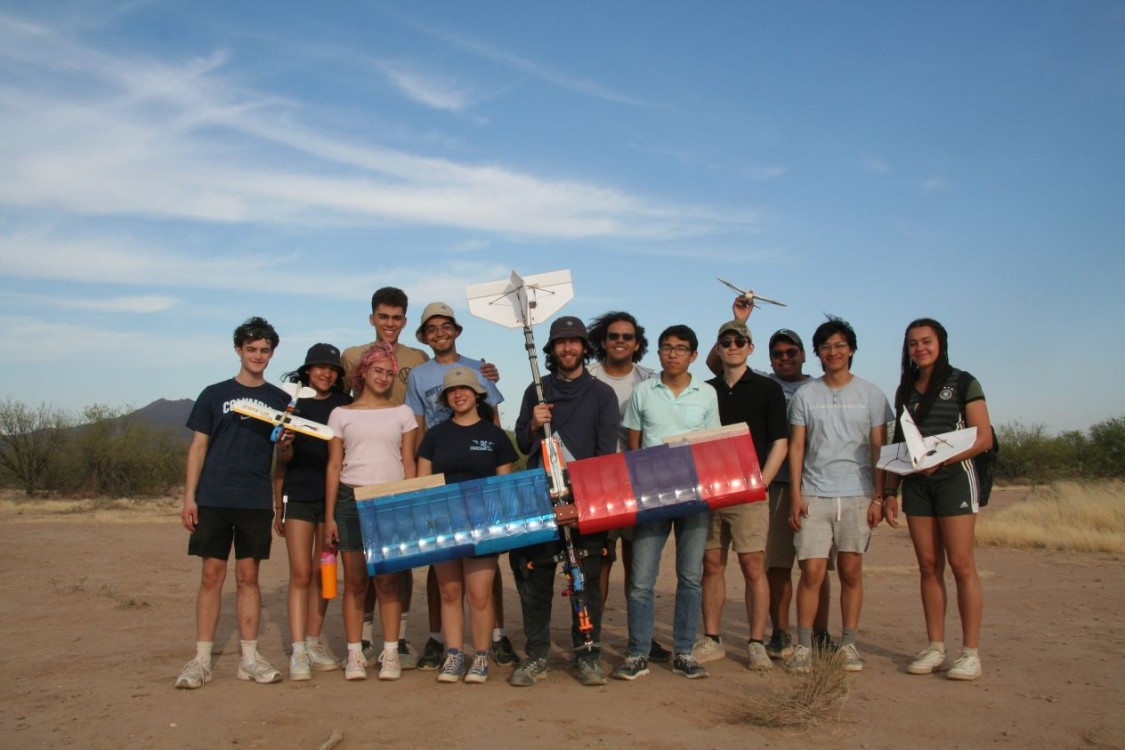
Maiaru also serves as the faculty adviser to Columbia’s popular Airplane Club, another active club on campus focused on innovative remote-controlled aircrafts. This year, they took home a big win in the AIAA Design, Build, Fly Competition, coming in 16th place out of 112 international teams.
Through workshops, seminars, and panels, as well as classes and research projects, the Guggenheim Initiative is positioned to engage the community as well as advance critical research topics, growing Columbia’s aerospace footprint and preparing students to take leading roles in the field.
“Students are in the part of their life and career where they can establish where they are going, and aerospace is a very large field,” said Maiaru. “The Initiative wants to help students understand what it means to be a structural engineer in aerospace – what kind of research activities you might do — so they can be well-positioned to lead efforts in the future.”
In the coming semesters, the School expects to launch a major program, a master’s concentration, and a graduate opportunity in aerospace, as well as a certificate program in aerospace structures.
“Students are signing up, the alumni are really receptive to it, the dean is supportive of it, there’s a lot of support for it schoolwide,” Massimino said. “We have an opportunity to do something significant here.”
Lead Photo Credit: Jean Garcia