Students
Columbia Announces Ignition Grant Winners and Engineering for Humanity Grant Winners
Startups iCleanMedX, Kernel, Retriever, Lucina Health, and Erasmus Labs receive funding for their next stages of development.
Five ventures launched by Columbia Engineering students have been awarded grants to help fund their early stage development. Student-run startups iCleanMedX, Kernel, and Retriever have each been awarded $9,000 Ignition Grants; Lucina Health was awarded a $6,000 Ignition Grant, and Erasmus Labs has been awarded a $5,000 Engineering for Humanity grant. Ignition grants can be used by the winning teams for development, including formation, IP protection, prototypes, and more.
iCleanMedX
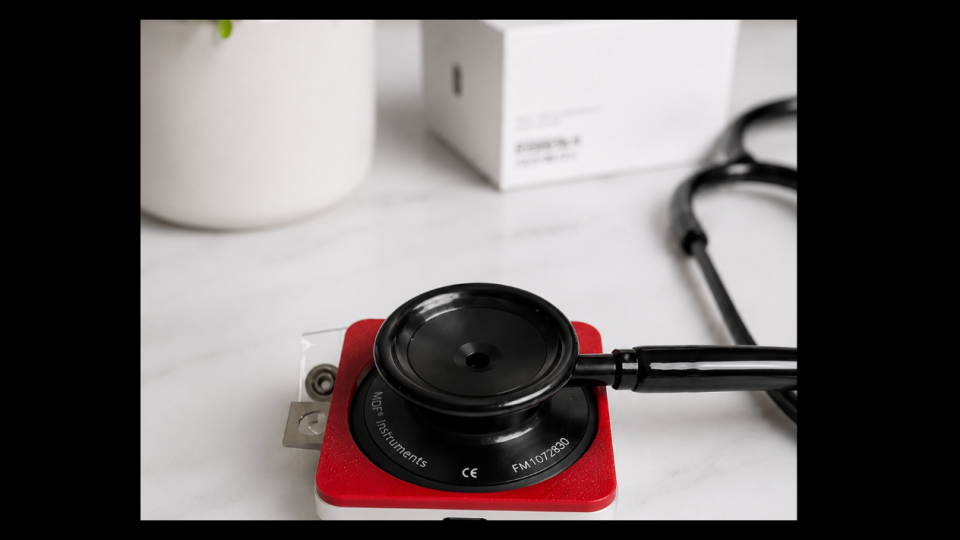
Stethoscopes are dirty and tracking cleaning protocol compliance is challenging — iCleanMedX wants to solve both problems. Team lead Sondos Alnamos MBAxMS‘26 (dual degree with Columbia Business School) and her team have developed an IoT-connected stethoscope cleaner that uses UV light to clean and sterilize stethoscopes, which can carry dangerous pathogens. With iCleanMedX’s technology, docking a stethoscope for 30 seconds gives medical professionals a clean stethoscope and documented compliance data, all in one frictionless step.
Kernel
Kernel, created by Timothy Gutowski MBAxMS’27, is an AI-powered data reconciliation platform designed to help pharmaceutical companies sort and reconcile the massive amount of data they collect. The current MDM solutions most companies employ are slow, complicated, and miss critical mistakes. Kernel’s decentralized operating system scans multiple data sources, and finds and proactively fixes mistakes and conflicts existing systems miss — all while maintaining an audit trail. It's a faster, more accurate, and more transparent way to handle this crucial information.
Retriever
Grad students with work experience have a once-in-a-lifetime window to make tax planning decisions that can save them thousands of dollars every year, and almost none of them know it. Retriever, led by Andrew Oestreicher MBAxMS’27, surveys students to create a personalized tax plan, with a generative AI assistant that answers questions and helps students make the most of their financial future — for free.
Lucina Health
High-risk pregnancies can bring a host of complications, but warning signs can be easy to overlook, especially in early pregnancy. Teeth and gum health is an early indicator of many systemic health issues in pregnancy, but capturing real-time changes and symptoms is cumbersome. The team at Lucina Health, led by Maria Eleni Batatoudi BS’26, has created a connected toothbrush with a built-in micro-endoscope that uses computer vision and machine learning to capture and process signs of inflammation, plaque, and gingival recession that can signal early indicators of health issues to patients and their providers.
Erasmus Labs
Kids and teens use AI tools every day, but those tools aren’t made with them in mind. Fabian Schlag MBAxMS’26 and Laurens Houtekamer MBAxMS’26 of Erasmus Labs have created what they call a “customizable guardrail layer” that lets parents and guardians instruct AI providers how to respond, what things it shouldn’t help with, what it should redirect, and how it should interact with their kids. It’s a multi-agent system that intercepts and reshapes kid-AI interactions in real time and sends reports and alerts to parents. And it’s as simple as a browser extension that’s compatible with all major providers, including ChatGPT, Gemini, and Claude, making it an easy-to-adopt option for anyone with minor children.