Faculty & Staff
Columbia Engineer Awarded NIH Director’s New Innovator Award
Santiago Correa has been awarded over $3.7 million in funding for high-risk, high-reward research.
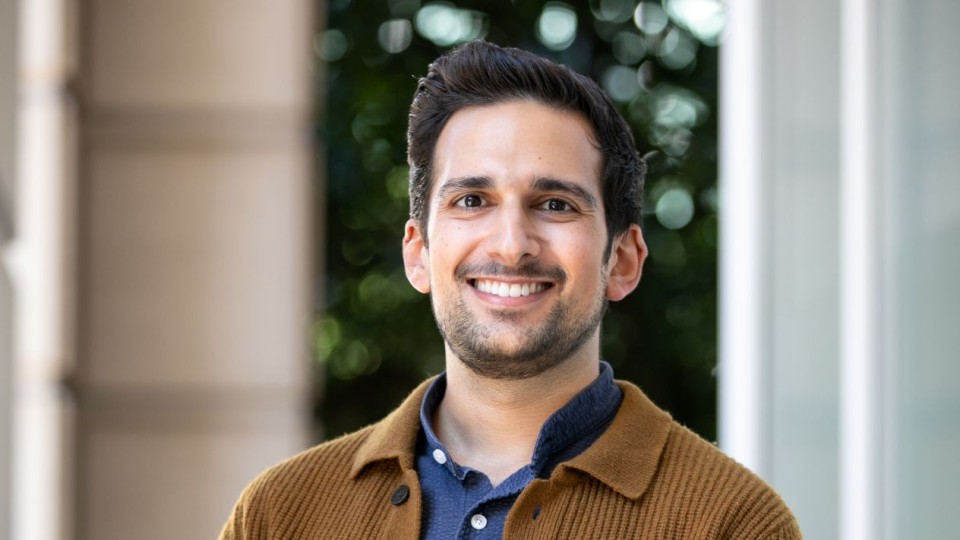
The National Institutes of Health (NIH) has awarded Santiago Correa, assistant professor of biomedical engineering at Columbia Engineering, the NIH Director’s New Innovator Award for over $3.7 million in research funding over five years.
The award is given to early-stage investigators whose research has the potential to make a significant impact in any scientific area related to the mission of NIH. Recipients are chosen for their creative and innovative approaches to solving scientific problems. A part of the High-Risk, High-Reward Research program, Correa will be supported to continue his transformative immunotherapy research.
“I'm honored to receive the NIH Director's New Innovator Award,” said Correa. “I'm grateful to have the NIH Common Fund’s support to explore this bold new research direction and their commitment to supporting the next generation of investigators like me.”
This funding will support the lab’s research on bioactive injectable hydrogels formulated with extracellular vesicles (EVs) for a new approach to immunotherapy. The team uses an unconventional approach that leverages the milk EVs from yogurt to build an injectable hydrogel where EVs are held in place rather than the body clearing them. The yogurt EVs enable the hydrogel to replicate the mechanical properties of living tissue while actively interacting with surrounding cells, thereby promoting healing and tissue regeneration.
“There's also a practical angle that excites me,” Correa states. “Most EV therapies rely on stem cell cultures, which are expensive and difficult to scale. Our EVs come from whey, the leftover liquid from making yogurt. The world produces about 200 million tons of it every year. If this works, an abundant waste product could become a starting material for new therapies, and labs without big cell-culture facilities could do this research too.”
The NIH Common Fund will support the testing of probiotic EVs for applications in which the immune system requires support, including the treatment of chronic wounds and autoimmune diseases. If successful, this new approach could transform waste products into valuable material for new therapies.