Research
Columbia Engineering Faculty Members Awarded Genesis Mission Funding
The Department of Energy initiative aims to harness AI for breakthroughs in energy dominance, discovery science, and national security.
Two projects led by Columbia Engineering faculty have received funding from the Genesis Mission, a national initiative from the U.S. Department of Energy (DOE) to accelerate scientific research through artificial intelligence (AI) technology. Four additional projects led by other institutions have Columbia Engineering faculty highlighted as key partners in the research. In total, the DOE’s Genesis Mission awarded funding to three projects led by Columbia University professors, while Columbia researchers are partnering on nine projects led by other institutions.
The Genesis Mission, announced in November 2025, is a national initiative to create a centralized AI platform that connects supercomputers, AI systems, and quantum technologies with advanced scientific instruments. The goal is to deliver decisive breakthroughs in energy, discovery science, and national security. By combining the power of DOE’s 17 National Laboratories with leading universities and industry, the Genesis Mission aims to double the productivity and impact of U.S. research and innovation within a decade.
Nearly 300 projects were selected under the first $293 million request for applications, which include Phase I awards ranging from $500,000 to $750,000 to support a nine-month project period and Phase II awards ranging from $6 million to $15 million over a three-year project period.
“As researchers, we’re so interested in pursuing the next scientific question that we don't necessarily step back and ask ourselves, how can we make this whole machinery work faster, more efficiently, and more automated?” says Kyle Bishop, professor of chemical engineering at Columbia Engineering, who received a Phase I award. “To me, that's the biggest opportunity of the Genesis Mission — it's encouraging us to step back and get all the hardware and infrastructure in place to accelerate discovery.”
Read about the winning projects:
AI-Enabled Physical Operating System for Bio-programmable Matter
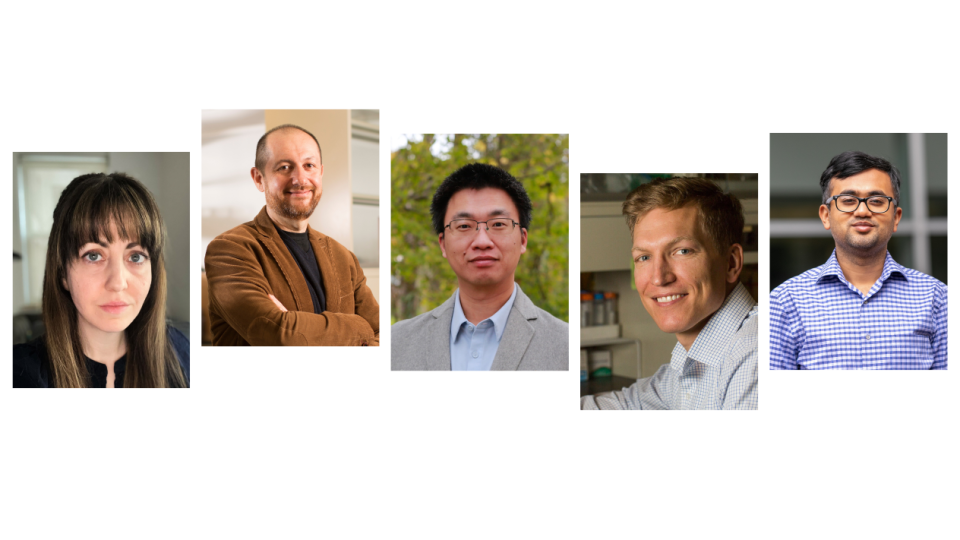
Project Lead: Kyle Bishop, professor in the Department of Chemical Engineering at Columbia Engineering
The ability to fabricate 3D materials and devices at the nanoscale is critical for many emerging applications, ranging from light manipulation and neuromorphic computing to catalytic materials and biomolecular scaffolds. But traditional methods for small-scale fabrication, such as lithography for microelectronics, struggle with complex 3D structures and involve slow assembly processes.
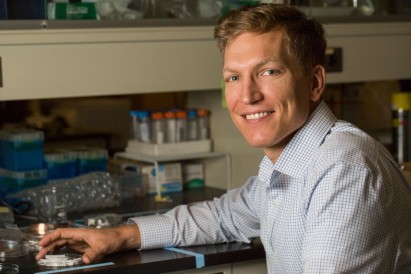
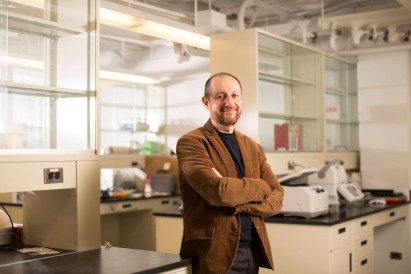
“Our brain is three-dimensional, but all electronics are quasi two-dimensional,” says Oleg Gang, professor of chemical engineering and of applied physics and materials science at Columbia Engineering, who is also part of the research team. “If we can make 3D chips, then potentially we can gain so much more in terms of energy savings, computer capacity, and performance.”
To address this challenge, Bishop and his colleagues will develop a prototype Physical Operating System (PhysOS), a first-of-its-kind AI-enabled operating system for programmable matter. Just as computer operating systems translate software instructions into actions performed by hardware, PhysOS converts desired material architectures into 3D molecular designs. The platform will start with DNA-programmed materials pioneered by Gang’s lab, which leverage DNA-directed self-assembly to build 3D materials and devices from the bottom up.
The researchers plan to fuse modeling, design, experimentation, and characterization into a self-improving closed-loop workflow. Rather than relying on repeated trial-and-error experiments, the system will combine physics-based computer models, AI, and automated robotic experiments into a continuous learning cycle.
“I’m really interested in these questions of how you automate the scientific process to achieve materials that have certain desirable functions or to answer new questions about the mechanisms by which they form,” says Bishop. “Now is a time we can truly benefit from automation to multiply our human effort dramatically and reduce the timescale it takes to do these studies.”
Cloud Microphysics Multi-Scale Modeling Moonshot (CM4): Creating the next generation of uncertainty-aware cloud models by leveraging multi-fidelity AI and DOE observations
Project Lead: Kara Lamb, associate research scientist in the Department of Earth and Environmental Engineering at Columbia Engineering

Water availability is critical to U.S. energy infrastructure and major industries such as agriculture and advanced manufacturing. However, current Earth system models, including the DOE’s E3SM Model, have long struggled to accurately represent the details of cloud and precipitation processes. Slow progress in understanding the complex nature of cloud microphysics contributes to errors in precipitation onset and intensity, limiting the ability to predict water resources on the time scale of weeks to years.
For this project, Lamb and her colleagues plan to develop a multi-scale hybrid physics-machine learning framework to understand how cloud microphysics and turbulence impact precipitation. Turbulence can modulate a key process called collision-coalescence, where cloud droplets collide with one another and grow large enough to fall as rain. Although turbulent effects can enhance rain formation and rainfall intensity by up to a factor of seven, they are not included in today’s Earth system models.
“We're specifically focused on collision-coalescence because it really impacts the early stages of rain formation,” says Lamb. “There has been recent work using highly detailed models where we can model individual droplets within a single cloud, but this isn't something that we normally represent in our current models.”
The eventual goal of the project, which leverages physics-informed machine learning and agentic AI, is to integrate an updated treatment of cloud microphysics and turbulence within E3SM for a more accurate view of Earth’s past, present, and future.
An Automated, Multimodal-AI-Enabled Cloud Chamber for Constraining Cloud Microphysical Processes in Earth System Models
Project Lead: Brookhaven National Laboratory (BNL)
Columbia Lead: Kara Lamb, associate research scientist in the Department of Earth and Environmental Engineering at Columbia Engineering
Lamb is also supporting a project led by BNL that will embed AI directly within the experimental workflow of a next-generation cloud chamber. Cloud chambers are experimental facilities that enable researchers to create and study clouds under carefully controlled conditions. BNL recently created Nephos, a one-cubic-meter convection cloud chamber — only the second of its kind in the U.S. — that serves as a testbed for DRACO, a much larger, 10-meter-tall device. The capabilities developed through this project will position DOE to achieve high-precision, AI-enabled control of the full-scale DRACO chamber and lead to improved understanding of precipitation.
Characterizing the Performance of HPC Workloads from Binary Executables
Project Lead: Lawrence Livermore National Laboratory (LLNL)
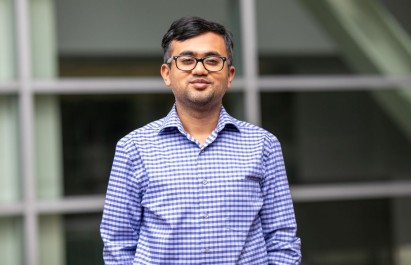
Columbia Lead: Tanvir Ahmed Khan, assistant professor in the Department of Electrical Engineering at Columbia Engineering
The DOE’s National Laboratories are leaders in high-performance computing (HPC), operating some of the world’s most powerful computers. Complex computational studies can yield valuable insights and improve technology across scientific disciplines. The HPC workloads primarily involve highly complex, data-intensive tasks spread across compute resources that aim to answer various scientific questions using AI.
“The high-performance needs for these computing applications are extremely diverse, and the goal of this project is to meet these diverse needs by characterizing application executables across a wide range of scenarios using profiling hardware,” says Khan, whose work on efficient data center processing has been adopted by Intel and ARM.
The project, led by LLNL, will address these challenges by developing an AI-empowered knowledge graph framework that captures the workload characteristics of HPC applications across various HPC systems.
REACT: Reactor Exhaust And Core Twin — Multi-fidelity AI Predictions for Safe, Integrated, and High-Performance Control
Project Lead: Lehigh University
Columbia Lead: Ben Zhu, assistant professor in the Department of Applied Physics and Applied Mathematics at Columbia Engineering
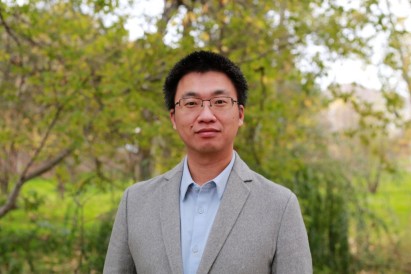
Achieving fusion energy at the reactor scale demands simultaneous control of both the core plasma performance and the edge plasma exhaust, all while enduring extreme plasma-material interface conditions. However, the development of integrated, real-time control strategies required for next-generation fusion reactors has been hindered by the fact that high-fidelity edge boundary simulations take weeks or months to converge.
The core vision of the REACT project, led by Lehigh University, is to realize fusion energy at reactor scale through the real-time integration of core plasma performance and edge exhaust management. The work will leverage Zhu’s ultrafast machine-learning-based surrogate models that can make predictions in less than one millisecond. “We've already built those models and put them on both KSTAR and D3D tokamak experiments,” he says. “The results look promising, so we've teamed up with Oak Ridge National Laboratory and Lehigh University to push towards a full device operation control exercise.”
Differentiable Physics-Integrated Generative Modeling for Complex Turbulent Flows in DOE Energy Systems
Project Lead: Cornell University
Columbia Lead: Ben Zhu, assistant professor in the Department of Applied Physics and Applied Mathematics at Columbia Engineering
Zhu is also supporting a project led by Cornell University that will develop a new AI framework that learns the statistical structure of turbulent flows from high-fidelity simulation data. Turbulent flows play a central role in many energy systems, including reactor cooling channels, heat exchangers, and boundary plasma flows in fusion applications. However, they remain difficult to predict, and traditional high-fidelity simulations remain too expensive for routine use.
By using generative AI, the project aims to produce faster predictions that capture the complexity of turbulent flows while remaining efficient enough for practical use.