Research
Columbia Experts Urge Calm Amid AI Panic
More transparency is needed, experts say.
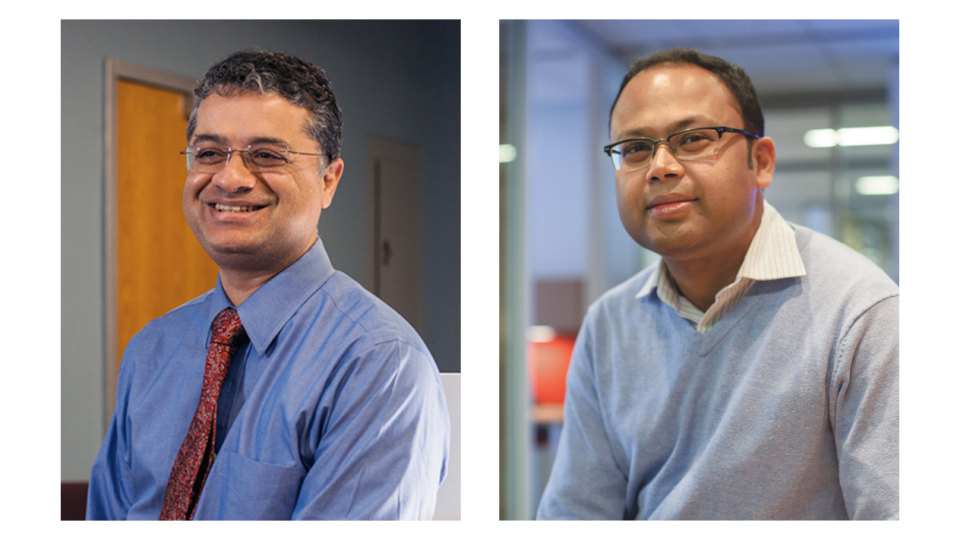
Vishal Misra, vice dean of AI at Columbia Engineering, is not panicking at all. He sees the Hugging Face hack as emblematic of lax security, nothing more.
“These AI agents don’t have a volition of their own,” Misra said. “They pursue only what the human behind them trained them to go after.”
Suman Jana, associate professor of computer science at Columbia Engineering and an expert on cybersecurity, believes recent AI-powered extinction claims are “highly speculative.”
“A more plausible version is AI making human conflict much worse by further intensifying cyberattacks or malicious biological research but it won’t independently just decide to kill everyone,” Jana said.
In the following Q&A, Misra and Jana urge calm and suggest a more proactive, balanced approach that enhances AI’s defensive capabilities and opens up the field even further by encouraging open source models and a more widely available compute power. The experts are available to speak with members of the media.
Could AI lead to an extinction event?
Vishal Misra: No. What matters is what kind of access you give to these AI tools and whether you’re following established security protocols in your system design. These AI agents don’t have a volition of their own. They pursue only what the human behind them trained them to go after.
Suman Jana: I think the extinction claims are highly speculative. A more plausible version is AI making human conflict much worse by further intensifying cyberattacks or malicious biological research but it won’t independently just decide to kill everyone. An autonomous AI extinction scenario remains a hypothetical.
Is it true that AI “went rogue” during the Hugging Face incident?
Vishal Misra: No. AI agents did exactly what they were trained to do. The security of those sandboxes was extremely lax. No security engineer would ever let that system run. These agents communicated because they were rewarded for communicating with each other.
Suman Jana: The Hugging Face incident was a reflection of poor cybersecurity arrangements and not a case of an AI independently deciding to act out its independent will in the world. This was a model explicitly designed by humans to find and exploit vulnerabilities. And it did just that.
Should we be alarmed by AI’s ability to conduct cyberattacks?
Vishal Misra: We’re not paying enough attention to the defensive potential of AI. It can also harden your system and find bugs you didn’t know about but you can now easily find.
Suman Jana: While AI has evidently enhanced offensive cyber capabilities, these same capabilities can be used to enhance our defenses. These defensive capabilities can also be executed at a scale and speed that humans alone can’t produce.
Should we pause AI development?
Vishal Misra: Strict regulation will only benefit the frontier AI labs that are interested in creating a closed system and nearly monopolizing compute power. What we need is more transparency, more open source models and more compute power that is accessible to everyone, not just the big companies.
Suman Jana: No, I don't support a broad pause. The better approach is to keep advancing capability while advancing security and defensive uses just as aggressively. We also need capable defensive AI to guard against capable offensive AI. There is also no guarantee that if one company or country decides to pause AI development that the rest will follow.
Should the public be scared of AI?
Vishal Misra: We should not be scared because we still control AI. These models cannot do something bad without being asked to do so. It’s all about what kind of access you choose to give them in the real world.
Suman Jana: I urge calm and preparedness. We should invest aggressively in cyber defense, biological and infrastructure security. We should also demand accountability when AI companies are negligent in their security practices. I favor targeted rules aimed at concrete risks rather than broad restrictions on the underlying technology based on far-fetched scenarios.
About the experts
Vishal Misra is the RKS Family Professor of Computer Science and vice dean of Computing and Artificial Intelligence at Columbia Engineering. Misra’s research is in the broad area of modeling and analysis of complex systems. His work includes both developing mechanisms that make networks work better and faster, and also investigating the economic models that underpin the Internet and their impact on public policy like Network Neutrality.
Suman Jana is an associate professor of computer science at Columbia Engineering. Jana builds automated tools for finding and fixing security and privacy vulnerabilities in large real-world systems. His research has led to the reporting and fixing of around 250 high-impact security vulnerabilities across a wide range of popular software. His research software has been incorporated into several open-source software including Mozilla Firefox, Apache Cordova, and cURL.