Faculty & Staff
Columbia Robotics Featured in the Wall Street Journal
The Wall Street Journal highlighted the Robotic Manipulation and Mobility Lab.
Columbia Engineering Associate Professor Matei Ciocarlie was featured in a recent Wall Street Journal (WSJ) article about one of the final hurdles that technologists must clear to build humanoid robots.
The article — “The ‘Hands Problem’ Holding Back the Humanoid Revolution” — showcases several emerging approaches to solving the difficult problem of building mechanical grippers that can accomplish tasks that are easy for human hands.
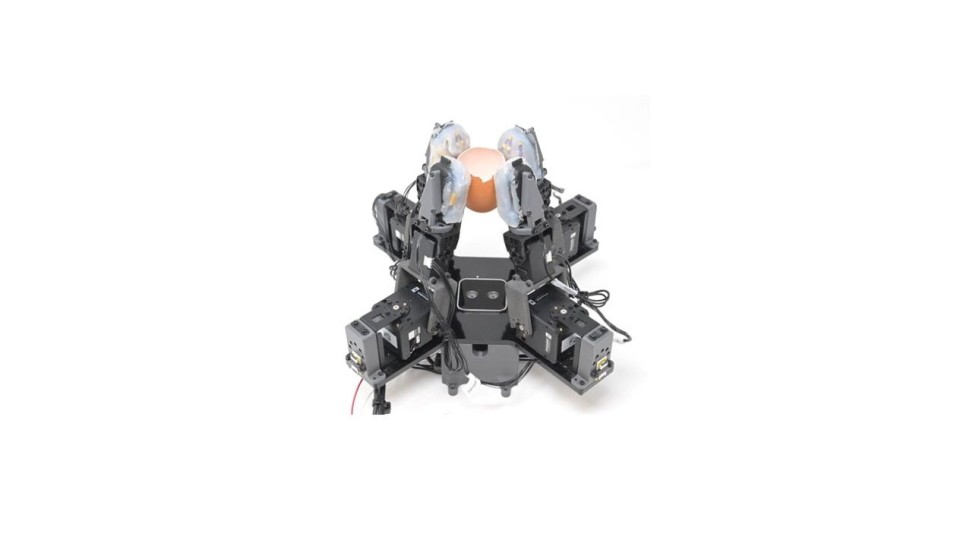
Ciocarlie told WSJ reporter John Keilman that his teams’ technology — developed in collaboration with Ioannis (John) Kymissis, Kenneth Brayer Professor of Electrical Engineering and the School’s vice dean of infrastructure and innovation — relies on a four-fingered robot that gathers information by touch, not vision.
“The robot essentially learns by doing,” says Ciocarlie, an associate professor of mechanical engineering.
Read the full article here or visit Columbia Technology Ventures to learn more about the sensor that enables precise tactile manipulation.
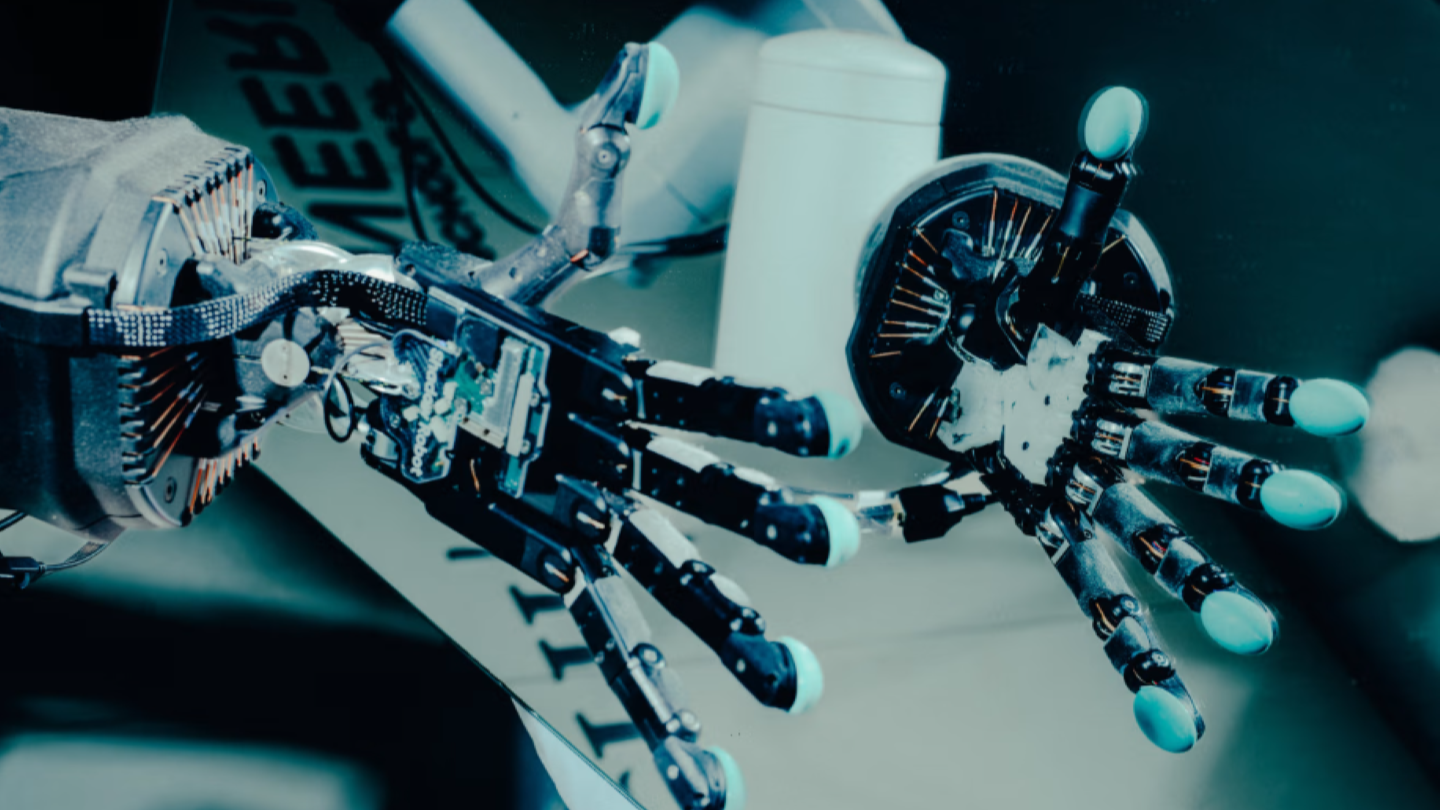
Lead Photo Credit: Columbia University ROAM Lab
The SpikeATac research featured was led by Engineering doctoral students Eric Chang and Peter Ballentine, with Zhanpeng He spearheading the reinforcement learning fine-tuning that enabled motor learning on the sensor. Kai Jiang, Hua-Hsuan Liang, and William Hong Qin Wang also made key contributions to that effort. Do-Gon Kim led the parallel gripper integration and fast-grasping experiments, while the multifingered robot hand used throughout the study was designed and built by Joaquin Palacios, with Pedro Piacenza developing the mechatronics and firmware.