Research
Columbia University and Partners Awarded Up to $25M to Build Off-the-Shelf Engineered Liver Tissue
The ImPLANT program leverages cross-institutional expertise across multiple bioengineering disciplines to address liver failure.
Columbia University is part of a team led by the Wyss Institute at Harvard University that has received an up to five-year, $25 million award from the Advanced Research Projects Agency for Health (ARPA-H) to engineer off-the-shelf, transplant-ready liver tissue. The funding comes from the Personalized Regenerative Immunocompetent Nanotechnology Tissue (PRINT) program at ARPA-H. By creating the framework for a functional graft that could apply to any patient, the ImPLANT program (Immunoshielded Printed Liver Assist NeoOrgan for Transplant) aims to overcome current barriers in organ transplantation, including donor organ shortages, inequities in access, and the need for immunosuppressive drugs.
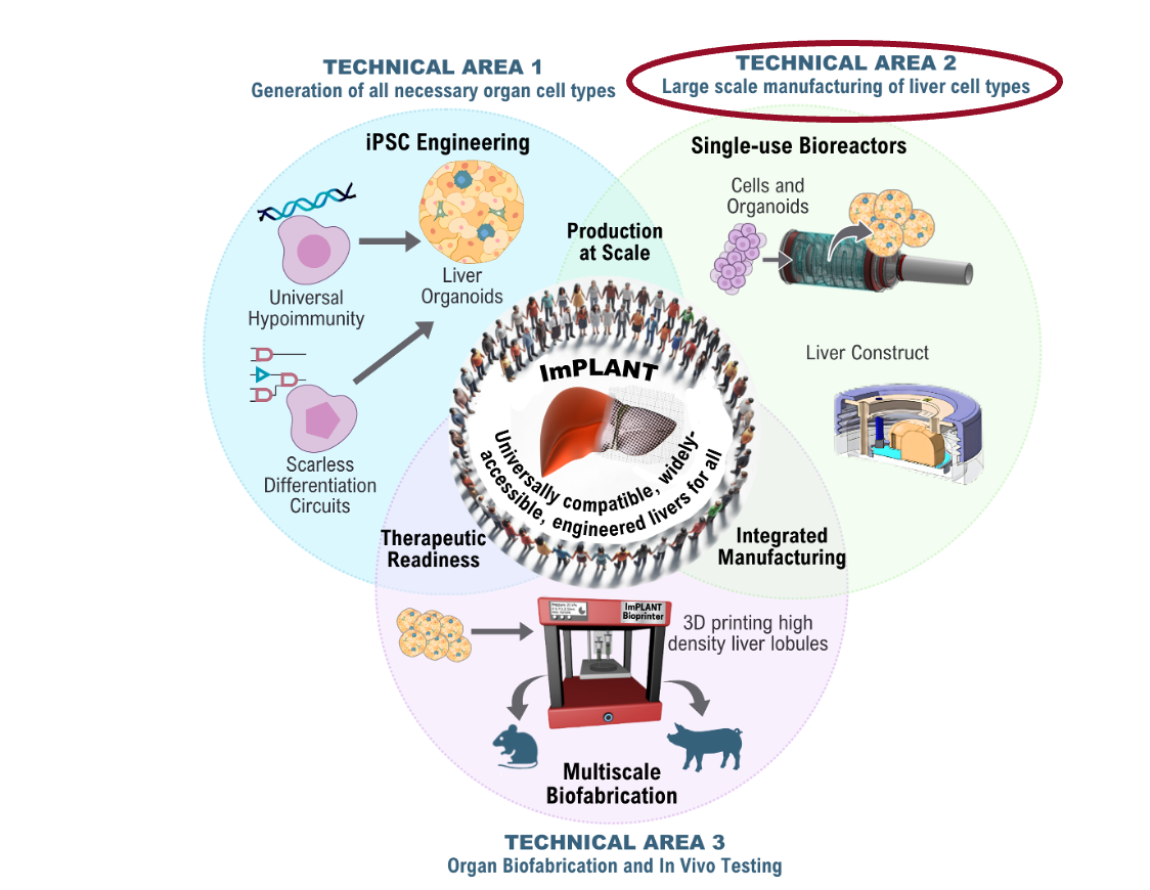
The project brings together leading researchers from four institutions with diverse expertise in fields like tissue fabrication, organoids, vascular biology, and transplant immunology. Gordana Vunjak-Novakovic, University Professor and the Mikati Foundation Professor of Biomedical Engineering and Medical Sciences at Columbia Engineering will lead Columbia’s efforts to cultivate functional liver organoids with bioreactor technology — a crucial step in producing large-scale liver tissues and organs for clinical use.
“At the end of the day, we want to provide medical and societal benefits with our research, and this project is designed to result in a much-needed medical product,” said Vunjak-Novakovic. “We are very grateful to ARPA-H for recognizing the value of the project, because it is extremely ambitious and something that hasn't been done before. There are very few opportunities to support this scale of effort.”
While organ transplant represents a life-saving treatment for organ failure, there are many more people who need organs than are available from the organ donor pool, leading to a critical global shortage. In the U.S. alone, there are more than 100,000 adults and children on the waiting list for an organ transplant, with another person added every 8 minutes. After kidney, liver is the second most common organ needed by those on the list.
Geographic barriers, blood type mismatches, and systemic inequities mean that people in rural areas and those from Black, Asian, and minority ethnic communities often face longer waits or may never receive a transplant. Even when a match is found, recipients must take immunosuppressive drugs for life to prevent organ rejection — facing challenges such as an increased risk of infections, potential side effects, and the need for lifelong management.
The PRINT program is led by ARPA-H Program Manager Ryan Spitler, PhD.
The ARPA-H PRINT program funded the ImPLANT program, a moonshot to manufacture engineered liver tissues for universal transplantation. Researchers from Columbia, Harvard, MIT, and the University of Colorado Boulder will each helm a unique component of the complex, multidisciplinary project, which will span five years to culminate in readiness for human clinical studies.
“Such a huge challenge can only be tackled by a strong, capable, and motivated team of colleagues I have known and collaborated with for a long time — and I’m proud to be working with this dream team,” said Vunjak-Novakovic. “We all want to succeed, and our ultimate goal is to provide livers for implantation that are functional and can restore normal life for the patient without immunosuppression.”
The team will leverage Vunjak-Novakovic’s decades-long expertise in developing innovative tissue engineering technologies for regenerative medicine — in particular, bioreactors — to create high-quality, functional liver tissue at clinical scale. A bioreactor is an apparatus for growing living cells, tissues, or whole organs under tightly controlled conditions. She pioneered the application of bioreactors for growing specialized tissues and cells on a structural scaffold, in attempt to recreate organ-like tissue structures in-vitro.
“I came to Columbia from MIT in 2005, and one of the reasons for relocating was that Columbia was interested in starting programs in human stem cells and tissue engineering,” she said. “At that time, we were just beginning, and now we have a large community at Columbia working in this field, driven by a medical need that is inspiring and guiding our efforts.”
Technologies developed by her group — the Laboratory for Stem Cells and Tissue Engineering — have been used to regrow bone in patients, extend the life of lung transplants, and better understand how heart disease develops and can be treated. Her lab is also home to the national Tissue Engineering Resource Center, funded by the National Institutes of Health (NIH) to foster tissue engineering for medical impact.
Also part of the Columbia ImPLANT team are transplant immunology experts Megan Sykes, the Michael J. Friedlander Professor of Medicine and professor of microbiology & immunology and surgical sciences, and David Sachs, professor of surgical sciences and professor of medical sciences at Columbia University’s Vagelos College of Physicians and Surgeons. Sykes has previously engineered mice with human immune systems, which will allow the team to study immune responses to engineered liver cells and tissues and test features designed to confer immune tolerance. Sachs developed the first successful trial for inducing transplant tolerance in organ recipients, freeing them from the need for immunosuppressive drugs.
“Our expertise in generating human immune systems in immunodeficient mice will allow us to test the role of each type of human immune cell in attacking the engineered liver tissue and then determine the success of novel genetic modifications in preventing these attacks,” said Sykes, who also serves as director of the Columbia Center for Translational Immunology. “We are very excited about working on this cutting-edge project, which has the potential to make viable liver tissue available for everyone who needs a liver transplant. Our unique line of genetically modifiable pigs will allow translation of these advances into a pre-clinical large animal model.”
The first three years of the ImPLANT program will focus on growing liver organoids in bioreactor systems that will be coupled with 3D printing technologies to gradually increase the size and functionality of liver constructs for testing in larger animal models. The final two years will be dedicated to translating the established research protocols to clinical trials and submitting an Investigational New Drug (IND) application to the U.S. Food and Drug Administration (FDA). Overall, the technological framework is meant to lay the foundation for future manufacturing facilities to fabricate off-the-shelf, transplant-ready liver tissue grafts.
Research reported in this publication was supported by the Advanced Research Projects Agency for Health (ARPA-H) under Award Number D25AC00322-00. The content is solely the responsibility of the authors and does not necessarily represent the official views of the Advanced Research Projects Agency for Health.
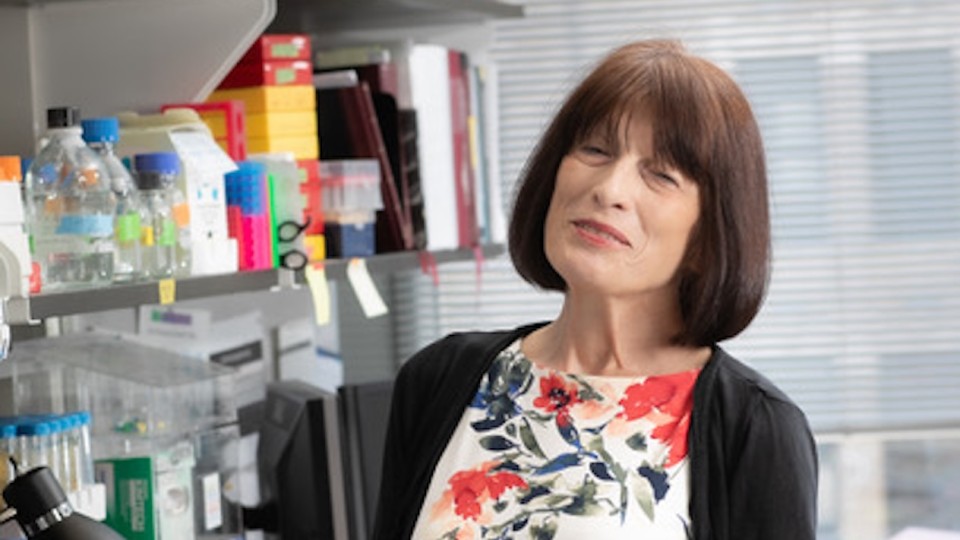
Lead Photo Caption: Gordana Vunjak-Novakovic is leading a Columbia team of researchers as part of a larger ARPA-H effort to bioprint universally matched organs on demand.
Lead Photo Credit: Timothy Lee/Columbia Engineering