Driving the Future of Energy and Transportation
Climate change is pushing two pillars of our society — the electrical grid and the transportation system — to undergo significant changes very quickly.
“Innovation in this space is urgently needed to help societies accomplish our goals for energy transition and sustainability,” said Shih-Fu Chang, Dean of Columbia Engineering, in his opening remarks at the Columbia Forum on Smart Electric Energy and Transportation.
The event, now in its third year, brought leading experts in smart energy and transportation electrification to Morningside Heights on Feb. 23.
“Our agenda is curated to showcase cutting-edge developments in electrified powertrain components, vehicle designs, energy storage, grid technologies, and more,” said Matthias Preindl, associate professor of electrical engineering and director of the Motor Drives and Power Electronics Laboratory (MPlab), who co-hosted the event with W. Wesley Pennington, CEO of Tau Motors Inc., and James Anderson, assistant professor of Electrical Engineering at Columbia Engineering.
“As we unite the worlds of transportation electrification and smart energy, our aim is to contribute to a secure, connected, and sustainable future,” he said.
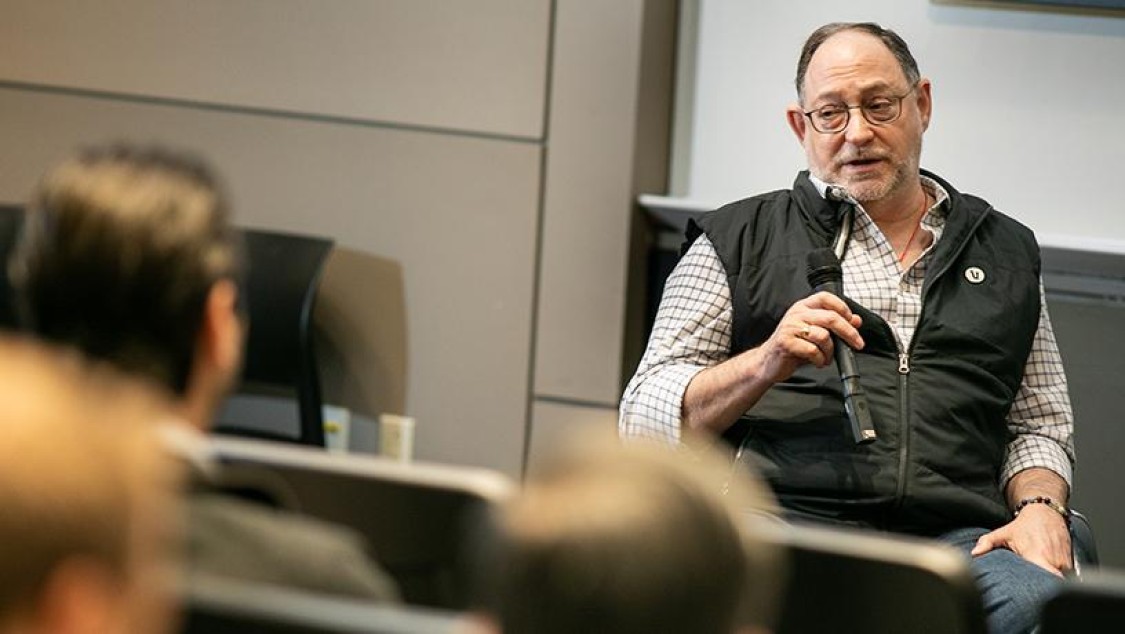
"Access to university settings has been really, really important to us and to the companies that we support," he said. "A number of those companies were born because an entrepreneur knew of a problem that could or should be fixed — but no one knew how to do it. Many of those technologies were developed by funding university programs to address those problems."
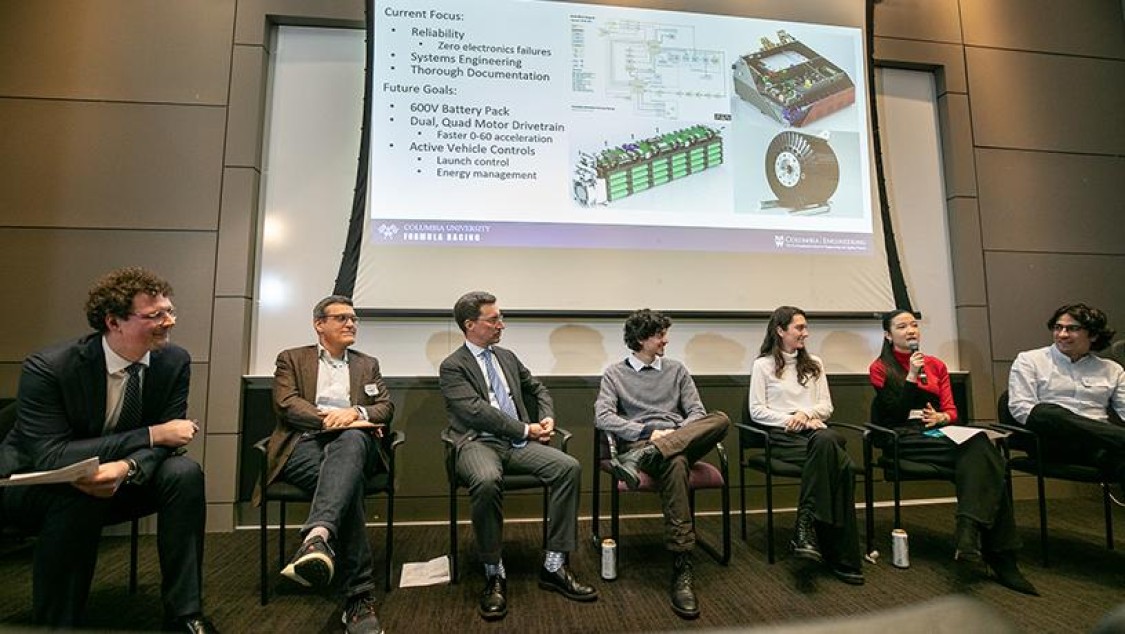
Left to right: Club advisors Matthias Preindl, Adjunct professor of mechanical engineering Joshua Browne, and University Trustee Keith Goggin; club members Matthew Ethan Modi, Alex Deli-Ivanov, Alexandra Polzak, and Mustafa Mert Saygi.
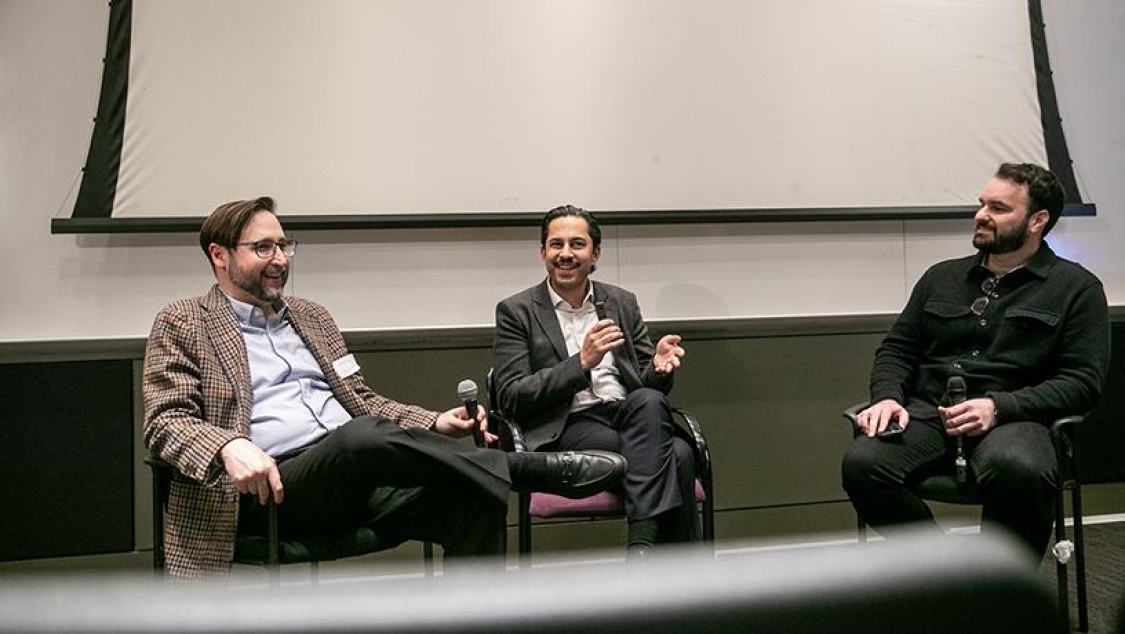
“In the United States, the primary energy policy that exists is really tax policy,” Medina said. “Almost all of the value provided to companies to get [clean energy] projects to scale or to compete with legacy companies is provided in the form of tax credits.”
The problem, he said, is that many of the policymakers and aides who write those regulations aren’t themselves experts in energy or sustainability.
Nazar made the point that the IRA is actually a “localization law masquerading as a climate law.”
“When the IRA was passed, 100 EVs or so qualified for the consumer tax credits,” he said. “Now it’s only 14.”
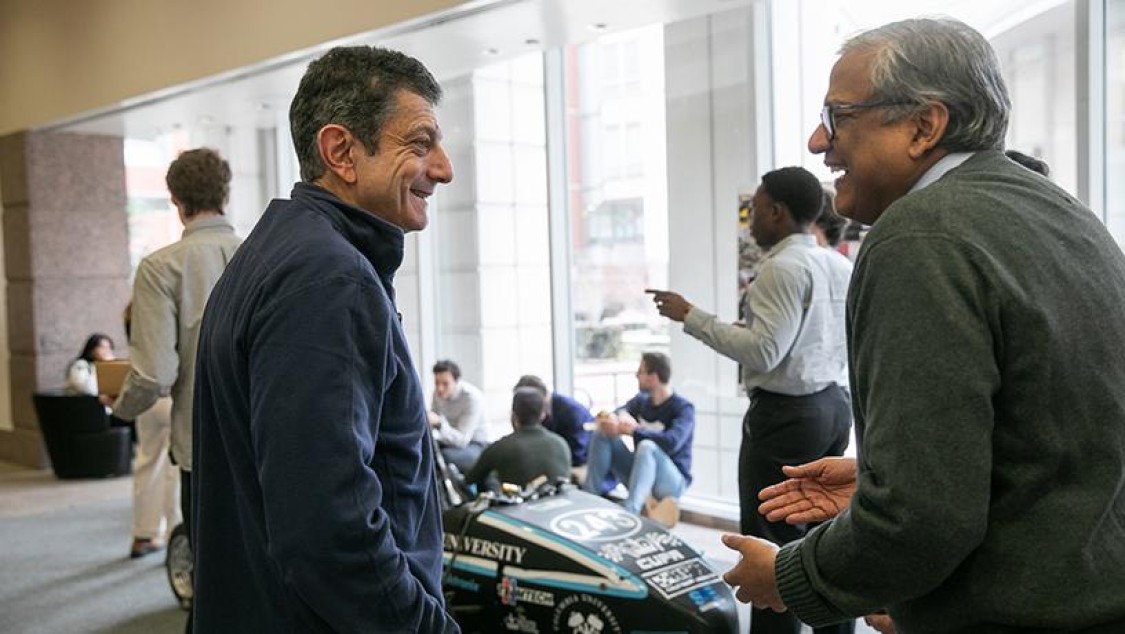
Modi said he aimed to “provoke discussion” in his talk, which focused on his work developing micro- and nano-grid systems in Uganda.
“We are focused on supply, but even a poor country like Uganda has plenty of supply,” he said. “Ninety percent of the challenge is the last mile.”
After describing the approaches that worked in that context despite limited internet connectivity and other challenges, Modi provoked the audience by questioning if the North American grid was up to the task of making such a transition itself.
“My gut feeling,” he said, “is the legacy players are just not hungry for this new model because they have a very good thing going."
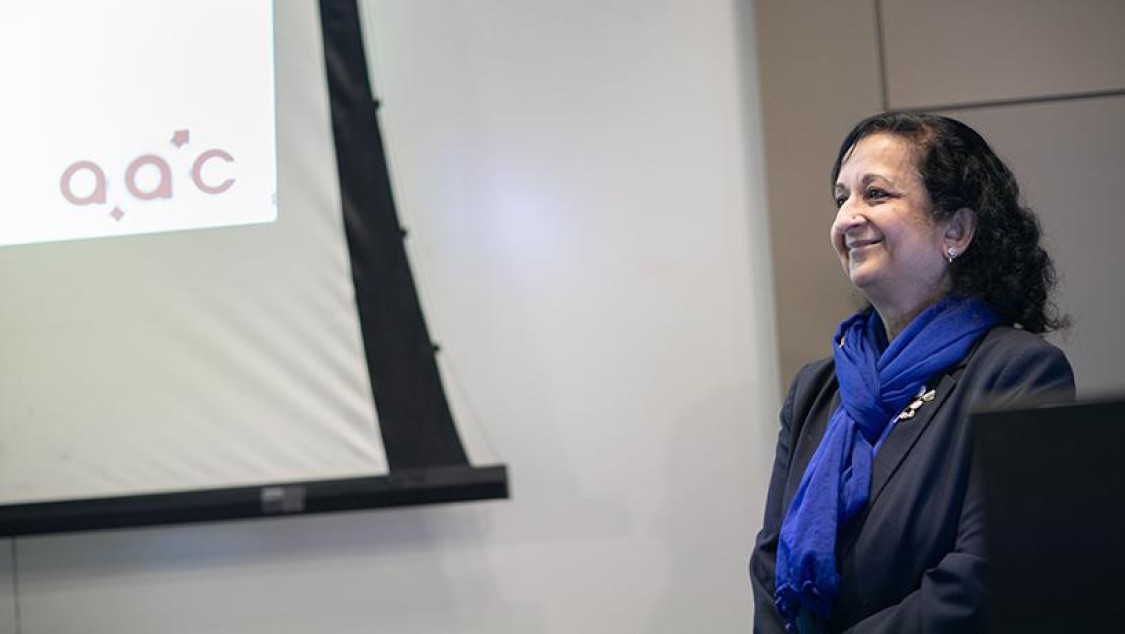
Last year, Annaswamy wrote the NASEM’s report, “The Role of Net Metering in the Evolving Electricity System.”
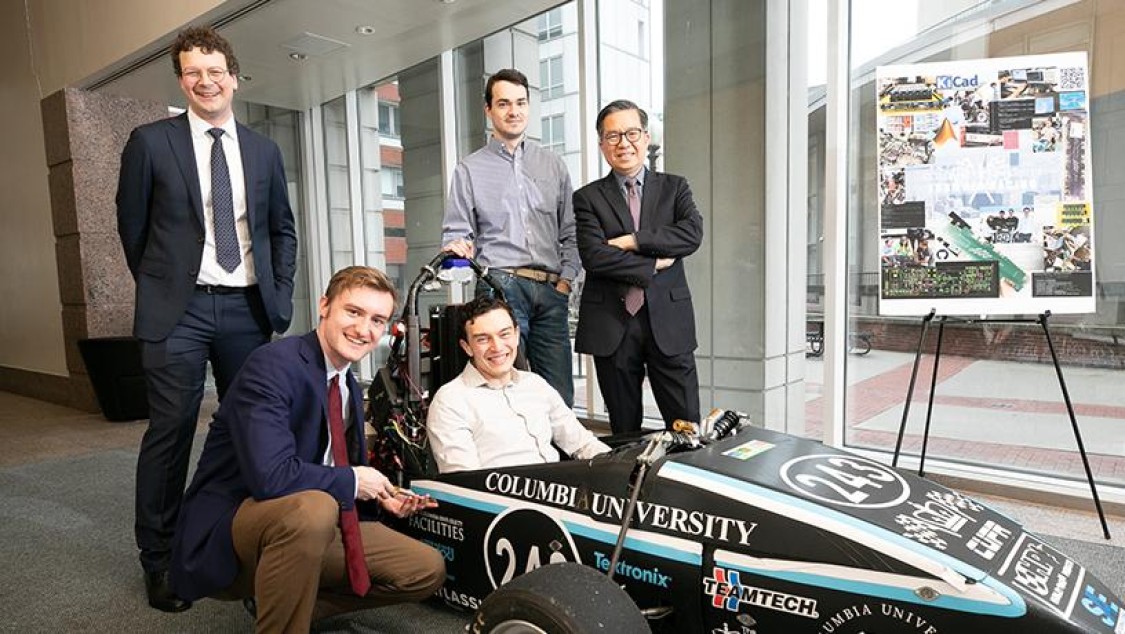
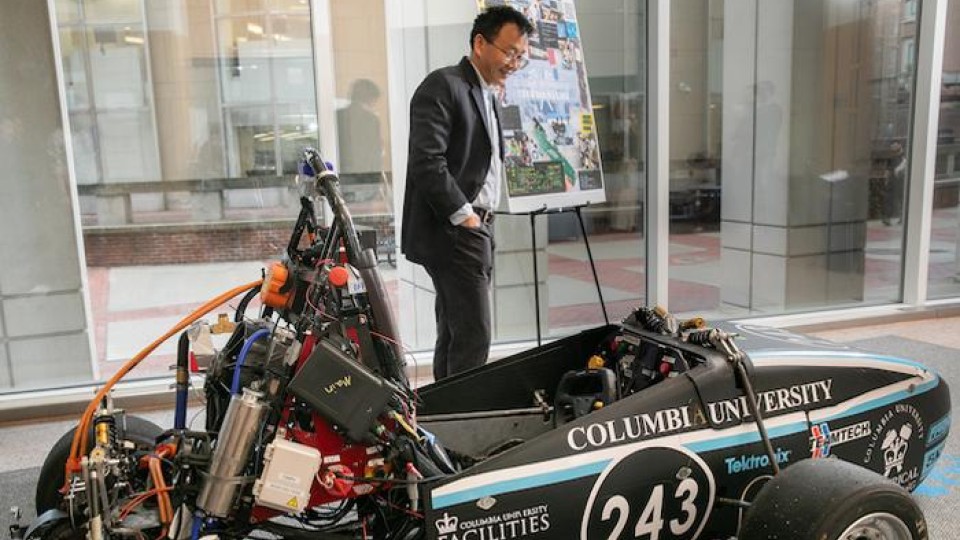
In its first appearance in the electric vehicle (EV) category last year, the formula racing club passed technical inspection — a huge accomplishment that most first-time teams fail to achieve. The team won the highest score for brake design.
“This was unprecedented for a first-time EV team,” Dean Chang said.