Faculty & Staff
Engineering Faculty Elected to the American Academy of Arts & Sciences
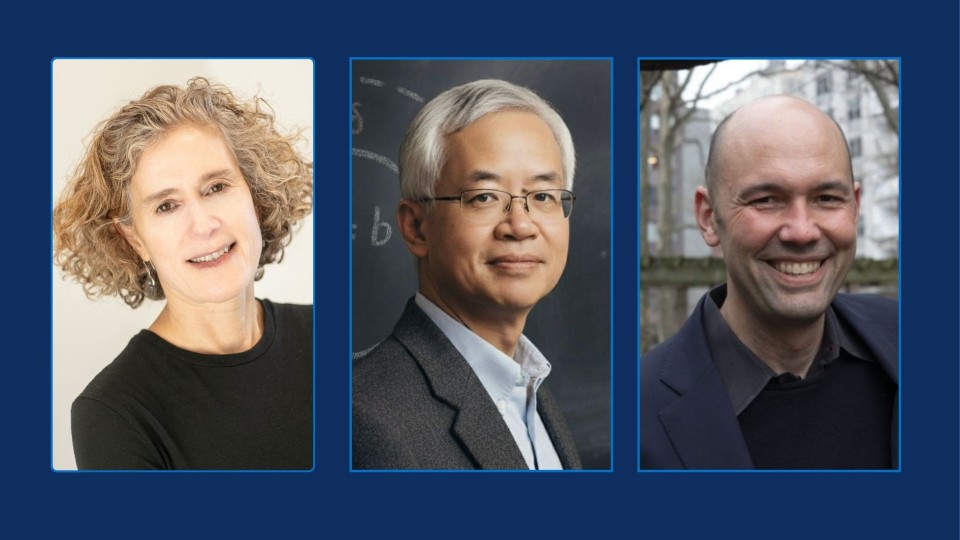
Professors Keren Bergman, Qiang Du, and Tim Roughgarden are among the newly elected members of the Academy for 2026
Keren Bergman, Charles Batchelor Professor of Electrical Engineering; Qiang Du, Fu Foundation Professor of Applied Mathematics; and Tim Roughgarden, professor of computer science, have been elected to the American Academy of Arts and Sciences.
Founded in 1780, the American Academy of Arts and Sciences elects members who have made exceptional contributions to the arts, sciences, academia, business, and public affairs. Members include more than 250 Nobel and Pulitzer Prize winners. Columbia Engineering’s newest elected fellows span expertise in photonics, mathematical modeling, algorithms, and game theory.
“We congratulate Professors Bergman, Du, and Roughgarden on this tremendous and richly deserved honor,” said Dean of Columbia Engineering Shih-Fu Chang. “Their contributions to scientific and engineering research have made a far-reaching impact on their respective fields.”
Induction ceremonies for new members will take place October 2026 in Cambridge, Massachusetts.
Keren Bergman
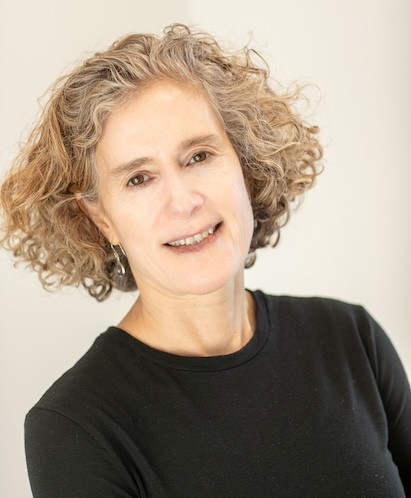
Keren Bergman is the Charles Batchelor Professor of Electrical Engineering at Columbia University where she also serves as the faculty director of the Columbia Nano Initiative.
Bergman’s work at the intersection of photonics and computing drives to exploit optical data movement for creating energy efficient extreme performance data centers. Bergman’s research on nanoscale photonic networks is pioneering new optical computing architectures that will enable the ultra-high speed communication of massive volumes of information.
She is developing a new class of nanoscale photonic interconnect technologies that seamlessly move data from on-chip networks, across memory and large computing systems with extreme energy efficiency. These future platforms, driven by nanophotonic-enabled interconnectivity and the enormous bandwidth advantage of dense wavelength division multiplexing, will fundamentally transform the computation-communications architecture, to create systems able to meet explosive information demands at all scales.
At Columbia, Bergman leads the Lightwave Research Laboratory encompassing multiple cross-disciplinary programs at the intersection of computing and photonics. Since 2023 Bergman has been the director of the Center for Ubiquitous Connectivity (CUbiC), a five-year multi-university center funded by DARPA and the Semiconductor Research Corporation (SRC) under the Joint University Microelectronics Program 2.0 (JUMP 2.0). Bergman serves on the Leadership Council of the American Institute of Manufacturing (AIM) Photonics leading projects that support the institute’s silicon photonics manufacturing capabilities and Datacom applications.
Bergman received the BS from Bucknell University in 1988, and the MS in 1991 and PhD in 1994 from MIT all in electrical engineering. She is the recipient of the IEEE Photonics Engineering Award and the Optica C.E.K. Mees Medal. Bergman is a Fellow of Optica and IEEE.
Qiang Du
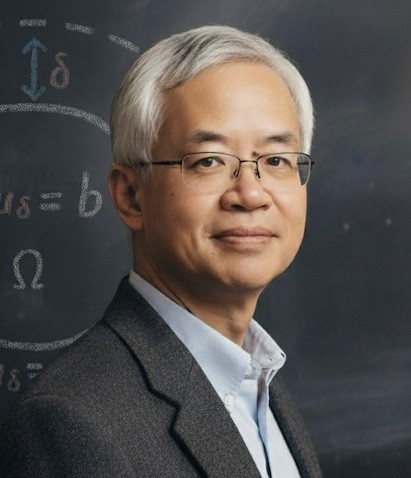
Qiang Du leads the Computational Mathematics and Multiscale Modeling (CM3) group at Columbia. CM3 conducts research at the interface of mathematical, computational and data sciences through partnerships with experts from different fields. Du has developed mathematical models and computational algorithms for various complex and multiscale systems.
He has received much recognition for his work, including the Feng Kang prize in scientific computing (2005), the Eberly College of Science Medal (2007), SIAM (Society of Industrial and Applied Mathematics) Outstanding Paper prize (2016), ACM Gordon Bell Prize finalist (2016), SIAM Review SIGEST Award (2020), USACM (US Association of Computational Mechanics) Thomas J.R. Hughes Medal (2021), ICBS Frontiers of Science Award (2024). He is a Fellow of SIAM, AMS (American Mathematical Society) Fellow, and AAAS (American Association for the Advancement of Science).
He graduated in 1983 from the University of Science and Technology of China with a degree in mathematics and in 1984 was selected by a special AMS-SIAM committee to pursue graduate studies in the U.S. He later earned a PhD in mathematics (1988) from Carnegie Mellon University. Prior to joining Columbia in 2014, he was the Verne M. Willaman Professor of Mathematics and Professor of Materials Science and Engineering at Penn State University. At Columbia, Du has served as the chair of the Applied Mathematics PhD program (2014-2020). As a faculty affiliate of the Data Science Institute, he was also a co-chair of the Center for Foundation of Data Science (2018-2019), the Center of Computing Systems for Data-Driven Science (2020-2024) and the Center of AI for Science and Engineering (2025-).
Tim Roughgarden
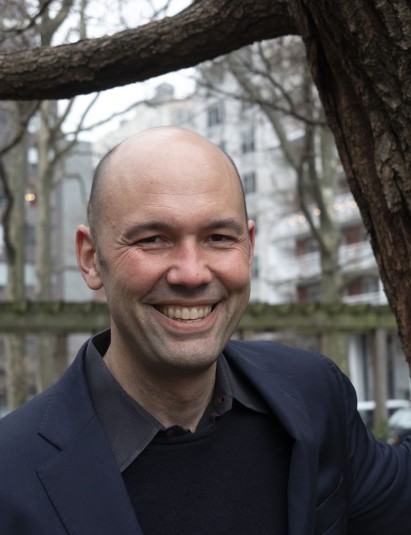
Tim Roughgarden is a professor of computer science at Columbia University and the director of the Columbia-Ethereum Research Center for Blockchain Protocol Design. He is also the head of research at a16z crypto. His research interests include the many connections between computer science and economics, as well as the design, analysis, applications, and limitations of algorithms.
For his research, he has been awarded the ACM Grace Murray Hopper Award, the Presidential Early Career Award for Scientists and Engineers (PECASE), the Kalai Prize in Computer Science and Game Theory, the Social Choice and Welfare Prize, the Mathematical Programming Society's Tucker Prize, and the EATCS-SIGACT Gödel Prize. He was an invited speaker at the 2006 International Congress of Mathematicians, the Shapley Lecturer at the 2008 World Congress of the Game Theory Society, and a Guggenheim Fellow in 2017.
He has written or edited ten books and monographs, including Twenty Lectures on Algorithmic Game Theory (2016), Beyond the Worst-Case Analysis of Algorithms (2020), and the Algorithms Illuminated book series (2017-2020).
Prior to joining Columbia, he spent 15 years on the computer science faculty at Stanford, following a PhD at Cornell and a postdoc at UC Berkeley.