Students
Expanding Horizons Through Study Abroad
More and more Columbia Engineering students are enriching their University experience overseas through Columbia Engineering’s global engagement programs.
Study abroad hasn’t always been a hallmark of engineering education, but at Columbia Engineering, that’s changing.
According to Scott Carpenter, associate dean at Columbia’s Center for Undergraduate Global Engagement, more students than ever are pursuing opportunities abroad. Historically, Columbia Engineering students haven’t been a large part of those numbers. The challenges of finding accredited engineering programs in foreign universities that let Engineering students keep pace with their requirements meant that overseas study hasn’t been on many engineering students’ radars. But Carpenter says more and more engineering students have been recognizing the value study abroad can bring to their college experience, and the University is behind them all the way. And there are other opportunities, in addition to traditional semesters abroad, that may appeal to them.
Reaping the benefits
The benefits of studying abroad have never been more relevant.
“What we’re looking to cultivate in students is a sense of global competency,” Carpenter says. “That’s a really critical set of skills that students need to develop to be global citizens in a fast-changing world.”
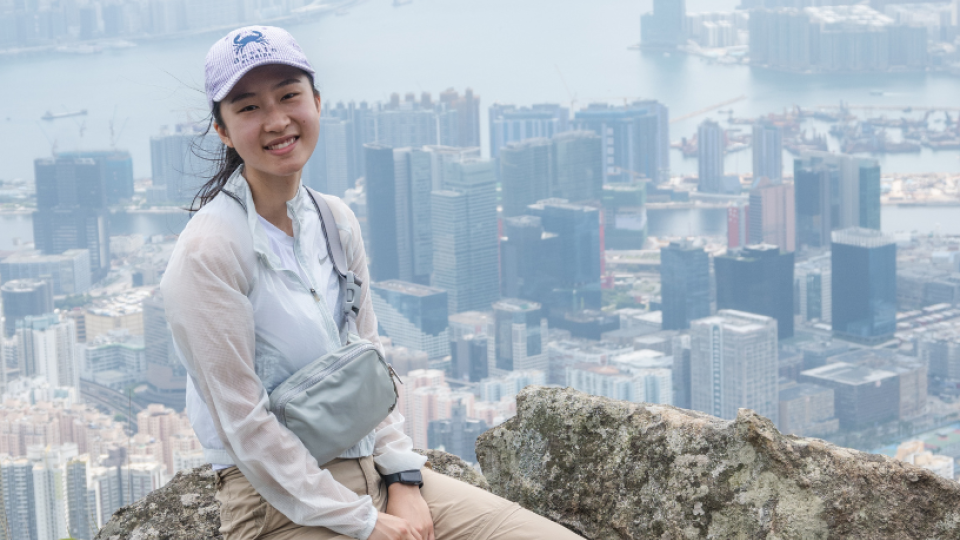
That’s what drew Tiffany Lin Fu BS’26 to study abroad. Fu, a computer science major at the Engineering School, elected to do a semester in Hong Kong in 2024 during the spring semester of her sophomore year.
“I knew the opportunity to go abroad would expand my personal life and provide me with the challenges and joys of being somewhere new and uncomfortable,” she says.
And those skills, Carpenter adds, are incredibly important for engineering students: “It’s some of the most global work that there is.”
Making it happen

But while study abroad for engineering students comes with unique challenges, the Center for Undergraduate Global Engagement has been laying the groundwork to make it as seamless as possible.
Most students opt for a spring semester program, although summer, full-year, and fall semester options are also on the table. In the past few years, Engineering students have been enrolled at universities in Australia, Germany, Ireland, Greece, and Hong Kong, among others.
Because the stakes are high for students needing to fulfill the School’s rigorous requirements, UGS coordinates with Engineering faculty and staff to find programs that count toward unmet curricular requirements at schools with ABET accreditation (the third-party accreditation organization that evaluates post-secondary programs in engineering, engineering technology, computing, and more). It also works with program partners to do curricular mapping to identify courses that could be easily replaced with offerings at other schools.
Those relationships allow the department to create individual plans for students that maximize their study abroad opportunities while making sure they’re staying on academic track.
Carpenter says many Columbia Engineering students find the spring of their sophomore year a “particularly flexible” moment, although summers and other periods are also possible. No matter when students decide to choose, however, the office will work with them to identify a program that fits their specific needs.
Fu says that support was valuable.
“I got a lot of support, and it was really easy for me to sign up and do it,” she says. Fu took four computer science classes during her semester, all of which will count toward her graduation requirements. Her classes felt just as challenging and educationally valuable as her coursework at Columbia.
“I was pretty impressed, the classes were tough,” she says.

There are even opportunities to gain global study experience for students who aren’t willing or able to commit to a full semester or summer.
This summer, for example, the Columbia Summer Program: Global Neuroscience is a one-month session hosted in Paris, France that allows students to take two three-point courses while studying with other undergraduates from Columbia and other universities.
Another option is the Global Columbia Collaboratory, a not-for-credit educational opportunity that gives students a first-hand look at United Nations Sustainable Development goals and the chance to collaborate with experts and NGOs. The Collaboratory is examining Environmental Humanities & Global Health in The Gambia seminar, and will combine two months of virtual small group meetings and virtual programming over the summer with three weeks in the field in The Gambia, wrapped up with virtual programming and a showcase later in the fall.
No matter when and how students decide to access study abroad opportunities, UGE is committed to making sure all engineering students who want to are able to, irrespective of their financial picture. In fact, a similar proportion of students who receive financial aid study abroad as attend the school in general.
“We partner with the financial aid office to make sure that a semester study abroad is not more expensive for students on financial aid than a semester on campus,” Carpenter says.
And that includes summers, which often present more challenges for students receiving financial aid.
UGE administers the Global Learning Scholarship (GLS), an application-based program that disperses funds that can be applied to summer tuition or toward plane fare/housing/meals for Columbia summer programs. In 2024, UGE administered more than $200,000 to students for summer programs.
The effort is worth it, Carpenter says, because getting students outside of their comfort zone and experiencing new cultures is a critical enhancement to academic learnings in the classroom.
“Studying abroad gives students the chance to interact firsthand with people from other cultures, and to be a student of other cultures really opens students to new perspectives and challenges them to develop new skills — the global learning skills that are critical for their success,” he says.
Fu agrees.
“The main things I was looking for was resilience and building my independence, and connecting more with my culture and family and my roots,” she says. “But otherwise, it was about learning how I can be okay with being myself in a completely foreign place, and I feel more confidence about being able to do that in the future. It was really rewarding – I’m 100% glad I did it.”