
Faculty & Staff
Faculty Experts Dissect the Promise and Pitfalls of AI Agents
The new issue of The Lever–Columbia Engineering’s limited series newsletter–provides takeaways and insights from leading AI experts.
Chatbots quickly became mainstream with the debut of ChatGPT three years ago. But animating chatbots was just the start. Large language models (LLMs) can navigate the internet, fill out forms, send emails, and make payments–and when LLMs are empowered to take action beyond the dialogue box, they’re called AI agents.
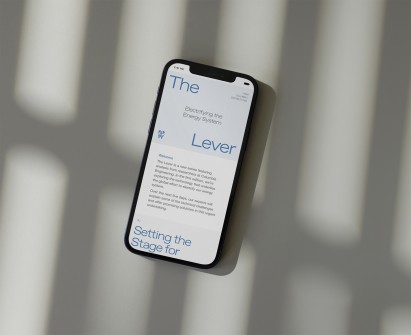
In the latest issue of The Lever, Columbia Engineering’s limited series newsletter introduced in the fall of 2024, faculty experts weigh in on the challenges and opportunities of AI agents.
In “Putting Agents to Work”, Vishal Misra, Columbia Engineering’s vice dean of AI and computing and RKS Family Professor of Computer Science, writes, “For years, people have predicted that AI agents would handle tasks like booking a vacation, taking care of everything from buying flights to reserving hotels. But I don’t think anyone is ready to hand over their credit card without checking the itinerary first. I feel the same way about applying AI agents to mission-critical systems in enterprise settings.”
Eugene Wu, director of Columbia’s DAPlab and associate professor of computer science, emphasizes how critical it is for organizations to implement guardrails for AI agents. “What does it take to make agents trustworthy?” he writes. “We need systems that let agents plan, simulate, and act in controlled environments that are designed to take advantage of their strengths while mitigating their weaknesses.”
Five faculty members from the School’s Department of Computer Science, Columbia’s DAPlab, and the Columbia University Data Science Institute all weigh in on this burgeoning technology. Find out what they have to say when you subscribe to the issue, The Lever: Putting AI Agents to Work.
The Lever: AI Agents at work
Credit: Jane Nisselson; Music: License agreement is made between Columbia Engineering and the copyright owner David Szesztay, in regards to the musical composition, titled as At the Right Moment.
About The Lever:
The Lever is a new collection of limited series newsletters direct from our faculty. In each edition, researchers at the forefront of discovery break a problem or technology into its core elements and explore the most likely pathways for progress. Over the course of a few days, subscribers will get an inside view into topics like sustainable energy, AI agents, or fusion energy.