Research
Fashion Forward: Columbia and FIT Awarded Bezos Earth Fund Grant for Sustainable Fashion
The PRISM program combines age-old natural processes with modern technology to create future materials that can replace synthetic fibers and advance a circular economy.
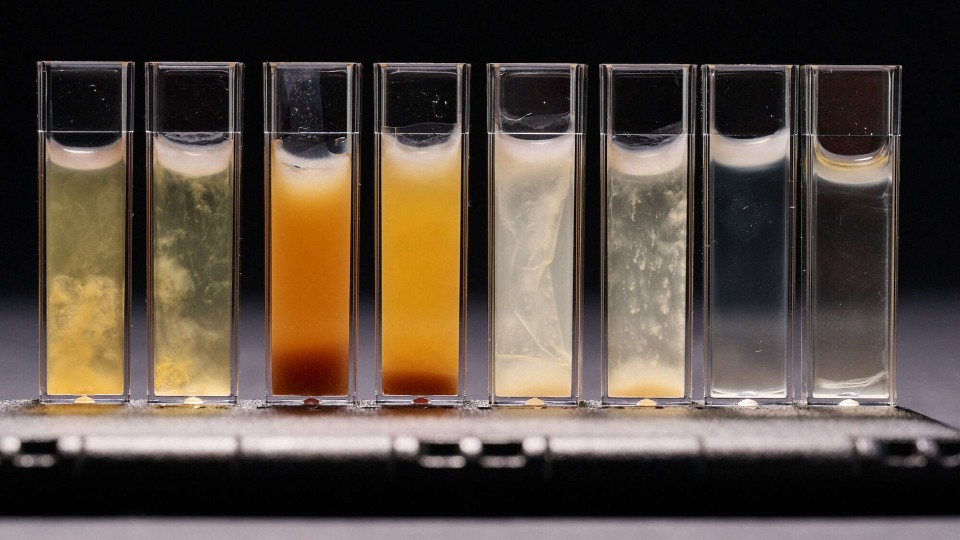
Columbia University, in partnership with the Fashion Institute of Technology (FIT), part of the State University of New York (SUNY), has received an $11.5 million grant from the Bezos Earth Fund, a $10 billion initiative by Jeff Bezos and Lauren Sánchez Bezos to fund climate and nature programming. Columbia and FIT will use the grant to advance their PRISM platform, a framework to develop a high-performance textile fiber grown by bacteria fed on agricultural waste, which will require no land, be compostable at the end-of-life, and produce no microplastic pollution.
PRISM, which stands for Precision, Regenerative, Intelligent, Scalable Materials, is a five-year research program that will address key scientific and technical bottlenecks in control, predictability, and scalability in the production of bacterial cellulose fiber, a biomaterial that can match the strength and elasticity of synthetic fibers like polyester but will also be compostable. Using bioengineering, synthetic biology, theory, machine learning, data science, and textile science, PRISM is focused on materials innovation for the fashion industry and beyond.
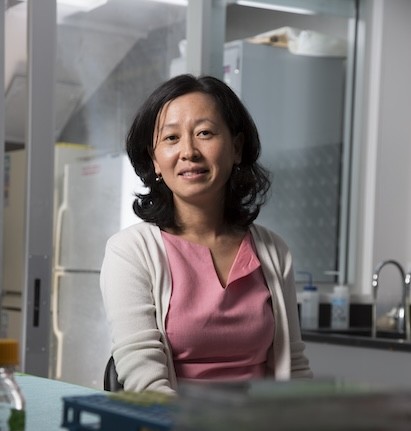
“The goal of PRISM is to harness the power of cells for the production of next-generation, high-performance, and regenerative fibers for the fashion industry, and the visionary support from the Bezos Earth Fund enables us to develop foundational science in biofabrication,” said Columbia’s Helen Lu, Percy K. and Vida L.W. Professor of Biomedical Engineering, and professor of dental and craniofacial engineering. “Most excitingly, the project gives the PRISM team a unique opportunity to build beyond biology by reverse-engineering nature’s best designs to create brand-new materials that are useful and healthy for us, and for the planet.”
Lu, who is also senior vice dean for faculty affairs and advancement of Columbia Engineering, is the Columbia lead for the program, working with FIT’s program lead, Theanne Schiros, professor of materials science, Department of Science and Math.
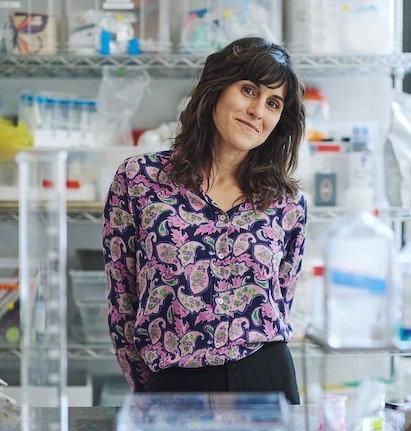
“We believe PRISM will be transformative in demonstrating that biofabricated cellulose fibers can compete with today’s commercial fibers while delivering measurable environmental benefits,” said Schiros. “With the support of the Bezos Earth Fund, we are ensuring these material innovations scale with performance, transparency, and full traceability. This is just the beginning.”
The PRISM research program is one of the latest efforts of Gotham Foundry, a first-of-its-kind sustainable materials innovation hub launched in September 2025 with support from the New York City Economic Development Corporation (NYC EDC). Led by Lu at Columbia University, Gotham Foundry operates in partnership with CUNY Advanced Science Research Center (ASRC), FIT, and Genspace. Gotham Foundry was founded to advance the circular economy in the heritage New York City industries of fashion, construction, and healthcare. The hub is also committed to job creation and workforce training for the city’s burgeoning green economy.
In addition to Lu and Schiros, the PRISM team includes Marianna Maiaru, associate professor of civil engineering and engineering mechanics at Columbia; Mary Boyce, professor of mechanical engineering at Columbia; Harris Wang, professor of systems biology, of pathology and cell biology, and of biomedical engineering at Columbia; and Gregory Odegard, John O. Hallquist Endowed Chair in Computational Mechanics, Mechanical and Aerospace Engineering at Michigan Technological University, as well as Ann Cantrell, associate professor of fashion business management at FIT, Asta Skocir, professor of at FIT, and Amy Sperber, assistant professor of fashion design at FIT.
An industry poised for transformation
Fashion is a leading driver of climate change and pollution, consuming enormous amounts of water and producing waste, with 85% of textiles going to landfills each year, according to the United Nations Economic Commission for Europe. Currently, less than 1% of textiles are recycled. Each stage of the industry—from sourcing and extraction to processing and production—follows a linear model with practices that are unsustainable. Growing health concerns about microplastics shed by synthetic textiles and textile finishes, and the impact of synthetic fabrics, have also sped up the need for more sustainable solutions.
The market for bio-made fibers faces challenges in the areas of performance, cost, and transparency regarding the origin and supply chain of sustainable materials. The PRISM framework aims to address these factors currently limiting the translation of bio-made materials to the marketplace.
The long-standing challenge in material development is that properties depend on phenomena that take place on multiple different length-scales. To capture this, the PRISM team will build a digital twin for cellulose synthesis to better understand how nature makes high-performance materials, and use that knowledge to grow fibers with desired properties.
Another key challenge to market adoption has been the absence of standardized LCA methodologies for biofabrication. The LCA framework developed by PRISM will enable quantitative rigor in comparing emerging and conventional textiles, moving beyond marketing claims to science-based assessments. Insights gained from PRISM will be leveraged to predict material performance, identify best manufacturing processes, and design better materials.
Lu and Schiros have been tackling sustainable materials since 2017, when they were connected by Columbia University’s Materials Research Science and Engineering Center. Schiros was on faculty at FIT and was already exploring biofabricated materials as leather alternatives. Lu, an expert in polymers and scaffolds for medical applications, was intrigued by how materials designed to biodegrade in the human body could serve as a catalyst for thinking about other applications. The two teamed up on projects ranging from engineered seaweed yarn to bio-leather and engineering color in textile fibers. A pair of shoes created by the team will be on exhibit and part of the permanent collection at the new National Geographic Museum of Exploration in Washington, D.C., opening this summer. With PRISM, they are once again drawing on the lessons of living organisms that have acquired an array of sophisticated functions over years of evolution.
Partnering for next-generation materials
The support from the Bezos Earth Fund comes as part of the organization’s recent announcement of $34 million toward breakthrough materials for the fashion and textile industry. The initiative focuses on materials that resemble today’s textiles but with improved properties and a more sustainable profile.
“We’re thrilled to see this level of support from the Bezos Earth Fund toward sustainable materials innovation,” said Shih-Fu Chang, dean of Columbia Engineering. “Society is in need of healthier and more sustainable alternatives and we have the novel technology and tools to work with partners and make these solutions a reality.”
“With generous support from the Bezos Earth Fund, the partnership with Columbia and the work of FIT’s Theanne Schiros reflects the kind of future-facing collaborations that will help define FIT’s next chapter. PRISM is a powerful example of how we plan to bring design, science, and technology together to address real-world challenges while also opening new pathways for students to engage with the industries that will accelerate more sustainable solutions for fashion,” said FIT President Jason S. Schupbach.
PRISM’s operations will be at labs on Columbia’s Morningside Campus with some wet spinning tryouts of fiber planned at the Phase 1 site of Gotham Foundry in the Mink Building in Upper Manhattan, as well as at FIT’s labs.