Research
The Future of Fusion Depends on Collaboration
At the Columbia Fusion Research Center, leaders charted the path forward while students highlighted their work in plasma physics.
The Columbia Fusion Research Center welcomed a distinguished group of leaders at its annual symposium on September 24, 2026. This event, part of Columbia Engineering's celebration of Climate Week NYC, highlighted the importance of collaboration across international borders and in the effort to add fusion power to the world’s energy portfolio.
“I'm so happy that this generation is showing that understanding plasma is not impossible, and it's also a wonderful area that will be revolutionary for the world,” Provost Angela Olinto said in her opening remarks. “I'm so happy to be part of Columbia as this is happening.”
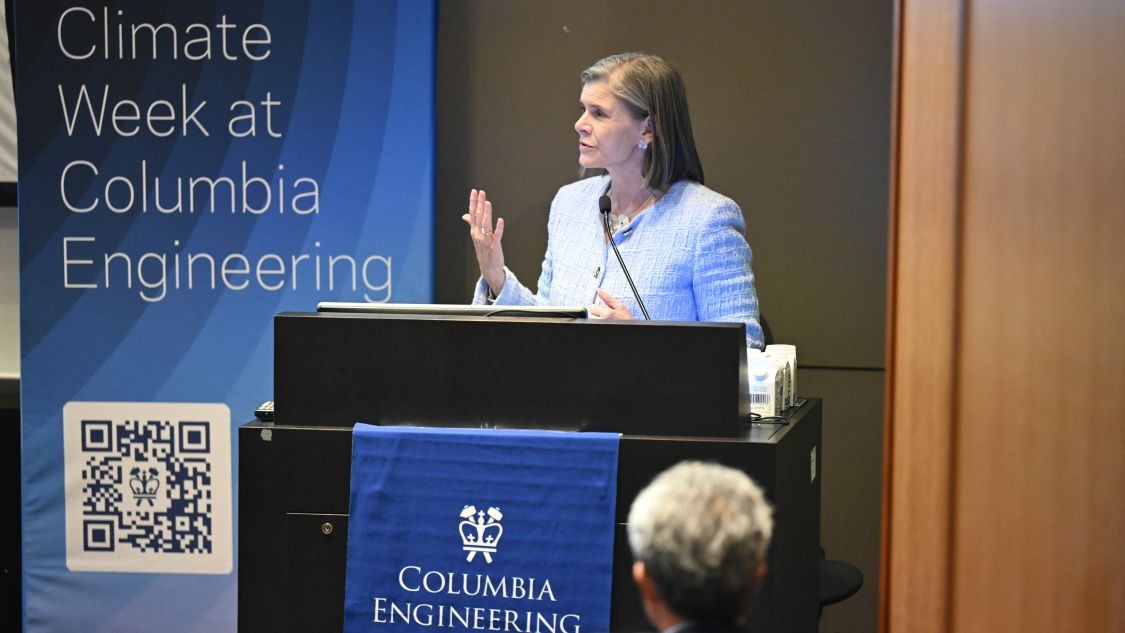
The event featured experts representing key domains for the development of fusion technology, including industry, government, philanthropy, and academia. Najat Mokhtar, deputy director general and head of the International Atomic Energy Agency (IAEA) Department of Nuclear Physics and Applications, spoke about the importance of working across sectors and countries to achieve the long-held aim of this new source of energy.
“The work being done here contributes to the bigger goal of making fusion a viable, sustainable energy source with potential implications for energy security and decarbonization,” he said.
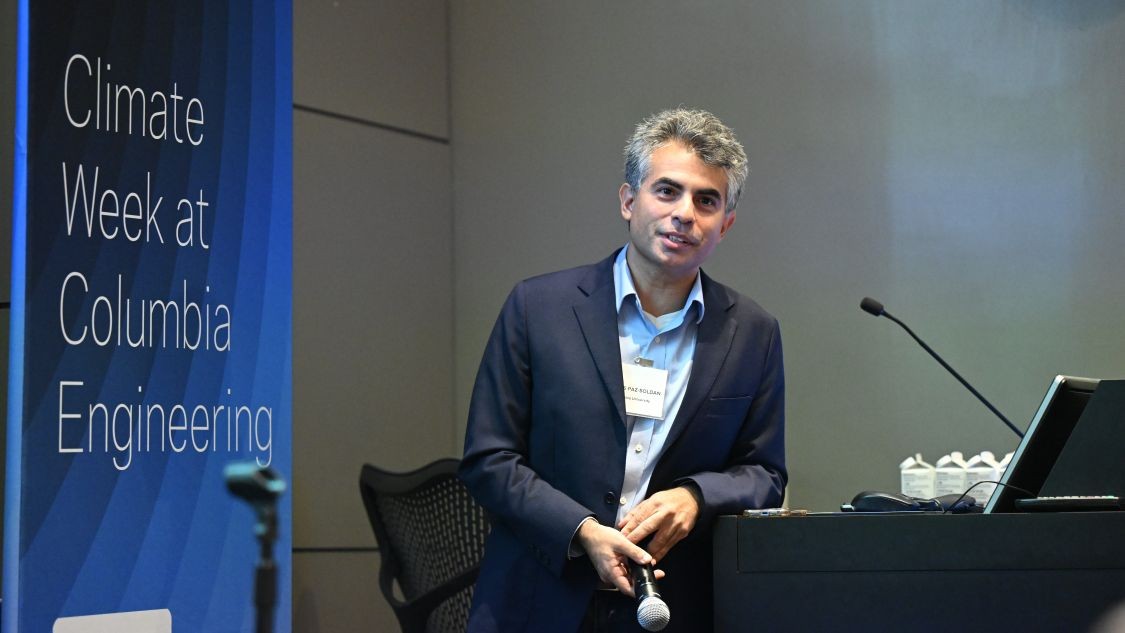
“International collaboration and public-private partnership are cornerstones of Columbia’s fusion effort,” said Carlos Paz-Soldan, director of the Columbia Fusion Research Center and an associate professor of applied physics and applied mathematics at Columbia Engineering. “We know we can achieve our research goals faster in partnership than in isolation.”
Philanthropic organizations are a key partner in academic fusion research.
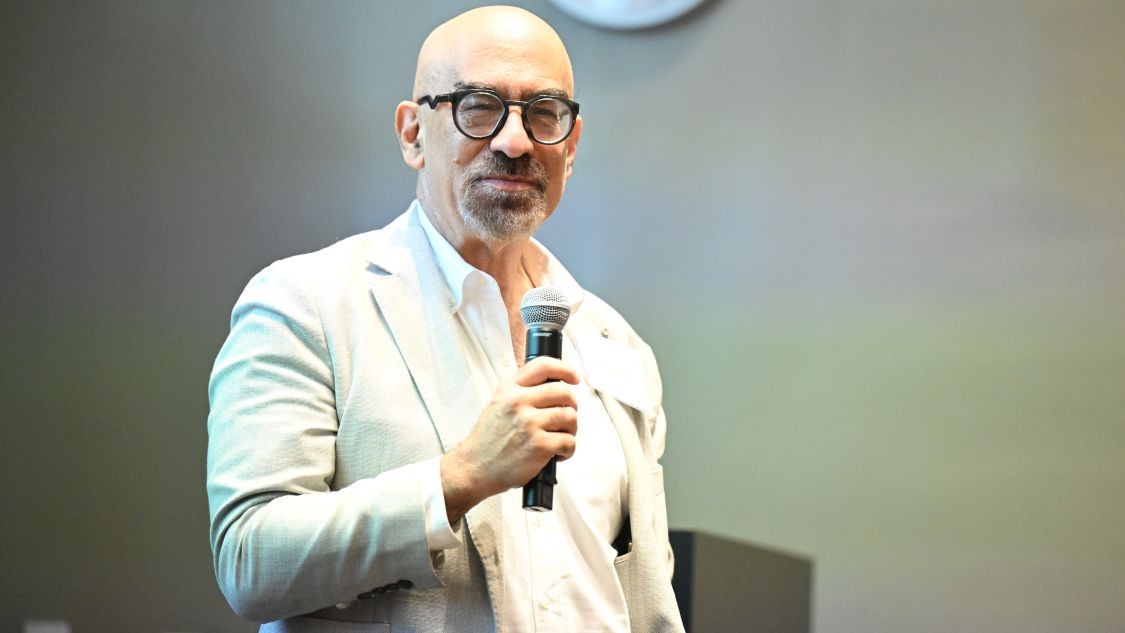
“Our mission is to support research in mathematics and basic science,” David Spergel, president of the Simons Foundation, said at the event. “There’s really beautiful mathematics in plasma physics.”
Senior Vice Dean for Faculty Advancement Helen Lu added, “At Columbia, we strongly believe that academia, industry, government, philanthropy, and research institutions working together in public-private partnerships allows us to leverage our strengths and accelerate progress.”
Industry experts praise international collaboration
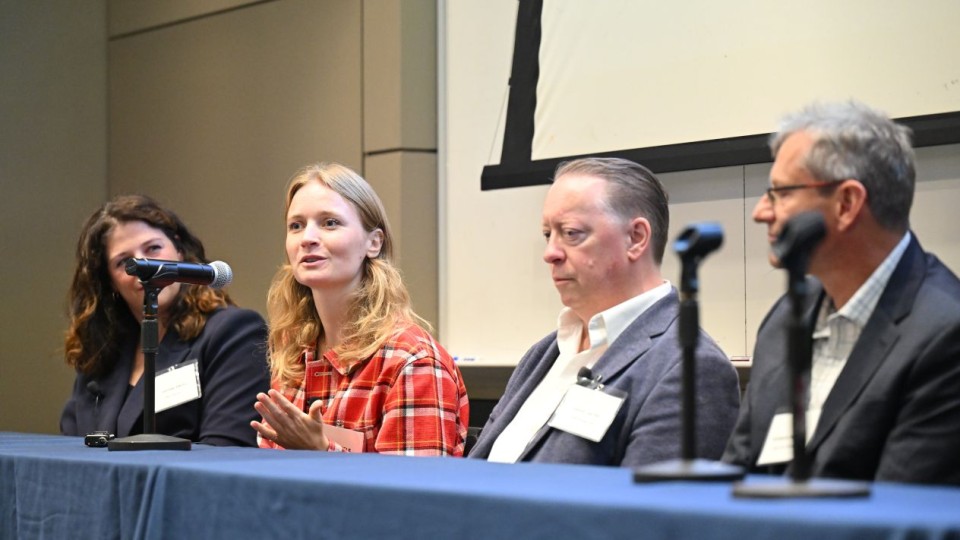
Following the opening remarks, a panel of industry experts spoke about their work and their hope for the future of fusion as a viable power source. They agreed that sustainable power could one day benefit the globe, so international collaboration was a necessity.
“Fusion is a global challenge, and it's hopefully also going to solve global problems,” said Thomas Pedersen, chief technical officer at Type One Energy. “That means global is going to get us there faster. In our company, we have decided to be international from the beginning.”
Collaboration was at the core of the day’s panel, which was hosted by Elizabeth Paul, an assistant professor of applied physics and applied mathematics at Columbia. The panelists explained that their field has benefited from scientists sharing information across the two main approaches to fusion research. Fusion research is exploring two design variations for the magnetic “bottle” that contains plasma: a tokamak, which relies on internal plasma currents to confine the plasma, and a stellarator, which relies solely on external coils to confine the plasma to a donut-like shape.
“A lot of equations that have already been looked at for tokamaks or codes that were originally developed for tokamaks are now being looked at for stellarators. There's a very natural collaboration there,” said Josefine Proll, associate professor at Eindhoven University of Technology and group leader at IPP.
Phil Snyder, vice president of Plasma Physics, agreed that collaboration between stellarator and tokamak scientists was critical for developing fusion into a viable energy source. He said, “There have been developed within the stellarator community some really cool theoretical ways of thinking and numerical tools. Many of these we can apply to tokamaks too.”
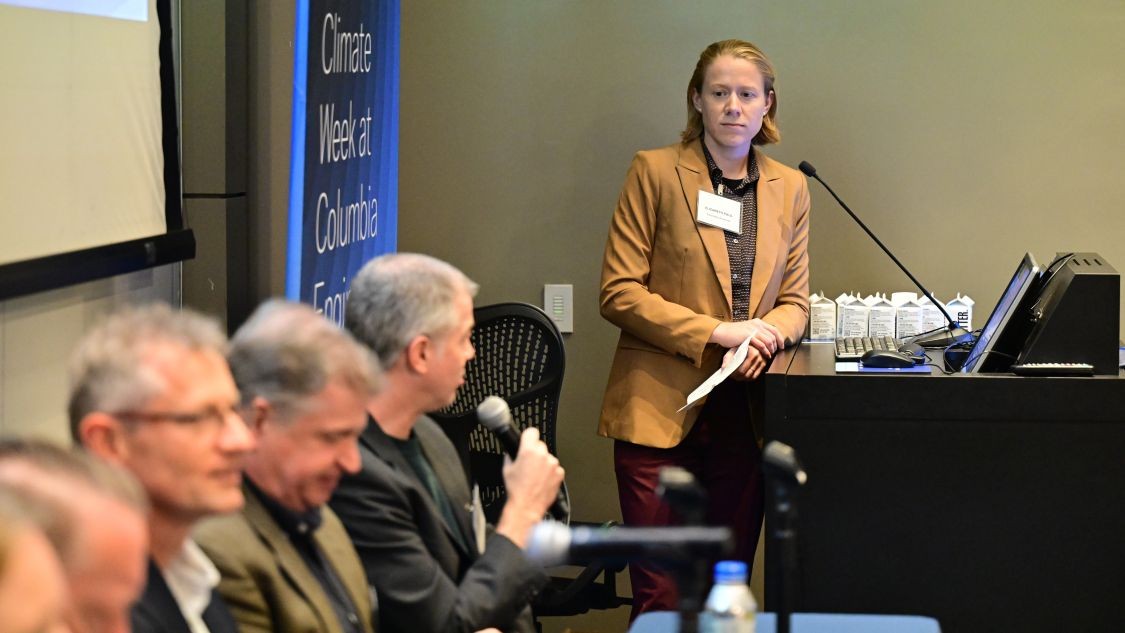
The panel ended with a discussion on the economics of fusion power and investment in research.
Ellen Smeele, the chief of staff at Proxima Fusion, said she believes continued partnerships with government and industry will help reduce the cost of the materials needed for plasma physics research. She said, “There's a shared interest across everyone here to make more of our materials available.”
David Gates, co-founder of Thea Energy, agreed, adding that partnerships between academia and business will keep the industry bankable. He said, “Academics can have expertise in specialty areas that don't fully support the financial interests of the company directly, but we need that information anyway. It's just a natural thing to collaborate between academia and business.”
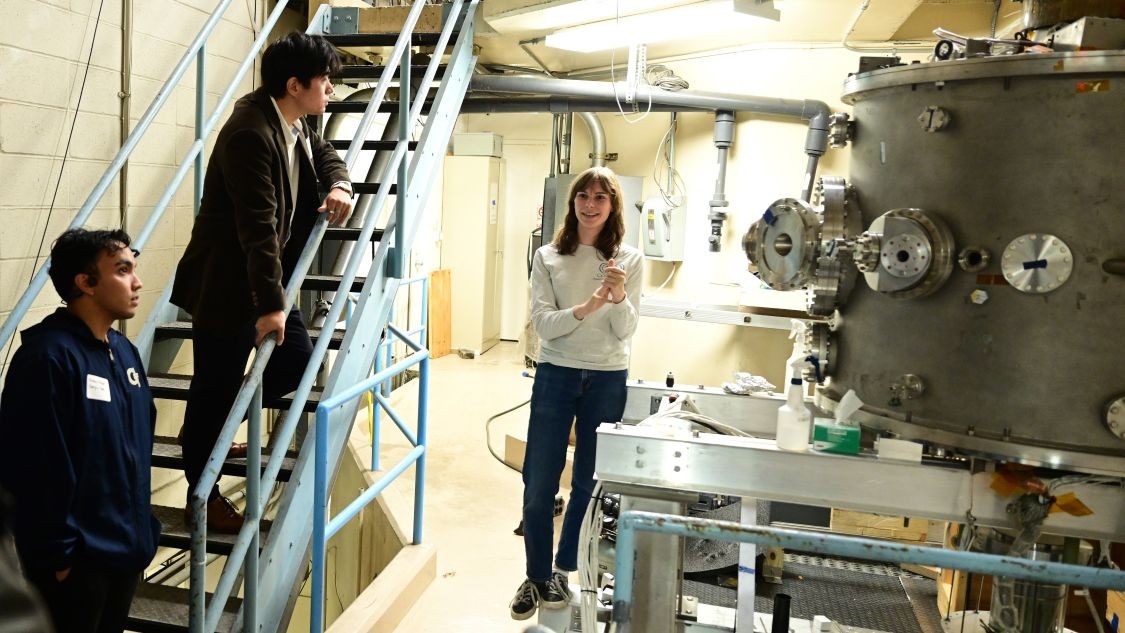
The symposium ended with a round of lightning talks, where students from the Columbia Fusion Research Center shared their work, followed by a poster session. The student presenters discussed their experiments and simulations that tackle some of the biggest issues in fusion. For example, Sophia Guizzo, a third-year PhD student, simulated the interaction of plasma and its container.