
Research
At the Intersection of Natural and Artificial Intelligence
ARNI researchers explain why now is the time to understand what brains and AI have in common.
What principles underlie intelligence in living things and engineered systems? After years of rapid advancements in AI and our understanding of the brain, it’s a vital question.
Researchers at ARNI (short for ARtificial and Natural Intelligence) are working to find out. An NSF AI Institute led by Columbia Engineering, ARNI convenes computer scientists, neuroscientists, and cognitive scientists to probe for similarities across intelligent systems designed by humans and those that emerged from evolution. Along the way, the institute is developing new paradigms for interdisciplinary research connecting the fields.
“Humans are constantly looking at the environment around them and trying to guess what’s about to happen,” says Richard Zemel, director of ARNI and the Trianthe Dakolias Professor of Engineering and Applied Science in the Department of Computer Science at Columbia Engineering.
“We’re faced with prediction problems all the time— either explicitly or implicitly— as we operate in the world,” he says. “Presumably, that’s what our brains are tuned to do.”
At ARNI, every research project includes a PI whose primary specialty is natural intelligence and another who focuses on artificial intelligence. The goal is to make discoveries that accelerate progress in both disciplines, with an eye to advancing useful knowledge and technologies. For ARNI’s many engineers, thinking of the brain as a prediction machine clarifies the search for common principles of intelligence as an engineering problem.
To learn more about ARNI’s mission, click here to see a playlist of short videos featuring Zemel and ARNI researchers affiliated with Columbia Engineering, Google, and the City University of New York.
ARNI: On Natural and Artificial Intelligence
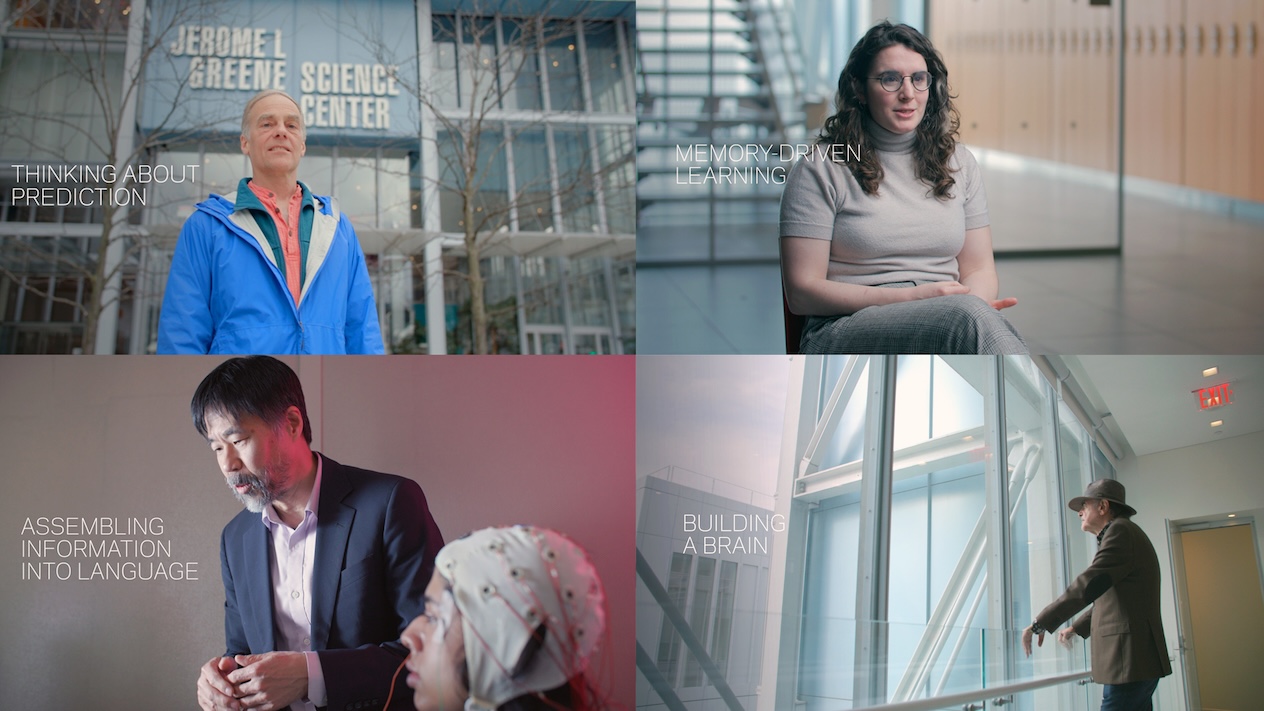
Videos by Jane Nisselson/Columbia Engineering