Alumni
Lessons in Leadership from McKinsey Veteran Asheet Mehta BS’87
Returning to campus as Columbia Engineering’s latest Executive in Residence, Asheet Mehta shares leadership lessons, adaptability, and how to be career resilient in the rise of AI.
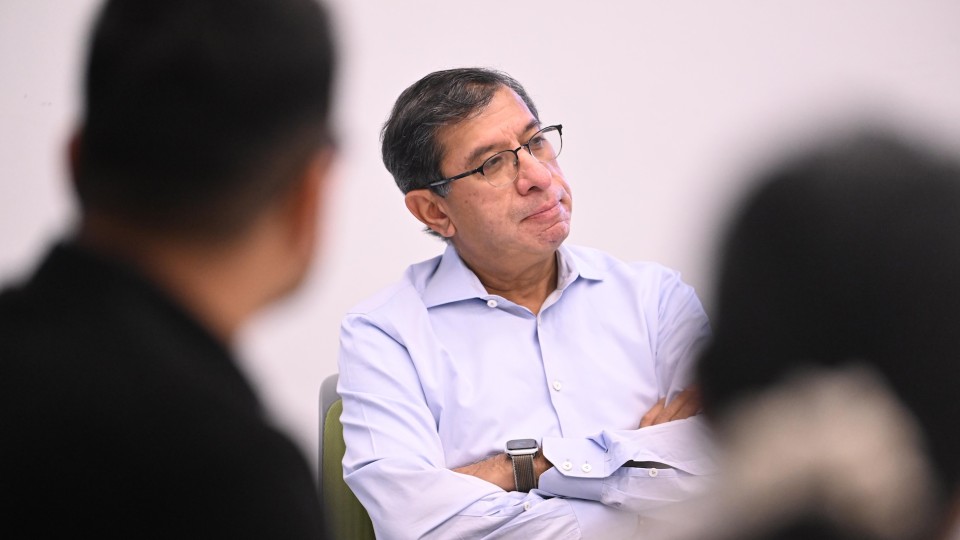
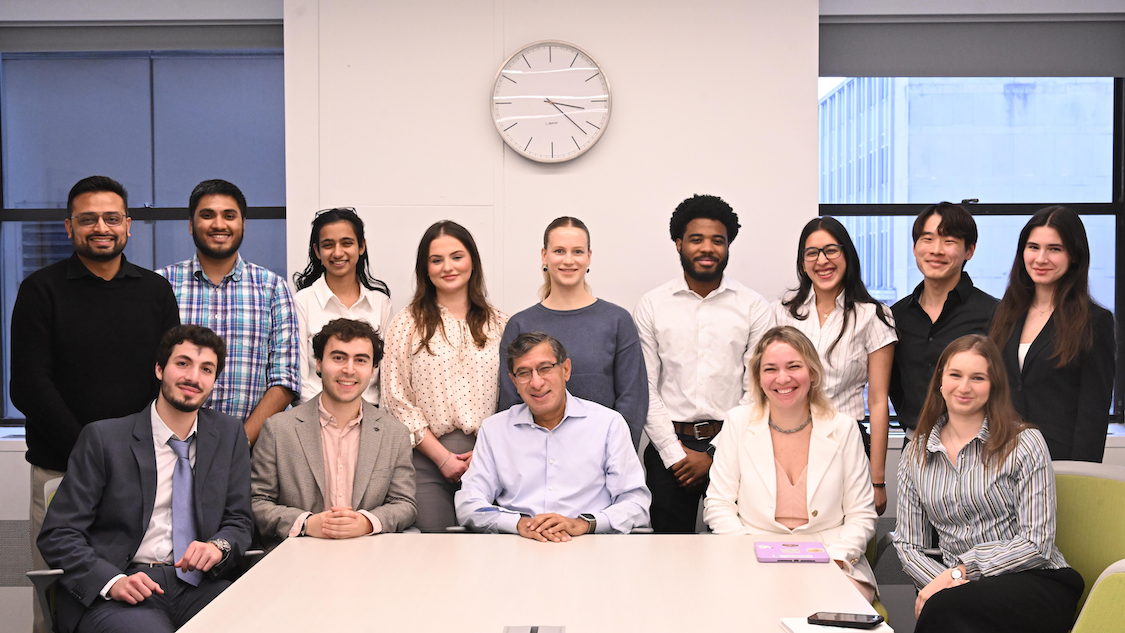
The analytical toolkit alumnus Asheet Mehta BS'87 built at Columbia Engineering followed him through a 30-plus consulting career, and into his latest venture as a startup founder. On Feb.18, engineering students had the opportunity to learn from Mehta’s experience as the School's latest Executive in Residence. A former senior partner at McKinsey & Company, Mehta is the founder/CEO of Resfi.ai, and a current member of Columbia Engineering’s Board of Visitors, where he chairs the Finance Committee.
The Executive in Residence program recruits distinguished visitors from business, government, and the nonprofit sector to meet with students and share perspectives on their careers and leadership paths. During his residency with students, Mehta drew from a more than two-decade consulting career at McKinsey, sharing anecdotes of how he applied the skills he learned at Columbia Engineering to become a better consultant, leader, and entrepreneur.
Finding the right fit
Mehta's path to McKinsey was not a straight line. After graduating from Columbia with a degree in electrical engineering, he took a well-paying job on Wall Street that felt ultimately unfulfilling. "I spent quite a few years there and realized that if I did this, I would be doing this for the rest of my life,” he said. “I wasn’t sure I loved it." Mehta pivoted to pursue an MBA at the University of Chicago Booth School of Business, where he found the industry that would define the majority of his career: consulting. This field appealed to Mehta for the same reason engineering had — it was, at its core, problem solving.
At McKinsey, Mehta would spend years navigating different clients, projects, and teams to discover what he really enjoyed in his career. He quickly learned as a junior associate that while the job was fulfilling, there were many difficult roadblocks he would face. Mehta recalls an especially tough project in his early years with a bank, where he spent 14-15 hours a day with a client – arriving at the office early and leaving late. Upon reflection, however, “It was probably the best development ever – because I got a lot of freedom to work with the vice chairman of this bank,” Mehta said. Through a difficult project and an even more demanding client, he built a valuable mindset that helped him get through the very exhausting – but equally exhilarating – world of consulting. “All the ducks are never going to get lined up in life. But there are always things that are going well – focus on what is good and make the most of it.”
What ultimately made McKinsey such a great place to work for Mehta was the variety of challenging projects, exposure to colleagues from various walks of life, and the rewards that came with strong performance. During his tenure, Mehta co-led the Global Financial Services practice, served on the McKinsey Board, and was the chief transformation officer for North America – working with global financial institutions, scaling businesses, and guiding CEOs through financial strategy, transformation, and risk management. He credits his success to the genuine passion he has for work every day. “That was the important lesson for me – which is if you find a job that you love and you like the people you work with, don’t ever quit. You are unlikely to find both of those together.”
From corporate leader to startup founder
Mehta shared his perspectives on leadership with students, having done the traditional track at an established company and the unconventional route through his new startup. Emphasizing the role of leaders as a team’s compass, he believes success hinges on setting a clear vision, motivating others, building a strong team, establishing necessary guardrails, adapting with mid-course corrections, and celebrating successes. But according to Mehta, the model only works when the people around you genuinely want you to succeed. “They’re rooting for you because you are helping them, and they care for you,” Mehta said. “That makes a very big difference in whether you will succeed or not.”
After retiring from McKinsey in 2025, Mehta began a new journey by founding Resfi.ai, a fintech startup built on a problem he had observed up close throughout his career in financial services. American consumers who hold roughly $18 trillion in debt are underserved in the financial guidance space. Resfi.ai bridges this gap by leveraging AI and behavioral finance to deliver personalized financial advice that can be automatically implemented. Resfi stands for “responsible finance,” said Mehta, and serves as the foundational ethos that the company is built on.
But the startup world is not easy. Without the infrastructure of a company like McKinsey, the pressure to fail is more likely than ever. “The fintech success rate is one percent, so there’s a ninety-nine percent chance this thing fails,” Mehta said. But instead of being discouraged by those odds, he uses them to stay grounded, being committed to making it work while remaining honest about the risks, and being flexible wherever possible.
Successful leadership in the startup space is less about effective oversight and more about administration. Without departmental help that usually comes with being a part of a large company, Mehta is left to manage the many dimensions of a small business himself – from filing LLCs to handling payroll. The ability to prioritize ruthlessly, stay disciplined, and maintain motivation every single day became critical in a way it never had been at McKinsey. "Regulating yourself every single day and keeping people positively motivated — including yourself — that became the real challenge," he told students.
Being adaptable in the age of AI
For students wanting to know what the future of AI holds for engineers, Mehta was realistic: nobody knows with certainty how AI will reshape the workforce. “But I think what you’ll have to learn is how to be a lot more adaptable – how to acquire skills that are less readily replaceable,” he said. This looks like investing in soft skills that AI can’t replicate, like building interpersonal skills: "How to motivate people, how to engage with and excite them — those are things AI can't do.” Additionally, having a strong network across multiple industries becomes increasingly necessary to navigate the unknown changes AI could bring.
The good news, however, is that Columbia Engineering students are already better prepared for this kind of pressure than they might realize, Mehta said. The rigor of the curriculum and demanding coursework help students create a durable mindset that can adapt to any challenge. Because of Columbia Engineering’s robust core curriculum, Mehta believes these opportunities better prepare engineers to succeed in an AI world.
"Pressure is a privilege," Mehta said. "You are at one of the most demanding educational institutions in the most demanding majors, and it's your responsibility – and your job – to step up and shine."