Research
Mining is Essential. It Doesn't Have to be Wasteful.
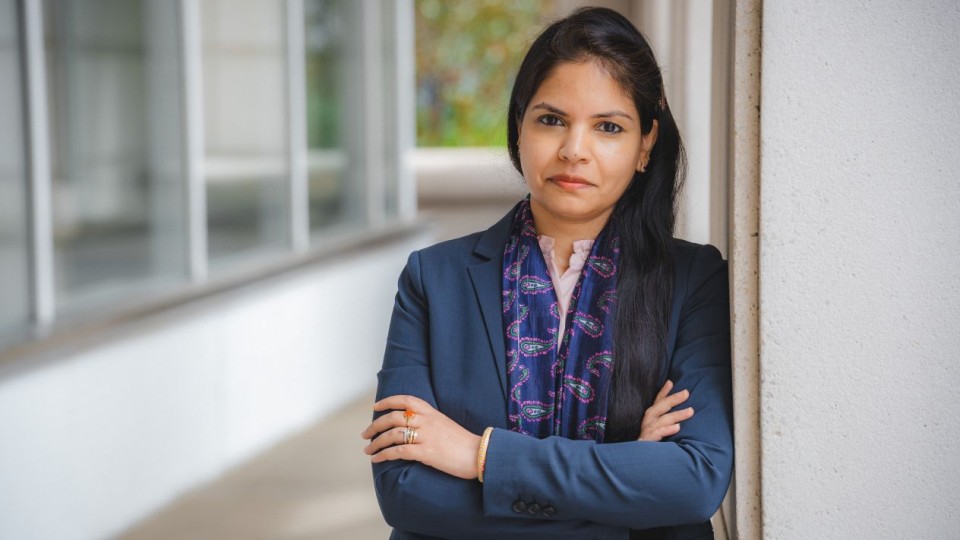
Greeshma Gadikota lays out new approaches in mining, refining, and recycling that stand to revolutionize how the U.S. acquires essential resources.
Nearly every technology today relies on raw materials that began underground as ores and other deposits. The United States is rich in these natural resources, but the country does not produce large quantities of many important metals and other minerals.
Greeshma Gadikota, the Lenfest Earth Institute Professor of Climate Change and professor of earth and environmental engineering, is seeking to change that. An expert in mining, processing, recycling, and energy technologies, Gadikota is developing a wide range of new approaches for sustainably acquiring and refining the raw inputs that become hardware and energy. Gadikota also directs the Lenfest Center for Sustainable Energy at Columbia and is a faculty member at Columbia Climate School.
The deficit in U.S. mining and refining is particularly urgent for a specific subset of resources that are difficult to substitute, essential to modern technology, and dependent on vulnerable supply chains. These critical materials are vital to technologies ranging from phones and laptops to vehicles and defense systems. As key components in energy storage devices (e.g., batteries) and energy and emission conversion systems (e.g., catalytic converters, nuclear reactors), and advanced manufacturing (e.g., magnets and semiconductors) are particularly important to energy security and sustainability.
Columbia Engineering sat down with Gadikota to learn more about her work.
How are today's mines different from those in the past?
Mining has never had a great reputation, and for good reason: traditional approaches left behind huge quantities of pollution that affected the landscape and local communities for generations. That's because traditional mines were built to recover one high-value element and discard everything else. In sustainable mining, we treat the ore that comes out of the ground as a whole resource and engineer systems to extract everything we can and find a use for what would traditionally be considered waste.
What are the benefits to using all parts of the ore?
Nature almost never hands you a pure deposit of one metal. An ore that's rich in copper or nickel usually comes bundled with a handful of other elements, some valuable and some historically treated as leftovers. If you recover more of what's actually in the rock, you get more economic value out of the same hole in the ground. It can also solve problems that have nothing to do with mining. The calcium in a rare-earth-bearing ore, for instance, can be used to capture and convert CO2 to produce construction materials.
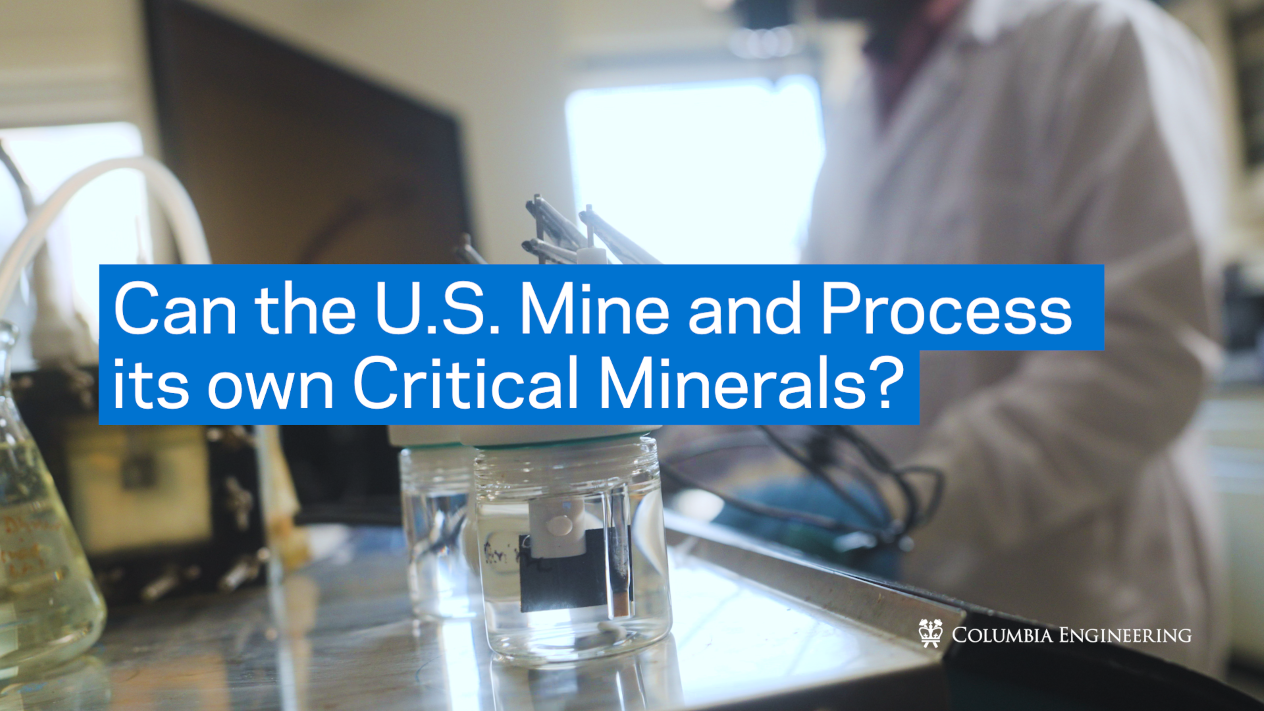
Can the United States mine and process its own materials? Why should it want to?
There's a real pathway for the United States to build its own supply chain for critical materials, from ore to finished device. We have proven resources across the country. Developing it means we're not just producing nickel, copper, cobalt, and platinum-group metals domestically, we're building the processing know-how here instead of somewhere else. Columbia's location matters for this in a way people don't always expect. Being in New York means we're not just talking to engineers — we're down the street from the finance, policy, and legal expertise this industry needs to actually scale. That combination is what makes a technology viable in the real world, and New York is really the only place that offers it.
How does your lab contribute to this national effort?
Columbia Engineering has the oldest mining engineering program in the country, and a lot of the technical know-how that built the modern industry traces back to graduates of this school. We want to build on that legacy. Concretely, that means taking ores and residues, which are currently shipped overseas for processing, and developing the science and technology to process them domestically instead. We are working on dozens of projects using feedstocks ranging from raw ores to mining waste and recycled inputs such as magnets from wind turbines. In doing so, we're maintaining and building knowledge and know-how here in the United States rather than exporting it along with the raw materials.
How do you work with industry partners?
Companies come to us for a few different reasons. Some need help with a product, such as iron, steel, critical materials, or fertilizers. Others are trying to manage emissions, whether that's their own direct output or emissions further down their supply chain. The particulars of what we hand back to our partners depend on where they are in the mining and refining process: sometimes a reactor design, sometimes a full processing scheme showing how to extract more value from a resource than they currently do. If they want to go further, we get deeper into engineering and help solve deployment problems for the new system. When the work produces a patent, we patent it through Columbia Technology Ventures and license it to the company.
What do you most want to impart on your students?
I want them to see themselves as builders — not just consumers — who look at mineral processing, mining, and recycling as one connected system. Every product has an end of its life, but that end can be an opportunity. So much of what we produce ends up in a landfill or in the water. It's possible for us to re-engineer the future that we want to live in. I want students to take ownership of that cycle as they build a career in this field.