Faculty & Staff
Mischa Schwartz at 100: A Century of Communications, Teaching, and Taking Chances
The Columbia Engineering Charles Batchelor Professor Emeritus reflects on a career that stretched from World War II-era radar to computer networks, shaped generations of electrical engineers, and was instrumental in building Columbia’s strength in telecommunications.
When Prof. Emeritus Mischa Schwartz was a teenager growing up in the East Bronx, he had little idea what an electrical engineer did.
He did know that he liked bridges. Schwartz and his friends would ride their bicycles across the Bronx, through Manhattan and over bridges, and the young Schwartz began imagining a career designing them. Civil engineering also seemed to offer another attraction: the possibility of working outdoors.
“I’d never gone away to camp,” Schwartz recalled recently. “I liked the idea of being outdoors.”
That plan did not last long. After enrolling at Cooper Union, Schwartz struggled with descriptive geometry and drafting. A professor pulled him aside and suggested that he consider another field. Schwartz opened the school catalog and looked for the program with the most mathematics and physics, two subjects he loved. Electrical engineering won. It was one of many unexpected turns in a life that would eventually span a century and much of the modern history of communications and networking. In September of this year, Schwartz, the Charles Batchelor Professor Emeritus of Electrical Engineering at Columbia University, celebrated his 100th birthday.
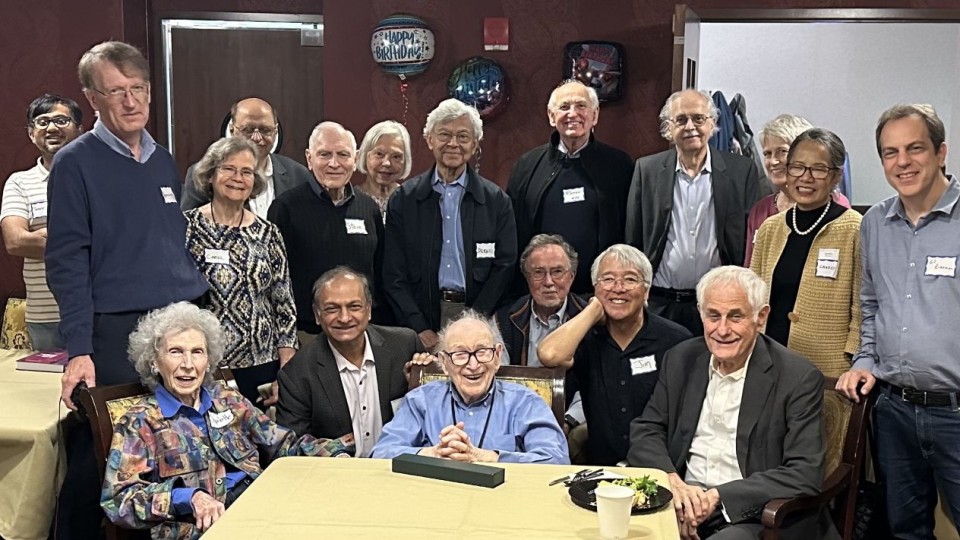
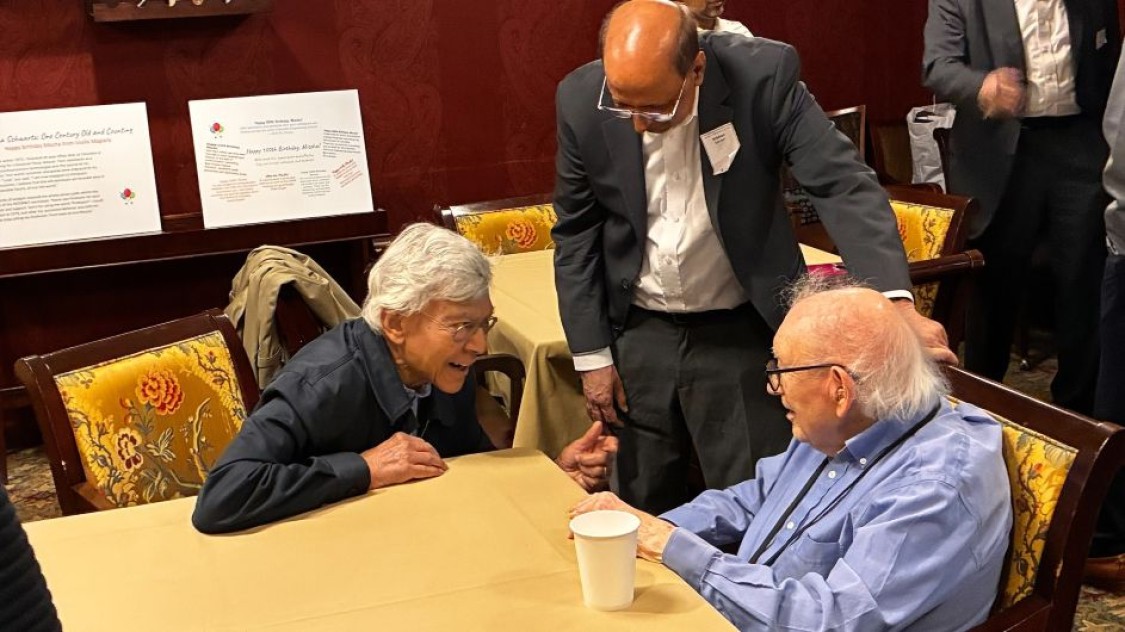
To mark the milestone, more than 20 former students, friends, and colleagues gathered to celebrate Schwartz and share fond memories of his impact on their lives and careers. Schwartz reflected on his early research, his decades at Columbia, and offered advice to future generations of students. The celebration was organized by Professor Jim Kurose (CS PhD ‘84), a former student of Schwartz who is now a Distinguished University Professor at the University of Massachusetts Amherst and a member of the National Academy of Engineering.
Columbia Electrical Engineering Senior Research Scientist Debasis Mitra, who attended the event along with Professors Tanvir Ahmed Khan and Henning G. Schulzrinne, Dean Emeritus Zvi Galil, Professor Emeritus Yannis Tsividis, and current Department Chair Gil Zussman said: “Mischa’s 100th birthday celebration was a joyous event of remembrance by attendees of a long life marked by intellectual vigor, scholarship, societal involvements and service to students, the department, the university and the profession.”
The gathering offered a chance not only to celebrate that legacy, but also to look back at the choices and risks that shaped Schwartz’s own path. From the Bronx to Cooper Union, Harvard, industry, academia, and eventually Columbia, Schwartz sees a common thread running through his century-long journey. “All my life, I’ve always taken chances,” he said. “And generally, it has worked out.”
From the Bronx to radar research
Born in New York City in 1926, Schwartz grew up in the East Bronx and attended the Bronx High School of Science before entering Cooper Union. His undergraduate years coincided with World War II, when the school was operating on an accelerated schedule.
At 18, after completing roughly two and a half years of college, Schwartz was drafted into the U.S. Army. Although an Army psychiatrist suggested that his electrical engineering background made him an obvious candidate for the Signal Corps, Schwartz opted for the infantry, hoping that doing so might eventually qualify him for an Army program that sent soldiers back to school.
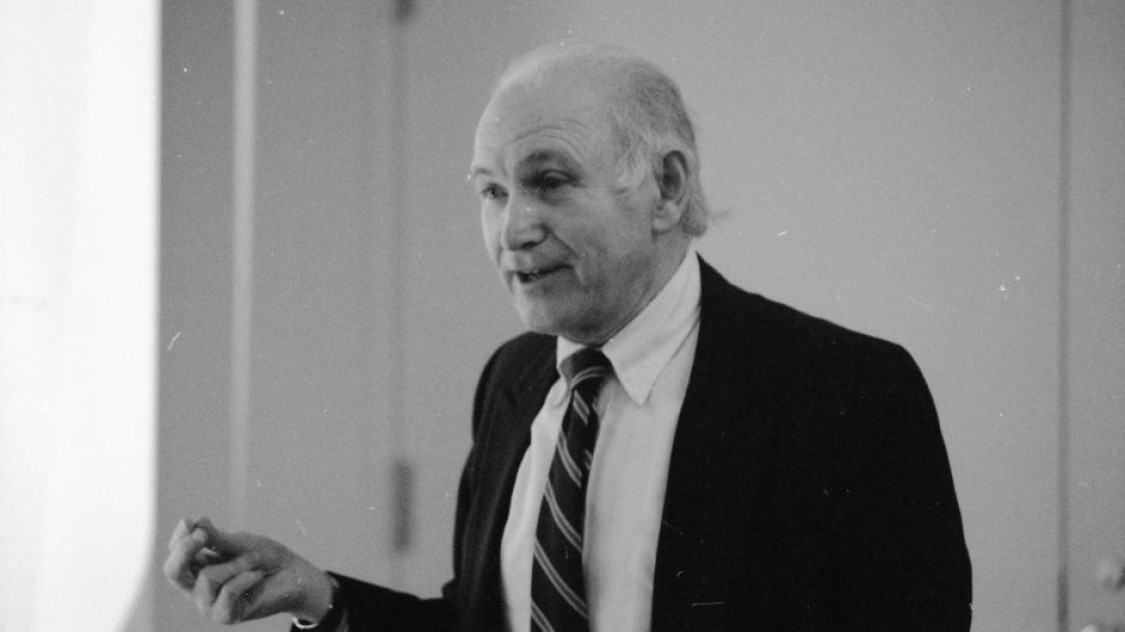
After 20 months in the Army, he returned to Cooper Union and completed his electrical engineering degree in 1947. He later earned a master’s degree from the Polytechnic Institute of Brooklyn in 1949 and a PhD in applied physics from Harvard University in 1951. At Harvard, rather than pursue a thesis topic suggested to him, he devised his own research problem based on radar and statistical signal detection, building on work he had begun at Sperry Gyroscope Company. Schwartz worked at Sperry from 1947 to 1952, studying radar detection and design at a time when statistical approaches to communications were rapidly developing. The work helped establish the research interests that would follow him through much of his academic career.
It also taught him a lesson he later passed on to his students: publish your work. After finishing his dissertation, Schwartz initially tried to submit the entire document to a journal, only to be told to divide it into papers. By the time he did, other researchers had published work on some of the same problems. He recommends publishing quickly “because people are working [on] the same problem.”
Finding his place in the classroom
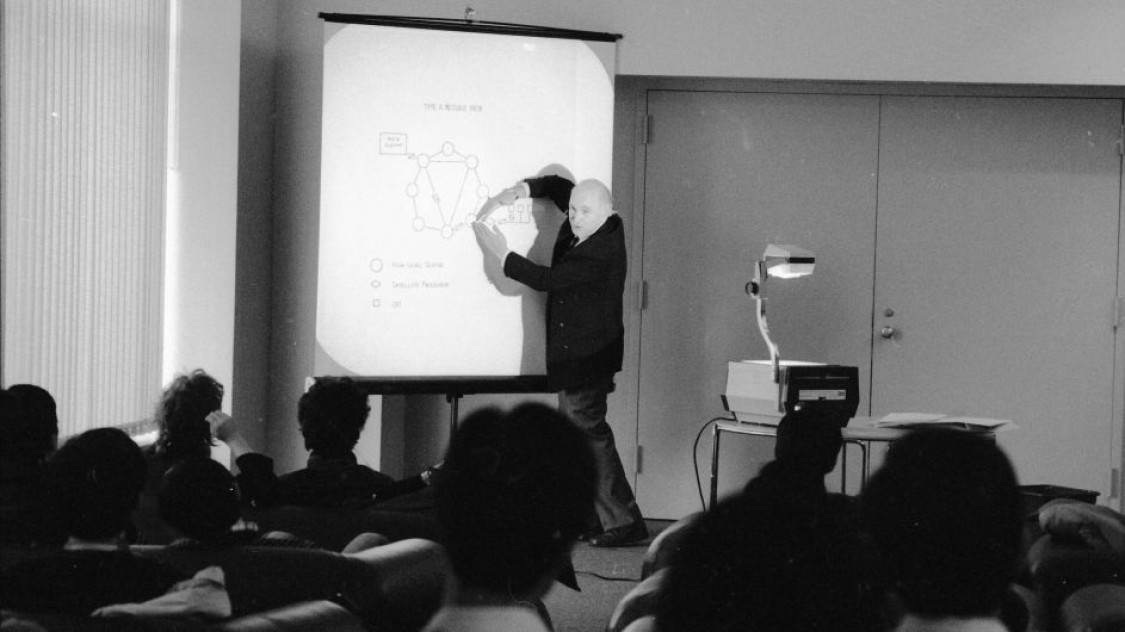
Schwartz eventually discovered that teaching appealed to him more than an industry career. After teaching evening courses while still at Sperry, he joined the Polytechnic Institute of Brooklyn in 1952. He rose to full professor and served as head of its Electrical Engineering Department from 1961 to 1965. During his years there, he also developed new courses, including one introducing quantum mechanics to electrical engineering students.
Teaching soon led to another defining part of his career: textbooks. Schwartz developed a set of course notes on statistical communications that eventually became Information Transmission, Modulation, and Noise, first published in 1959. The book went through four editions and established his international reputation as an engineering educator. Schwartz recalled that engineers would recall the book when he traveled around the world.
“Wherever I went, people would know that book,” he said. It was the first of a body of work that eventually included 10 books and more than 180 papers covering communication theory and systems, signal processing, wireless systems, computer communication networks and the history of communications. The textbooks reflected a habit Schwartz maintained throughout his career. When he finished working deeply in a field, he often tried to turn what he had learned into a book. That approach made his influence broader than research papers or awards. Generations of engineers first encountered communications theory and networking through his texts.
“Mischa Schwartz is, in the truest sense, the ultimate teacher,” said Krishan Sabnani (EE PhD ‘81), a former student of Schwartz and currently professor of computer science at Johns Hopkins University and member of the National Academy of Engineering. “For more than half a century, he has inspired generations of students.” Sabnani said Schwartz’s practice of keeping records on his students long after they left his classroom reflected the attention he gave to their development. “His greatest legacy,” Sabnani said, “is the generations of students whose lives he has touched and whose careers he has helped.”
Ness Shroff (EE PhD ‘94), the Ohio Eminent Scholar Chaired Professor of Networking and Communications at Ohio State University and a former student of Schwartz, remembers him as an energetic mentor and gifted teacher. “What I remembered most about Mischa was how cheerful and upbeat he was when we met,” Shroff said. “He always greeted us with his million-dollar smile and could explain very complex concepts in the most simple ways.” During their first meeting, Schwartz surprised Shroff by climbing onto his desk to retrieve a conference paper, a moment Shroff said captured his “energy and enthusiasm.” Schwartz also set “an impossible standard” for timely feedback, often responding to students’ work within a day, and taught Shroff two lessons he carried throughout his career: “the importance of writing ideas in their most direct and simple forms” and “treating everyone around you with respect and kindness.”
Kurose, the organizer of the event, arrived at Columbia as a physics major planning to earn a master’s degree and enter industry. Instead, he said, “I fell in love with computer networking in Mischa’s course, and then with networking research as Mischa’s PhD student at Columbia Engineering.” Kurose credits Schwartz’s quantitative approach to modeling networks with shaping his own research, and his mentoring style with influencing how he later advised students. “Our meetings felt much more like extended, thoughtful conversations than meetings in which an advisor ‘directed’ a student’s research,” he said. “I learned so much from those conversations, not just about research, but about how to mentor others.”
Schwartz said he advised 51 PhD students over the course of his career.
Building telecommunications at Columbia
Schwartz came to Columbia Engineering as a visiting professor in the 1973–74 academic year and formally joined the faculty in 1974 as a professor of electrical engineering and computer science. By then, he was already widely known for his work in communications.
At Columbia, his attention increasingly turned toward computer communication networks. Working closely with Professor Thomas Stern, Schwartz helped expand research and teaching in telecommunications. A networks course he developed became the basis for his 1977 book Computer-Communication Network Design and Analysis, which is considered one of the early books devoted to communication networks.
Their work also helped set the stage for one of Schwartz’s most consequential contributions to Columbia. When the National Science Foundation launched a new program in the 1980s to create large, interdisciplinary Engineering Research Centers connecting universities with industry, Schwartz saw an opportunity. He and Stern assembled faculty across Columbia and built partnerships with organizations such as IBM and Bell Labs.
The proposal succeeded. In 1985, Columbia established the Center for Telecommunications Research (CTR), with Schwartz as its founding director. One of the first NSF Engineering Research Centers, CTR brought together faculty and graduate researchers across disciplines to study integrated communications networks capable of carrying data, voice, images and video. Industry partners participated in both funding and research guidance.
Schwartz remembered the effort required to build the proposal, travel to companies and persuade industry partners to participate. He also remembered defending it before a room of experts at NSF in Washington. “They threw questions at me,” he recalled. By the end, “I was so exhausted.”
Two weeks later, he learned that Columbia’s proposal had been selected. The center operated for more than a decade and became an important part of Columbia’s growth in telecommunications research. Its work ranged from network systems and software to electronics and optical devices, anticipating the increasingly interconnected communications environment that followed.
Columbia Engineering Dean Emeritus Zvi Galil thanked Schwartz for both his work and his friendship. “The school was fortunate to have you,” he said. “You are a wonderful colleague.”
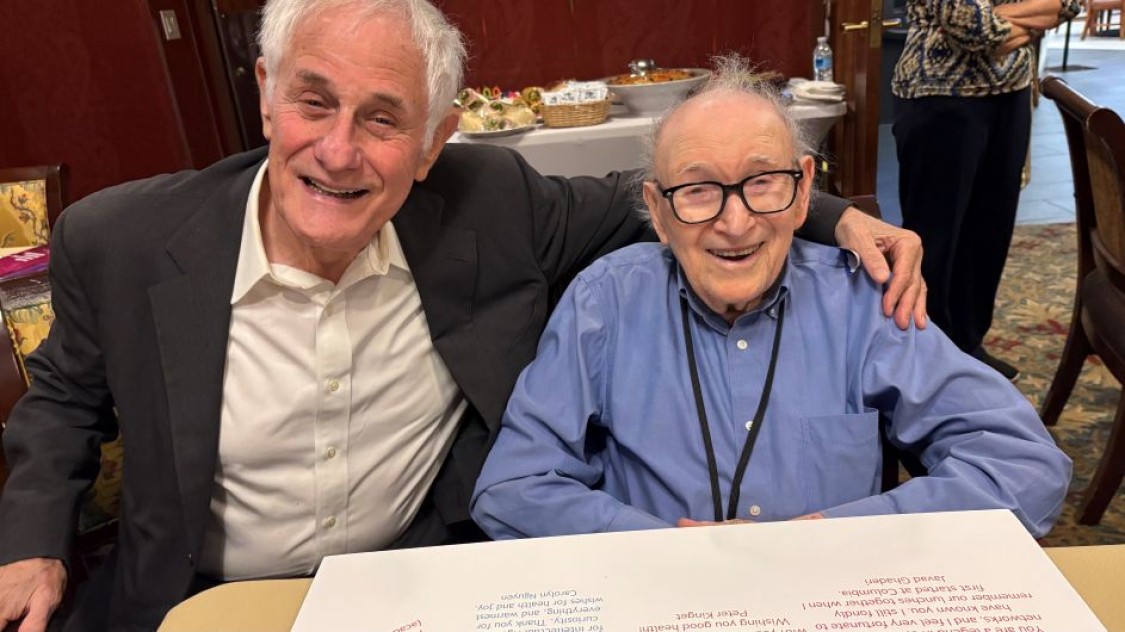
Credit: Department of Electrical Engineering, Columbia Engineering.
‘Nobody ever gets it right’
A century of life has placed Schwartz in an unusual position from which to consider technological change. He began studying electrical engineering before the transistor became commercially widespread. He worked on radar after World War II, taught communications theory as digital systems emerged, studied computer networks before the internet became part of everyday life, and later wrote about broadband and mobile wireless communications.
Yet when asked about which development had surprised him most, Schwartz resisted the temptation to impose a neat story on the past. “That’s a bad question,” he replied with a laugh. Predictions about technology, he said, have a way of failing. “Nobody ever gets it right.”
Schwartz had seen that uncertainty firsthand. Technologies and standards he once expected to dominate sometimes lost out to alternatives. Fields moved in directions that even experts immersed in them did not foresee.
For an engineer whose career unfolded alongside extraordinary changes in communications, that uncertainty seems less like a frustration than part of the work itself.
Schwartz’s contributions have earned recognition including the IEEE Education Medal and Columbia’s Great Teacher Award, both in 1983; the IEEE Edwin Howard Armstrong Achievement Award; the 2003 Okawa Prize for contributions to telecommunications and engineering education; and election to the National Academy of Engineering. In IEEE’s centennial-era recognition of leading electrical engineering educators, he was named among the field’s all-time outstanding educators.
Columbia Engineering Dean Shih-Fu Chang, who is also a professor in the electrical engineering department, reflected on Schwartz’s legacy.
“Mischa has made a lasting contribution to his field and to education and teaching at Columbia,” he said. “Through his books and his research, which is still being recognized today for its impact, he will continue to influence generations of students to come.”
In conversation, Schwartz returns less often to honors than to teachers, students, colleagues, books, research problems and the choices that sent his career in unexpected directions.
At 100, the lesson running through those stories is remarkably consistent. Engineering changes. Predictions fail. Careers rarely unfold according to plan.
And sometimes the most important decision is simply to take the chance.
More photos of the event can be found here.