Research
New $20M NSF Grant to Further Power Physical AI
Institute will train emerging talent on how to apply AI to manufacturing.
The National Science Foundation has awarded a $20 million grant to the NSF AI Institute in Dynamic Systems that will focus on fundamental AI research in aerospace, robotics and manufacturing. The institute is led by five researchers from the University of Washington in Seattle, Columbia University in New York City, University of Michigan in Ann Arbor, and Harvard University in Boston. The investment is a second tranche of a $40 million total.
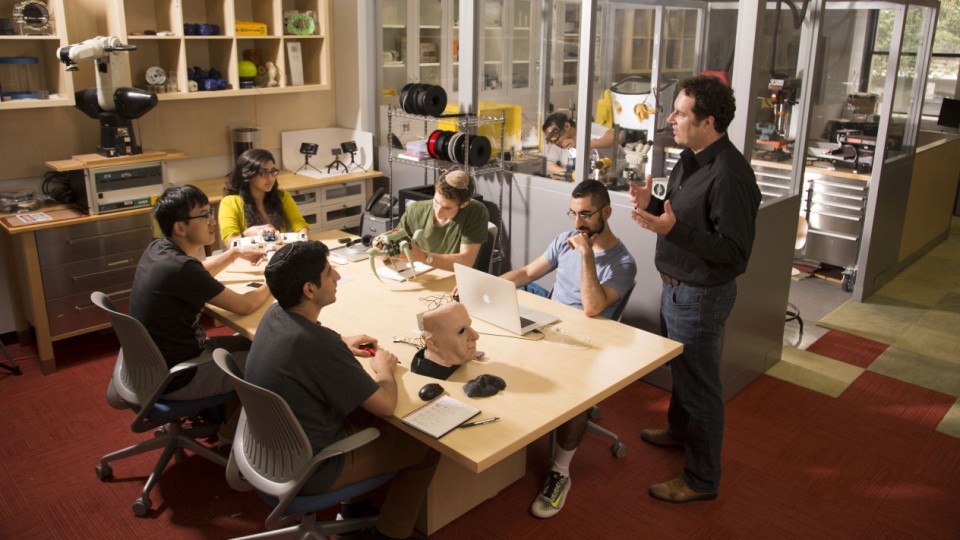
The institute is focusing on what many see as the next big phase of AI – Physical AI. “Robotics, embodied AI and physical AI are all synonyms for the technology that allows AI to gain agency in the physical world – when it can touch, move, and poke in the real world, explained Hod Lipson, James and Sally Scapa Professor of Innovation and chair of the Department of Mechanical Engineering at Columbia Engineering who leads the Columbia portion of the institute.
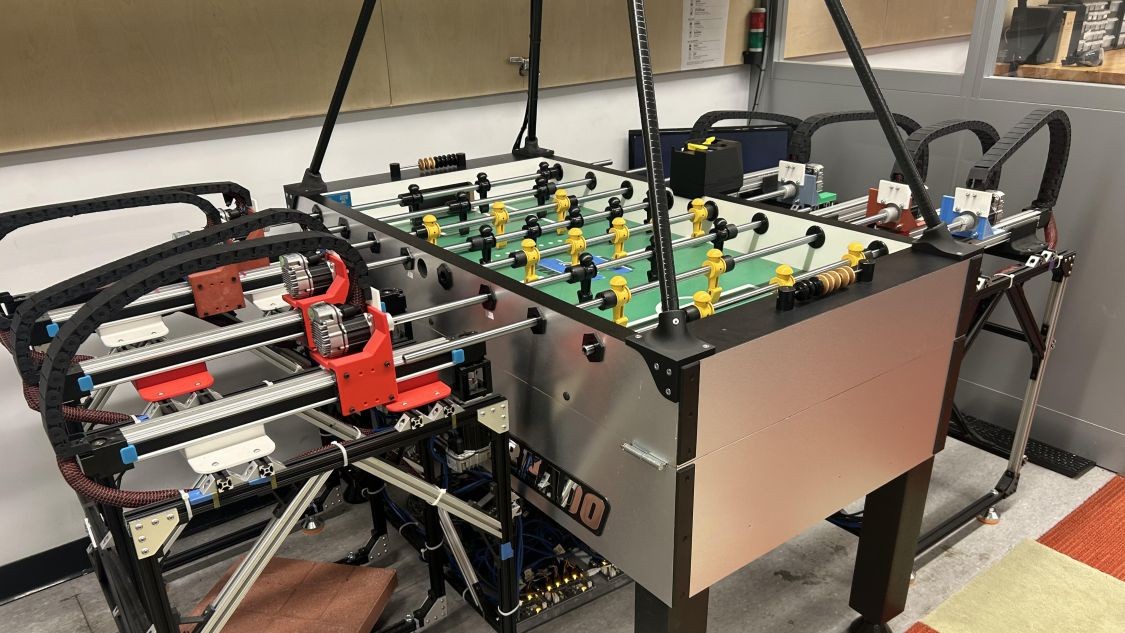
The physical world is much more challenging for AI to navigate, explained Lipson. “Today’s state of the art AI models can see, hear, think and talk about the world, but they have a hard time physically interacting with it.” The physical world also presents different challenges, starting with the fact that the physical world is more complex than the virtual world, requires more energy, and is in real-time. And in the physical world, mistakes are more expensive. “Losing a game of chess is different than physically breaking something,” Lipson said. Therefore, AI needs new ways to learn and train before it can interact safely with the world.
Many people think of robotics in terms of humanoids, but physical AI has many shapes and forms. Some of the simplest forms of physical AI, such as driverless cars, are already among us, and are already eight times safer than human drivers per mile. But as other forms of AI begin to enter factories, roads, fields and homes, new technologies and safeguards need to be developed to make that transition smooth, safe and effective.
The institute will focus in particular on learning dynamics of complex robotic manufacturing systems with an emphasis on aerospace applications. The aerospace industry, ranging from transportation to defense stands to benefit from automation, as highly complex systems are manufactured at relatively low quantities, making mass production difficult. AI can help accelerate this automation in many ways, ranging from self-learning digital twins to advanced world models, as well as physical systems that can self-repair and adapt in real time. As these innovations mature, they will begin to move into other industries.
The institute will also focus on training the next generation of engineers who are well versed in the application of AI to manufacturing, robotics, and aerospace.
The institute is led by Steven Brunton and Krithika Manohar (UW), Hod Lipson (Columbia), Na Li (Harvard), and Ricardo Vinuesa (University of Michigan).