Campus
A Tale of Two AIs
Columbia Engineering hosted its first World Leaders Forum with Endeavor Greece and the School of the Arts, bringing together leaders in government, global development, technology, and art to discuss AI's impact on people and culture.
Global leaders, technologists, and artists gathered in the Low Library Rotunda Sept. 24 for Columbia Engineering’s first-hosted World Leaders Forum event “AI + Culture,” which examined how artificial intelligence (AI) is reshaping human development and creative expression.
Presented in collaboration with Endeavor Greece, under the patronage of UNESCO, and Columbia School of the Arts, the program coincided with the UN General Assembly’s High-Level Week and featured two panel sessions and a keynote address.
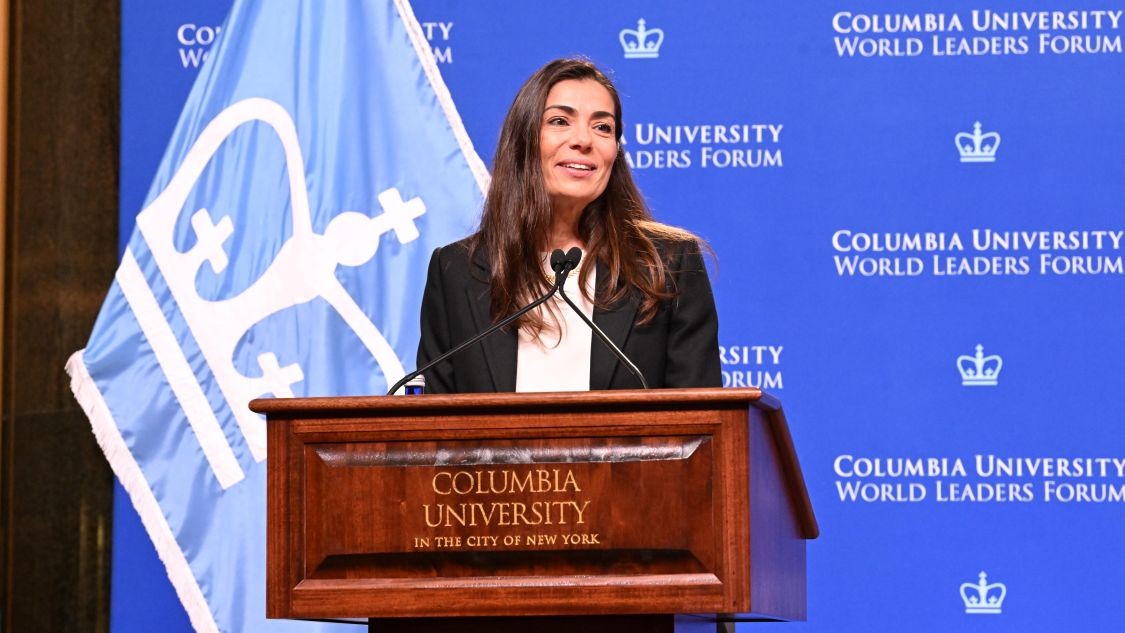
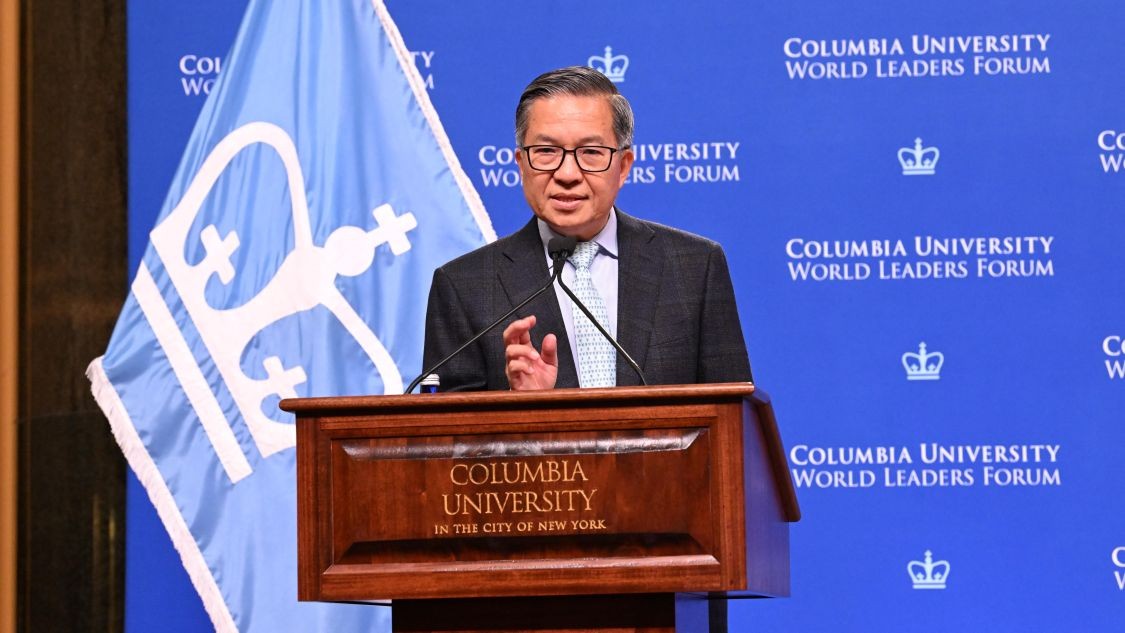
Opening remarks from Columbia University President Jennifer Mnookin, chairwoman of Endeavor Greece and UNESCO Goodwill Ambassador Costantza Sbokou Constantakopoulou, and Columbia Engineering Dean Shih-Fu Chang framed the central tension of AI’s power to accelerate progress, alongside its potential to deepen inequality and flatten culture.
President Mnookin described the current moment as “a tale of two AIs” – one of unparalleled opportunity and another of unprecedented risk.
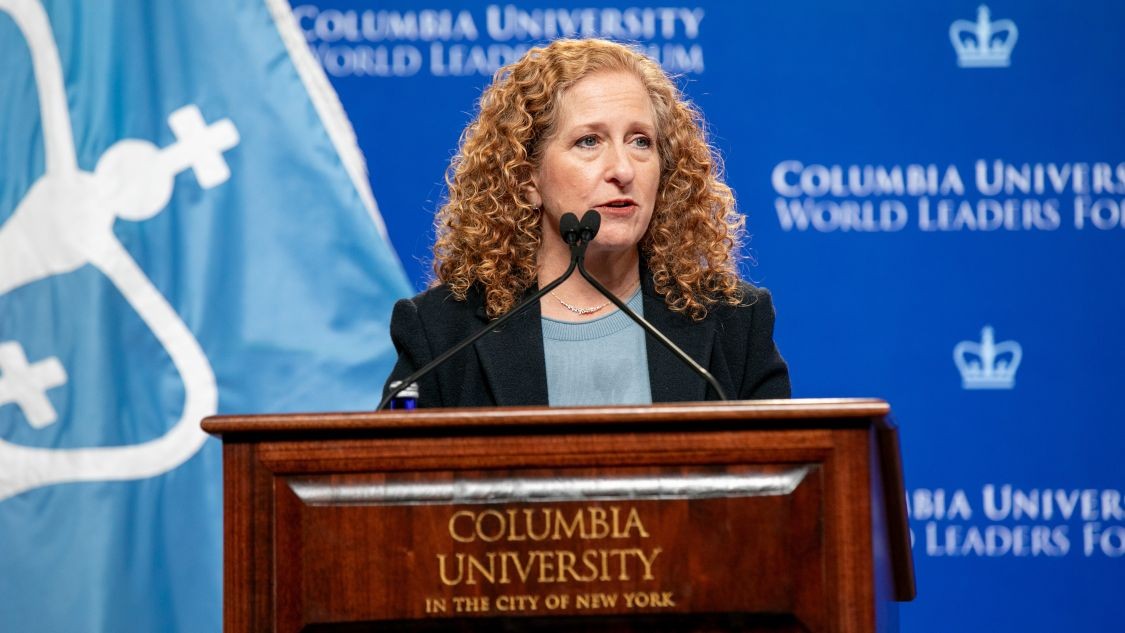
Constantakopoulou and Dean Chang echoed that duality in their remarks.
“Our task is not just to slow this [AI] down, nor to rush it blindly. It is to move carefully enough to avoid catastrophic mistakes, while we put our collective knowledge into the service of humanity and work together, so this technology serves all cultures equally,” said Constantakopoulou.
“At Columbia Engineering, we are at the forefront of some of the most exciting technology breakthroughs today in AI, but we are also deeply aware of the concerns about its negative impact,” said Dean Chang. “To navigate this journey, we should stay anchored in our vision of Engineering for Humanity.”
AI + human development
The first session brought together Kyriakos Mitsotakis, prime minister of the Hellenic Republic, and Ajay Banga, president of the World Bank Group, in a conversation moderated by Fareed Zakaria, host of CNN’s “Fareed Zakaria GPS.” The discussion focused on how AI could expand opportunity around the world — and what it could disrupt along the way.
Banga framed AI development through the lens of jobs, noting that 1.2 billion young people in emerging markets will reach working age over the next 15 years, with only about 400 million jobs projected to be created in that period. Rather than using frontier models that require vast computing power, energy, data, and capital, he argued that emerging markets stand to gain most from “small AI” – tools that solve practical needs in developing nations, such as reading tutors in El Salvador and a crop diagnostic tools app that helps small-scale farmers in India.
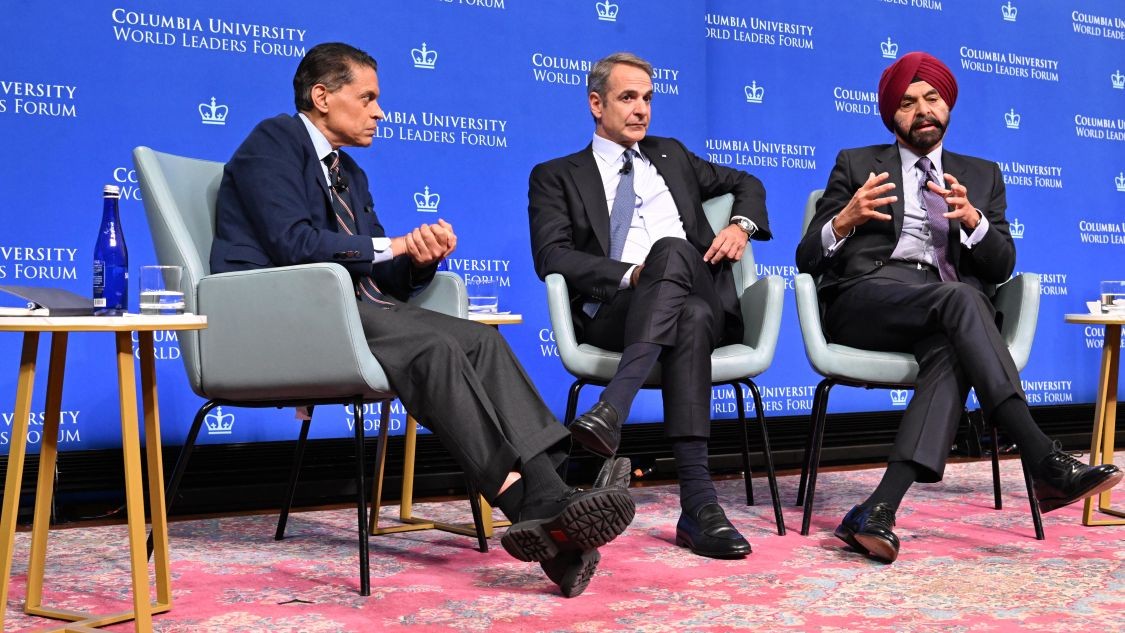
Mitsotakis described how Greece has used digital tools to modernize government, from its government web platforms to AI-assisted contract reviews that cut hours of work down to minutes. He also voiced concern about AI’s effects on students’ reading and reasoning, shrinking entry-level jobs, and gains that favor capital over labor, calling for a U.S. regulatory agency built on a “safety first” approach. “It needs to be very clear that human agency remains, and at the end of the day, the human is responsible for the decision,” he said.
Between the two sessions, UNESCO Director-General Khaled El-Enany delivered a keynote calling for AI that serves culture and people, and for young people and creators to be equipped to shape the technology's future. "The future of culture in the age of AI will be determined not by technology alone, but by the choices we make and the values we hold," he said.
AI + culture
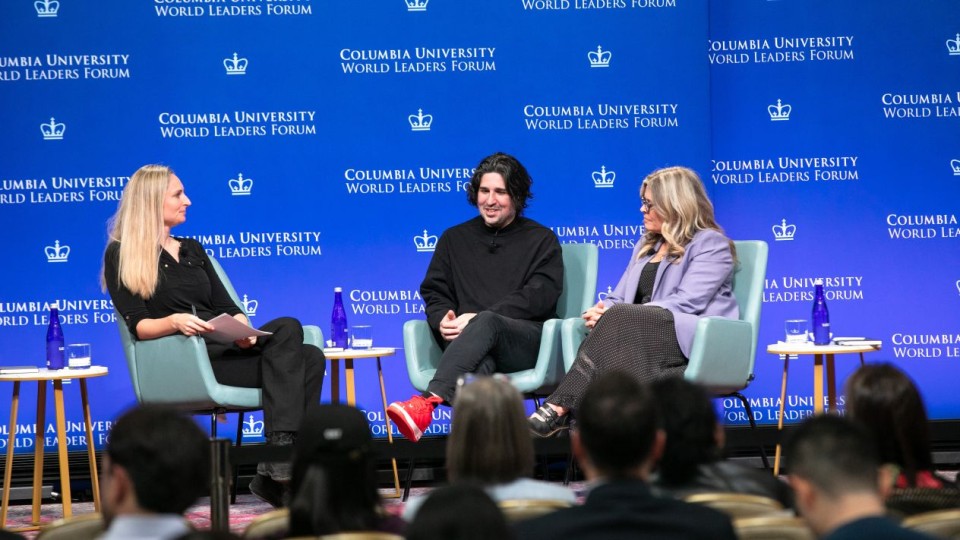
The second session turned to art and storytelling. Lydia Chilton, associate professor of computer science at Columbia Engineering, moderated a conversation between Anastasis Germanidis, co-founder and co-CEO of Runway – an AI research company building next-generation creative tools – and Jennifer Lee ’05SOA, Oscar-winning filmmaker, writer and director of Frozen, and former chief creative officer of Walt Disney Animation Studios.
Germanidis traced Runway’s origins to his time at NYU Tisch’s Interactive Telecommunications Program, where he and his co-founders saw that early generative models, though hard to use, could be powerful tools in artists’ hands. AI tools free filmmakers from worrying about budgets and resources, he said, letting them explore bolder ideas, and Runway is focused on giving creators more control while automating tedious tasks.
While AI will increase the volume of low-quality content, Germanidis argued it will also enable more high-quality stories that might otherwise never be told, noting the company’s work on provenance and watermarking standards to prevent misuse.
Lee emphasized that the stories that last come from artists’ authentic experiences, raising concerns about protecting individual artists’ ownership and voice as AI-generated work multiplies, but maintaining that technology does not change storytelling’s core. “Whether we’re using technology that was hand-drawn or CG, or whether we’re doing live action or a Broadway stage musical, the storytelling foundation is exactly the same – the human experience,” Lee said.
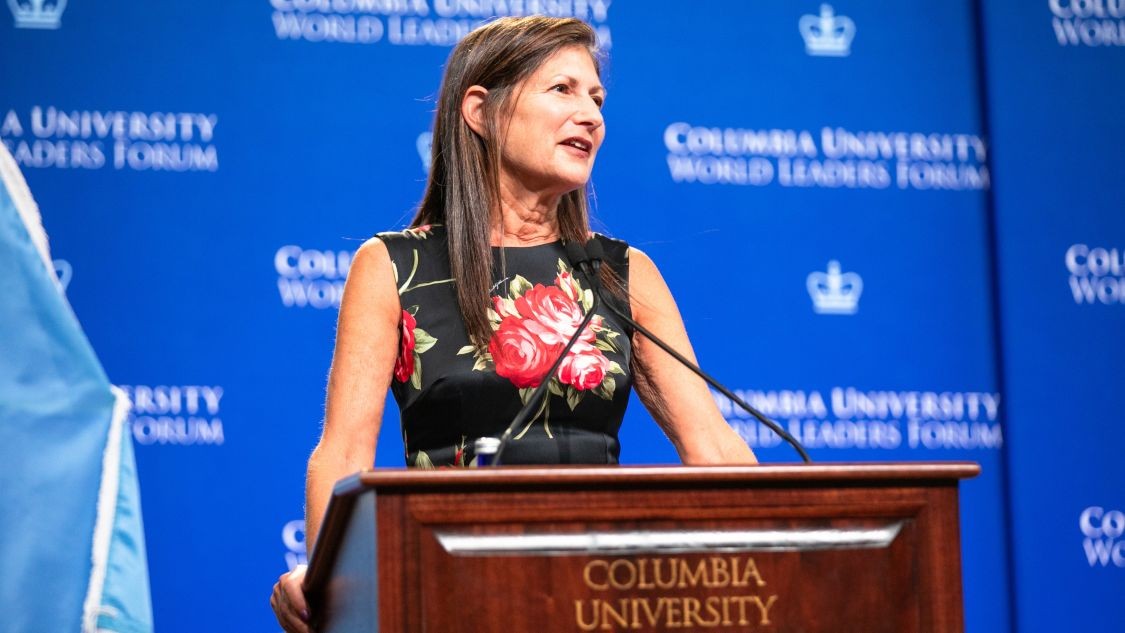
Sarah Cole, dean of Columbia School of the Arts, closed the program by reflecting on AI’s ability to offer new ways to expand and democratize many aspects of life and work, even as it undermines aspects of the human enterprise. Meeting this moment, she said, requires holding contradictory views and realities in mind at once.
“It's a big moment for thinking anew,” Cole said, “but I am stimulated and moved and inspired by our discussion today to keep thinking dialectically, to embrace the contradictions that define this new dispensation in which we live, and above all, to keep believing in the unending value of our human project."