Campus
What’s Next in AI and Finance?
At the Center for AI and Responsible Financial Innovation and Capital One Symposium, researchers dove into the perils and promise of AI.
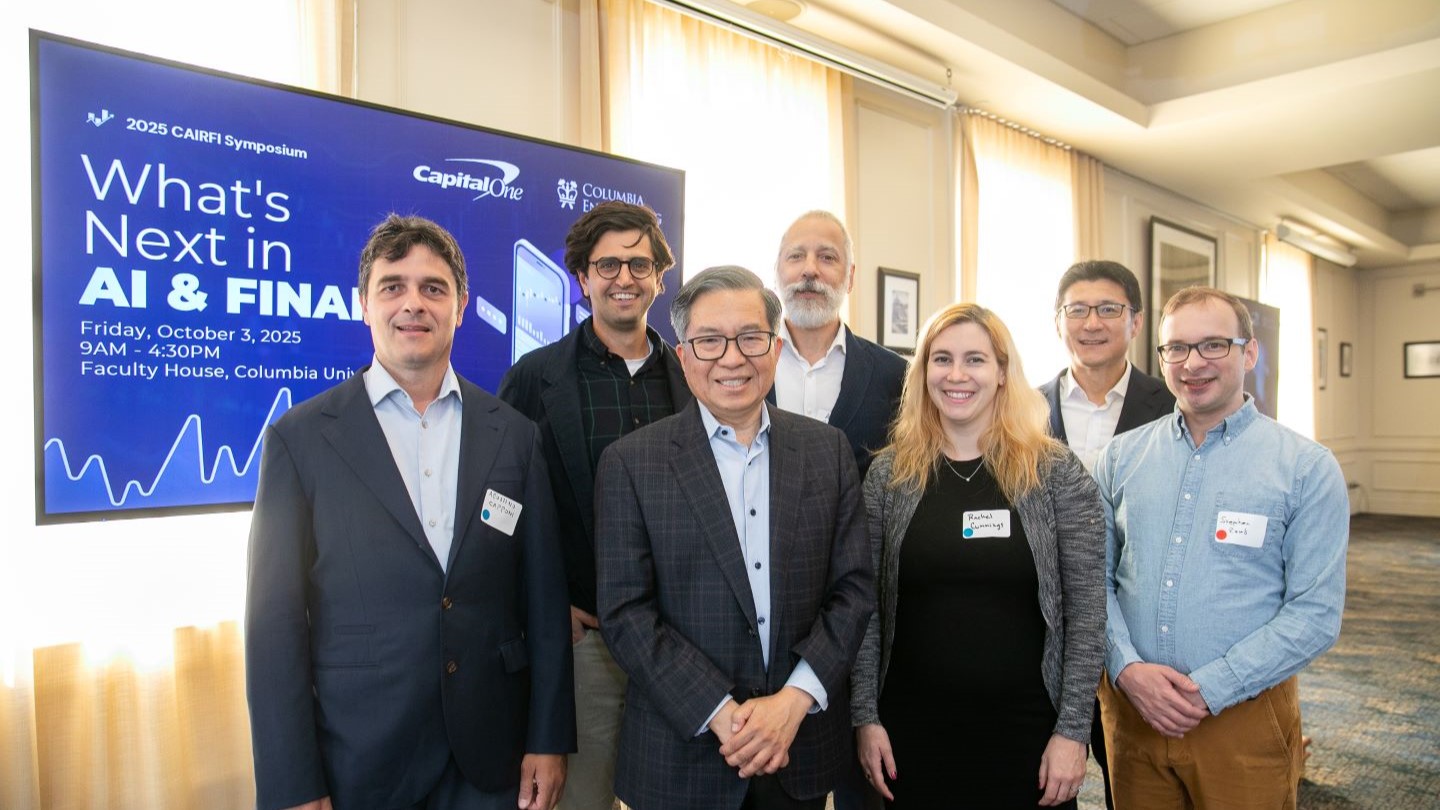
On October 3, more than 200 people gathered at Columbia Engineering and 50 joined virtually for the Center for AI and Responsible Financial Innovation (CAIRFI) and Capital One symposium on “What’s Next in AI and Finance.”
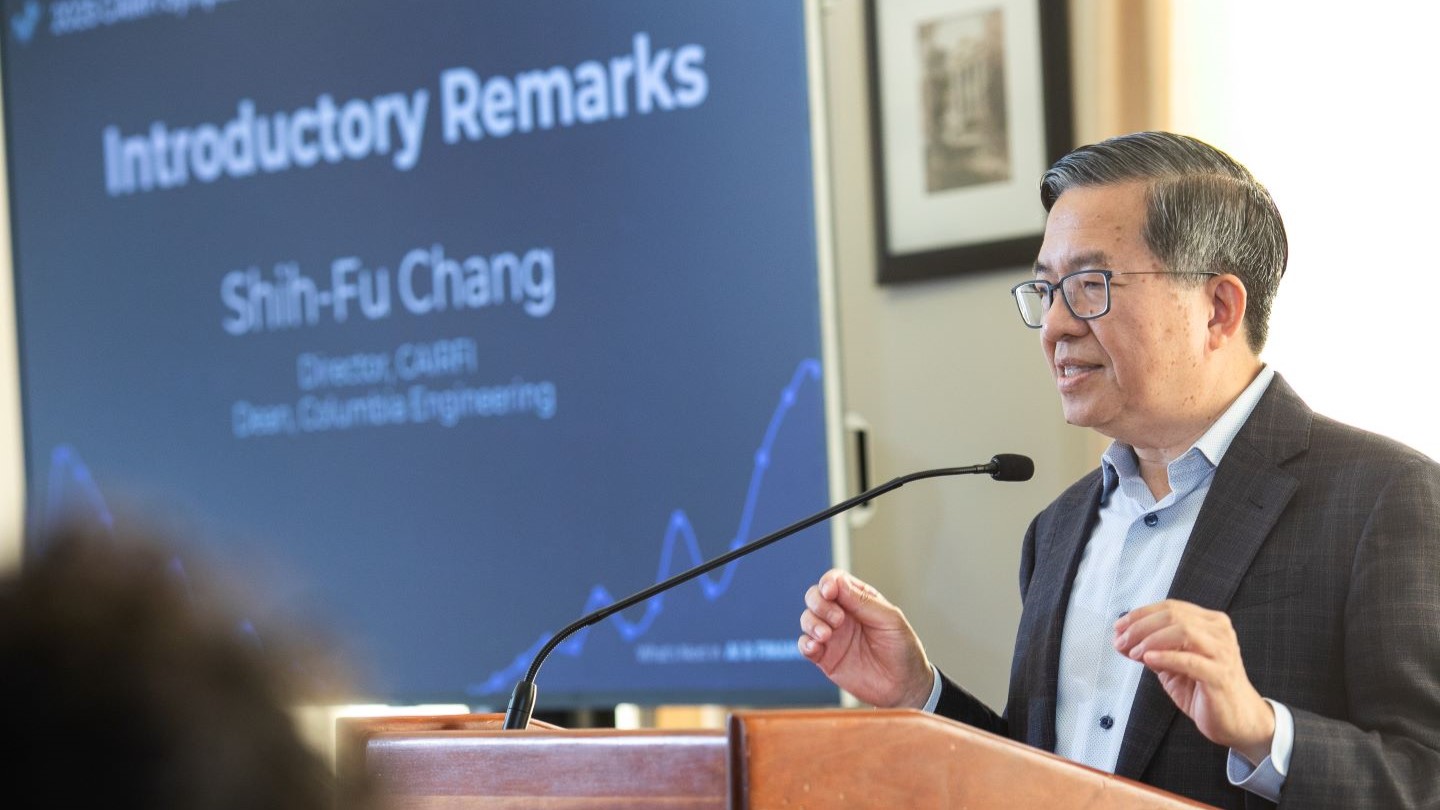
Dean of Columbia Engineering Shih-Fu Chang welcomed participants, thanking Capital One for its partnership and noting the research projects that had been funded for the academic year on topics ranging from AI agents to trustworthy lending and domain-specialized language models for financial applications.
“This type of collaboration is the hallmark of the kind of industry and academic partnerships we seek to foster,” said Dean Chang. “We look forward to building on this foundation.”
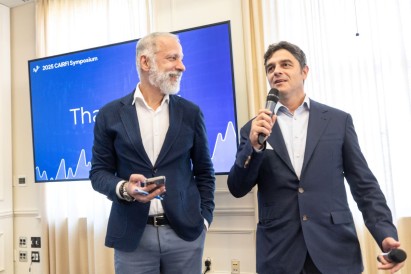
Agostino Capponi, professor of industrial engineering and operations research (IEOR) and director of the Center for Digital Finance and Technologies, and Ali Hirsa, professor of professional practice in IEOR, also welcomed guests, along with more than 15 panelists, speakers, and presenters.
Cynthia Dwork, the Gordon McKay Professor of Computer Science at Harvard, delivered the keynote talk on outcome indistinguishability, a concept borrowed from computational indistinguishability in computer science that can be applied to assessing probability for non-repeatable events, such as common practices in finance like giving someone a loan.
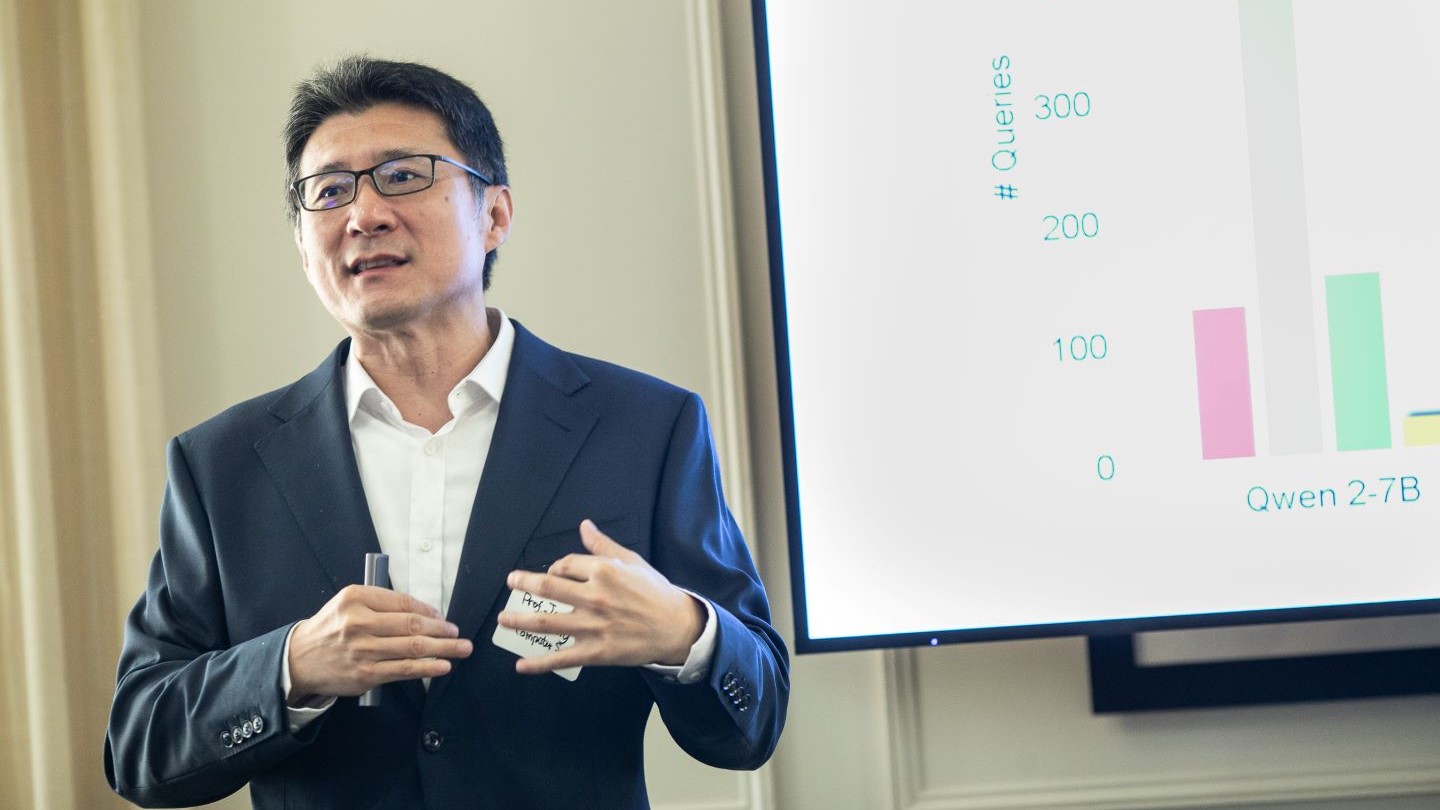
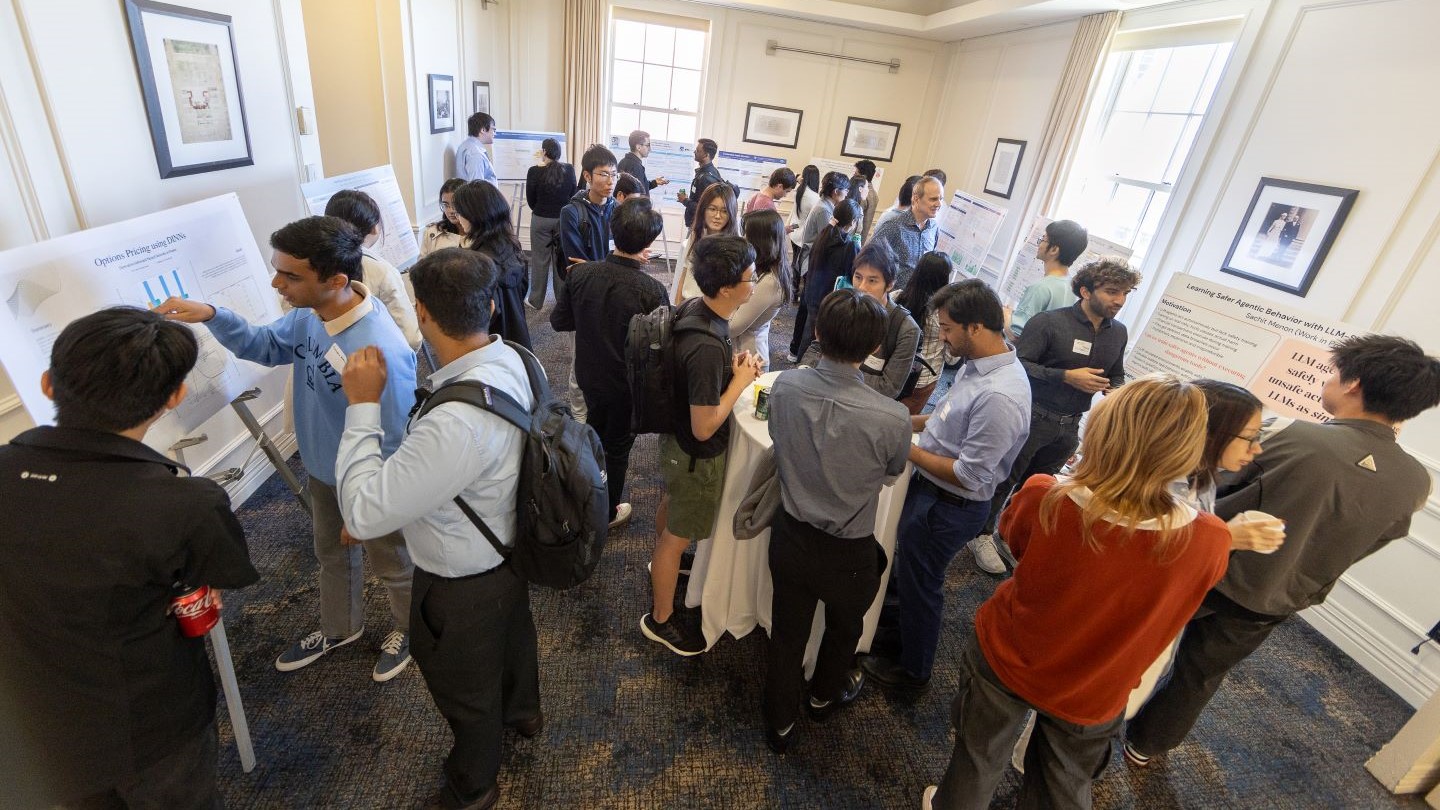
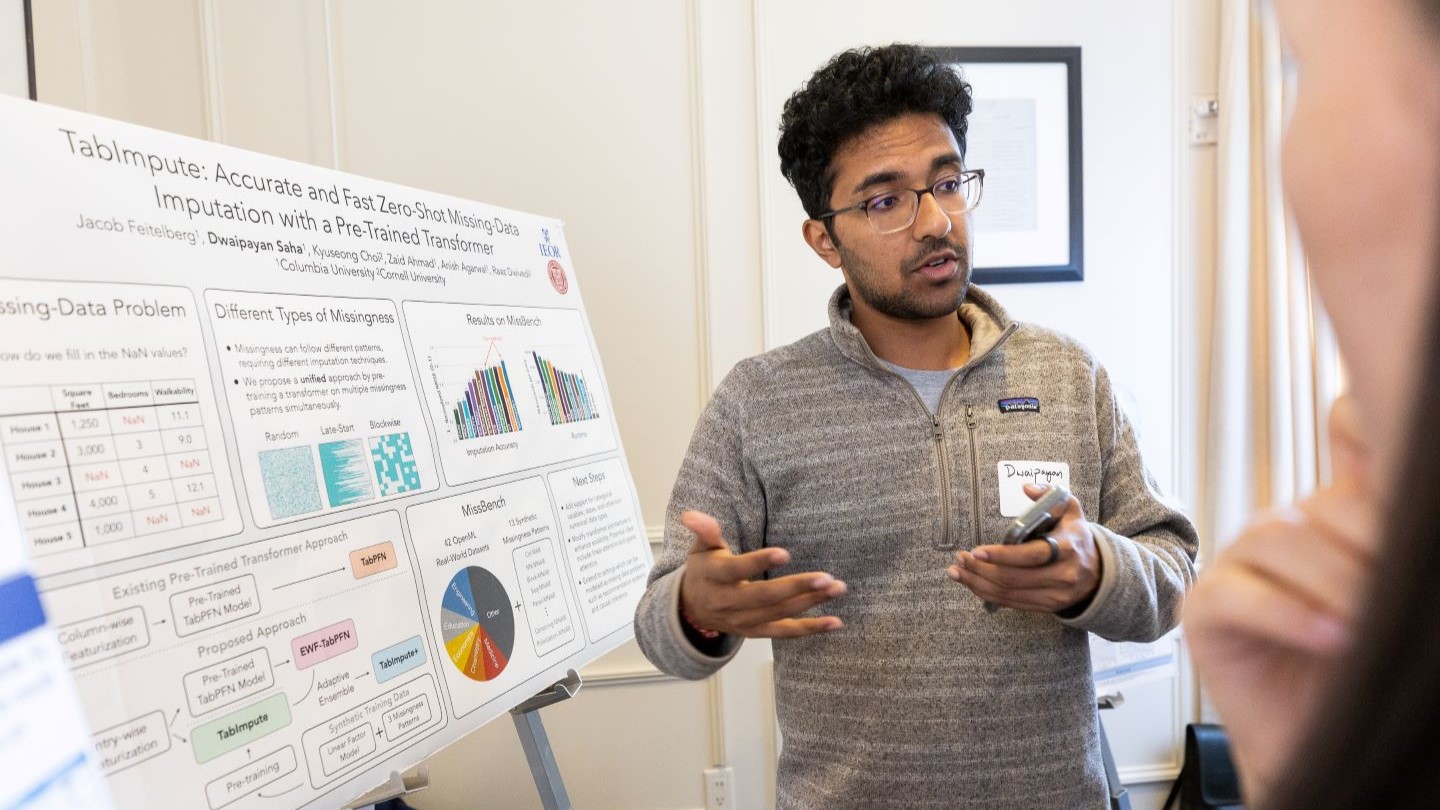
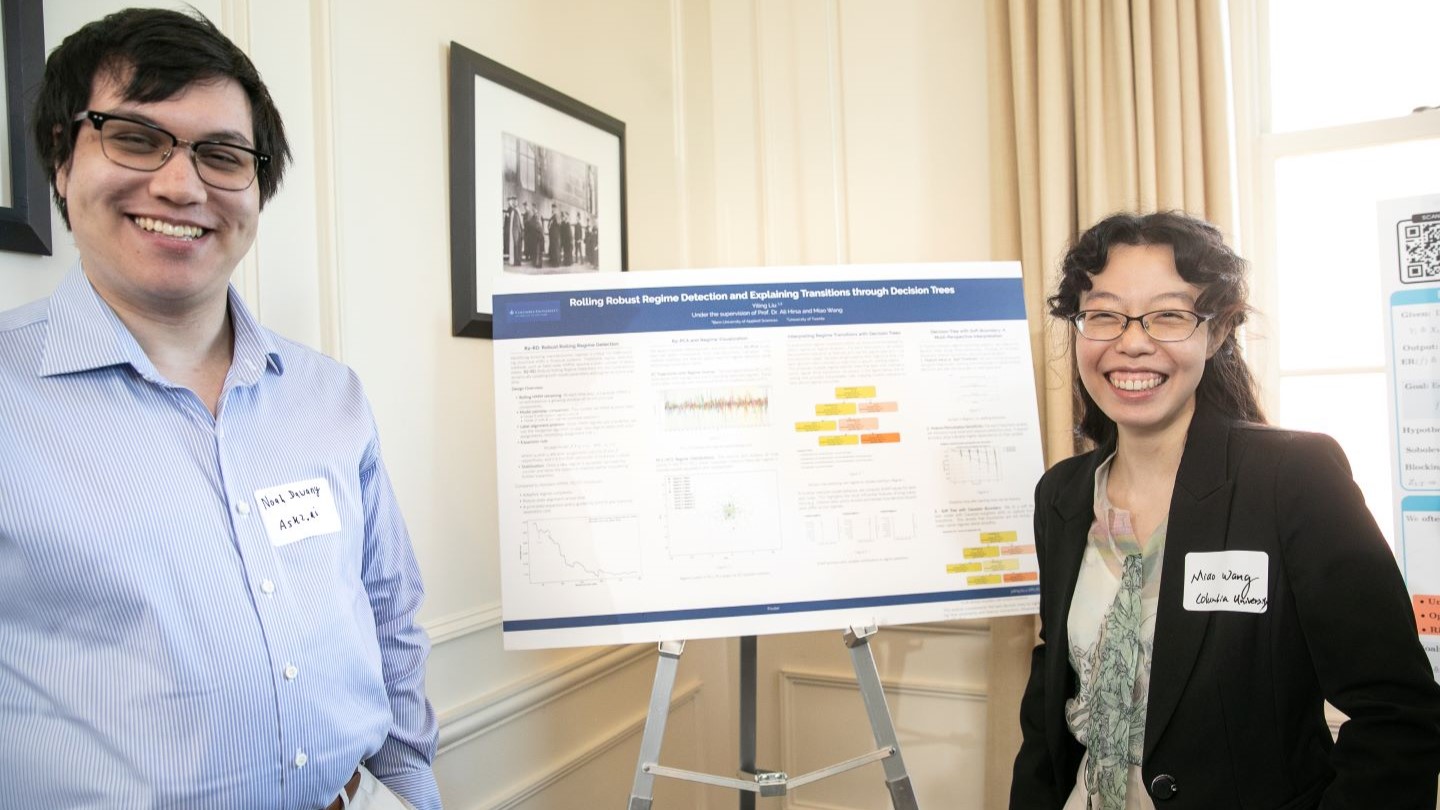
Sessions throughout the day focused on “AI, Privacy, & Security in Finance” and “AI and Causality,” as well as a poster session featuring research from students and center affiliates. At the session on AI, Privacy, and Security in Finance, Rachel Cummings, associate professor of IEOR at Columbia Engineering, expanded on the fundamentals presented in Professor Dwork’s talk, applying them to problems of differential privacy—a technique used to protect individual privacy when analyzing and sharing data. Differential privacy is increasingly being used in financial services to strike a balance between the need for data-driven insights with the need to protect customer confidentiality. Professor of Computer Science Junfeng Yang, an expert in cybersecurity, explained his work on red-teaming to secure enterprise AI systems. Red teaming, or simulated adversarial testing to uncover vulnerabilities, is a common method for testing these systems and mitigating potential risks, particularly as organizations adopt AI into their workflows. Yang’s research introduces a new method of automated red teaming, called DAGR, that’s more efficient and effective than previous methods, both human and automated.
From data privacy to quantum frontiers
During the “AI and Causality” session, Elias Bareinboim, a professor of computer science at Columbia Engineering and an expert in causal AI, noted the issue of AI systems perpetuating existing biases, as AI data is a “snapshot” that reflects our current world.
“They have a very low amount of understanding about what they are learning from the data,” said Bareinboim of AI systems. “It’s almost like a clever, huge parrot that is able to replicate some things in an amazing way.”
He pointed out that AI's inability to causally understand situations is a fundamental issue and proposed a robust causal framework to improve AI's decision-making, including its ability to articulate explanations and address ethical implications.
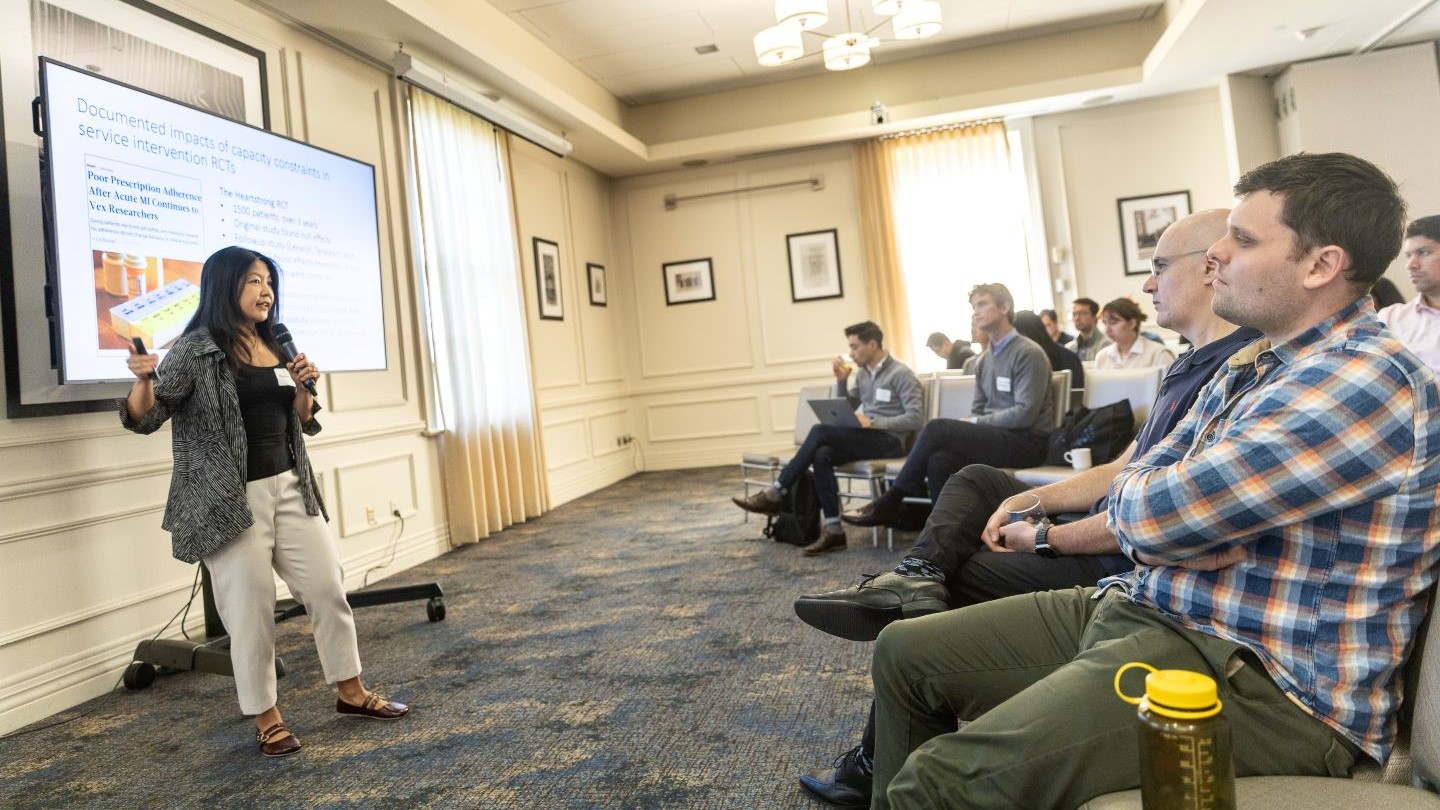
Hannah Li, assistant professor in the Decision, Risk, and Operations division at Columbia Business School, discussed the impact of capacity constraints on the evaluation of AI systems with a case study on an MIT project that involved digital health nudge interventions for tuberculosis patients. While a small-scale pilot trial in Kenya showed promising results, scaling the trial across Kenya with more patients revealed a lower treatment effect size due to capacity constraints. She highlighted that the common use of randomized controlled trials and A-B tests in the industry often overlooks the reality of capacity constraints.
“There’s some point where not only do you get diminishing returns, but your normalized effect size goes down,” said Li. “If we don’t realize that capacity constraints are an issue . . . we could be harming our power, our ability to detect these effect sizes.”
Her research explores ideas, including some from cubing theory, on how to identify the optimal point before the effect size decreases.
Snapshots from the Symposium
Photos by Timothy Lee
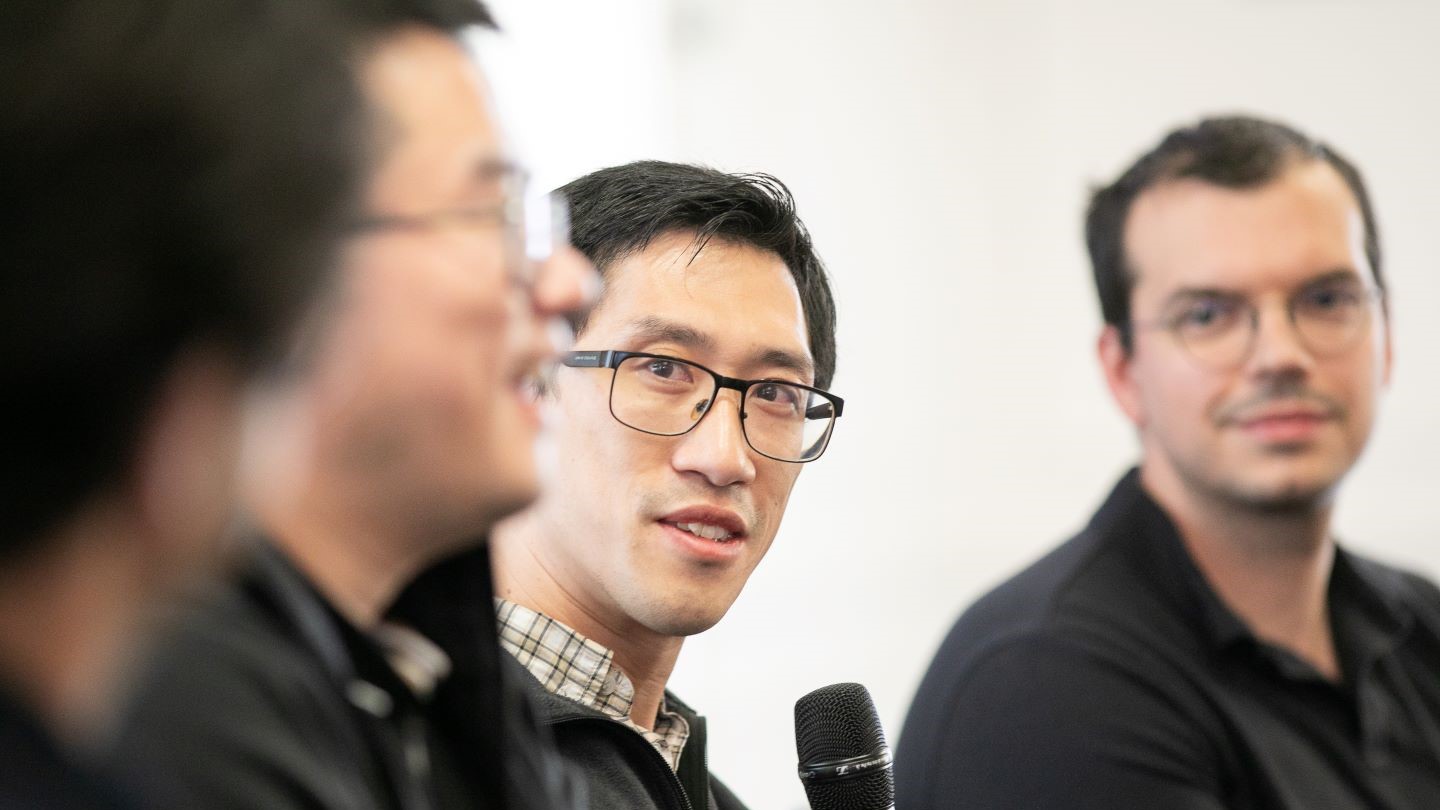
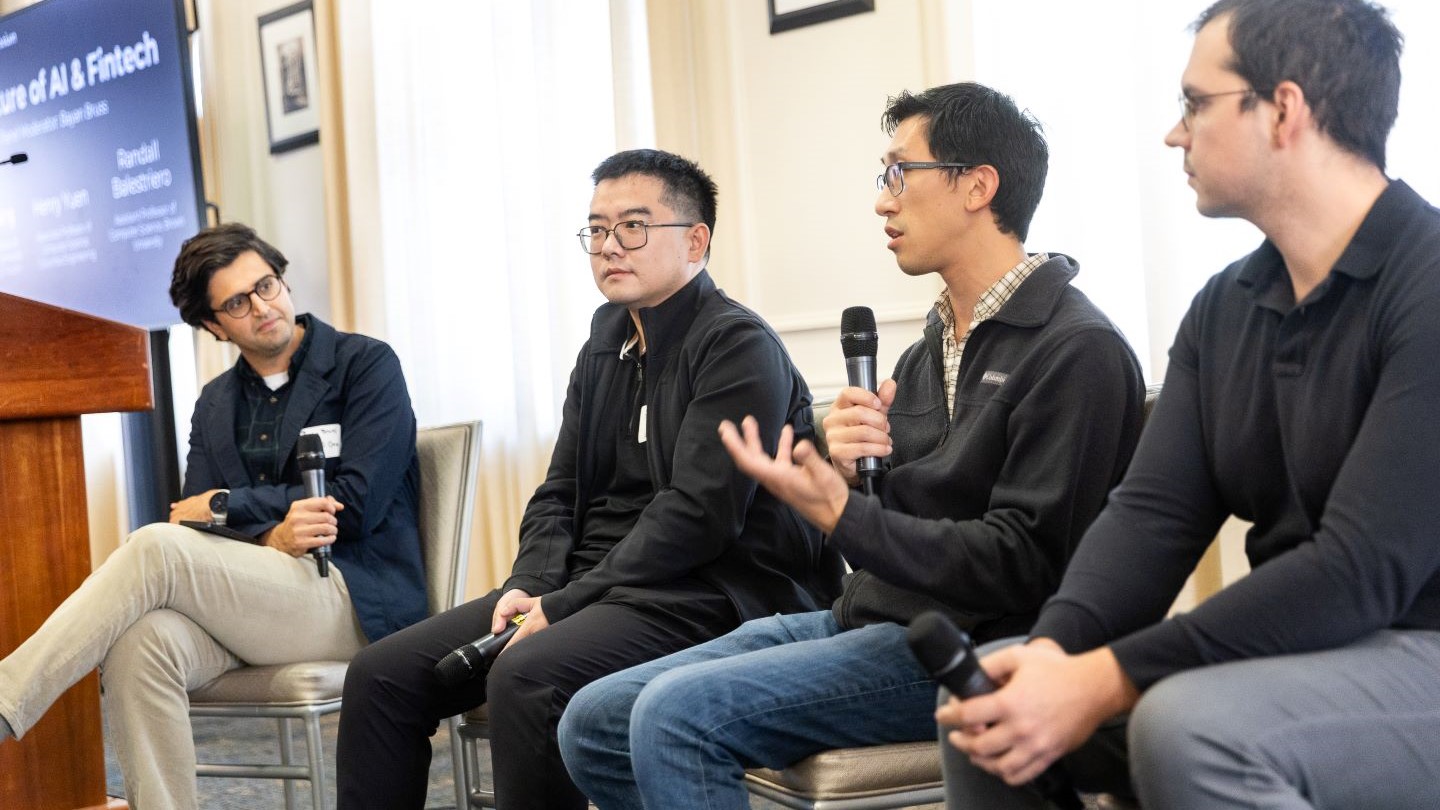
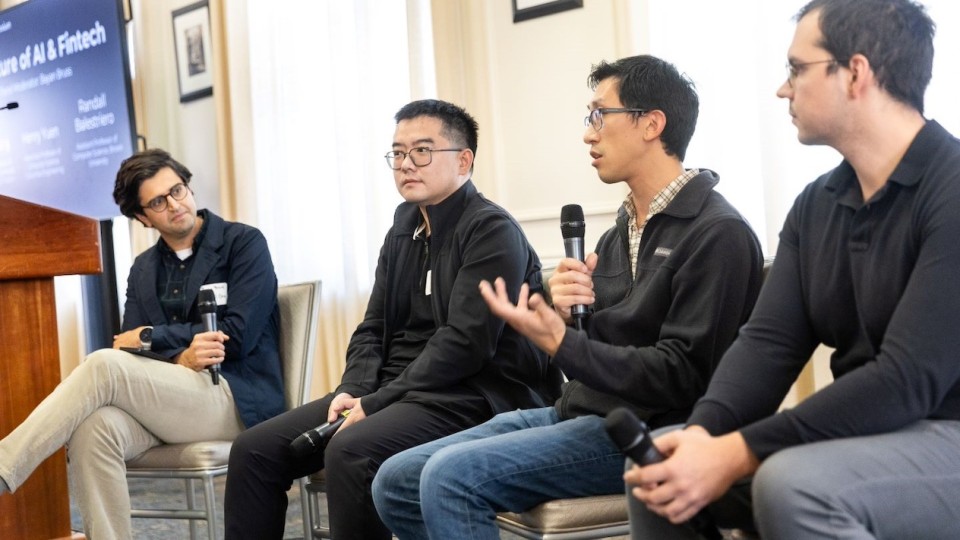
The final panel, moderated by Bayan Bruss of Capital One, focused on the “Future of AI and Fintech” and featured academic researchers from Columbia Engineering, the University of Texas at Austin, and Brown University. Their conversation explored the integration of quantum computing and AI into financial services, including the current limitations and potential of these technologies.
“In terms of where we’re at with quantum computing, things are very early-stage,” said Henry Yuen, Srivani Family Associate Professor of Computer Science at Columbia Engineering. “There’s a lot of fundamental research to be done. If we build these machines, what are we going to use them for?”
The panel agreed that significant theoretical and practical advancements are needed before it can revolutionize finance, particularly in the areas of scalability and reliability.
“We had a fantastic lineup of speakers,” said Capponi, closing out the day’s agenda. “It’s a very good example of the mix between academia and industry. We all learn from each other. I’ve seen interactive discussions with people that hopefully will lead to further ideas.”
Prem Natarajan, chief scientist and head of Enterprise AI at Capital One, also praised the breadth of expertise among the participants.
“We value gatherings like this to foster discussion and potential collaborative ideas,” said Natarajan. “Successfully maximizing the broad benefits of AI will require interdisciplinary collaboration, combining expertise from academia's research capabilities with industry's infrastructure and data resources. The breakthroughs of the future will come out of such partnerships.”
Lead Photo Caption: From left to right: Bayan Bruss, VP, Applied AI Research at Capital One, Atlas Wang, associate professor of electrical and computer engineering, UT Austin, Henry Yuen, Srivani Family Associate Professor of Computer Science, Columbia Engineering, Randall Balestriero, assistant professor of computer science, Brown University