
Evelyn Ding
Evelyn Ding
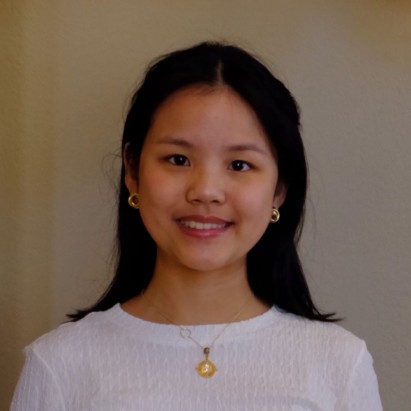
Evelyn Ding grew up in Plano, Texas, and she graduated from Plano West Senior High School. Fascinated by the application of AI to fields such as computational linguistics, medicine, and finance, she plans on majoring in Computer Science at Columbia.
In high school, Evelyn actively pursued independent research, presenting her work at science fairs and leading her school’s LASER (Learning About Science & Engineering Research) Club. One of her favorite memories was attending the 2025 Regeneron International Science and Engineering Fair (ISEF). Her project focused on creating an accessible screening system for Developmental Language Disorder (DLD), a communication disorder that affects 1 in 14 children. She utilized machine learning models to detect DLD cases and identify language areas in need of targeted interventions. This project excited her because it highlighted how computers can understand the nuances of human language and increase awareness of a commonly misdiagnosed disorder. In addition to qualifying to ISEF, her project won Grand Prize at the Dallas Regional Science and Engineering Fair and 3rd Place at the Texas Science and Engineering Fair.
Evelyn is also the first author of a published research paper, which she presented at the 2024 IEEE Global Humanitarian Technology Conference (GHTC). Her research involved building a novel home automation system to help people live a comfortable and independent life around the home; in the system, hand gestures are used to control home appliances and hand movements are analyzed for signs of Parkinson’s tremors. Her research on this topic also received recognition at the Texas Junior Academy of Science (TJAS), where she won 2nd Place in the Computer Science category.
In 2024, Evelyn had the incredible opportunity of researching at UT Southwestern Medical Center through the STARS Summer Research Program. She worked in the Medical Physics Division of the Department of Radiology. Her project utilized CAD software and 3D-printing to construct spine models from patient CT scans, allowing medical trainees to practice interventional spine procedures on realistic, affordable models. For her research, she received the Kathryn and Ashley H. Priddy Young Scientist Award.
Evelyn is excited to pursue research at Columbia, where she can draw on diverse and interdisciplinary perspectives to integrate her interests in technology, language, and policy. In her free time, she enjoys trying new ice cream flavors, drawing in her bullet journal, and chasing sunsets.