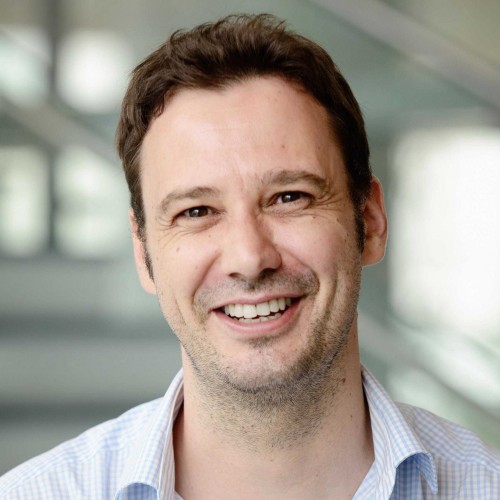
Markus Schläpfer
Assistant Professor of Civil Engineering and Engineering Mechanics
Markus Schläpfer is interested in data-driven urban science approaches for the design of sustainable infrastructures in cities.
His research utilizes large-scale human activity data to understand how people use urban space and translates these insights into detailed infrastructure demand predictions. Applications focus on the efficiency of integrated infrastructures, such as coupled transportation and energy systems.
In his research, Markus Schläpfer combines mathematical approaches from Complex Systems Science (e.g., network theory, scaling analysis), tools from Data Analytics (e.g., machine learning), and state-of-the-art infrastructure modeling and engineering techniques (e.g., Monte Carlo simulation, techno-economic assessment).
Markus Schläpfer's work has been published in top-tier venues such as Nature (twice) and has been covered in the media worldwide. He won several prizes, including the First Prize in the Data for Development Challenge (2015), and he has been Finalist in the Falling Walls Science Breakthrough of the Year (2021). He received his MSc and PhD from ETH Zurich and conducted postdoctoral fellowships at MIT and the Santa Fe Institute. Before joining Columbia University, he was a Principal Investigator at the ETH Future Cities Laboratory and an Assistant Professor (adjunct) at the Nanyang Technological University in Singapore while also holding a position at the University of Bern, Switzerland.
Additional Information
-
Research Experience
- Postdoctoral fellow, MIT (2011-2013)
- Postdoctoral fellow, Santa Fe Institute (2014-2015)
-
Professional Experience
- Assistant Professor of Civil Engineering and Engineering Mechanics, Columbia University (2022 – present)
- Principal Investigator, ETH Future Cities Laboratory, Singapore (2016-2022)
- Assistant Professor (adjunct), Nanyang Technological University, Singapore (2016-2022)
- Senior Research Associate, University of Bern, Switzerland (2021-2022)
-
Honors & Awards
- Finalist, Science Breakthrough of the Year, Falling Walls Berlin, Germany (2021)
- Winner, Data for Development (D4D) Challenge, MIT Media Lab, Cambridge, USA (2015)