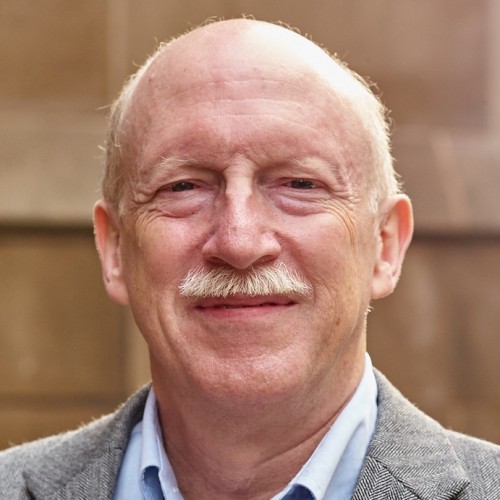
Michael E. Mauel
Professor Emeritus of Applied Physics
For more than 40 years, Michael E. Mauel built experiments to study high-temperature ionized gas, called plasma, and explored how strong magnetic fields guide plasma motion in the space surrounding Earth, at the surfaces of stars, and inside the cores of fusion energy reactors that may someday produce cleaner, healthier, and sustainable power.
Plasma within these experiments have very high temperatures, more than 10 million degrees, and can become hotter than the centers of stars. Together with his students and collaborators, Mauel shaped magnetic bottles to better confine high pressure plasma, used real-time systems to control how plasma mixes within the containment vessels, and launched electromagnetic waves to generate electrons that move through the plasma at speeds near the speed of light. With his students, Mauel identified and imaged the instabilities that limit plasma confinement and the power achievable from fusion reactions.
As emeritus professor of applied physics, Mauel continues to explore nonlinear turbulent transport in magnetized plasma, energetic particle modes, the relationship between laboratory and space plasma physics, and feedback techniques to control instabilities in advanced tokamak operating regimes. He also studies the many modern developments in fusion energy science and technology and how advanced computation and artificial intelligence can be applied to advance physics.
Mauel received his doctorate from MIT in 1983 and joined the Columbia University faculty in 1985. He a fellow for the American Physical Society and served as a Jefferson Science Fellow in the U.S. Department of State. He received the Rose Award for Excellence in Fusion Engineering, Leadership Award from the Fusion Power Associates, the Teacher of the Year award from Columbia University’s School of Engineering and Applied Science, and Certificates of Appreciation from the U.S. Department of Energy and the U.S. Department of State. He served as chair of the Division of Plasma Physics of the American Physical Society, chair of the Department of Applied Physics an Applied Math at Columbia University, chair of the U.S. Burning Plasma Council, and as chair of the NRC Plasma Science Committee. Mauel co-chaired the National Academics of Sciences Committee for a Strategic Plan for U.S. Burning Plasma Research (2019) and currently serves as the Editor-in-Chief of the Physics of Plasmas. In 2020, Mauel was named a lifetime Associate of the U.S. National Academies.
Research Areas
- Astrophysics and Astronomy
- Plasma Physics (Controlled Fusion)
- Artificial Intelligence (AI) and Machine Learning (ML)
- Energy Science
- Advanced Materials
Additional Information
-
Professional Experience
- Professor Emeritus, Applied Physics, Columbia University, 2026-present
- Professor, Applied Physics, Columbia University, 1995 –2026
- Editor-in-Chief, Physics of Plasmas, 2016 –
- Chairman, Dept. of Applied Physics and Applied Mathematics, 2000-2006
- Associate Editor, Physics of Plasmas, 2003-2015
- Associate Editor, Journal of Fusion Energy, 2014-2015
- Associate Professor, Dept. of Applied Physics, Columbia University, 1990 – 1995
- Assistant Professor, Dept. of Applied Physics, Columbia University, 1985 – 1990
- Instructor, Dept. of Electrical Engineering, M.I.T., 1984 – 1984
-
Professional Affiliations
- American Physical Society
-
Honors & Awards
Leadership Award, Fusion Power Associates, 2020
Associate of the U.S. National Academies, 2020
- Jefferson Science Fellow, National Academies, U.S. Dept. of State, 2006-2007
- Certificate of Appreciation, U.S. Dept. of State, 2007
- Rose Award for Excellence in Fusion Engineering, Fusion Power Associates, 2000
- Fellow, American Physical Society, 1995
- Teacher of the Year, 1994, elected by Columbia’s School of Engineering Undergraduates
- Certificate of Appreciation, U.S. Dept. of Energy, 1989
- I.E.E.E. Fortesque Fellowship, 1978 – 1979
- Guillemin Prize for undergraduate thesis in Electrical Engineering
-
Education
- Sc.D. (EE) 1983, Massachusetts Institute of Technology
- M.S. (EE) 1979, Massachusetts Institute of Technology
- B.S. (EE) 1978, Massachusetts Institute of Technology