
Rohan Ramachandran
Rohan Ramachandran
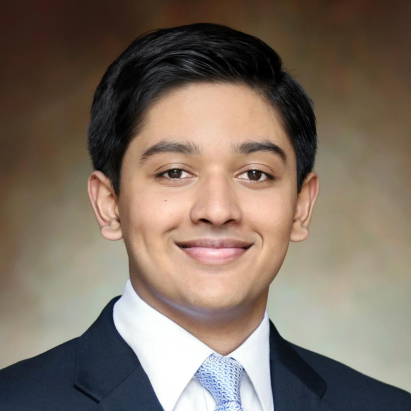
Rohan Ramachandran is from Nashville, Tennessee, and graduated from the University School of Nashville. There, Rohan was a varsity tennis player, mountain biker, and avid Quiz Bowler, and also founded and led the school’s Coding and Public Health clubs. Rohan plans to major in Computer Science and minor in Operations Research at Columbia University. He hopes to push the frontiers of artificial intelligence, machine learning, and computing while exploring how foundational models and applied AI solutions can impact the healthcare, financial services, and education industries, analyze collective behavior, or even tackle climate change.
Rohan’s research and engineering journey began with a simple question: how could he make the invisible visible? After observing his grandfather suffer from Parkinson’s disease, he struggled to understand how humanity could master complex procedures like heart transplantation yet still lack a simple, quantitative test for neurodegeneration—unlike the A1C test for diabetes or a lipid panel for cholesterol. To address this gap, he independently developed SpineSync, a novel, accelerometer-embedded smart vest that tracks posture-based biomarkers to quantify Parkinson’s progression and generates real-time spinal curvature visualizations. By replacing costly and radiation-intensive x-rays with an inexpensive wearable, SpineSync enables accurate, noninvasive monitoring at a 99% lower cost. For this work, Rohan earned first place at the 2025 Tennessee Junior Science & Humanities Symposium, advanced as a National JSHS Finalist, secured a provisional patent, and presented his findings at an IEEE conference and to the Vanderbilt Department of Neurology.
Rohan also worked as an AI student researcher at Vanderbilt’s Institute for Software Integrated Systems, where he helped develop computer vision pipelines to accelerate instructor evaluation of nurse trainees in manikin-based simulation labs. Additionally, he developed deep learning models for affective computing tasks, such as facial expression, gesture, and contextual emotion analysis in educational environments. Similarly, Rohan worked as an AI Engineer at ACUITY.health, where he built the research prototype for an AI-powered ambient listening system to autofill healthcare forms from nurse-patient conversations and a novel context window reduction algorithm scheduled for integration within an EMR platform serving over 1 million patients. Previously, Rohan served as a Deep Learning Intern at Sensable, where he built a vision transformer & LLM-based AI system and image auto-labeling agent to help automate manufacturing quality inspection for a client.
Apart from research, Rohan enjoys participating in academic competitions and has previously placed first in the US Academic Bee and third in the National Science Bee. He loves spending time with friends and family, working out, hiking, table tennis, photography, cooking, and reading. He speaks English and Tamil and looks forward to exploring his culture further through Columbia’s South Asian organizations.