Image

Milan Stojanovic

Professor of Medical Science (in medicine) and Biomedical Engineering

Image

Ken Shepard

Lau Family Professor of Electrical Engineering and Professor of Biomedical Engineering

  • Undergraduate Labs

    The undergraduate wet-lab teaching facility is located on the third floor of Engineering Terrace and provides a state-of-the-art, hands-on teaching facility. Some laboratory exercises will also take place within the premises of the university’s affiliated hospitals.

  • Electives

    The undergraduate program in Biomedical Engineering is accredited by the Engineering Accreditation Commission of ABET: http://www.abet.org.

  • Senior Design

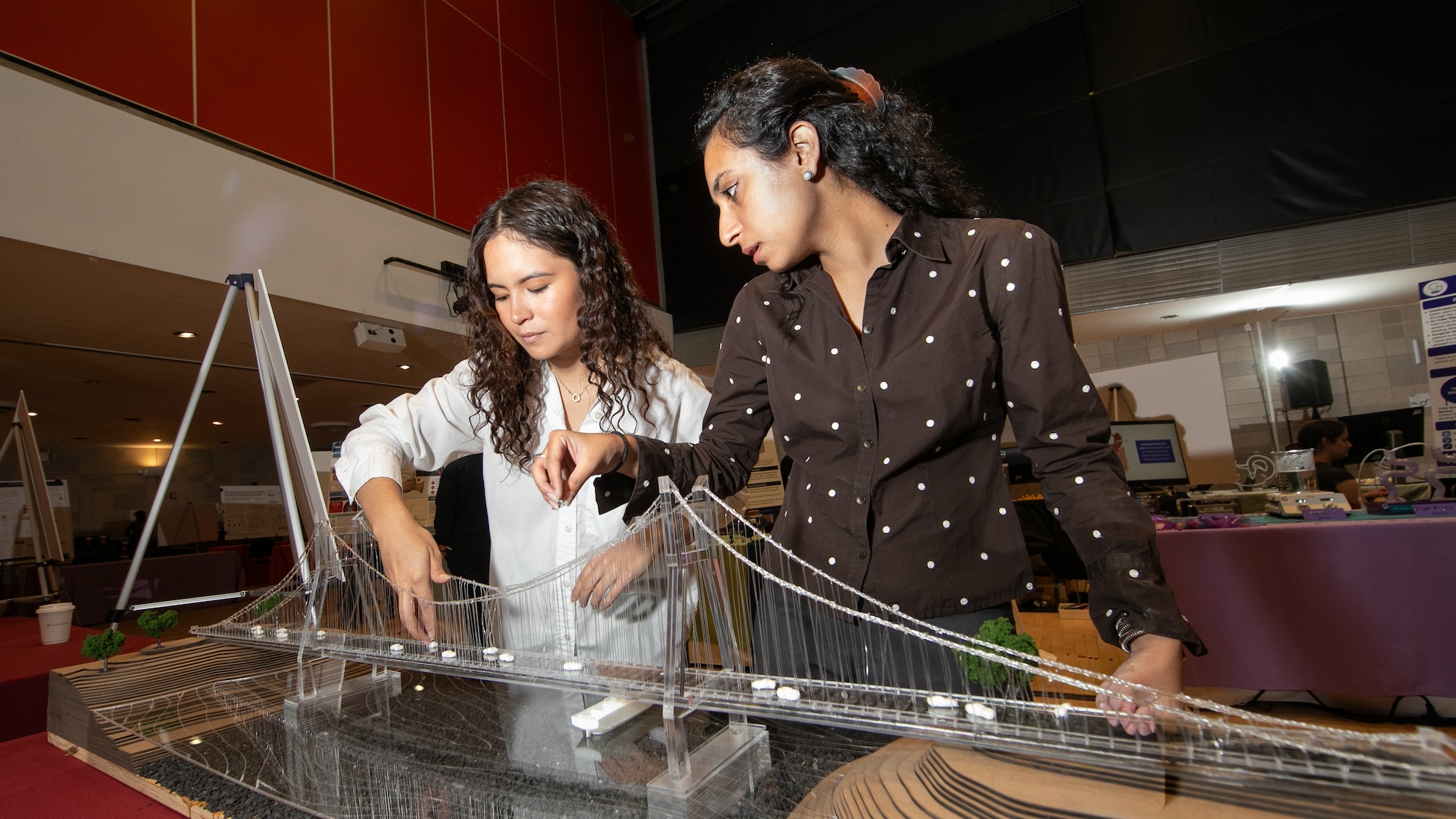
    The Biomedical Engineering Design course is a required, two-semester capstone course for undergraduate students. Students work in a team to tackle a real-world, open-ended design project in the biomedical field.

  • Undergraduate Research

    Undergraduate students have the opportunity to get involved in cutting-edge research within the Department of Biomedical Engineering.

    Many BME labs welcome qualified undergraduates to join their research teams, either through work-study or as paid research assistants. These hands-on experiences allow students to apply classroom knowledge, explore areas of interest, and contribute to ongoing innovations in the field.

    For more information on the work-study program, please visit Student Financial Services.

  • Undergraduate Advising

    Advising in BME is centered on close interactions between students and BME faculty advisors, who provide counseling regarding the BME major, career planning, and student life. Students are assigned BME faculty advisors as soon as they enter the department.

  • Non-Department Led Research

    Research conducted outside the BME department may count for BMEN E3998 credit if approved. In this case, students must register under their BME academic advisor, who will coordinate with the external research supervisor. To qualify:

    • The project must relate to biomedical engineering and include engineering content (confirmed with a short project description).
    • The external supervisor must confirm via email:
      • The student is not being paid.
      • The work is being done for credit.
      • 1 credit = 5 hours/week commitment (up to 3 credits per semester).
      • The student will receive a letter grade.
      • Assessment methods (e.g., final paper, presentation, or poster).
  • Summer Research

    BME labs offer summer research positions through internships, research assistantships, and work-study. Students can receive technical elective credit by enrolling in BMEN E3998 during the summer.

    Additionally, many BME faculty participate in Columbia’s Summer Undergraduate Research Fellowship (SURF). Qualified students are encouraged to apply.

  • Education Objectives

    The Biomedical Engineering Department at Columbia University is dedicated to preparing our graduating students for the following:

    1. Professional employment in areas such as the medical device industry, engineering consulting, biomechanics, biomedical imaging, and biotechnology
    2. Graduate studies in biomedical engineering or related fields
    3. Attendance at medical or dental school
  • Student Outcomes

    We strive to ensure that our students successfully attain the following:

    1. an ability to identify, formulate, and solve complex engineering problems by applying principles of engineering, science, and mathematics
    2. an ability to apply engineering design to produce solutions that meet specified needs with consideration of public health, safety, and welfare, as well as global, cultural, social, environmental, and economic factors
    3. an ability to communicate effectively with a range of audiences
    4. an ability to recognize ethical and professional responsibilities in engineering situations and make informed judgments, which must consider the impact of engineering solutions in global, economic, environmental, and societal contexts
    5. an ability to function effectively on a team whose members together provide leadership, create a collaborative and inclusive environment, establish goals, plan tasks, and meet objectives
    6. an ability to develop and conduct appropriate experimentation, analyze and interpret data, and use engineering judgment to draw conclusions
    7. an ability to acquire and apply new knowledge as needed, using appropriate learning strategies.
  • Undergraduate Enrollment and Graduation Data

    Graduates of our program go on to graduate studies, medical school, and employment. Students have gone onto sectors including pharmaceuticals, medical devices, diagnostics, governmental oversight organizations (FDA, NIH, OSHA, etc.), and even finance. Through the program, students can meet entrance requirements for graduate training in the various allied health professions. For instance, no more than three additional courses are required to satisfy entrance requirements for most U.S. medical schools, and can be chosen to also fulfill elective requirements for graduation.

    A statistical breakdown of each class is available below (numbers as of Fall 2023):

     201820192020202120222023
    Sophomores363540444440
    Juniors494144555357
    Seniors485240475554
    Total133128124146152151

From my perspective, innovation is what happens when you apply your expertise in a new context. Real impact comes when those new approaches change the way we study problems or how treatments are carried out in the clinic.

Santiago Correa
Assistant Professor of Biomedical Engineering

His new and innovative approach trains the pre-existing immune cells within the body rather than extracting the cells from the patient. The ultimate goal is to develop off-the-shelf nanomaterials that can be personalized to the patient’s individual immune profile to make immunotherapy faster to deploy, easier scaling and directly target the disease.

The Pershing Square Sohn cancer prize will provide Correa with more than just funding for his high-risk, high-reward research. He will be given access to a notable network and invitations to collaborative programs with colleagues and charitable and business investors. 

Image

Blair Dayton

Career Placement Officer

Subscribe to Biomedical Engineering