Image

Harry West

Professor of Professional Practice in the Department of Industrial Engineering and Operations Research

3. Agentic AI is more than just a buzzword.

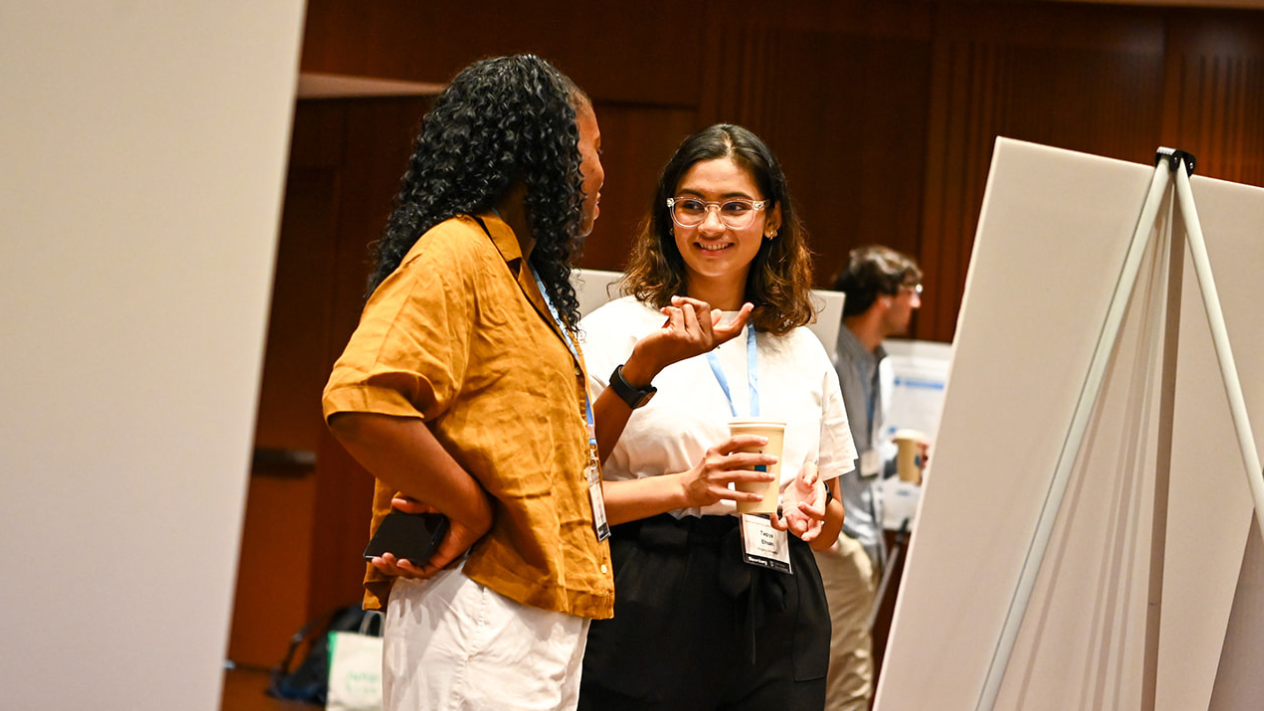
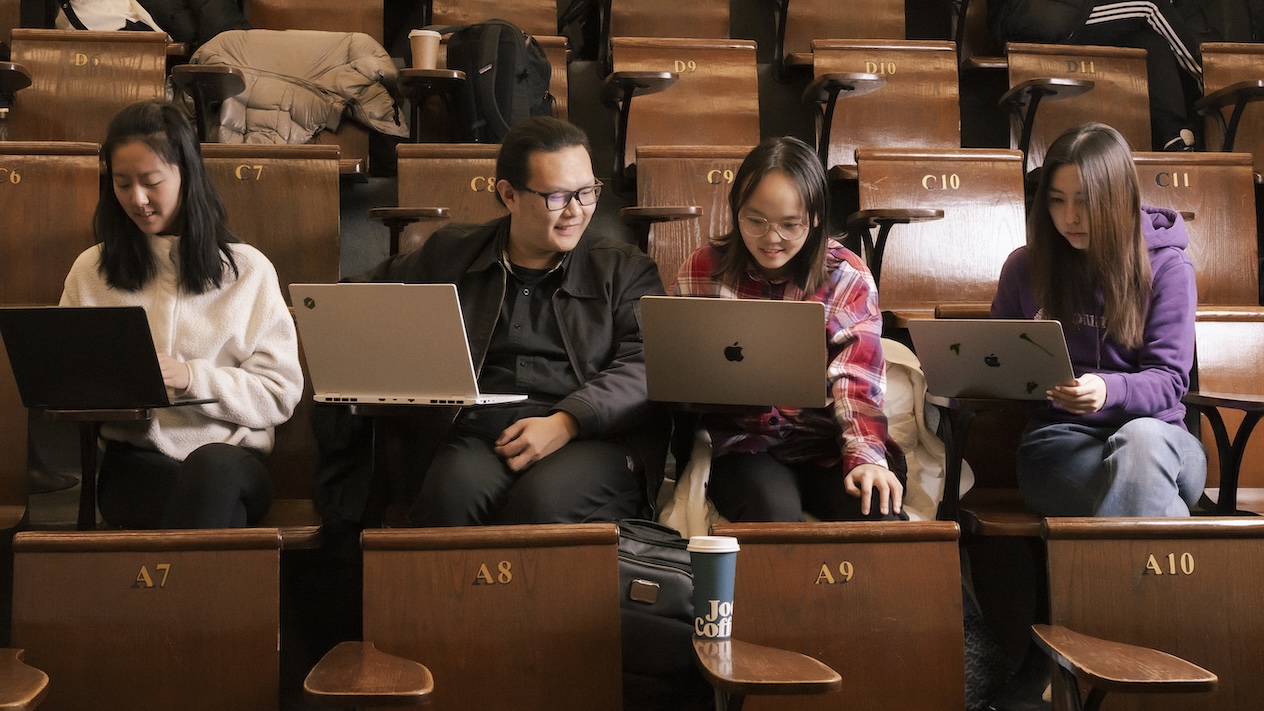
Taqiya Ehsan, a PhD candidate in electrical and computer engineering at Rutgers University, whose research collaborates with Columbia’s Center for Smart Streetscapes, said the sessions dedicated to agentic AI stood out as particularly useful.

"We hear the agentic AI buzzword everywhere. Most of us don't really know what it means," she said. The summer school addressed that gap head-on, bringing in experts who build these systems to explain exactly what agentic AI is and how it works in practice.

Specifically, a talk by Brendan Rappazzo Hogan – a Morgan Stanley representative of alphaLab – on the firm's agentic AI framework stood out to Ehsan, offering a rare look at how a major financial institution is putting these systems into practice outside the lab. "It was really, really helpful to get insight into exactly what AI agents are from the experts who are building it," she added.

4. AI research must be interdisciplinary.

Transformative breakthroughs in AI rarely come from just one discipline – and the summer school made sure participants understood the importance of drawing AI research from multiple backgrounds.

Zachary Laborde appreciated the strong emphasis on interdisciplinary research and the importance of these intersections beyond the lab. Coming in with a background in psychology, Laborde was drawn to the program specifically to understand how language models — tools largely outside his own research — were reshaping fields like robotics and embodied AI. 

"My work doesn't involve natural language processing or large language models, but a lot of recent work has shown that in spaces like robotics and embodied AI, using language models leads to incredible results," he said. "I was hoping to better understand those components to be able to apply them to my work, or to work that I might do in the future."

For Emily Bejerano, what stood out most about the summer school was the sheer range of people and perspectives in the room. "I just thought it was a great opportunity to meet a lot of people from a variety of different areas with this overlapping interest in AI, and how we can leverage it to help our systems," she said. "I love meeting people from all around the world with various interests, hearing about their research, and sharing my research to get valuable perspectives from different people."

The 2026 Machine Learning Summer School delivered on the comprehensive view of the field that Columbia Engineering set out to showcase. From the theoretical promise of causal AI to the practical demands of interpretability, the agentic AI systems reshaping industries, and the deeply interdisciplinary nature of the work itself, participants left with more than just new technical knowledge – but a sharper sense of where the field is headed, and the responsibility that comes with building it.

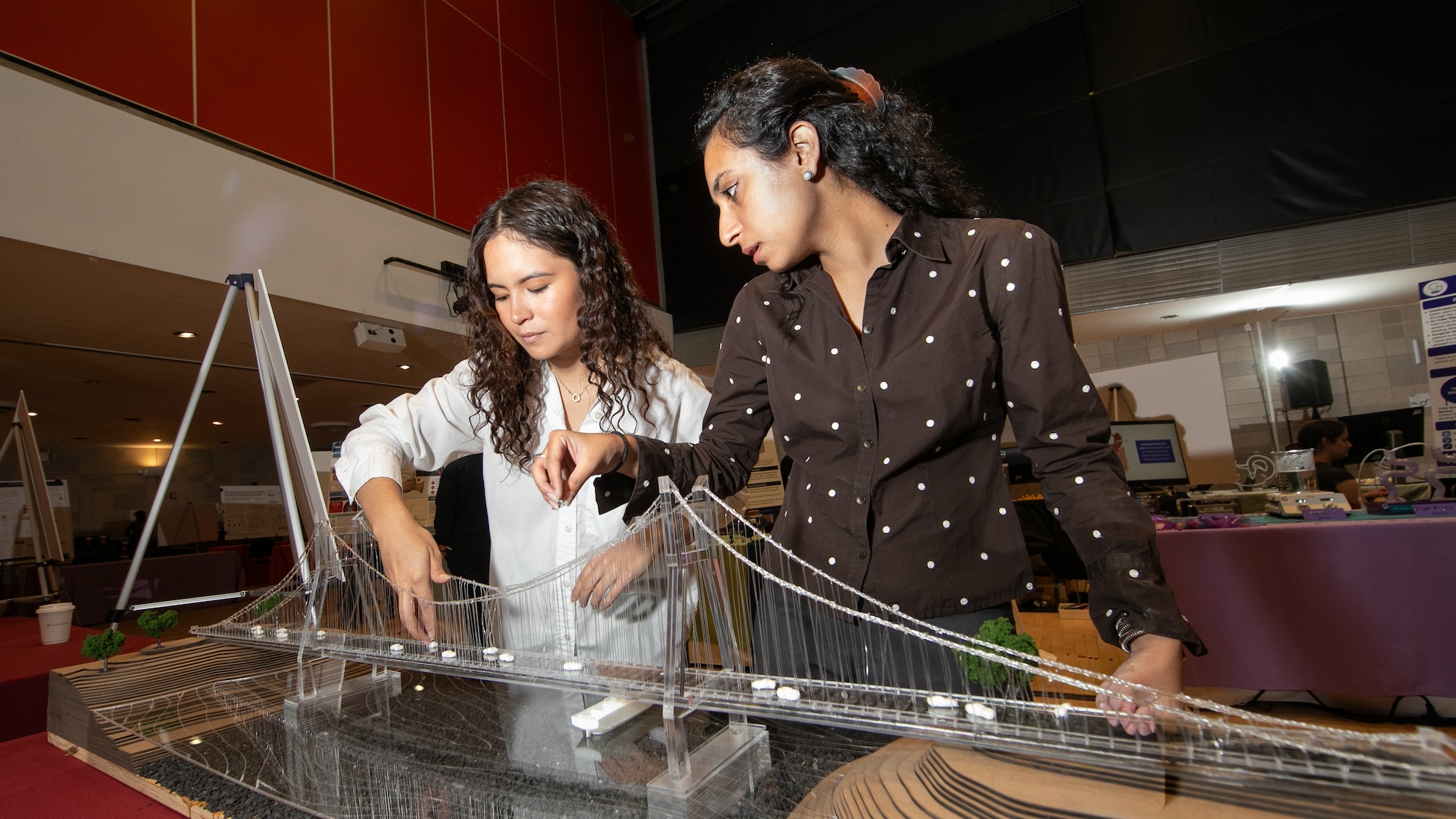
Many of the projects in this year’s expo integrated AI with custom hardware. The Clinical Handwashing Coach, which tracks handwashing sessions, is being tested at a hospital in Pasadena, California. The team of electrical engineering students designed an AI system to ensure that medical professionals comply with handwashing protocols. Other teams from the department used AI to create noise-canceling headphones with real-time language detection and translation (team ANURA) and a wearable device that inexpensively creates digital transcriptions (CLACS).

A couple of projects tackled wheelchair comfort and mobility autonomy. The Mechanical Engineering team STAR (Self-Transfer with Automated Reversing) Lift made moving in and out of a wheelchair easier for wheelchair users with upper-body mobility, allowing them to transfer themselves to a bed without assistance. Team Wheel-E created a specialized seat cushion for wheelchair users that helps alleviate the painful symptoms of prolonged sitting. 

Urban green infrastructure was the main theme for many projects in the Department of Civil Engineering and Engineering Mechanics. The Morningside Park Rehabilitation Project reimagined the local neighborhood park by proposing two new community centers for public use and an upgraded drainage system that can handle heavier rainfall runoff. 

From AI devices to reimagining a neighborhood park, the Class of 2026 proved that the best engineering goes beyond the classroom and makes an impact in the world.

Dean Shih-Fu Chang recognized Raymond P. Daddazio BS'75, MS'76, EngScD'82 with the Thomas Egleston Medal for Distinguished Engineering Achievement. Daddazio is chairman of the Thornton Tomasetti Foundation and former president of Thornton Tomasetti. Dean Chang also recognized Azmi T. Mikati BS'94, the CEO of M1 Group, with the Samuel Johnson Medal for Distinguished Achievement Beyond Engineering and Applied Science.

Over the weekend, alumni and guests attended lectures from Columbia Engineering faculty, including a talk on AI and neural intelligence with Richard Zemel, Trianthe Dakolias Professor of Engineering and Applied Science and professor of computer science; as well as a presentation on energy, transition, and mining with Dan Steingart, Stanley-Thompson Professor of Chemical Metallurgy, professor of chemical engineering, and chair of the Department of Earth and Environmental Engineering

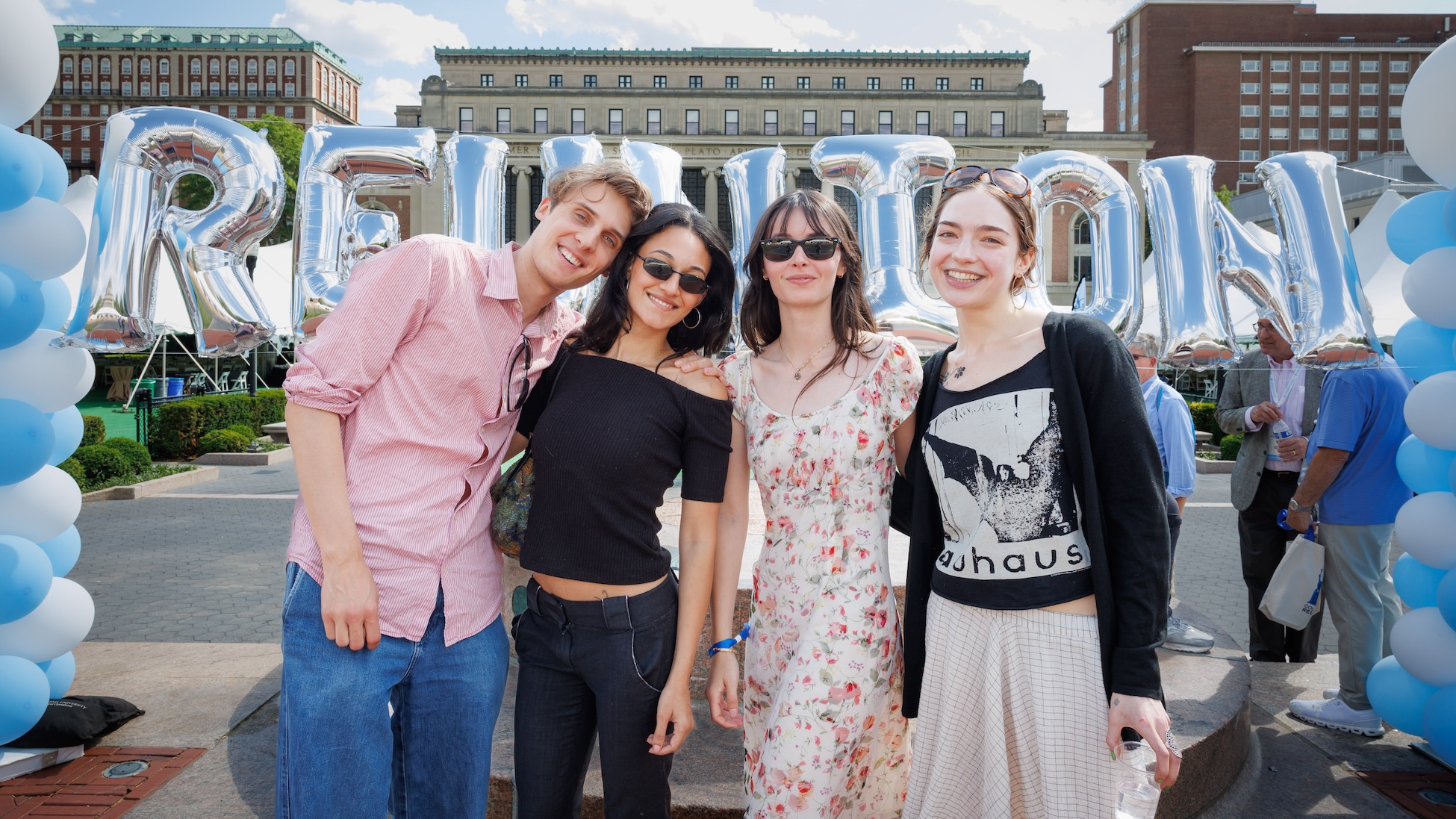
On Friday, attendees toured the Plasma Physics Lab and the Robotics and Rehabilitation (RoAR) Lab. They also mingled at a general All Class Reception and recognized classes celebrating their 50- and 25-year anniversaries. Members of the Class of 1976 received Golden Lions pins, while the Class of 2001 members received Silver Lions pins to commemorate the milestone and their entry into the Golden and Silver Lions Societies. The day ended with a Reunion Lawn Party for alumni of Columbia Engineering, Columbia College, and the School of General Studies. 

Image
Harry West stands behind a podium in a bright room with large windows, speaking between two tall banners featuring carved lion figures during a Columbia Engineering alumni reunion program.
Professor Harry West was recognized with the Great Teacher Award by the Society of Columbia Graduates. Credit: Brandon Vallejo

Dean Chang gave attendees an overview of Columbia Engineering news highlights and research updates on Saturday at the Dean’s Breakfast. The Engineering School also hosted a special reception for alumni of its master’s and doctoral programs. The Society of Columbia Graduates sponsored the Great Teacher Awards reception to recognize the 2026 honorees. Harry West, professor of professional practice in the Department of Industrial Engineering and Operations Research, received the Great Teacher Award for the Engineering School. Caterina Pizzigoni, associate professor of history, was the Columbia College recipient. The day closed with receptions and dinners for the classes and a Starlight Celebration on Low Plaza featuring a live band, dessert, and champagne.

Image

Kelly Katsigris

Academic & Student Affairs Advisor

Image

Jean Flick

Director of Academic & Student Affairs

Image

Christine Chan

Senior Associate Director, Academics and Student Affairs

Image

Vidal Baez

Manager - Finance and Grants

Image

Samantha Sudol

Academic and Student Affairs Coordinator

Subscribe to Industrial Engineering and Operations Research