Innovators in Science Award: AI Powered Cancer Research

Professor Elham Azizi was the 2024 Innovators in Science Award Early-Career Scientist winner. The 2024 award focus was cancer immunology.
Award Winners
Recognized by the Paul G. Allen Family Foundation Award
Ask Us Anything: Paul Sajda
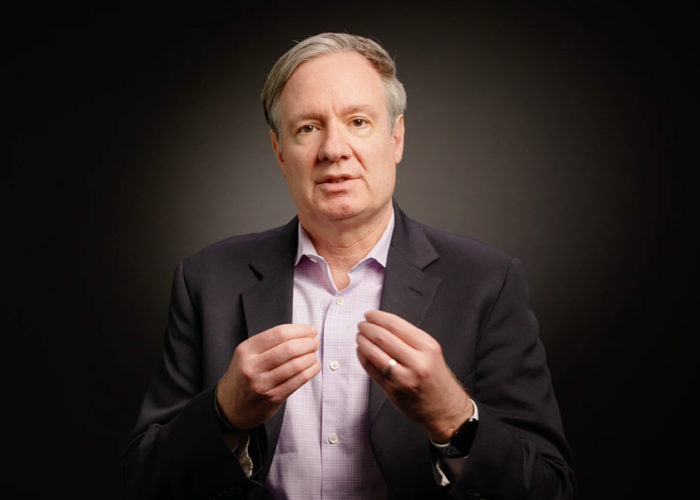
Paul Sajda is the Vikram S. Pandit Professor of Biomedical Engineering and a professor in electrical engineering and radiology. His research is interested in what happens in our brains when we make a rapid decision and, conversely, what processes and representations in our brains drive our underlying preferences and choices, particularly when we are under time pressure.
Traumatic stress can have devastating effects on people, in particular those in the military, including mental illness, substance abuse, post-traumatic stress disorder, family violence, and suicide. Developing effective approaches to prevent suicide and improve treatments is a top priority within the U.S. Department of Defense (DOD).
New DARPA program
A new program from DARPA (Defense Advanced Research Projects Agency), the DOD’s central research and development organization, has awarded $12 million to a multi-institutional team led by Paul Sajda, department chair and Vikram S. Pandit Professor of Biomedical Engineering at Columbia Engineering, to advance critical research in major depressive disorder (MDD) and suicide.
An interdisciplinary team
Sajda will be working with an interdisciplinary group that includes engineers, neuroscientists, and clinicians at the Medical University of South Carolina (MUSC), the University of Wisconsin-Madison, and the University of Oklahoma. The team is a close-knit one -- many of them have been working together for more than 10 years, including collaborating on clinical trials that link precision neurostimulation therapy to clinical outcomes.
The grant is one of three research projects funded by DARPA’s STRENGTHEN program, Strengthening Resilient Emotions and Nimble Cognition Through Engineering Neuroplasticity, which aims to build on recent advances in neuroscience and clinical practice to increase well-being and prevent or mitigate the effects of traumatic stress leading to behavioral health disorders and suicidality.
Brain stimulation techniques for treatment-resistant depression
The researchers are building on NIH-funded work aimed at developing brain stimulation techniques to treat cases of treatment-resistant depression disorder. They recently completed a six-week-long clinical study that used repetitive transcranial magnetic stimulation (rTMS), triggered by electroencephalography (EEG), to synchronize brainwaves, to induce a brain state known as “entrainment.” The study demonstrated that patients with better entrainment had greater treatment improvement, spotlighting the strong potential for EEG-informed rTMS therapy in cases of resistant MDD.
A new generation of psychiatric treatment
“The psychiatric field needs new ways to tackle treatment-resistant major depressive disorder, which does not respond to existing drug therapy or psychotherapy,” says Sajda, who is also affiliated with Columbia’s Data Science Institute. “Our team has decades of experience using innovative brain stimulation methods and multi-modal imaging in psychiatry. We expect our revolutionary approach in delivering individualized internal and external interventions to entrain brain networks will result in neuroplastic changes that improve clinical outcomes.”
His lab has decades of experience using innovative brain stimulation methods and multi-modal imaging in psychiatry. The DARPA-funded project — Realigning Emotion and COgnition Via prEcision Regulation of networkS (RECOVER) — is focused on developing a new generation of psychiatric treatment to guide the brain’s neuroplasticity, its natural ability to form new neural connections.
The clinical study will be run at MUSC, under the lead of co-PI Lisa McTeague, associate professor in the Brain Stimulation Division of the Department of Psychiatry and Behavioral Science at MUSC. Dr. McTeague is also a practicing clinical psychologist in the PTSD Clinical Team at the Ralph H. Johnson VA Health Care System. She and her group at MUSC have been working with Sajda for 10 years.
Promoting brain’s cognitive flexibility and emotional regulation to overcome depression and process trauma
The team hopes to reduce clinical symptoms of depression, anxiety, and suicidality by promoting cognitive flexibility (CF) -- the mental ability to switch between thinking about two different concepts according to the context of a situation -- and emotional regulation (ER) -- a conscious or nonconscious strategy to start, stop, or otherwise modulate the trajectory of an emotion. Together, CF and ER are essential to overcoming depression and processing trauma.
The researchers posit CF and ER are strongly influenced by patterns of electrical activity in the brain, called alpha oscillations. They believe that tweaking alpha oscillations using transcranial magnetic stimulation can improve a patient’s cognitive flexibility and emotional regulation by encouraging neuroplasticity. When combined with interventions such as cognitive-behavioral therapy, this new approach has tremendous potential to transform mental health.
Applying functional magnetic resonance imaging, electroencephalography, and transcranial magnetic stimulation
Their approach brings together a suite of familiar techniques that noninvasively image and manipulate the brain. By simultaneously using functional magnetic resonance imaging (fMRI), electroencephalography (EEG), and transcranial magnetic stimulation (TMS), the researchers hope to develop an entirely new approach for treating this debilitating mental disorder.
The team also hopes to translate their findings and build a less expensive and more widely available system based on simultaneous functional near-infrared spectroscopy (fNIRS), EEG, and TMS. This part of the project will be co-led by the Investigator Han Yuan, associate professor at the University of Oklahoma’s Stephenson School of Biomedical Engineering.
“The clinical trials we have completed, funded by NIH and done at MUSC, have shown to be very promising, and this new DARPA award will help us extend the approach even further, adding hybrid treatments as well as expanding our approach to addressing other forms of mental illness, such as PTSD and suicidality,” says Sajda. “We will build on recent advances in neuroscience and clinical practice to increase well-being and prevent or mitigate the effects of traumatic stress leading to behavioral health disorders and suicidality.”
About the Study
Journal: Science
Title: “Probiotic-guided CAR-T cells for solid tumor targeting”
Authors: Rosa L. Vincent(1), Candice R. Gurbatri(1), Fangda Li2, Ana Vardoshvili(1), Courtney Coker(1), Jongwon Im(1), Edward R. Ballister(1,2), Mathieu Rouanne(2), Thomas Savage(2), Kenia de los Santos-Alexis(2), Andrew Redenti(1,2), Leonie Brockmann(2), Meghna Komaranchath(1), Nicholas Arpaia(2,3), Tal Danino(1,3,4)
- Department of Biomedical Engineering, Columbia Engineering
- Department of Microbiology & Immunology, Vagelos College of Physicians and Surgeons of Columbia University
- Herbert Irving Comprehensive Cancer Center, Columbia University
- Data Science Institute, Columbia University
Funding: This work was supported by NIH 1R01EB030352, Columbia Translational Therapeutics (TRx) Award, and the NSF Graduate Research Fellowship (1644869 to C.R.G.).
COI: R.L.V., T.M.S., C.R.G., J.I., N.A., and T.D. are inventors on a patent application describing the use of Probiotic-guided CAR-T cells for cancer immunotherapy (International Application No. PCT/US2022/016775).

How do you think this will benefit Columbia researchers?
This is going to infuse lots of energy into our current collaborations. And I think it will spark even more. We have an amazing engineering school and an amazing medical center at Columbia, and we’ve built many long-standing relationships between engineering and medicine. So I think the Biden initiative will give a big boost to the many projects we’re already working on as well as inspire new groundbreaking ones. It's going to rejuvenate the field and encourage the amazing women's health researchers that we already have here to go even bigger. And it will be great for our junior faculty members to come on board and adapt their engineering tools for improving women's health research.
We have an extraordinary group of researchers working in women’s health here. I’ve been at Columbia Engineering for more than 13 years and have been working very closely with Electrical Engineering Associate Professor Christine Hendon to use imaging to assess the mechanical properties of the cervix in relation to preterm birth. We are also collaborating with Noémie Elhadad, Biomedical Informatics and Department Chair at Columbia’s Vagelos College of Physicians and Surgeons. The core group of engineers and doctors have been working together for many years on women's health, gynecologic health, and pregnancy, using imaging, data, and computational simulations to build a bank of fundamental research that we can draw upon to design new techniques and devices to improve women’s health. Columbia has a community of very dedicated researchers who’ve been around for quite a while, but we've all been plagued by small funding pools. So this initiative will be huge both for us and for all the startups that are looking for funding -- they need fundamental research and financial backing to develop their new products.
How do you see this having an impact on your own work?
We are one of the first groups in the world to take maternal anatomy measurements throughout pregnancy, working with patients in a clinical trial at Columbia University Irving Medical Center (CUIMC) and then creating a digital twin of that individual pregnancy to understand how much mechanical load is on the uterus in the cervix and what might lead to a preterm birth. I'm a mechanical engineer and study design, practice design, and teach design to students, so I’m always looking at materials and wondering about their mechanical properties. When I was pregnant eight years ago, I lay there on the examining table, thinking “Hey, can I just spend five more minutes with this ultrasound and measure key anatomical features of me, the mom?” So that’s what we did. We started a clinical study in 2019 and our last patient in the study delivered last May.
President Biden’s announcement is really bringing awareness to the synergies that we researchers all have in women's health, engineering, research, and innovation. One of the interesting things resulting from this increased awareness of women’s health is the fact that the NIH issued a policy less than 10 years ago that states that sex as a biological variable must be factored into research designs, analyses, and reporting in vertebrate animal and human studies. Now you can't study only male monkeys, rodents, etc., which is a really important direction, especially in gynecologic health. In the past, many women’s symptoms such as uterine pain or heavy menstrual bleeding were dismissed -- people just thought of these as a normal part of life, that they didn’t indicate disease. But if we had more basic research data, we would have a much better idea of what healthy physiological functioning looks like, of what really is “normal.”
So I need more colleagues -- I can’t do it all myself. Everytime I fund a graduate student, I'm creating a new researcher in this field and increasing the pipeline. It’s critical for researchers like me to educate the next generation of engineers to solve these problems. And I'm excited about this announcement because my future trainees, my grad students, will read about this in the news and say, “Hey, I want to be in this field, and I can easily adapt what I'm already doing at the bench and work to improve women's health.
Tell us about your journey from engineering into women’s health and how you decided to focus on the cervix.
I started off as a traditional mechanical engineer in the automotive industry, where I did research projects on things like exploding tires, thinking about how rubber heats and degrades. Once I got to graduate school as a young woman at MIT, I wanted to differentiate myself. I wanted to work on a project that was meaningful to me as an engineer, and I was introduced to the pregnancy mechanics project. This was an easy jump for me because the great thing about engineering is that we learn tools to solve problems. And in this case, I learned about structural mechanics. I was using the same analysis, tools, and material equations to think about how the cervix changes its material properties when exposed to the hormones of pregnancy. This is the work that my NSF Early Career grant was on, and I won the PECASE award for my research on exploring material mechanics of materials and the cervix, and how the cervix remodels itself. The cervix is analogous to rubber, with elastomers heating, degrading, and potentially breaking and becoming catastrophic.
Working on the cervix and preterm birth issues with my colleagues at Columbia, we ran clinical studies on pregnant women who were eager to participate. Once we got the data from our studies, we made a digital twin by replicating the uterus virtually on the computer. We then ran simulated experiments on the computer to see what might happen under varying conditions. This is much more complicated than it sounds because the human body is really complex and there are so many things we still don’t know. This work will probably take my whole career because I'll keep improving my models with discoveries I make at the biological level with my collaborators. For instance, I’m working with a molecular biologist at the University of Texas Southwestern Medical Center in Dallas to understand the biology of tissue remodeling and I’m trying to figure out what the environmental triggers for that remodeling are. Over the last five years, I’ve integrated factors into my models such as anatomy shape and size, or structural anatomy and tissue material properties. We’ve actually done the measurements and taken the data of how the uterus and the cervix physically deform -- in fact, we’re the only team in the world with this kind of data.
Where will this data take your research next? What’s in store for the future?
I now have a new hypothesis that we’ll be presenting at a conference in February. My group is going retrospectively into the imaging database at CUIMC in partnership with Mount Sinai, and we're planning to use AI to read all the ultrasounds of pregnancy to pick out a key anatomical feature that might lead to preterm birth. It’s great because we can test our hypothesis because the imaging database also has clinical outcomes -- this is where the AI and bioinformatics work comes in. Then we hope to create digital twins of phenotypes that are related to preterm birth. If we have a phenotype that's related to preterm birth based on this retrospective database, I can design a new therapeutic or a device to structurally bolster the cervix.
I hope that in five years we'll have new diagnostic and therapeutic innovations and that our work will be translational. I want to reiterate that I can’t get there without first taking the data. I needed the observational study because nobody's measured these features before -- this is why fundamental research is so critical.
I want to lower the barrier of entry for engineers to work in the women's health and pregnancy space. I feel privileged that I have a longstanding relationship with a top-tiered research ob/gyn department and I want to bring more people into the field. The only way to do that is to open source and release all of our raw data sets, all of our models, and all of our model byproducts.
Is this a long time coming?
Yes!
Ask Us Anything: Helen Lu Highlights
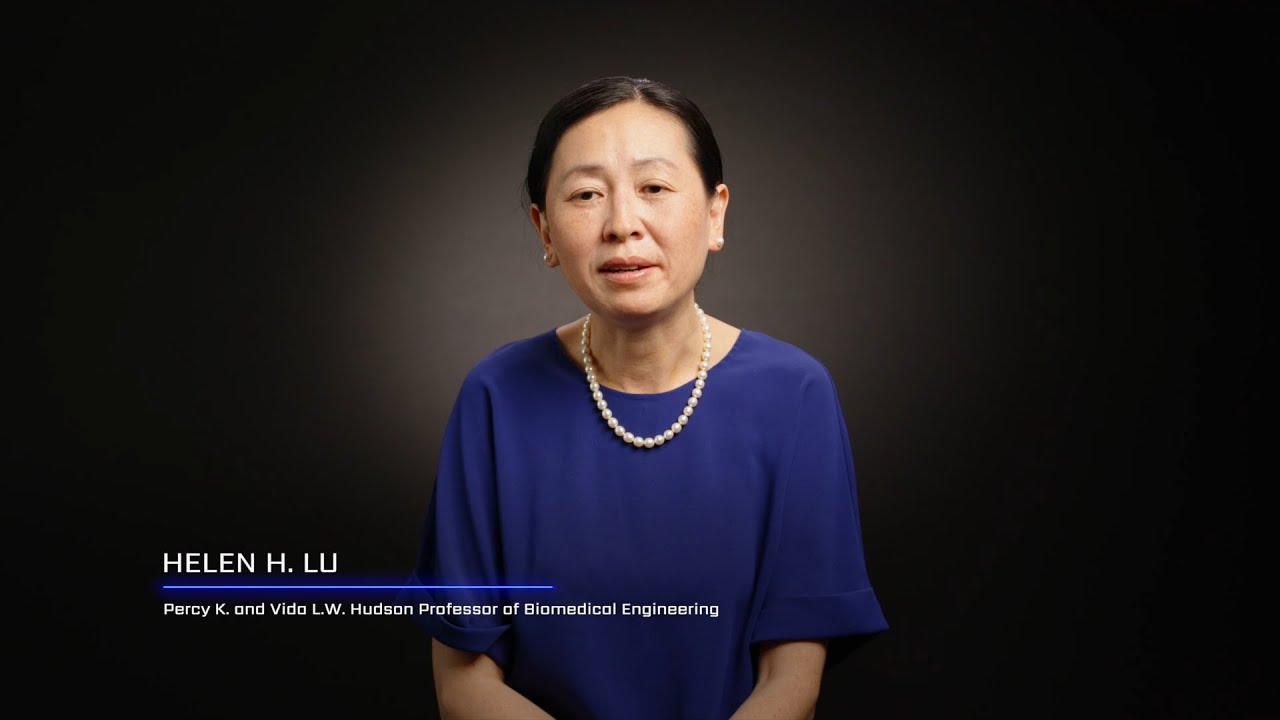
Helen Lu is Percy K. and Vida L.W. Hudson Professor of Biomedical Engineering and Senior Vice Dean of Faculty Affairs and Advancement. Her research focuses on Orthopaedic Interface Tissue Engineering and the formation of complex tissue systems, with the goal of achieving integrative and functional repair of soft tissue injuries.
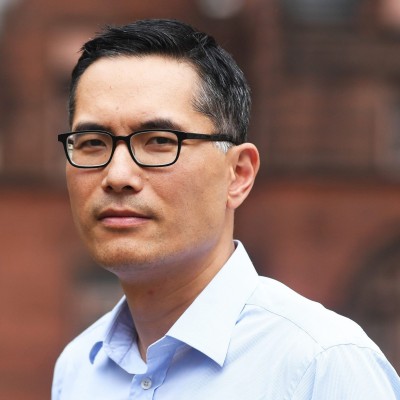
Sam Sia