The 21st Century Cane for Walking Stability
New York, NY—August 6, 2019—By adding electronics and computation technology to a simple cane that has been around since ancient times, a team of researchers at Columbia Engineering have transformed it into a 21st century robotic device that can provide light-touch assistance in walking to the aged and others with impaired mobility.
A team led by Sunil Agrawal, professor of mechanical engineering and of rehabilitation and regenerative medicine at Columbia Engineering, has demonstrated, for the first time, the benefit of using an autonomous robot that “walks” alongside a person to provide light-touch support, much as one might lightly touch a companion’s arm or sleeve to maintain balance while walking. Their study is published today in the IEEE Robotics and Automation Letters.
“Often, elderly people benefit from light hand-holding for support,” explained Agrawal, who is also a member of Columbia University’s Data Science Institute. “We have developed a robotic cane attached to a mobile robot that automatically tracks a walking person and moves alongside,” he continued. “The subjects walk on a mat instrumented with sensors while the mat records step length and walking rhythm, essentially the space and time parameters of walking, so that we can analyze a person’s gait and the effects of light touch on it.”
The light-touch robotic cane, called CANINE, acts as a cane-like mobile assistant. The device improves the individual’s proprioception, or self-awareness in space, during walking, which in turn improves stability and balance.
“This is a novel approach to providing assistance and feedback for individuals as they navigate their environment,” said Joel Stein, Simon Baruch Professor of Physical Medicine and Rehabilitation and chair of the department of rehabilitation and regenerative medicine at Columbia University Irving Medical Center, who co-authored the study with Agrawal. “This strategy has potential applications for a variety of conditions, especially individuals with gait disorders.”
To test this new device, the team fitted 12 healthy young people with virtual reality glasses that created a visual environment that shakes around the user—both side-to-side and forward-backward—to unbalance their walking gait. The subjects each walked 10 laps on the instrumented mat, both with and without the robotic cane, in conditions that tested walking with these visual perturbations. In all virtual environments, having the light-touch support of the robotic cane caused all subjects to narrow their strides. The narrower strides, which represent a decrease in the base of support and a smaller oscillation of the center of mass, indicate an increase in gait stability due to the light-touch contact.
“The next phase in our research will be to test this device on elderly individuals and those with balance and gait deficits to study how the robotic cane can improve their gait,” said Agrawal, who directs the Robotics and Rehabilitation (ROAR) Laboratory. “In addition, we will conduct new experiments with healthy individuals, where we will perturb their head-neck motion in addition to their vision to simulate vestibular deficits in people.”
While mobility impairments affect 4% of people aged 18 to 49, this number rises to 35% of those aged 75 to 80 years, diminishing self-sufficiency, independence, and quality of life. By 2050, it is estimated that there will be only five young people for every old person, as compared with seven or eight today.
“We will need other avenues of support for an aging population,” Agrawal noted. “This is one technology that has the potential to fill the gap in care fairly inexpensively.”
Columbia Engineering
Columbia Engineering, based in New York City, is one of the top engineering schools in the U.S. and one of the oldest in the nation. Also known as The Fu Foundation School of Engineering and Applied Science, the School expands knowledge and advances technology through the pioneering research of its more than 220 faculty, while educating undergraduate and graduate students in a collaborative environment to become leaders informed by a firm foundation in engineering. The School’s faculty are at the center of the University’s cross-disciplinary research, contributing to the Data Science Institute, Earth Institute, Zuckerman Mind Brain Behavior Institute, Precision Medicine Initiative, and the Columbia Nano Initiative. Guided by its strategic vision, “Columbia Engineering for Humanity,” the School aims to translate ideas into innovations that foster a sustainable, healthy, secure, connected, and creative humanity.
Journal
IEEE Robotics and Automation Letters
About the Study
The study is titled, “Effects of a person-following light-touch device during overground walking with visual perturbations in a virtual reality environment.”
The other contributors are Danielle M. Stramel (Columbia Engineering); Robert M. Carrera (Columbia University Irving Medical Center), Sam A. Rahok (Oyama National College of Technology/visiting CUIMC); Joel Stein (Columbia University Irving Medical Center) and Sunil Agrawal (Columbia Engineering).
The authors declare they have no competing financial interests.
Programmed Bacteria for Cancer Immunotherapy
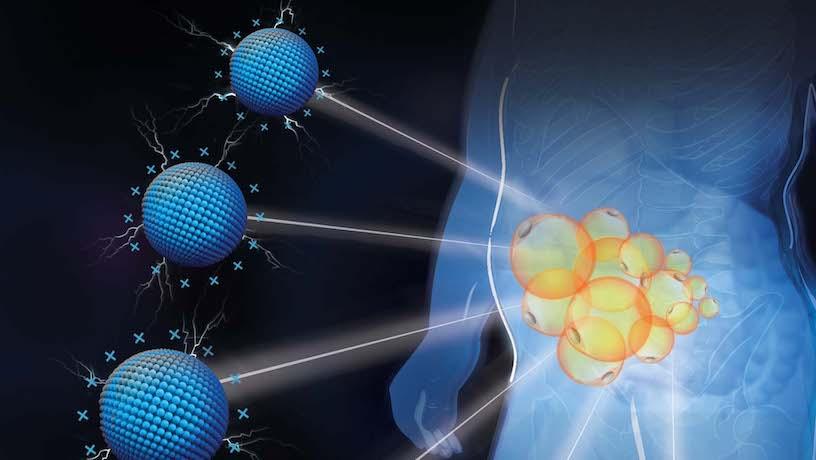
Teaming up with the Columbia University Irving Medical Center (CUIMC), Columbia Engineering has addressed this challenge by engineering a strain of non-pathogenic bacteria that can colonize solid tumors in mice and safely deliver potent immunotherapies, acting as a Trojan Horse that treats tumors from within.
The study was led in collaboration with Nicholas Arpaia, assistant professor of microbiology & immunology at CUIMC, and co-senior author on the publication. The team combined their expertise in synthetic biology and immunology to engineer a strain of bacteria able to grow and multiply in the necrotic core of tumors. When bacteria numbers reach a critical threshold, the non-pathogenic E. coli are then programmed to self-destruct, allowing for effective release of therapeutics and preventing them from wreaking havoc elsewhere in the body. Subsequently, a small fraction of bacteria survive lysis and reseed the population, allowing for repeated rounds of drug delivery inside treated tumors. The proof of concept in programming the bacteria in this way was originally developed a few years ago (Din & Danino et al. Nature 2016). In the current study, the authors chose to release a nanobody that targets a protein called CD47.
CD47, a “don’t-eat-me” signal, protects cancer cells from being eaten by innate immune cells such as macrophages and dendritic cells. It is found in abundance on a majority of human solid tumors and has recently become a popular therapeutic target.
“But CD47 is present elsewhere in the body, and systemic targeting of CD47 results in significant toxicity as evidenced by recent clinical trials. To solve this issue, we engineered bacteria to target CD47 exclusively within the tumor and avoid systemic side-effects of treatment,” adds Sreyan Chowdhury, the paper’s lead author and a PhD student co-mentored by Arpaia and Danino.
The combined effect of bacterially induced local inflammation within the tumor and the blockade of CD47 leads to increased ingestion, or phagocytosis of tumor cells and subsequently to enhanced activation and proliferation of T cells within the treated tumors. The team found that treatment with their engineered bacteria not only cleared the treated tumors but also reduced the incidence of tumor metastasis in multiple models.
“Treatment with engineered bacteria led to priming of tumor-specific T cells in the tumor that then migrated systemically to also treat distant tumors,” Arpaia says. “Without both live bugs lysing in the tumor and the CD47 nanobody payload, we were not able to observe the therapeutic or abscopal effects.”
The team is now performing further proof-of-concept tests, as well as safety and toxicology studies, of their engineered immunotherapeutic bacteria in a range of advanced solid tumor settings in mouse models. Positive results from those tests may lead to a clinical trial in patients. They are also collaborating with Gary Schwartz, CUIMC’s chief of hematology/oncology and deputy director of the Herbert Irving Comprehensive Cancer Center, on clinical translation aspects of their work, and have started a company to translate their promising technology to patients.
Columbia Engineering
Columbia Engineering, based in New York City, is one of the top engineering schools in the U.S. and one of the oldest in the nation. Also known as The Fu Foundation School of Engineering and Applied Science, the School expands knowledge and advances technology through the pioneering research of its more than 220 faculty, while educating undergraduate and graduate students in a collaborative environment to become leaders informed by a firm foundation in engineering. The School’s faculty are at the center of the University’s cross-disciplinary research, contributing to the Data Science Institute, Earth Institute, Zuckerman Mind Brain Behavior Institute, Precision Medicine Initiative, and the Columbia Nano Initiative. Guided by its strategic vision, “Columbia Engineering for Humanity,” the School aims to translate ideas into innovations that foster a sustainable, healthy, secure, connected, and creative humanity.
About the Study
The study is titled “Programmable bacteria induce durable tumor regression and systemic antitumor immunity.”
Authors are: Sreyan Chowdhury1,2; Samuel Castro1; Courtney Coker1; Taylor E. Hinchliffe1; Nicholas Arpaia2,3; Tal Danino1,3,4
1Department of Biomedical Engineering, Columbia University
2Department of Microbiology & Immunology, Vagelos College of Physicians and Surgeons of Columbia University
3Herbert Irving Comprehensive Cancer Center, Columbia University
4Data Science Institute, Columbia University
This work was supported by the NIH Pathway to Independence Award (R00CA197649-02) (T. Danino), DoD Idea Development Award (LC160314) (T. Danino), DoD Era of Hope Scholar Award (BC160541) (T. Danino), NIH NIGMS (R01GM069811) (T. Danino), NIH K22AI127847 (N. Arpaia), Searle Scholars Program SSP-2017-2179 (N. Arpaia), Bonnie J. Addario Lung Cancer Foundation Young Investigators Team Award (N. Arpaia and T. Danino) and the Roy and Diana Vagelos Precision Medicine Pilot Grant (N. Arpaia and T. Danino).
S. Chowdhury, N.A., and T.D. have filed a provisional patent application with the US Patent and Trademark Office (US Patent Application No. 62/747,826) related to this work. T.D. and N.A. 270 have a financial interest in GenCirq, Inc.
Regeneration of Severely Damaged Lungs
New York, NY—May 7, 2019—Lung transplantation, the only life-saving therapy for an increasing population of patients with end-stage lung disease, is severely limited by the number of available donor organs. Currently, up to 80% of donor lungs are rejected for serious but potentially reversible injuries. Since the beginning of transplantation in 1960s, clinicians and scientists have been trying to address the critical shortage of donor organs.
Now, a multidisciplinary team from Columbia Engineering and Vanderbilt University has—for the first time—demonstrated in a clinically relevant model that severely damaged lungs can be regenerated to meet transplantation criteria. In a study published today on Nature Communications’ website, the researchers describe the cross-circulation platform that maintained the viability and function of the donor lung and the stability of the recipient for 36 to 56 hours. As Brandon Guenthart, a lead author of the study, explains “to support lung recovery and to demonstrate cellular regeneration, we had to pursue a radically different approach and develop more minimally invasive diagnostics.” Current methodologies of lung support are limited to only 6 to 8 hours, a time that is too short for therapeutic interventions that could regenerate the injured lung and improve its function.
The team, co-led by Gordana Vunjak-Novakovic, University Professor and The Mikati Foundation Professor of Biomedical Engineering and Medical Sciences at Columbia Engineering, and Matthew Bacchetta, the H. William Scott Professor of Surgery at Vanderbilt University and adjunct professor at Columbia’s department of biomedical engineering, also developed new diagnostic tools for the non-invasive evaluation of the regenerating lung. They expect their advance will lead to an increase in the number of lungs for transplant through the recovery of severely damaged lungs that are currently unsuitable for clinical use. Lungs throughout 36 hours of ex vivo support.
The researchers have long been focused on developing processes to recover lungs that are being turned down for transplant because of injury to enable people with end-stage lung disease to live longer and better lives. “We have been fortunate to assemble a highly talented, interdisciplinary team of bioengineers, surgeons, pulmonologists, and pathologists, who have designed a durable physiologic support system for a donor lung outside the body, along with new technologies to achieve and monitor lung recovery,” Bacchetta says.
A previous study from the team demonstrated a cross-circulation platform that maintained the viability and function of a donor lung for 36 hours. The researchers were able to use their advanced support system to fully recover the functionality of lungs injured by ischemia (restricted blood supply) and make them suitable for transplant.
For this new study, the team decided to test the effectiveness of their platform technology combined with conventional therapies and new diagnostics on lungs afflicted by the most frequent injury leading to donor lung rejection—gastric aspiration. This injury is caused by the entry of gastric material into the respiratory tract, resulting in severe injury to the pulmonary epithelium and thus making the lung unacceptable for transplantation. Currently, severely damaged donor lungs cannot be salvaged using existing devices or methods. This new study suggests that lungs injured by gastric aspiration can be maintained outside the body for several days, are amenable to repeated therapeutic interventions, and display evidence of cellular regeneration and improved function. Lungs regenerated on this platform met all criteria for transplantation.
“For seven years, we have diligently worked to develop new technologies for the maintenance and recovery of donor organs. This paper represents a culmination of fundamental and translational studies of lung bioengineering that have converged into a system capable to recover severely damaged lungs. We now have the team and technology to bring this research to the patients, by making more donor lungs available for transplant,” says Vunjak-Novakovic.
The team plans to conduct further studies to evaluate the functional capacity of the lungs following transplantation and the safety of the method, using a clinically relevant large animal model with immunosuppression.
“We envision that interventional cross-circulation may be used to investigate regeneration of other damaged organs, such as hearts, kidneys, and livers, expanding donor pools by salvaging severely damaged organs and leading to more organ transplants,” Bacchetta adds.
Columbia Engineering
Columbia Engineering, based in New York City, is one of the top engineering schools in the U.S. and one of the oldest in the nation. Also known as The Fu Foundation School of Engineering and Applied Science, the School expands knowledge and advances technology through the pioneering research of its more than 220 faculty, while educating undergraduate and graduate students in a collaborative environment to become leaders informed by a firm foundation in engineering. The School’s faculty are at the center of the University’s cross-disciplinary research, contributing to the Data Science Institute, Earth Institute, Zuckerman Mind Brain Behavior Institute, Precision Medicine Initiative, and the Columbia Nano Initiative. Guided by its strategic vision, “Columbia Engineering for Humanity,” the School aims to translate ideas into innovations that foster a sustainable, healthy, secure, connected, and creative humanity..
About the Study
The study is titled “Recovery of severely damaged lungs using an interventional cross-circulation platform.”
Authors are: Brandon A Guenthart, John D O’Neill, Jinho Kim, Dawn Queen, Scott Chocotka, Kenmond Fung, Michael Simpson, Rachel Donocoff, Michael Salna, Charles C Marboe, Katherine Cunningham, Susan P Halligan, Holly M Wobma, Ahmed E Hozain, Alexander E Romanov, Hans-Willem Snoeck, Vunjak-Novakovic G, Matthew Bacchetta.
Brandon A. Guenthart 1,2,9; John D. O’Neill 1,9; Jinho Kim 1,3; Dawn Queen 1; Scott Chicotka 2; Kenmond Fung 4; Michael Simpson 2; Rachel Donocoff 5; Michael Salna 2; Charles C. Marboe 6; Katherine Cunningham 1; Susan P. Halligan 1; Holly M. Wobma 1; Ahmed E. Hozain 1,2; Alexander Romanov 5; Gordana Vunjak-Novakovic 1,7; and Matthew Bacchetta 1,8
1 Department of Biomedical Engineering, Columbia University Medical Center (CUMC)
2 Department of Surgery, CUMC
3 Department of Biomedical Engineering, Stevens Institute of Technolog.
4 Department of Clinical Perfusion, CUMC
5 Institute of Comparative Medicine, CUMC
6 Department of Pathology and Cell Biology, CUMC
7 Department of Medicine, CUMC
8 Department of Thoracic and Cardiovascular Surgery, Vanderbilt University
The study was supported by grants from the National Institutes of Health (R01 HL120046, U01 HL134760, P41 EB002520), Blavatnik Foundation, and the Mikati Foundation.
The authors declare no competing financial interests.
Algorithms driving recommendation systems and scheduling services have become all but ubiquitous—but designing these indispensable tools to function well in an ever-evolving landscape is extremely challenging.
Van-Anh Truong, associate professor of industrial engineering and operations research, is an expert in designing optimization algorithms for e-commerce and health care, two arenas grappling with huge amounts of data and very high levels of uncertainty.
“Matching people to goods and services in real time is challenging even when most of the variables are known,” says Truong. “When the customer as well as the provider side is uncertain, which is increasingly common, the problem is even harder.”
Truong’s algorithms self-correct to make transactions faster and more effective. She has repeatedly collaborated with Columbia University Irving Medical Center to address uncertainty in health care. In this realm, every unpredictable event—such as a patient falling critically ill—begets an uncertain quantity of demand and competition for doctors or treatments. A recent study shows her algorithms for matching patients with available treatment slots in the presence of such uncertainty could reduce no-shows and cancellations at a pediatric hospital from 33 percent to 9 percent.
Meanwhile, in the highly competitive environment of global e-commerce, implementing the right equations is essential for maximizing revenue. Here, algorithms must simultaneously juggle prices, popularity, inventory, and other factors, with customers’ preferences for cost and quality. Sellers must also reach customers with highly personalized offers in time windows when they’re most likely to purchase, without overtaxing their attention—a delicate balance Truong tackled in her collaboration with Alibaba, the Chinese online commerce company. She also devises methods for combating “popularity bias,” in order to connect users with solutions best suited to them individually.
“I wanted to do math with a purpose, so this is the ideal area for me,” she says.
Bacteria in a Dish
The team used the BSCC’s high-throughput system to rapidly characterize pools of programmed bacteria
The researchers knew that, while many bacteria can grow inside a tumor because of the reduced immune system there, bacteria are killed outside the tumor where the body’s immune system is active. Inspired by this mechanism, they searched for an antibacterial agent that can mimic the bacteria “killing” effect outside the spheroids.
They developed a protocol that uses the antibiotic gentamicin to grow bacteria inside spheroids that are similar to tumors in the body. Using BSCC, they then rapidly tested a broad range of programmed anticancer bacterial therapies made of various types of bacteria, genetic circuits, and therapeutic payloads.
“We used 3D multicellular spheroids because they recapitulate conditions found in the human body, such as oxygen and nutrient gradients—these can’t be made in a traditional 2D monolayer cell culture,” says the paper’s lead author Tetsuhiro Harimoto, who is a PhD student in Danino’s lab. “In addition, the 3D spheroid provides bacteria with enough space to live in its core, in much the same way that bacteria colonize tumors in the body, also something we can’t do in the 2D monolayer culture. Plus, it’s simple to make large numbers of 3D spheroids and adapt them for high-throughput screening.”
The team used the BSCC’s high-throughput system to rapidly characterize pools of programmed bacteria and then to quickly narrow down the best candidate for therapeutic use. They discovered a potent therapy for colon cancer, using a novel bacterial toxin, theta toxin, combined with an optimal drug delivery genetic circuit in attenuated bacteria Salmonella Typhimurium. They also found new combinations of bacterial therapies that can improve anticancer efficacy even more.
The researchers compared their BSCC results to those found in animal models and found similar behavior of bacteria in those models. They also discovered that their top candidate—theta toxin—is more potent than therapies created in the past, demonstrating the power of BSCC’s high-throughput screening.
While Danino’s group focused on cancer therapy in this study, they hope to expand BSCC to characterize bacteria-based therapeutics for various diseases, including gastrointestinal disease and infections. Their ultimate goal is to use these new bacterial therapies in clinics around the world.
Columbia Engineering
Columbia Engineering, based in New York City, is one of the top engineering schools in the U.S. and one of the oldest in the nation. Also known as The Fu Foundation School of Engineering and Applied Science, the School expands knowledge and advances technology through the pioneering research of its more than 220 faculty, while educating undergraduate and graduate students in a collaborative environment to become leaders informed by a firm foundation in engineering. The School’s faculty are at the center of the University’s cross-disciplinary research, contributing to the Data Science Institute, Earth Institute, Zuckerman Mind Brain Behavior Institute, Precision Medicine Initiative, and the Columbia Nano Initiative. Guided by its strategic vision, “Columbia Engineering for Humanity,” the School aims to translate ideas into innovations that foster a sustainable, healthy, secure, connected, and creative humanity.
About the Study
The study is titled “Rapid screening of engineered microbial therapies in a 3-D multicellular model.”
Authors are: Tetsuhiro Harimoto a, Zakary S. Singer a, Oscar S. Velazquez a, Joanna Zhang a, Samuel Castro a, Taylor E. Hinchliffe a, William Mather b, and Tal Danino a,c,d.
a Department of Biomedical Engineering, Columbia Engineering
b BioCircuits Institute, University of California, San Diego
c Data Science Institute, Columbia University
d Herbert Irving Comprehensive Cancer Center, Columbia University
The study was supported by Honjo International Scholarship Foundation 4160341 (Tetsuhiro Harimoto), National Cancer Institute F32CA225145 (Zakary Singer) R00CA197649-02 & P30CA013696 (Tal Danino), and Department of Defense LC160314 & BC160541 (Tal Danino).
T.H., Z.S.S., and T.D. have filed a provisional patent application with the US Patent and Trademark Office related to this work.
Authors: Sai Mali Ananthanarayanan, Charles C. Branas, Adam N. Elmachtoub, Clifford Stein, and Yeqing Zhou
Adds Zhou, also a co-lead author, "Our simulation model is not only general, in that it can be adapted to any number of elevators, floors, and general traffic patterns, but it also takes into account potential issues in implementation such as the impact of limited lobby space--It’s very flexible."
While these initial approaches offer simple, low-tech solutions, the team is also looking at more advanced elevator systems that would enable them to embed AI technologies to more efficiently and safely manage elevators. They are developing algorithms for moving elevators that can depend on the global state of the system, which can be measured via sensors in the elevators and waiting areas.
“We’ve simulated for different building types and calibrated data from a large New York City building,” says Stein, who is also the Associate Director of Research at the Data Science Institute. “Our proposed interventions will be useful to any high-rise building managers who are formulating reopening plans. We’re excited to be part of engineering a speedy recovery for New York City and locations around the world with a vertical transportation solution.”
For more information on implementation, building operators and facility managers can email:
[email protected].
###
Columbia Engineering
Columbia Engineering, based in New York City, is one of the top engineering schools in the U.S. and one of the oldest in the nation. Also known as The Fu Foundation School of Engineering and Applied Science, the School expands knowledge and advances technology through the pioneering research of its more than 220 faculty, while educating undergraduate and graduate students in a collaborative environment to become leaders informed by a firm foundation in engineering. The School’s faculty are at the center of the University’s cross-disciplinary research, contributing to the Data Science Institute, Earth Institute, Zuckerman Mind Brain Behavior Institute, Precision Medicine Initiative, and the Columbia Nano Initiative. Guided by its strategic vision, “Columbia Engineering for Humanity,” the School aims to translate ideas into innovations that foster a sustainable, healthy, secure, connected, and creative humanity.
Photo and Video Credit: Kindea Labs for Columbia Engineering
About The Study
The study is titled “Queuing Safely for Elevator Systems Amidst a Pandemic.”
Authors are: Sai Mali Ananthanarayanan, Adam Elmachtoub, Clifford Stein, and Yeqing Zhou (all Department of Industrial Engineering and Operations Research, Columbia Engineering), and Charles C. Branas (Mailman School of Public Health).
The study was supported by an $85,000 award under Columbia Engineering’s “Urban Living Tech Innovations” initiative to develop technology innovations for urban living in the face of COVID-19. Adam Elmachtoub and Yeqing Zhou were also supported by National Science Foundation CMMI-1944428. Cliff Stein and Sai Mali Ananthanarayanan were also supported by National Science Foundation CCF-1714818.
The authors declare no financial or other conflicts of interest.
Links
Paper: https://onlinelibrary.wiley.com/doi/10.1111/poms.13686
DOI: 10.1111/poms.13686
https://www.youtube.com/watch?v=5KvX7_WNGFw
http://engineering.columbia.edu/
https://ieor.columbia.edu/
https://datascience.columbia.edu/
https://www.publichealth.columbia.edu/