Engineering for Humanity: HEALTHY

The RoAR lab develops innovative robots and methods to help humans relearn, restore, and improve functional movements.
Your Trunk Support Trainer (TruST) is a great example of that. It was created to assist those with spinal cord injuries. Later, you demonstrated that it’s also effective in helping children with cerebral palsy. Was this an unexpected development, due to overlap in the nature of these disorders, or do you find that you often translate your work to meet different challenges?
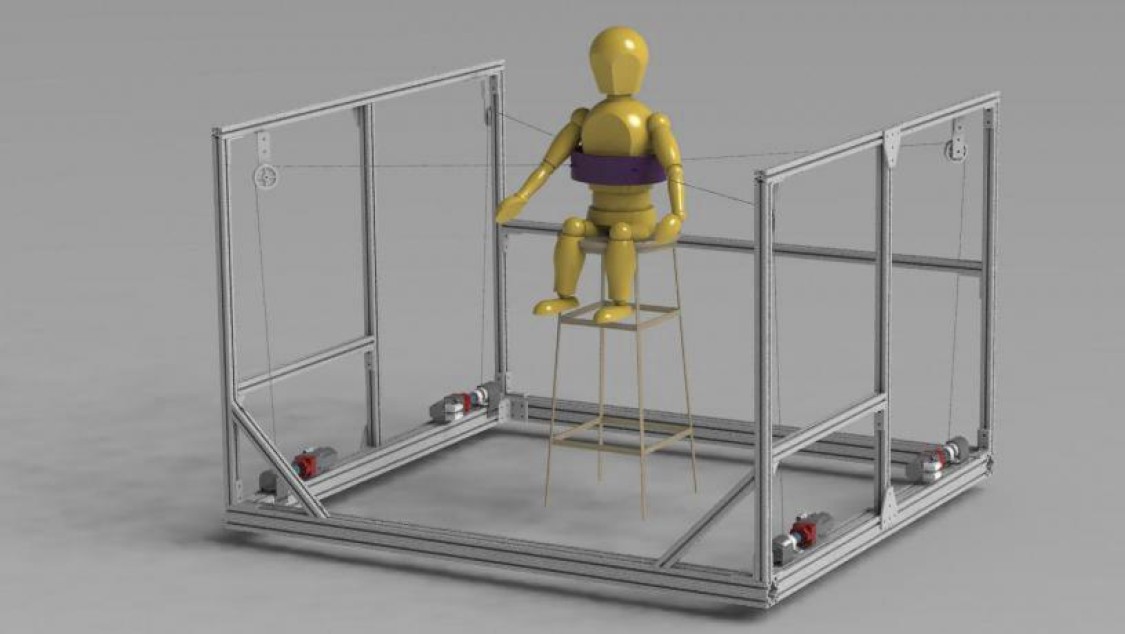
Poor trunk control is a functional impairment that we see in different medical conditions, including spinal cord injury, cerebral palsy, stroke and many others. The TruST robotic device was designed with the following goal in mind: How to provide active support to the trunk at different levels in the upper body while simultaneously challenging a participant to perform tasks that take them outside their base of support. Through an intensive training of the task and changing the level/magnitude of the support, participants are able to relearn and regain their muscle activity and coordination. A similar procedure could be applied to both participants with SCI and children with cerebral palsy. However, TruST had to be fine tuned for the two different patient groups. We just started a new National Institutes of Health-funded project to perform a clinical trial using TruST with a group of 85 children with cerebral palsy to evaluate the efficacy of TruST relative to typical standard of care. We are optimistic that TruST will be able to restore and retrain trunk control in children with cerebral palsy who absolutely need these to be functional in their daily life.
In her opening remarks, Dean Boyce touched on the School’s deep focus on AI research. “This is an area that Columbia Engineering is quite committed to,” she said, adding that over 50 faculty members—almost a quarter of the faculty—are actively investigating artificial intelligence across all departments. “They are either working on the foundations of AI or they are bringing AI into their domains. They may be discovering new materials, creating innovative new business models, or looking at how do we bring engineering impact into medicine.”
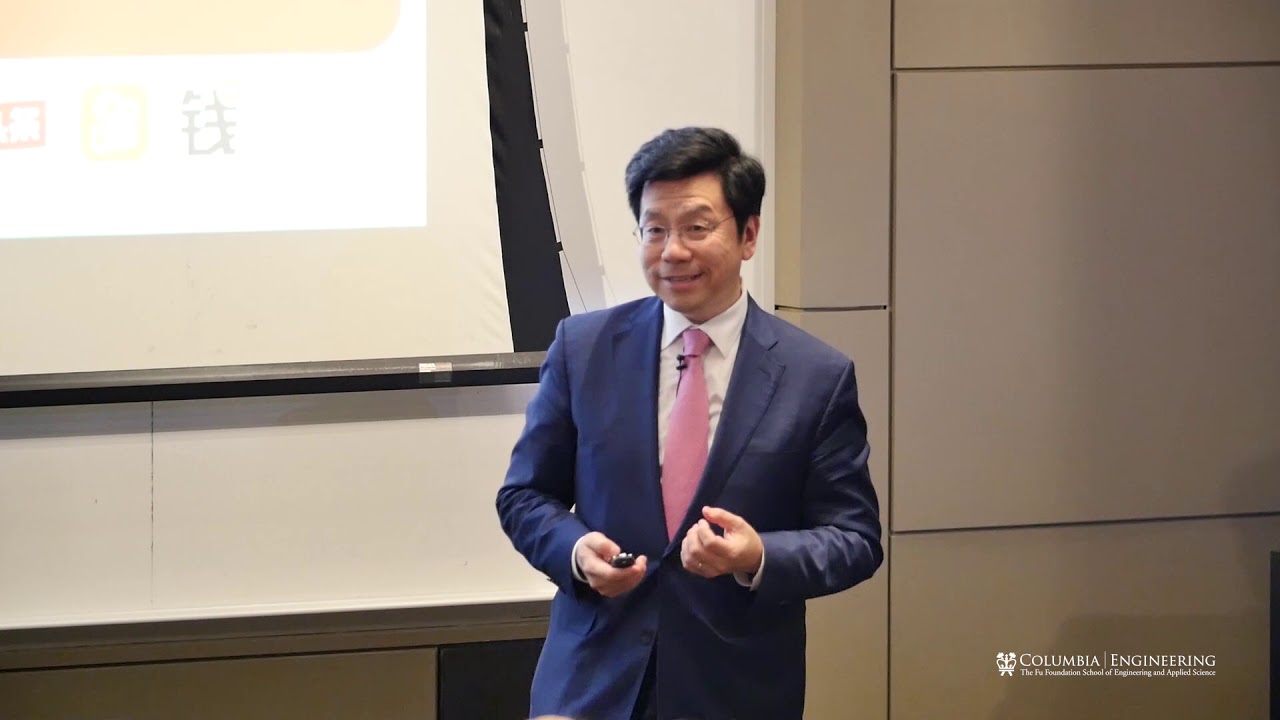
Lee, who devised a first-of-its-kind speech recognition system for his PhD thesis, is a widely cited expert on the subject. Presently head of Sinovation Ventures, a venture capital (VC) firm that has launched five, billion-plus-dollar tech startups, and the author of seven best-selling books, Lee also served as founding president of Google China. In 2017, he spoke at Columbia Engineering’s graduation ceremony, which he credited with sowing the seeds for his latest venture. “It’s great to be back at my alma mater and to be talking about my new book, the idea for which actually came from my Class Day speech,” Lee told the crowd at Davis.
The financier began his talk with a brief overview of how and why AI technology has advanced so rapidly in China over the past decade. In the last ten years, a fierce approach to entrepreneurship combined with favorable regulation and access to a uniquely rich trove of data transformed the country into an AI juggernaut. In 2017, VC funding in China eclipsed similar investment in the US.
But while the pace of China’s rise might give some pause, Lee cautioned the audience not to view AI development in the two countries as a zero-sum game. “The growth of one doesn’t imply shrinking of the other,” he said.
The more pressing issue is an AI-induced existential threat faced by both, he argued. Unprecedented risks to areas such as privacy and security lurk just below our collective horizon. The greatest challenge, however, will likely arise from AI’s potential to undermine labor markets and social systems across the globe as it greatly exacerbates income inequality and automates many jobs out of existence by midcentury.
But we needn’t feel powerless in the face of such dire predictions, Lee said.
“I propose that if we do a very good job in the next 20 years, AI will be viewed as an age of enlightenment,” he said.
To effectively and fairly manage the transition will require nothing less than a realignment of the world economy, Lee posited, so as to adequately compensate work based on the kind of compassion and creativity machines are incapable of. It also requires redirecting our parochial instincts toward a new era of international cooperation. Such a golden age would not only liberate humanity from routine work, but also push people to think more deeply and expansively about what it means to be human.
“For those who fear AI, fear not,” he said. “Because AI is just a tool. We are the masters of AI. We uniquely have free will, and we will be the ones to write the ending of the story of humans and AI.”
Lee’s talk was the first in a new Engineering for Humanity lecture series focusing on how technology can have a positive impact on humanity. The next installment takes place on Nov. 28, when Dean Boyce and Biomedical Engineering Professor Elizabeth Hillman join alumni Greg Dorn and Shivrat Chhabra to discuss health and wellness technology at the Computer History Museum in Mountain View, CA.