Lab to Market Initiative
Photos by Sirin Samman/Columbia Engineering
Costis Maglaras, dean of Columbia Business School, opened the event in a room where he spent more than two decades as a faculty member. "The program that we just launched is interesting and valuable, both to us here at Columbia and back in Athens," he said. Maglaras described how the program came about, first as an informal exchange that turned into a WhatsApp conversation and, eventually, into a collaboration spanning institutions and continents.
"Most of the time in academia you come up with good ideas and nothing happens," he told the audience. "We're executing, and we're actually getting it off the ground."
Dora Varvarigou, professor of electrical and computer engineering at NTUA, emphasized that the collaboration had been a long time coming. "I thought you were never going to ask us to start this thing," she told the Columbia organizers with a laugh before explaining the vital mission of HIAS, which aims to draw on the talents of Greek scientists across the world to foster scientific excellence to advance knowledge and support human well-being.
The afternoon's speakers traced paths from research bench to commercial product in three of the program's focus areas: AI, health technology, and sustainable materials.
Elisa Konofagou, the Robert and Margaret Hariri Professor of Biomedical Engineering at Columbia, described two decades of work developing focused ultrasound techniques that can open the blood-brain barrier to deliver drugs directly to the brain. Her lab's technology has been spun out into a company called Sono Therapeutics.
"You are the first inaugural class, so you are our guinea pigs," she told the student audience, urging them to use the week to reflect on what the program had given them. Her broader message to aspiring founders: expect the journey to take longer than you think.
Antonis Lazanas, head of portfolio and index research at Bloomberg, offered a view from quantitative finance, arguing that the real entrepreneurial opportunity in AI lies in building the tools that make agents faster, cheaper, and more reliable. After noting that ethics was his least favorite course at NTUA, Lazanas struck a more philosophical chord, saying, "We need ethics, we need philosophy, so that we can make use of all this power in a way that's going to renovate us, not destroy us.”
Kostis Kaffes, an assistant professor of computer science at Columbia and an NTUA alumnus, presented his lab's work on AI agent infrastructure, including techniques for reducing latency and token costs in multi-step agent workflows. He echoed Lazanas’ point about where opportunity lies.
"The verification and the reliability of agents will be a major infrastructure issue, and that's extremely hard — no one has solved it yet. If you have good ideas on that, you might make a lot of money." His advice to the room was direct: stay out of hardware and foundation models, and look for deep-tech problems at the infrastructure layer where a genuine moat is possible.
Helen Lu, Percy K. and Vida L.W. Hudson Professor of Biomedical Engineering and senior vice dean at Columbia Engineering, closed the technical portion with a 20-year account of engineering synthetic ligaments and degradable scaffolds for orthopedic repair. Her most memorable lesson came not from a success but from a regulatory stumble: years into developing a tissue scaffold, her team discovered the solvent they were using for manufacturing fell into the wrong FDA safety class.
Rather than see it as a setback, she reframed it. "I turned the safety issue into an opportunity to actually improve the product," she said. Her takeaway for the NTUA founders: "Think of the end first."
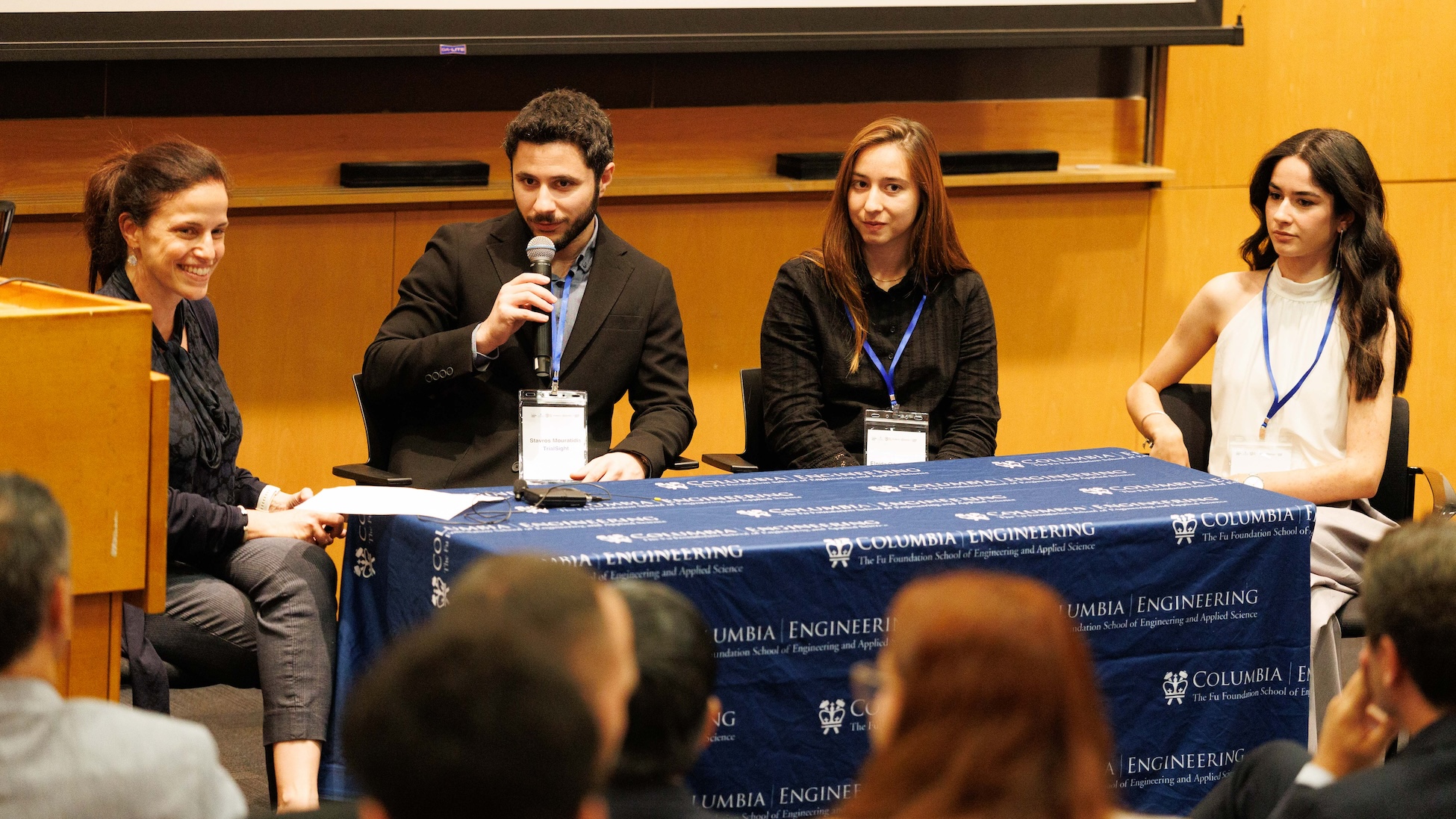
A panel of Columbia Lab to Market alumni — Fotis Tsitsos, Parth Gami, and Chrisha Nario — shared firsthand perspectives on navigating the startup landscape, while a second panel gave the NTUA participants, including Elpida Oikonomou, Stavros Mouratidis, and Anna Maria Papakonstantinou, a forum to offer feedback on the program itself. The event closed with a reception where student teams presented their work.
Highlights from the 2026 Millard Chan ‘99 Tech Challenge
Photos by Sirin Samman
Meet the winners
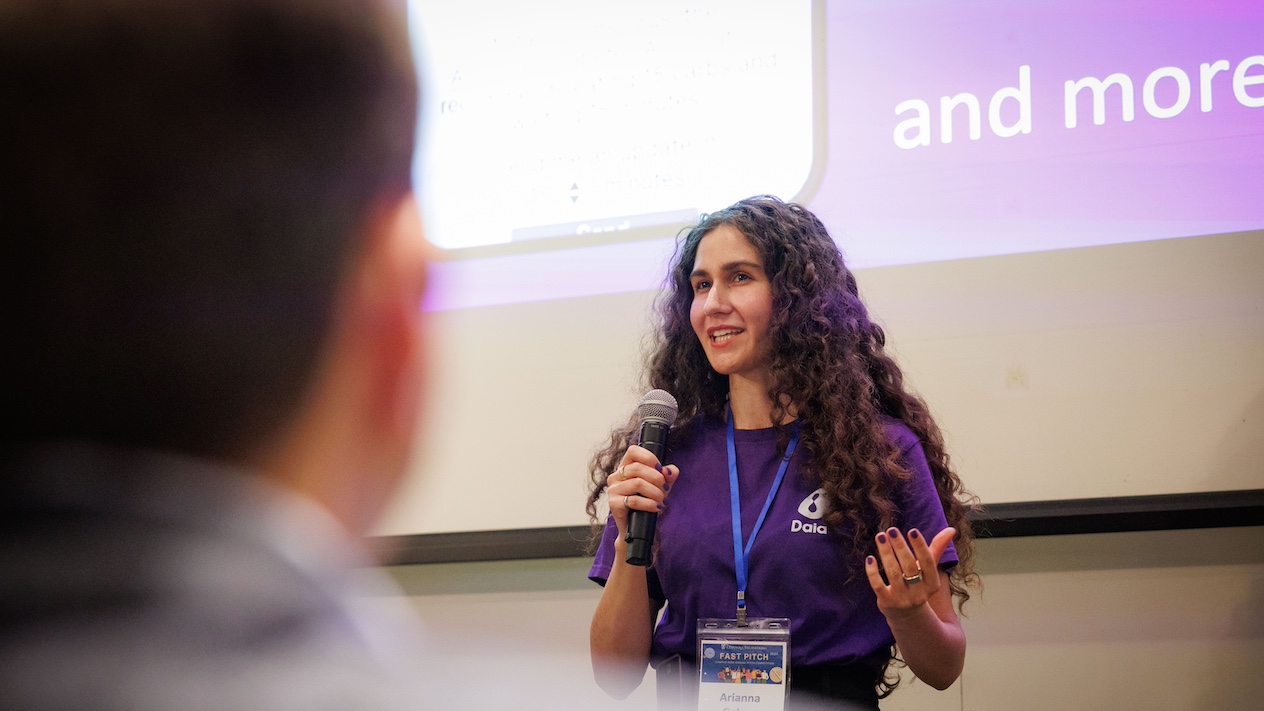
In first place, winning $25,000, was Routerr Health, a smart logistics platform for mobile at-home healthcare, pitched by Brendan Stec MBAxMS’26. Routerr Health, Stec explained, was born from a gap in the $70 billion at-home care market. The number of U.S. adults who are 65 or older is driving demand for at-home care. Providers are struggling to match patients with at-home clinicians, causing delays in care.
Routerr Health streamlines the process, helping teams organize hundreds of incoming orders from patients and match the right staff to the right patient. Routerr Health also uses AI to automate dispatching decisions.
“This helps teams serve more patients, right-size their clinical staff, and eliminate the daily dispatching errors that cause so many issues for patients and the clinicians,” Stec told the judges.
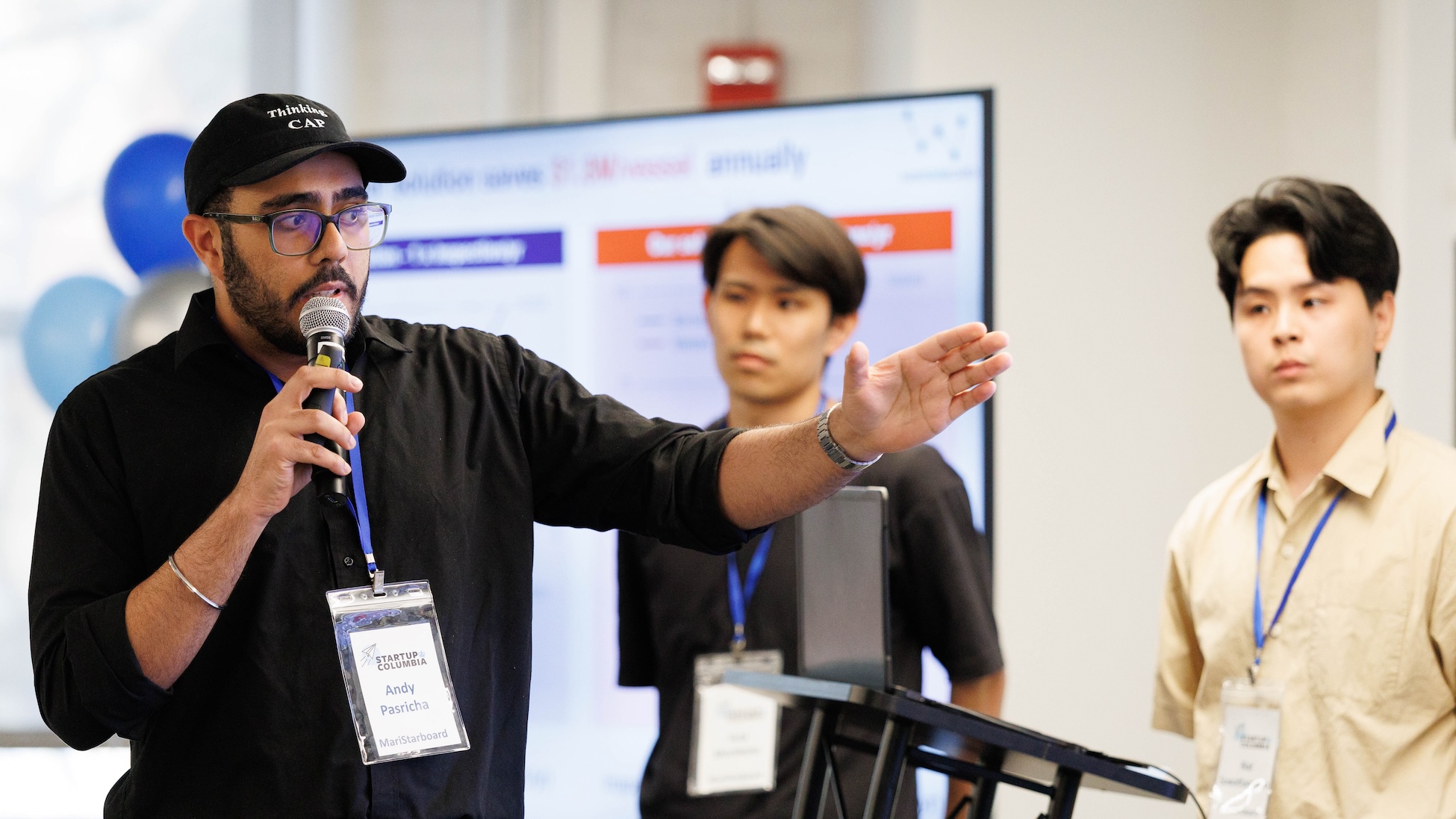
Coming in second place, with a prize of $15,000, was MariStarboard, pitched by Yuta Morimoto MBAxMS’27, Nat Suwattananon MBAxMS’27, and Andy Pasricha MBA’26BUS. MariStarboard plans to use autonomous underwater robotics to solve what the founders described as an inefficiency problem in global maritime infrastructure.
In their pitch, the team explained that barnacles and other organisms get stuck on a ship’s hull, increasing drag. The reduction in fuel efficiency costs the shipping industry upwards of $200 billion annually. Before a ship’s hull can be cleaned, a specialist must conduct an inspection, which is costly and time-consuming. MariStarboard’s software streamlines the costly and time-consuming process of hull inspection by using drone-captured video and an AI model. The system allows ship owners to conduct this inspection on demand, making it easier and cheaper to clean ship hulls.
Third place went to Plasmole, an AI research partner for molecular biology, pitched by Aditya Kulkarni MS’26 and Paul Yoo MS’22, who won $10,000 for the project. The platform provides AI tools to assist biologists at every stage of research, from hypothesis to publication, streamlining research and documenting it in one app. The beta version has already been a hit with scientists at Cornell and NYU.
Lab to Market Launch in Greece
Photos Courtesy of NTUA
The First Cohort
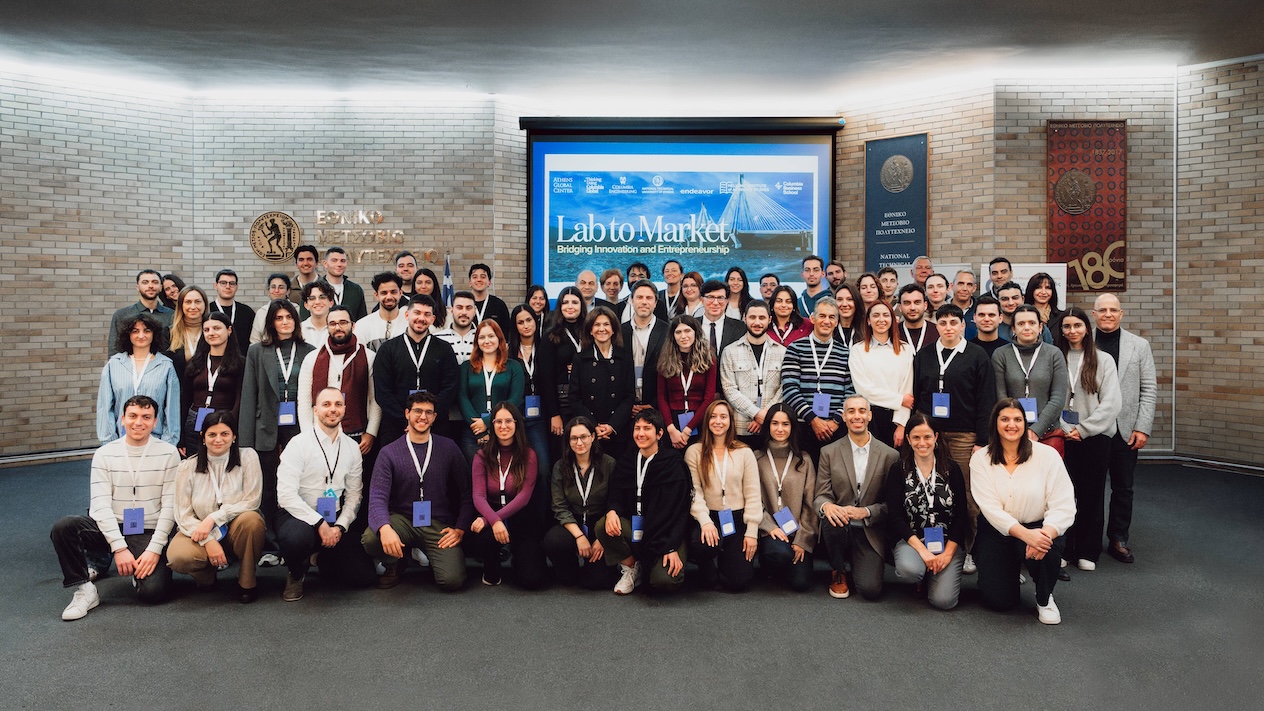
The inaugural cohort consists of 90 students and researchers, selected through a highly competitive process. “The number of applications exceeded all expectations,” noted Stefanos Gandolfo, director of the Columbia Global Center in Athens, “as we received more than 105 applications from teams representing over 400 students in total, the majority of whom were graduates of NTUA.”
Applications were rigorously evaluated by a committee comprising faculty from Columbia and NTUA, as well as executives from Endeavor Greece and HIAS. The main selection criteria were the quality and innovative factor of the proposals, as well as the composition and dynamics of the teams.
Profile of selected participants:
- Gender: 60% men, 40% women
- Geographic distribution: From 18 cities and towns across Greece, including Drama, Xanthi, Trikala, Ioannina, Heraklion, Aigio, Preveza, Athens, and Thessaloniki
Studies: Enrolled in 8 Greek universities, with primary fields including computer science (33%), electrical engineering (24%), civil engineering (8%), and medicine and life sciences (8%)
The Mentors
A decisive role in the program’s success is played by a team of internationally recognized mentors who generously contribute their time and expertise on a voluntary basis. Konstantza Sbokou-Konstantakopoulou, chair of Endeavor Greece and an NTUA alumna, noted: “Greek academic research is one of our country’s most important strategic advantages. Lab to Market launches with a clear goal: to bridge the gap between knowledge and the market, transforming research into sustainable entrepreneurial initiatives. By launching the program and offering free participation to 90 graduates and researchers, we are making a meaningful investment in the country’s human capital, creating new opportunities both for Greece and for the next generation.”
The voluntary contribution of these professionals, many of whom are alumni of NTUA and Columbia University, brings hands-on knowledge from the front lines of entrepreneurship and investment. As emphasized by Petros Koumoutsakos, professor of computational science at Harvard University and president of HIAS, “HIAS’s mission is to build and promote international collaborations and exchanges among Greeks, Americans, and scholars, academics, and policymakers of the Greek diaspora.
HIAS is an active member of the Lab to Market initiative and will play a crucial role in its success, contributing through expert speakers and assisting in the curation of specialized academic or business workshops. It will support the program by providing guidance through experts and researchers associated with HIAS in designated areas and will connect participants’ ongoing research initiatives with international programs focused on entrepreneurship."
The Need for Internationalization of Greek Universities
The initiative is part of the broader framework for the internationalization of Greek higher education, strengthened by government reforms since its first term under former Minister of Education Niki Kerameus, granting universities greater flexibility to establish partnerships with leading institutions abroad. As emphasized by the Minister of Labor and Social Security and former Minister of Education, “Lab to Market exemplifies a model of strategic international collaboration, connects education with employment, and invests in our most valuable asset, human capital. Fostering a culture of openness and innovation is a key step in transforming Greek universities, and young people are the most critical group in which we must invest.”
Deputy Minister of Development, responsible for Research and Innovation, Stavros Kalafatis, noted: “This initiative constitutes a bold step toward linking scientific excellence with entrepreneurial innovation. At the Ministry of Development, we support every effort that strengthens the ecosystem of innovation and entrepreneurship, so that new knowledge is transformed into solutions, products, and services that improve citizens’ daily lives, enhance the country’s competitiveness, and contribute to sustainable development. Through the creation of Networks of Technology Transfer Offices, funding actions for spin-offs and deep-tech startups, and international cooperation programs, we open pathways for outward-looking engagement and empower the new generation of entrepreneurs. We are transforming Greece into an international hub for research, technology, and innovation.”
The Rector of NTUA, Professor Ioannis Chatjigeorgiou, underlined that “a change in mindset within universities is perhaps the most important step for Greece’s transition to a sustainable knowledge-based economy.” As he noted, cultivating a culture of openness and innovation is crucial for the transformation of Greek universities, with young people at the forefront of progress and development. NTUA, as the country’s oldest and strongest technological institution, contributes scientific excellence, a strong research base, and high-caliber students, significantly strengthening the initiative’s impact.
About the Partners
The Columbia Fu Foundation School of Engineering and Applied Science demonstrates its strong and longstanding commitment to promoting entrepreneurship and innovation, supported by a robust ecosystem that ensures research outcomes have real-world impact. Through initiatives such as Lab to Market, the Ventures Competition, Start Me Up, and the Silberstein Family Executives in Residence Program, the School empowers faculty, students, and partners to launch and scale technologies with meaningful reach. This capacity is further enhanced by Columbia Global, which connects the University’s intellectual capital with partners worldwide to accelerate scientific progress and social impact.
The National Technical University of Athens is the oldest and largest technological institution in Greece and one of Europe’s leading polytechnic universities, producing cutting-edge research in engineering sciences, technology, construction, artificial intelligence, and energy. It is internationally recognized for its high-quality education, distinguished faculty and researchers, significant international collaborations, iconic role in Greek history, and substantial contribution to society. Its academic and research programs are renowned for their excellence, graduate employability is exceptionally high, and admission to NTUA is the most demanding among Greek universities. NTUA also maintains a strong connection with the Columbia School of Engineering and Applied Science, as 15 members of its faculty are NTUA alumni.
The Columbia Global Center in Athens serves as Columbia University’s hub in Greece and the wider region. Its mission is to build bridges between Columbia and the Greek academic community through innovative and impactful programs in education and research. The Center supports students and researchers from both communities, strengthening academic exchange, facilitating collaborative research, and promoting dialogue.
Endeavor Greece, the leading global network supporting high-impact entrepreneurs—co-founded by a Columbia alumnus and currently led by members of the Columbia community—and the Hellenic Institute for Advanced Studies, the network of top Greek scientists worldwide, will provide additional mentorship and access to a broader entrepreneurial ecosystem, further enhancing the initiative’s success.
The Blavatnik Family Foundation, founded by Sir Leonard Blavatnik, provides many of the world’s best researchers, scientists, and future leaders with the support and funding they need to tackle humanity’s greatest challenges. The Foundation is funded exclusively by its founder and has contributed more than $1.3 billion to over 250 world-renowned institutions and philanthropic organizations over the past decade.
Lead Photo Caption: Celebrating the launch event in Greece for “Lab to Market: Bridging Innovation and Entrepreneurship.”
Lead Photo Credit: NTUA
Described in a study published Dec. 8 in Nature Electronics, BISC includes a single-chip implant, a wearable “relay station,” and the custom software required to operate the system. “Most implantable systems are built around a canister of electronics that occupies enormous volumes of space inside the body,” says Ken Shepard, Lau Family Professor of Electrical Engineering, professor of biomedical engineering, and professor of neurological sciences at Columbia University, who is one of the senior authors on the work and guided the engineering efforts. “Our implant is a single integrated circuit chip that is so thin that it can slide into the space between the brain and the skull, resting on the brain like a piece of wet tissue paper.”
Shepard was joined in the BISC effort by senior and co-corresponding author Andreas S. Tolias, PhD, professor at the Byers Eye Institute at Stanford University and co-founding director of the Enigma Project. Tolias’s pioneering work training AI models on large-scale neural datasets — including datasets recorded in the Tolias laboratory using BISC — enabled the team to evaluate the device’s neural decoding performance. “BISC turns the cortical surface into an effective portal, delivering high-bandwidth, minimally invasive read–write communication with AI and external devices,” Tolias says. “Its single-chip scalability paves the way for adaptive neuroprosthetics and brain-AI interfaces to treat many neuropsychiatric disorders, such as epilepsy.”
Dr. Brett Youngerman, assistant professor of neurological surgery at Columbia University and a neurosurgeon at NewYork-Presbyterian/Columbia University Irving Medical Center, served as the chief clinical collaborator on the project. “This high-resolution, high-data-throughput device has the potential to revolutionize the management of neurological conditions from epilepsy to paralysis,” he says. Youngerman, Shepard, and NewYork-Presbyterian/Columbia epilepsy neurologist Dr. Catherine Schevon were recently awarded a grant from the National Institutes of Health to implement BISC in the management of drug-resistant epilepsy. “The key to effective brain-computer interface devices is to maximize the information flow to and from the brain, while making the device as minimally invasive in its surgical implantation as possible. BISC surpasses previous technology on both fronts,” continues Youngerman.
“Semiconductor technology has made this possible, allowing the computing power of room-sized computers to now fit in your pocket,” Shepard says. “We are now doing the same for medical implantables, allowing complex electronics to exist in the body while taking up almost no space.”
Smaller, Safer, and Faster
BCIs work by interfacing with the electrical signals that neurons use to transfer information throughout the brain. Today’s state-of-the-art BCIs, used in medical contexts, are constructed from individual microelectronic components, including amplifiers, data converters, radio transmitters, and power management circuits. To accommodate all these devices, a large canister of electronics must be surgically implanted in the body, either by removing a portion of the skull or by placing the device in another location, such as the chest, and running wires to the brain.
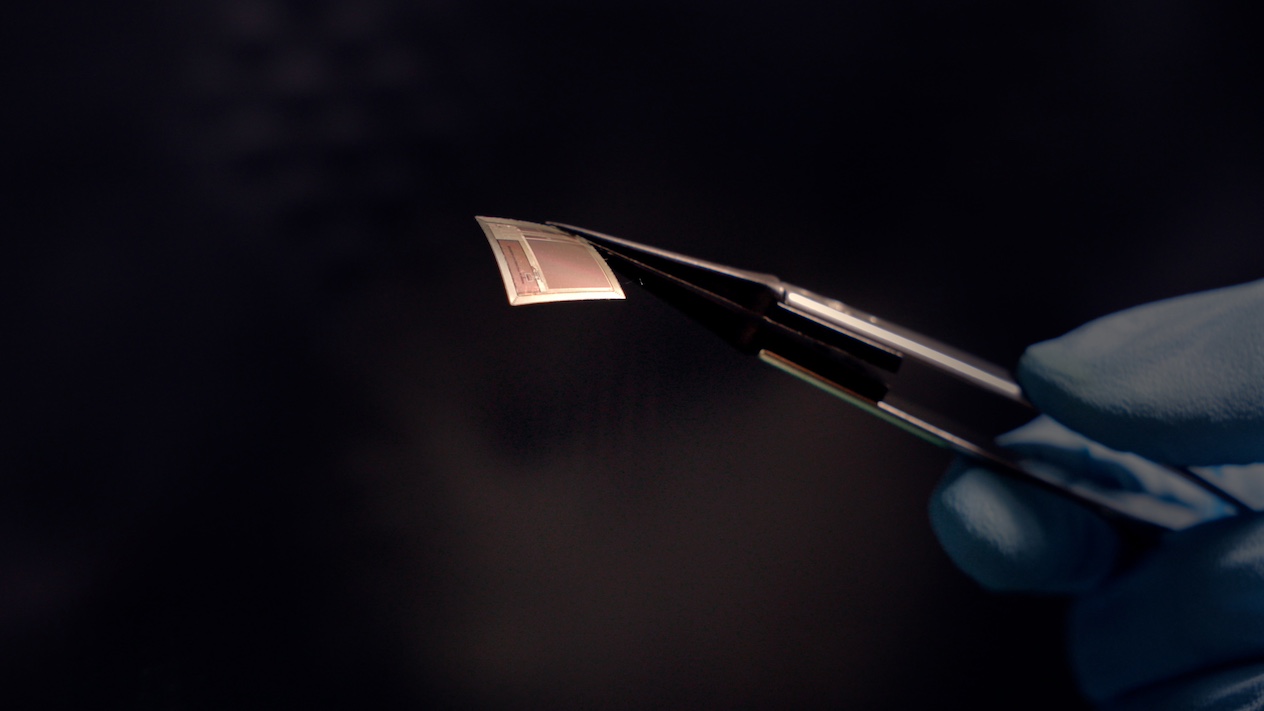
BISC works differently. The entire implant, which occupies less than 1/1000th the size of a conventional device, is a single complementary metal-oxide-semiconductor (CMOS) integrated circuit chip thinned to just 50 μm. With a total volume of approximately 3 mm³, the flexible chip conforms to the surface of the brain. This micro-electrocorticography (µECoG) device integrates 65,536 electrodes, 1,024 simultaneous recording channels, and 16,384 stimulation channels. By leveraging the large-scale manufacturing techniques developed in the semiconductor industry, these implants can be easily manufactured at scale.
The single-chip implant includes a radio transceiver, wireless powering circuit, digital control, power management, data conversion, and the analog circuits required to support the recording and stimulation interfaces. The battery-powered relay station powers and communicates with the implant, transferring data via a custom ultrawideband radio link that achieves 100 Mbps data bandwidths — a connection with at least 100 times higher throughput than any competing wireless BCI device. The relay station is itself an 802.11 WiFi device, in effect forming a relayed wireless network connection from any computer to the brain.
BISC has its own instruction set, supported by an extensive software stack, which together constitute a computing architecture designed for BCIs. As demonstrated in this study, these high-bandwidth recording capabilities allow brain-signal patterns to be submitted to advanced machine-learning or deep-learning frameworks for decoding complex intentions, perceptions, or states.
“By integrating everything on one piece of silicon, we’ve shown how brain interfaces can become smaller, safer, and dramatically more powerful,” Shepard says.
The BISC implant was manufactured using TSMC’s versatile 0.13-μm Bipolar-CMOS-DMOS (BCD) technology. This manufacturing process integrates three technologies onto a single chip to create mixed-signal integrated circuits (ICs). This integration enables the efficient combination of digital logic (from CMOS), high-current and high-voltage analog functions (from bipolar and DMOS transistors), and power devices (from DMOS), all of which are essential for BISC.
From Lab to Clinic
To make this technology available to doctors and patients, Shepard’s group partnered closely with Youngerman at NewYork-Presbyterian/Columbia University Irving Medical Center. Together, they refined surgical methods to safely implant the paper-thin device in a preclinical model and demonstrated its recording quality and stability, as described in the current study. Studies in human patients for short-term intraoperative recordings are underway.
“These initial studies give us invaluable data about how the device performs in a real surgical setting,” Youngerman says. “The implants can be inserted through a minimally invasive incision in the skull and slid directly onto the surface of the brain in the subdural space. The paper-thin form factor and lack of brain-penetrating electrodes or wires tethering the implant to the skull minimize tissue reactivity and signal degradation over time.”
Extensive pre-clinical testing of BISC in the motor and visual cortices drew on collaborations with both Dr. Tolias and Bijan Pesaran, professor of neurosurgery at the University of Pennsylvania, both of whom are leaders in computational and systems neuroscience.
“The extreme miniaturization by BISC is very exciting as a platform for new generations of implantable technologies that also interface with the brain with other modalities such as light and sound,” Pesaran says.
Developed under the Neural Engineering System Design program of the Defense Advanced Research Projects Agency (DARPA), BISC combines Columbia’s strengths in microelectronics, Stanford’s and Penn’s cutting-edge neuroscience, and NewYork-Presbyterian/Columbia University Irving Medical Center’s surgical innovation.
Toward Real-World Applications
To accelerate translation, the Columbia and Stanford teams launched Kampto Neurotech, a spin-off company founded by Columbia electrical engineering alumnus Dr. Nanyu Zeng, one of the project’s lead engineers. Kampto Neurotech is developing commercial versions of the chip for preclinical research applications and raising funds to advance the system toward human use.
“This is a fundamentally different way of building BCI devices,” Zeng says. “In this way, BISC has technological capabilities that exceed those of competing devices by many orders of magnitude.”
In a technological landscape driven by advances in artificial intelligence, BCI technologies have drawn considerable recent interest in both restoring function to those affected by neurological conditions and in potentially augmenting human capabilities by providing direct interfaces to the brain.
“By combining ultra-high resolution neural recording with fully wireless operation, and pairing that with advanced decoding and stimulation algorithms, we are moving toward a future where the brain and AI systems can interact seamlessly — not just for research, but for human benefit,” says Shepard. “This could change how we treat brain disorders, how we interface with machines, and ultimately how humans engage with AI.”
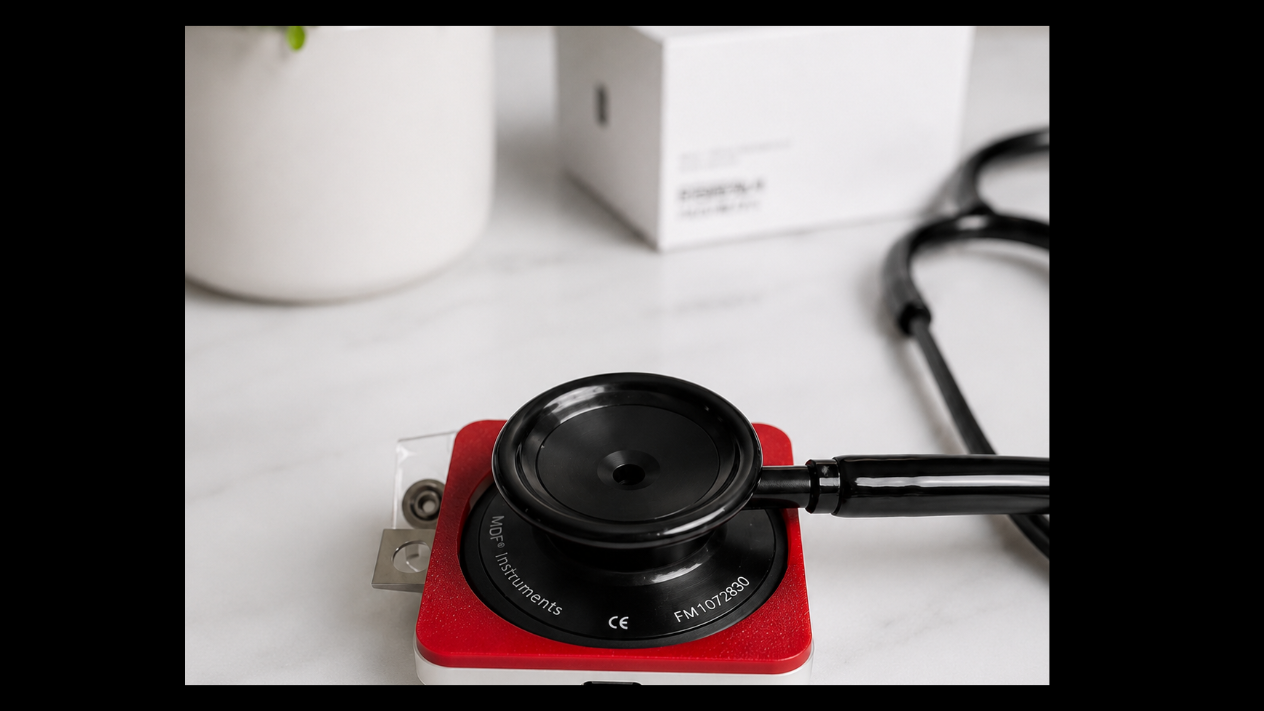
Lead Photo Caption: The BISC implant shown here is roughly as thick as a human hair.
Lead Photo Credit: Columbia Engineering
About The Study
Journal: Nature Electronics
DOI: 10.1038/s41928-025-01509-9
Title: Stable, chronic in-vivo recordings from a fully wireless subdural-contained 65,536-electrode brain-computer interface device
Authors: Taesung Jung, Nanyu Zeng, Jason D. Fabbri, Guy Eichler, Zhe Li, Erfan Zabeh, Anup Das, Konstantin Willeke, Katie E. Wingel, Agrita Dubey, Rizwan Huq, Mohit Sharma, Yaoxing Hu, Girish Ramakrishnan, Kevin Tien, Paolo Mantovani, Abhinav Parihar, Heyu Yin, Denise Oswalt, Alexander Misdorp, Ilke Uguz, Tori Shinn, Gabrielle J. Rodriguez, Cate Nealley, Sophia Sanborn, Ian Gonzales, Michael Roukes, Jeffrey Knecht, Daniel Yoshor, Peter Canoll, Eleonora Spinazzi, Luca P. Carloni, Bijan Pesaran, Saumil Patel, Joshua Jacobs, Brett Youngerman, R. James Cotton, Andreas Tolias, Kenneth L. Shepard
Funding/Acknowledgments: This work was partly supported by the Defense Advanced Research Projects Agency (DARPA) under Contract N66001-17-C-4001, the Department of the Defense Congressionally Directed Medical Research Program under Contract HT9425-23-1-0758, the National Science Foundation under Grant 1546296, and the National Institutes of Health under Grant R01DC01949
Scenes from Erman Ilicak’s Talk
Photos by David Dini
At age 26, frustrated by the slow pace of large corporate hierarchies, Ilicak decided to “do [his] own thing,” recruiting a team of young engineers to fill gaps left by industry giants. The firm would go on to deliver Europe’s tallest tower, its largest hospital, and the world’s longest tunnel. To date, his company has completed more than 5,000 contracts worth $60 billion worldwide.
Ilicak described the company’s evolution into what he calls the “Renaissance Way,” a model that reinvests capital, emphasizes innovation and collaboration, and manages risk through self-sufficiency. Informed by his time as a business leader and while pursuing an MBA and PhD, Ilicak’s approach enabled his company to finance ambitious projects that might not have been possible otherwise.
“We introduced a new growth model for delivering multibillion-dollar projects,” he said.
His talk closed with advice for students: choose your industry carefully, learn business finance, and build strong teams.
“It’s here — at places like Columbia Engineering — where you have the best opportunities to find teammates you trust,” he said. “That is the most important thing.”
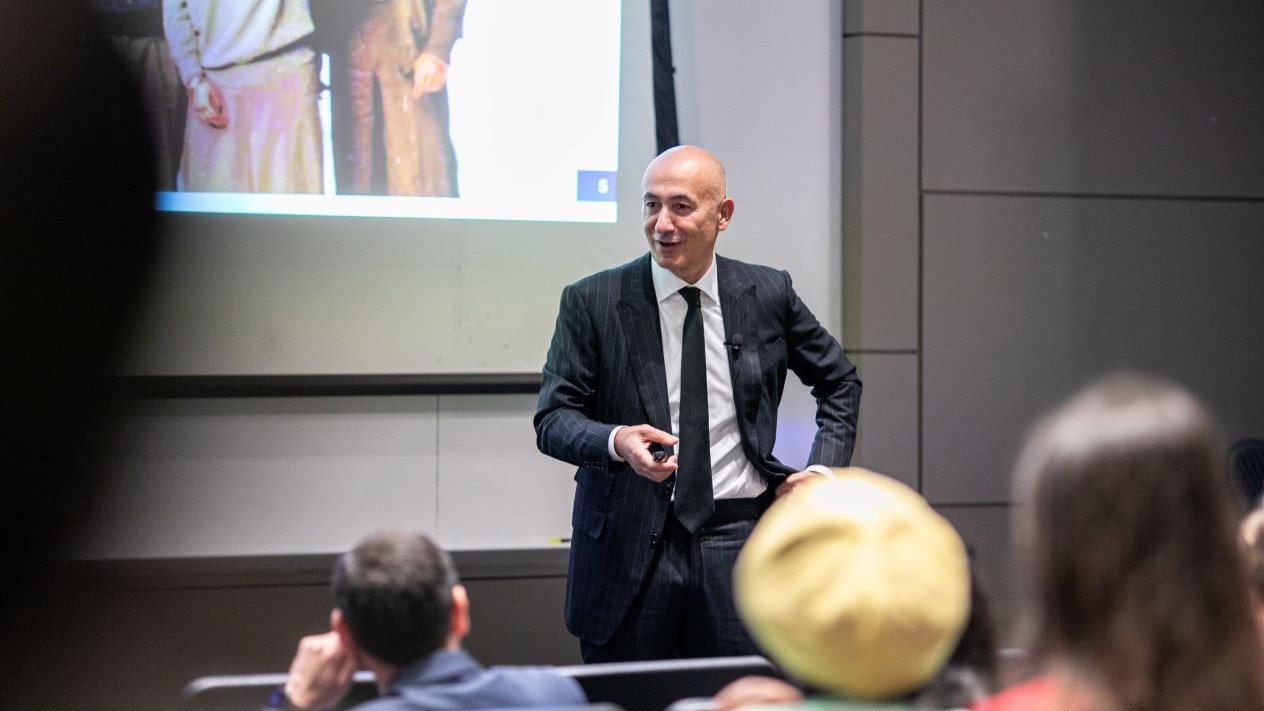
Caption: Erman Ilicak delivers a Tech CEO lecture in Davis Auditorium
Credit: David Dini/Columbia Engineering
Highlights from the Innovation Forum
Credit: Sirin Samman/Columbia Engineering
Fostering connections
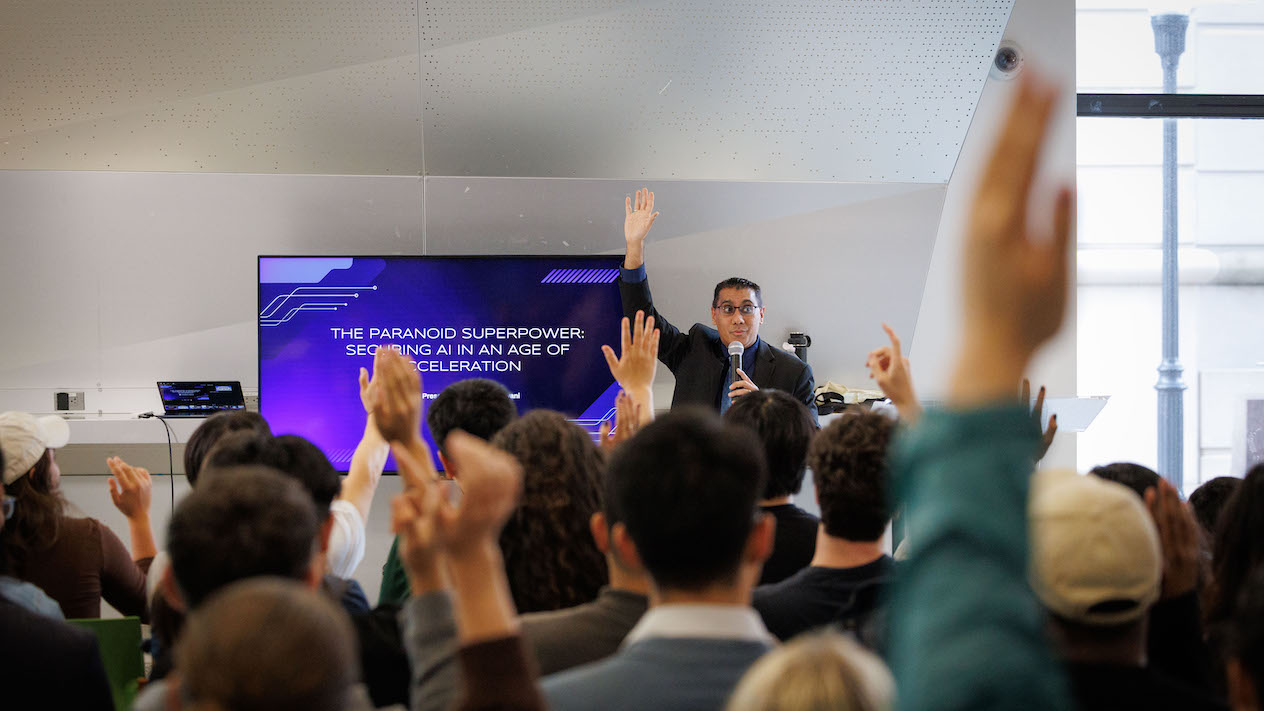
To close the forum, Daswani encouraged students to draw on the strength of their peers and alumni networks throughout their entrepreneurial journey. He advised, “Perhaps some of the people that you interact with here at Columbia will be confidants in your path in life.”
For Daswani, “paying it forward” is more than just speaking with students – it also includes creating new opportunities for them. With his former classmate, Gaurav "Gary" Makhija, he is establishing the Daswani and Makhija Scholarship Fund to support an undergraduate student in computer science during their time at Columbia. Inspired by their own experiences, the pair wanted to give back and help the next generation of engineers.
Daswani hopes this motivates fellow alumni to help current and future students thrive. “As a Columbia alum, one of the things that I've experienced is a lot of support from other alums who have helped me make an impact in the world after completing my undergraduate degree,” he said. “One of the reasons that it's really important for the alumni community to come together is to help the current generation of students create all kinds of impact that they may not be able to do without our support.”
Lead Photo Caption: Neil Daswani BS'96 speaks at Innovation Forum
Lead Photo Credit: Sirin Samman/Columbia Engineering