Senior Design X 4: 2024
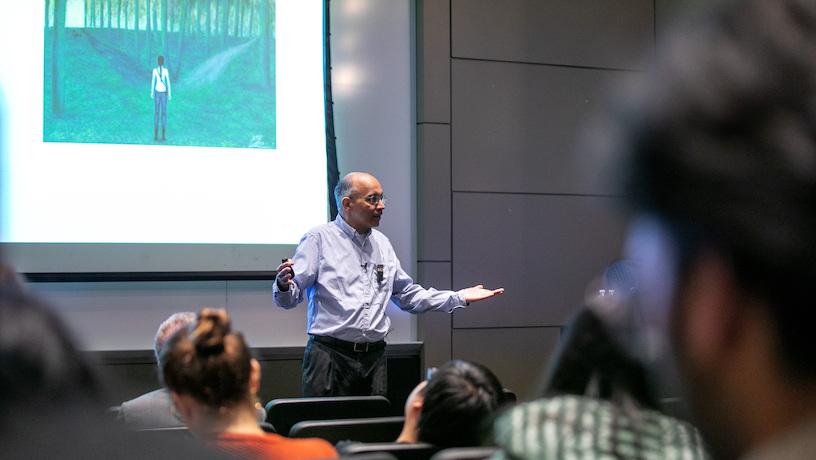
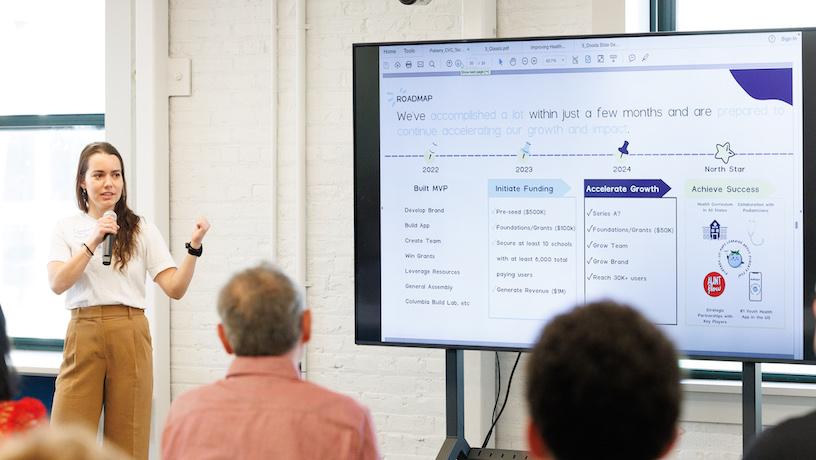
Four teams—MOBY, ParkinPlay, Thimble, and The Vermont Recreational Center with On-Site Wastewater Treatment—walk us through their senior design projects. Video: Jane Nisselson
The Future of Software-Controlled Cooking
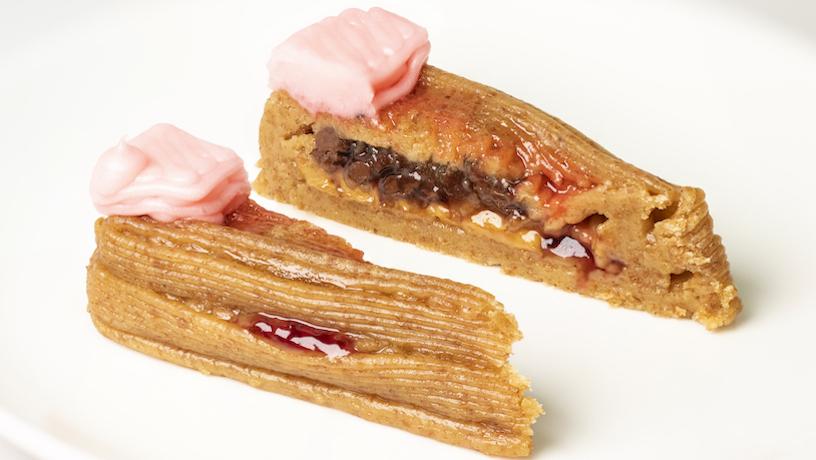
Watch how Columbia mechanical engineers constructed a cheesecake using 3D food printing techniques.
Research produced by Dr. Jonathan Blutinger and his team at the Creative Machine Labs at Columbia University (directed by Prof. Hod Lipson) and Prof. Christen Cooper, Pace University Nutrition and Dietetics.
Addressing food printing challenges
Food printing technology has existed since Lipson’s lab first introduced it in 2005, but to date the technology has been limited to a small number of uncooked ingredients, resulting in what many perceive as less than appetizing dishes. Blutinger’s team broke away from this limitation by printing a dish comprising seven ingredients, cooked in situ using a laser. For the paper, the researchers designed a 3D-printing system that constructs cheesecake from edible food inks — including peanut butter, Nutella, and strawberry jam. The authors note that precision printing of multi-layered food items could produce more customizable foods, improve food safety, and enable users to control the nutrient content of meals more easily.
“Because 3D food printing is still a nascent technology, it needs an ecosystem of supporting industries such as food cartridge manufacturers, downloadable recipe files, and an environment in which to create and share these recipes. Its customizability makes it particularly practical for the plant-based meat market, where texture and flavor need to be carefully formulated to mimic real meats,” Blutinger said.
To demonstrate the potential of 3D food printing, the team tested various cheesecake designs, consisting of seven key ingredients: graham cracker, peanut butter, Nutella, banana puree, strawberry jam, cherry drizzle, and frosting. They found that the most successful design used a graham cracker as the foundational ingredient for each layer of the cake. Peanut butter and Nutella proved to be best used as supporting layers that formed “pools” to hold the softer ingredients: banana and jam. Multi-ingredient designs evolved into multi-tiered structures that followed similar principles to building architectures; more structural elements were needed to support softer substrates for a successful multi-ingredient layered print.
Is 3D food printing healthy?
“We have an enormous problem with the low-nutrient value of processed foods,” Cooper said. “3D food printing will still turn out processed foods, but perhaps the silver lining will be, for some people, better control and tailoring of nutrition--personalized nutrition. It may also be useful in making food more appealing to those with swallowing disorders by mimicking the shapes of real foods with the pureed texture foods that these patients--millions in the U.S. alone--require.”
The potential of 3D food-printing
Laser cooking and 3D food printing could allow chefs to localize flavors and textures on a millimeter scale to create new food experiences. People with dietary restrictions, parents of young children, nursing home dieticians, and athletes alike could find these personalized techniques very useful and convenient in planning meals. And, because the system uses high-energy targeted light for high-resolution tailored heating, cooking could become more cost-effective and more sustainable.
“The study also highlights that printed food dishes will likely require novel ingredient compositions and structures, due to the different way by which the food is ‘assembled,’ ” said Lipson. “Much work is still needed to collect data, model, and optimize these processes.”
Blutinger added, “And, with more emphasis on food safety following the COVID-19 pandemic, food prepared with less human handling could lower the risk of foodborne illness and disease transmission. This seems like a win-win concept for all of us.”
About the Study
JOURNAL: npj Science of Food
STUDY: “The Future of Software-Controlled Cooking”
AUTHORS: Jonathan David Blutinger (1, Christen Cupples Cooper (2), Shravan Karthik(1), Alissa Tsai (1), Noa Samarelli (1), Erika Storvick (1), Gabriel Seymour (1), Elise Liu (1), Yoran Meijers (1,3) and Hod Lipson (1)
- Department of Mechanical Engineering, Columbia Engineering
- Department of Nutrition and Dietetics, Pace University
- Department of Food Technology, Wageningen University, Netherlands.
FUNDING: The study was supported by NSF AI Institute for Dynamical Systems, grant 2112085, and by a grant from the Redefine Meat Ltd.
The authors declare no financial or other conflicts of interest.
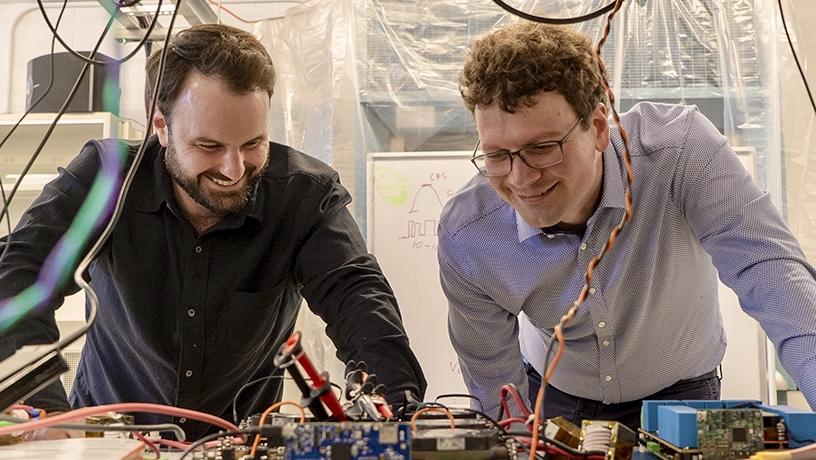
An Electrifying Pair: next generation electric vehicle technology
How He Started His Startup
Yao discusses how his project was born out of classes at Columbia University and how they brought his web plugin into reality.
What makes the clothing industry difficult to analyze
So in sustainability, there's a lot of different dimensions. You have the social aspect, the fair labor aspect, and you have the environmental impact. Within the environmental impact, you have the CO2 emissions, water consumption and you also have issues of microplastics so often used in clothes. You also have to consider If the garment is recyclable or if it's biodegradable. So it's really hard to make it easy for people to understand the impact that they're having while being a consumer for a kind of art that’s constantly evolving.
An early education in entrepreneurship
I've always wanted to make an impact, which is why I was drawn to entrepreneurship. Both my parents emigrated from China to France. The community that they were from was pretty poor in China, and they were trying to improve their conditions. When we were in France, everyone around me was hustling. They were all entrepreneurs, whether they were doing jobs in restaurants or working in different businesses. At the time, I never realized that I was growing up in this environment where everyone was hustling and it's only now that I see how much all that informed my outlook on entrepreneurship and business.
What makes Changing Room different from other companies?
I'd like to think of our company not as a technology-driven company, but as a company that's using technology to fulfill one of our purposes, which is to help people make more effective and conscious decisions. The difference between us and other technology-based companies, from my perspective, is that we're putting more of an emphasis on our mission to really try and have an impact, but only by drawing on all the technologies that are available. We're not building technology for technology’s sake.
Bringing Transparency to Fashion
Fast fashion is plagued with major issues, from environmental waste to abusive labor practices. Yao’s product gives consumers an idea of the impact of every purchase, and even offers alternatives.
How companies conceal data on practices
The fashion industry is very opaque, so it's very difficult to actually gather information on the impact of their products. So at the beginning, we tried to actually go very deep into the supply chain and quantify the environmental impact, but it was very difficult because factories are not very open to that idea. So one of our aims and missions is to really create this community and create this movement. We want to empower people with this tool so that they can be more informed and really push brands to give us more information along the way.
The role of consumers
We're trying to best inform users with all the information that's available out there, whether that’s the material used or the labor practices used to manufacture clothing. I'd like to think that by giving people more information about what they're buying, they can actually give a push to the industry–they can decide where they're going to put their money and they can signal to the market that they prefer ethically sourced garments or that they prefer second-hand products. They will say they prefer more transparent brands that put more effort in their supply chains that make products more environmentally friendly.
The Life of an Entrepreneur
According to Yao, the best way to get into the startup game is to jump right in.
Important to accept an irregular schedule
What it’s like to work in our startup really depends on the week and it depends on our focus. It depends whether we're starting to get to know our consumers, if we’re building the data structure or if we are going to talk to investors to seek new partnerships. We have some members of our team who are on the West Coast of the U.S., so some of our meetings are pushed back a bit later into the day, accordingly. Personally, I am pretty productive later at night. Sometimes I just have this rush of creativity and productivity and I just do my task where I could put some music on and just just get stuff done.
Striking a work/life balance is important
I think what I want to convey to people here is that I don't necessarily believe in working from 9 a.m. to 10 p.m., or even from 9 a.m. to 6 p.m. straight. We want our team members to really be able to take a break when they need to, and if it's a really nice sunny day, and they say they need to go for a walk then they should be able to go for a walk. I don't think you can always be productive because you need some time to be unproductive. You need to have some recreational time in order to actually be able to be creative and productive.
What Was it Like to Break into the Startup Scene?
Yao shares his thoughts on how best to put yourself out there to market you product as an entrepreneur.
Learning as you go
I think I've had a steep learning curve. Coming out of my master's program, Changing Room has really been my life. I've learned a lot, whether it's professionally or personally. I've learned to get out of my comfort zone and get out there. The first few times where I went to networking events I probably was one of the youngest entrepreneurs there. Originally I had this imposter syndrome, where I told myself, ‘Oh, I'm so young, what can I bring to the table?’ But I’ve since learned that I am capable and that, while I still have a lot to prove, I know how I want to get there.
Coming to understand your hidden strengths
I think that, over time, I’ve come to understand what my strengths are and what I can actually do. I realized that I'm pretty good at understanding people and managing people in the recruiting aspect of being a founder, whether it's for our work culture or understanding where my strengths lie and especially where my limits are. One of my goals in my role as a founder is to find people who are smarter and better than me at all the things that I'm not an expert at, and get them to do what they do best.