In the Media

In 1925, Max Born coined “quantum mechanics” to explain, under one theory, the growing number of observations that were physics. Its basic tenets: quantum objects are simultaneously particles, with masses, charges, and discrete amounts of energy called quanta, and waves, with given frequencies and wavelengths. These quantum objects, which include electrons and photons of light, can combine in unique and often counterintuitive ways.

Though scientists in Europe initially developed the theory, Columbia has had a part in quantum history since its earliest days. In 1909, Max Planck brought the concept of energy quanta — the idea that would eventually lend the field its name — to North America in a series of lectures at Columbia. In the coming decades, as theory gave way to applications, Columbians made several Nobel Prize-worthy quantum discoveries that led to now commonplace technologies, including:

  •  I.I. Rabi’s observations of magnetic resonance, which led to today’s magnetic resonance imaging (MRI).
  • Charles Townes’ amplified electromagnetic waves; the result, lasers, are just about everywhere.
  • Louis Brus’s connection between a particle’s size and the color of light it emits; these quantum dots have found applications in LED displays, solar panels, and biological sensors.

Today, Columbia’s researchers are creating entirely new materials with unique quantum properties, controlling individual photons of light and entangling them together, and developing theories to guide quantum research into its second century. So, what’s to come? Columbia Engineers share where they think the (quantum) world is heading:

Image
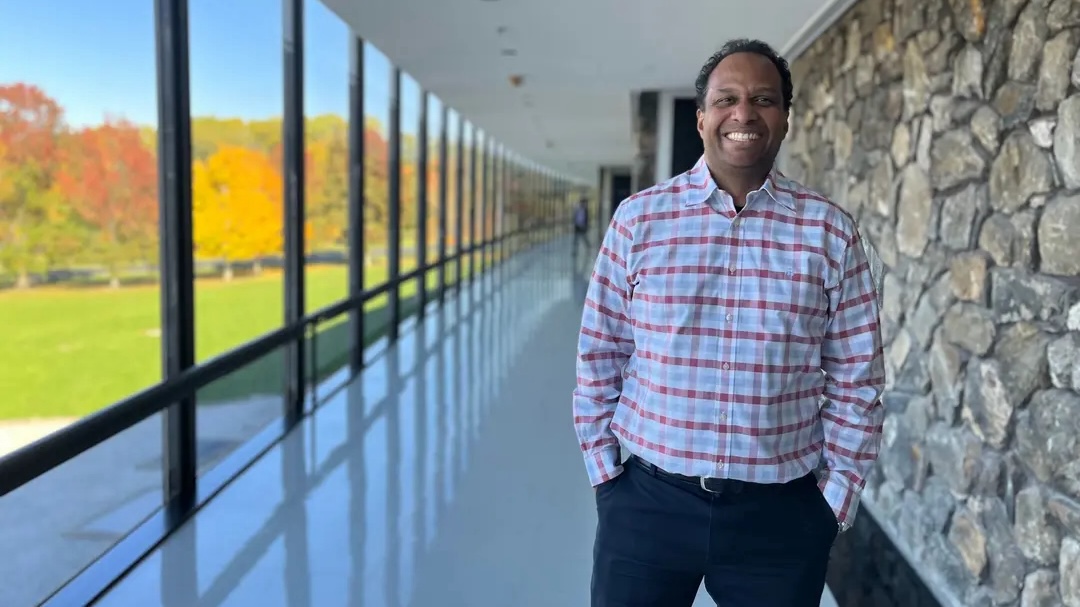
Alexander Gaeta headshot

“One hundred years is a pretty long time. Perhaps we will have a quantum computer with a wide variety of applications — ones we aren’t even thinking about now. Quantum sensors may also become ubiquitous, all linked through a network and with capabilities we haven’t even dreamed of yet. I think a lot of it will hinge on these technologies that we’re working on here.”

Alexander Gaeta

David M. Rickey Professor of Applied Physics and Materials Science, Professor of Electrical Engineering, and co-lead of the Columbia Quantum Initiative.

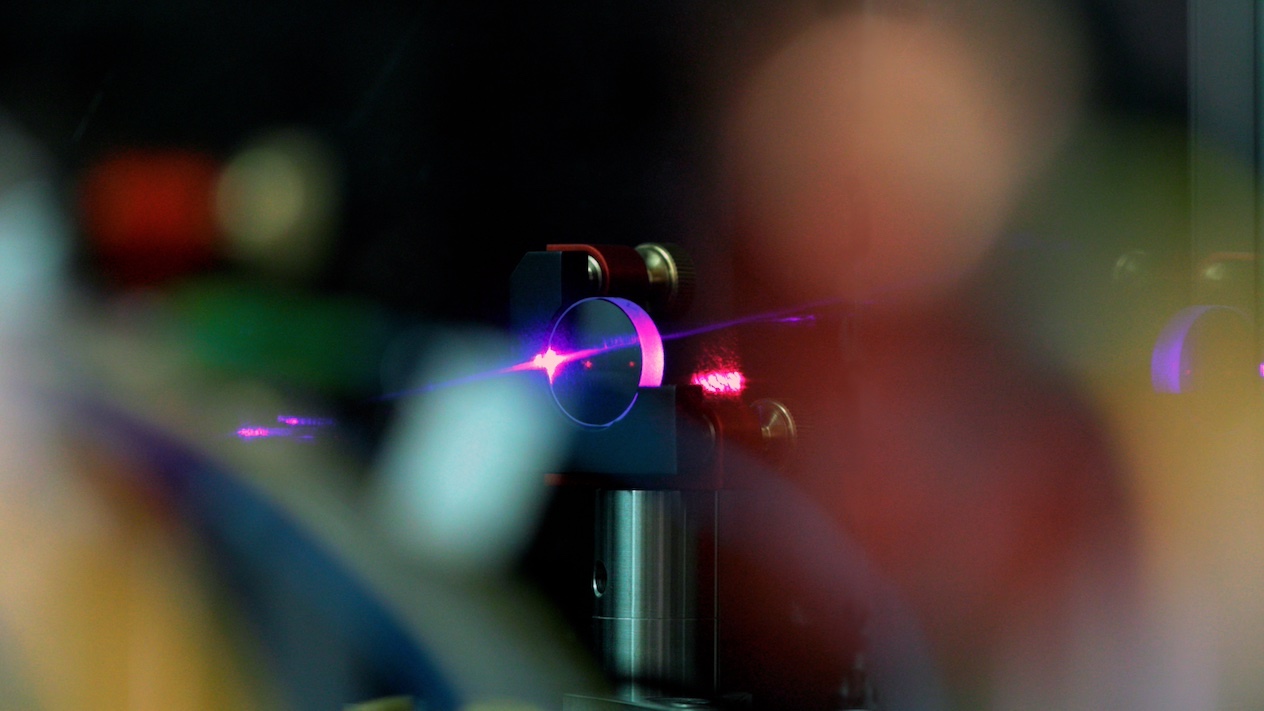
Gaeta studies how laser light interacts with matter.


Image
Aravind Devarakonda headshot

“We’ve been studying quantum systems for several decades already, but it’s been remarkable to see how quickly the field has grown recently. I’m particularly excited about using present-day quantum devices to simulate complex quantum materials and resolve long-standing, fundamental questions about how many electrons interact to create complex emergent behavior. There’s a lot of synergy here that could help us discover materials that revolutionize how we store energy, perform classical computing, and more in this century.”

Aravind Devarakonda

Assistant Professor of Applied Physics and Applied Mathematics Devarakonda combines physics, chemistry, and materials science to create and study quantum materials.

Image
Henry Yuen headshot

In the next 100 years, the way we vote, earn, spend, negotiate, medicate, dress, compute, communicate, sense, and think will rely on harnessing the counter-intuitive laws of quantum mechanics. Just as the steam engine and electricity have transformed civilization, there will be no aspect of everyday life untouched by the fact that nature is quantum mechanical.”

Henry Yuen

Srivani Family Associate Professor of Computer Science. Yuen studies the theoretical foundations of quantum computing.

Image
James Hone headshot

We’ve seen the story before with quantum dots, and lasers, and other quantum advances: a curiosity in the lab becomes a breakthrough that becomes routine and used everywhere. We’re in the earliest stages with new kinds of quantum materials and what they will enable, but some of our lab curiosities will translate and scale into real devices.”

James Hone

Wang Fong-Jen Professor of Mechanical Engineering. Hone studies the fundamental properties of 2D materials and their potential applications.

Image
Sherry Zhang headshot

The next 100 years will likely be the most exciting time for quantum technology as we build the promises from decades ago into a reality. Quantum sensing, simulation, and computing will transition from initial demonstrations to useful technologies and beyond. In the end, quantum science may stop being ‘quantum’: it will just be technology, like semiconductors or AI today.

Sherry Zhang

Assistant Professor of Applied Physics and Applied Mathematics

Image
James Schuck headshot

“While quantum computing currently gets much of the attention, quantum sensing may ultimately prove equally, if not more, impactful. The so-called quantum advantage originates from coherent states and quantum- entangled systems, enabling, for example, deep-brain imaging with photons that never touch the sample and detection of gravitational waves. By reducing noise and increasing precision by orders of magnitude, quantum sensing will become critical to fields spanning medical diagnostics to space travel. We have only begun to scratch the surface.”

Jim Schuck

Professor of Mechanical Engineering. Schuck builds tools that can control single photons and electrons.

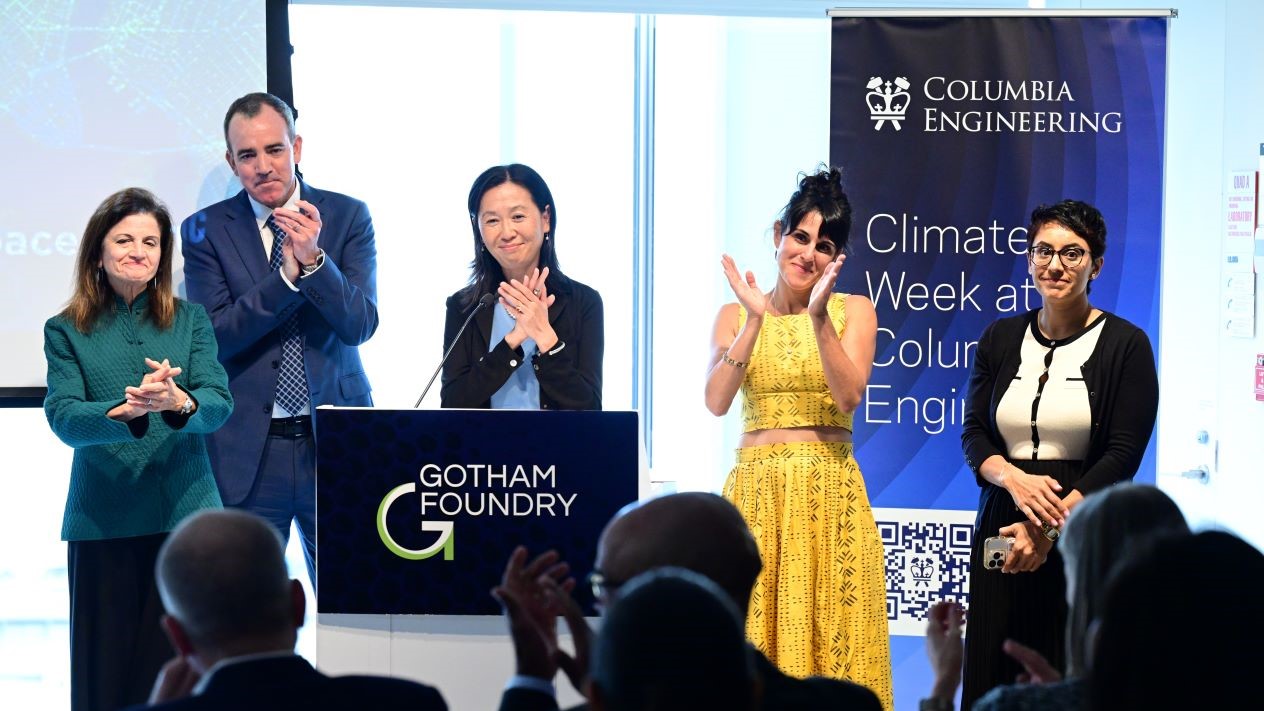
At Gotham Foundry’s Sept. 22 launch event, leaders from across New York City gathered at Columbia’s Jerome L. Greene Science Center for the exciting debut, which included a biomaterials exhibition, a fashion show of bio-derived designs, and remarks from Gotham Foundry Director Helen Lu; Columbia University Provost Angela Olinto; Andrew Kimball, CEO of NYCEDC; Adolfo Carrión, Deputy Mayor for Housing, Economic Development and Workforce; Dr. Joyce F. Brown, president, FIT; Rosemarie Wesson, associate vice chancellor and university vice provost for Research at CUNY; and Neena Chakrabarti, PhD, who spoke on behalf of Genspace; as well as Janet Rodriguez, founder and CEO of SoHarlem.

Community partners from Harlem Biospace and Communitas America were also in attendance, along with faculty from the Gotham Foundry Materials Innovation Team, a transdisciplinary network of engineering and science faculty at Columbia, CUNY, and FIT. 

The featured materials exhibit, “Regenerative Vision,” showcased the work of more than 30 start-ups and research teams, demonstrating the transformative power of regenerative materials and green manufacturing approach in the industries Gotham Foundry will initially target: fashion textiles, construction, and healthcare. The event closed with young designers from SoHarlem, an incubator for cultural industries, sporting green fashions they had created as part of their entrepreneurship program with legendary designer Dapper Dan.

Gotham Foundry is initially located at Harlem Biospace at the Mink building in West Harlem. Its permanent home will be in a new Columbia Engineering building on the Manhattanville campus—currently in planning, and set to break ground in 2027 and open in 2030.

“We are thrilled to launch the Gotham Foundry with our partners and the support of the NYCEDC, led by Professor Helen Lu, a true pioneer in regenerative materials,” said Shih-Fu Chang, Dean of Columbia Engineering. “We are looking forward to creating a leading hub for biofabrication and the circular economy as part of a growing innovation ecosystem in Upper Manhattan, bringing together our own history of breakthrough research in sustainability with other academic researchers, industry innovators, and community partners in job training and education.”

“A bold vision for our future is that all human-made products emulate nature’s circular life cycle by demonstrating desired performance and being fully regenerative or degradable at the end of service. Establishment of Gotham Foundry is a major step in fulfilling this vision,” said Lu. “We are so grateful to the NYCEDC for supporting this project and our partners for their ongoing collaboration and commitment. We are eager to seize this opportunity to build a more sustainable future through the promise of novel regenerative materials, while boosting the city’s economy and training a skilled future manufacturing workforce.”

Today, the global market for sustainable materials is valued at $358 billion and is expected to grow to $800 billion by 2032. Advancing innovation in sustainable and biomaterials has the potential to transform key industries that drive New York City's economy, from fashion and construction to plastics and medical supplies. Researchers at Columbia and partner institutions will collectively share their knowledge and rich expertise to bring new materials innovations to industry and consumers. Gotham Foundry will serve as an ecosystem for innovation to fuel a green economy, not just for R&D but to cultivate startups, for education, training, and workforce development, and to become the centralized space open to creators and designers who seek access to a state-of-the-art facility and its resources. 

Through its tightly integrated consortium, Gotham Foundry is redefining how infrastructure and commercialization efforts are coordinated. Gotham Foundry will leverage existing infrastructure at Harlem Biospace (for biofabrication and biocharacterization, technical consult, materials library, and training programs), ASRC (for advanced and complex materials characterization),  FIT (for fashion prototyping, production, and design), and Genspace (for workforce training).

The new hub is expected to generate $5.12 billion in economic output over the next three decades and will create career opportunities for New Yorkers, including through workforce training programs for entrepreneurs and students. It is supported by LifeSci NYC, the city’s $1 billion initiative to create 40,000 jobs over the next 10 to 15 years, and puts into action the city’s Green Economy Action Plan, a vision that integrates economic and talent development in this space. Gotham Foundry will leverage Columba’s established partnerships with its surrounding community to create opportunities for students and job seekers interested in learning skills for the green economy and to empower the next generation of scientists, engineers, and entrepreneurs.


Lead Photo Caption: From left to right: Kate Ascher, co-director of Gotham Foundry (GF) and professor of practice of urban development at Columbia; Rein Ulijn, co-director of GF and founding director of the CUNY ASRC Nanoscience Initiative; Helen Lu, director of GF and Percy K. and Vida L.W. Hudson Professor of Biomedical Engineering; Theanne Schiros, co-director of GF and associate professor at FIT; and Neena Chakrabarti, board member at Genspace. 
Lead Photo Credit: Chris Taggart/Columbia Engineering

On September 30, Columbia’s hookup was completed: photons, the quantum particles that make up light, can now be distributed and detected from Long Island to Morningside Heights. Entangled photons, one of the cornerstones of quantum science that enable instant information transfer, will soon follow. 

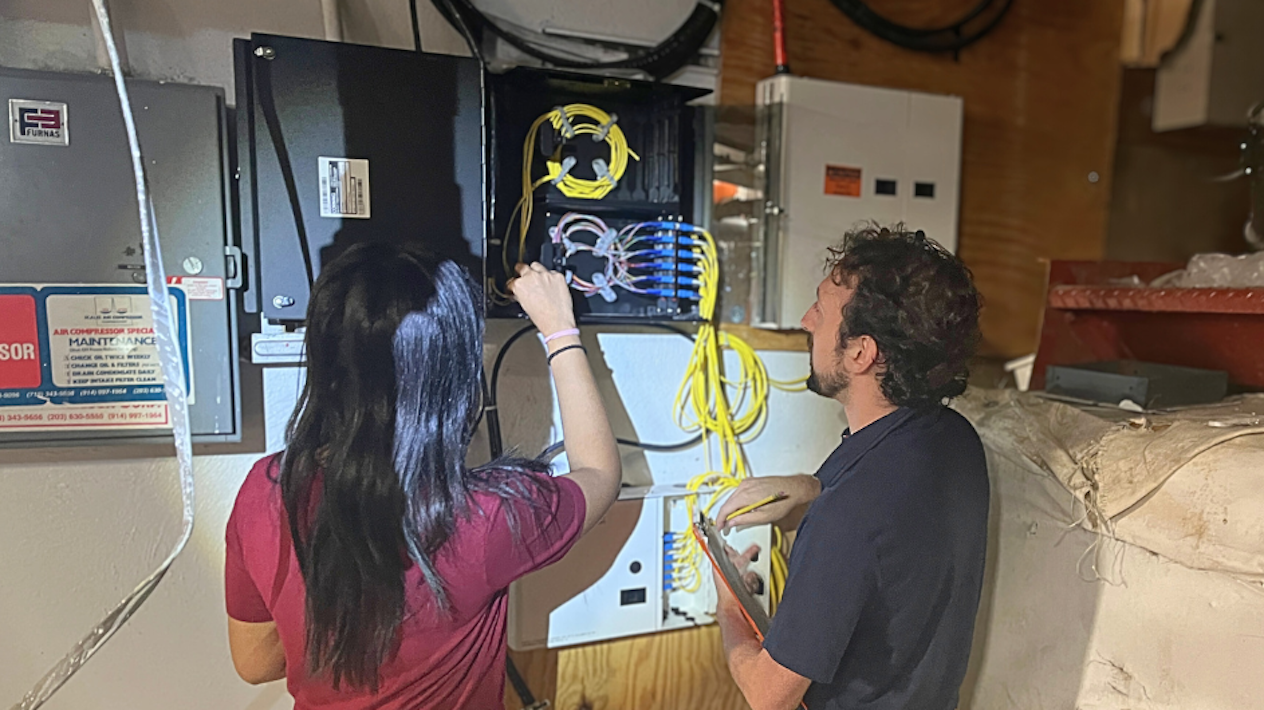
The network will link different quantum devices, including quantum sensors and computers, that are under development at the partner institutions into a nascent quantum internet. At Columbia, it now reaches three labs: those of Gil Zussman, Sebastian Will, and Alexander Gaeta:  

  • The GlueGil Zussman, Kenneth Brayer Professor of Electrical Engineering, provided access to the optical fibers needed to transport entangled photons; these fibers were originally deployed for the NSF COSMOS testbed. Seed funding from Columbia Engineering and the Data Science Institute allowed the team to expand the network to Qunnect in Brooklyn. An expert in classical networking and communications, Zussman will also help develop new protocols and standards to efficiently send information along the quantum network.
  • The Device: Sebastian Will, associate professor of physics and co-PI on the NQVL grant, is developing quantum devices that will send and receive information via the entangled photons transmitted along the network. His lab has been pioneering techniques to trap individual atoms into arrays that can serve as quantum bits, or qubits—a rapidly evolving approach to quantum computing, one of the goals of the NQVL collaboration.
  • The TranslatorsAlex Gaeta, David M. Rickey Professor of Applied Physics and Materials Science and professor of electrical engineering along with Michal Lipson, Eugene Higgins Professor of Electrical Engineering and professor of applied physics (and a co-PI on the NQVL grant), will make sure the devices at the network’s nodes, like Will’s atomic arrays, can “talk” with the entangled photons, which will be transmitted along the network’s fibers at a different wavelength than the devices can understand. Experts in quantum optics, Gaeta and Lipson have created quantum frequency converters that can change the wavelength of photons without breaking the entangled states that are essential to the network. 

“At Columbia, we are combining our expertise in networks, optics and photonics, and atomic physics to tackle open questions in quantum networking,” said Will. “Now the fun can really begin.”


Lead Photo Caption: Shivalee Shah, MS student in Quantum Science and Technology, and John Drogo, Electrical Engineering PhD student, worked with CUIT and Crown Castle on the fiber connection to Brooklyn.

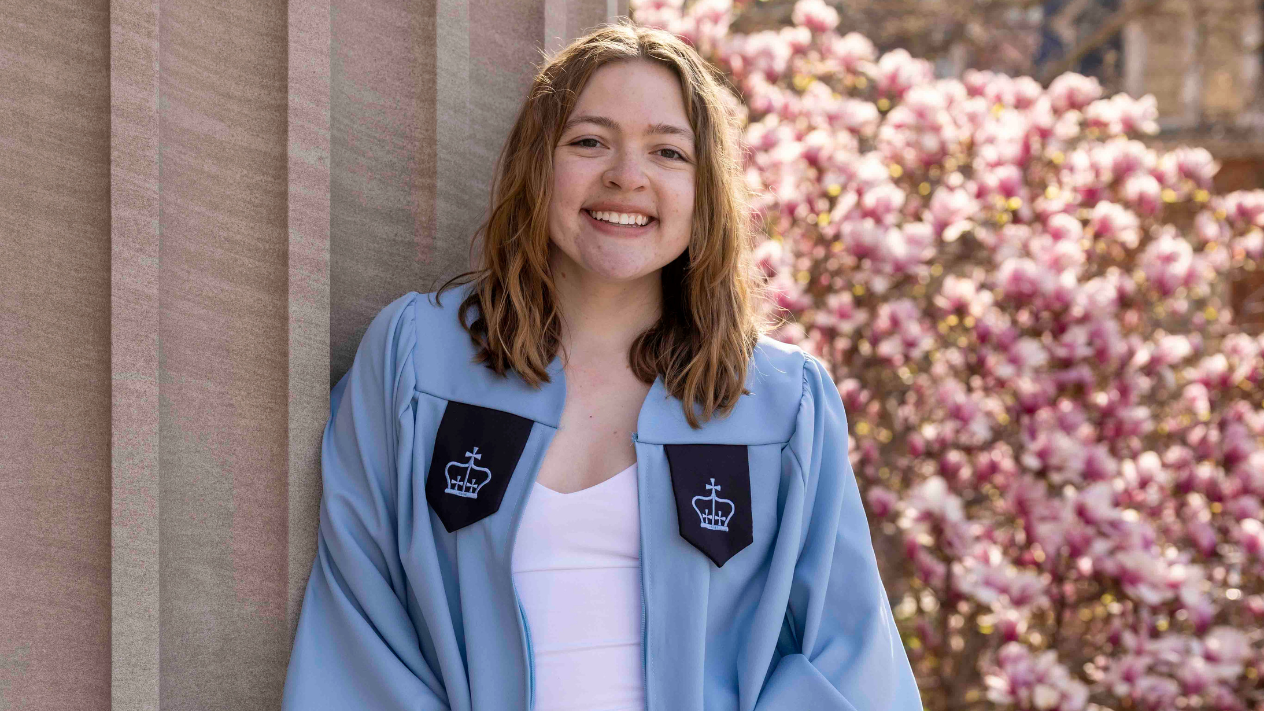
Kathryn (Kate) Lampo has always aimed higher than most—literally. “I was the kid who wanted to be an astronaut,” she said. 

As a senior majoring in mechanical engineering, she’s inching even closer to achieving that childhood dream. After graduation this spring, Kate, the current co-president of Columbia Space Initiative (CSI), will soon begin her professional journey in the aerospace field. 

Kate has recently been named a recipient of the 2025 Campbell Award, an honor presented to a graduating student who shows exceptional leadership and Columbia spirit as exemplified by the late Bill Campbell ’62CC, ’64TC. She has received numerous accolades this past year, including a Marshall Scholarship and was honored with Aviation Week Network’s 20 Twenties Class of 2025 award. Advised by Mechanical Engineering Professors Mike Massimino and Matei Ciocarlie, Kate conducts research in Ciocarlie’s Robotic Manipulation and Mobility Laboratory, where she works on designing and building robotic manipulators. She will be continuing her studies in space robotics at the University of Oxford following graduation.

Image
Four people smiling for a photo in front of Butler Library. Their shirts read "Senior Design Expo '25 Columbia Engineering"
Kate Lampo (second from right), donning the ‘25 Senior Design Expo official tee with her capstone project team. Credit: Kate Lampo

Thinking back — what first drew you to Columbia Engineering?

Honestly, the city! I grew up in the suburbs of Denver, and while I loved Colorado (and still do), I knew that I wanted to move somewhere completely different for college. Columbia also seemed like a place brimming with opportunity, and I knew that I would grow in significant ways at Columbia Engineering.

Did you always know you wanted to get into the aerospace engineering field? 

I did! When I was younger, I was the kid that wanted to grow up to be an astronaut. I’ve always been fascinated by the scientific potential inherent in exploring our universe, and as my aspirations developed throughout middle and high school, I became more and more interested in building the vehicles that allow us to do so. To me, aerospace engineering has always been a great way to combine my love for space with my enjoyment of designing and building things. I’ve been able to refine those aspirations further here, and am now focused on robotics for space applications.

Image
Four people smiling while holding a boat made of cardboard and duct tape.
Having fun with friends at the Engineering Student Council’s cardboard boat race. Credit: Kate Lampo

What’s a moment at Columbia that shifted how you see yourself—or your future?

I think the most valuable thing that Columbia has taught me is to believe that anything is possible. 

My freshman year, I worked in a team as a part of the Columbia Space Initiative (CSI) that built a lunar gripping and anchoring tool for a NASA competition. After being selected as national finalists, we got to travel to the Johnson Space Center in Houston, TX to test the tool in the Neutral Buoyancy Laboratory, which is a microgravity astronaut training center. 

To have that opportunity so early on was a phenomenal experience, and it made me realize that I could do serious engineering as early as my freshman year. That has inspired me to pursue every outlandish opportunity since, and while plenty of my efforts have been unsuccessful, my penchant for trying has opened up many other doors for me throughout college.

“The most valuable thing that Columbia has taught me is to believe that anything is possible.”

Kathryn Lampo
BS'25

How has the School’s guiding principle, Engineering For Humanity, resonated with your experience at Columbia?

I’ve been lucky enough to have had many teaching opportunities that embody the concept of Engineering for Humanity to me. I’ve spent a lot of time working on educational STEM outreach in Title I middle schools across the city, developing and delivering lessons on space science and engineering to thousands of kids. I’ve also been a teaching assistant for first-year students for the last two years, which is something that I’ve found to be incredibly rewarding.

In my mind, a big part of Engineering for Humanity is making STEM opportunities accessible to anyone that wants to pursue them. Coming up with creative and novel solutions that benefit humanity requires integrating diverse perspectives, which is something that Columbia has made clearly evident to me. 

Image
Mike Massimino and Warren Hoburg wear NASA jackets and flank Kate Lampo as they all smile for a photo
At one of many Columbia Space Initiative (CSI) events; Here, Kate Lampo is pictured with former NASA astronaut and Mechanical Engineering Professor Mike Massimino (left) and NASA astronaut Warren “Woody” Hoburg. Credit: CSI

If you could send one piece of advice to your first-year self, what would it be?
Relax! My first-year self (like many first-years) was overly stressed and trying to do way too much. Four years is a long time, and I would encourage her to authentically explore her interests instead of trying to join every extracurricular she came across. There’s no rush—and taking time for rest is important!

Share some words to live by or a message to your fellow grads? 

While I often think the phrase is used in a negative way, I really like the expression “throw everything at the wall and see what sticks.” I’m a big believer in trying things with the understanding that not everything will work out, but something is bound to stick. I think it’s worthwhile to be open to new and unfamiliar experiences, and to pursue things that seem improbable.

What are your plans this summer and after Columbia? 

This summer, I’m excited to spend some time resting at home in Colorado with my family and friends. In the fall, I’m off to Oxford to start my MSc in Engineering! I’ll be studying robotic planning for space environments.

What will you miss the most about your time at Columbia Engineering? 

Easily the Columbia Space Initiative (CSI)! CSI has been such a home for me during my four years at Columbia—I joined the first week of my freshman year, and I haven’t left since. From the jump, the club provided me with truly phenomenal aerospace opportunities, from testing a lunar gripping tool in NASA’s Neutral Buoyancy Laboratory to calling an astronaut on the ISS to building a pair of satellites to launch in the next couple of years. Beyond that, CSI has also given me some of my closest friends and my strongest community here. I’ll miss it very dearly!

Subscribe to Features