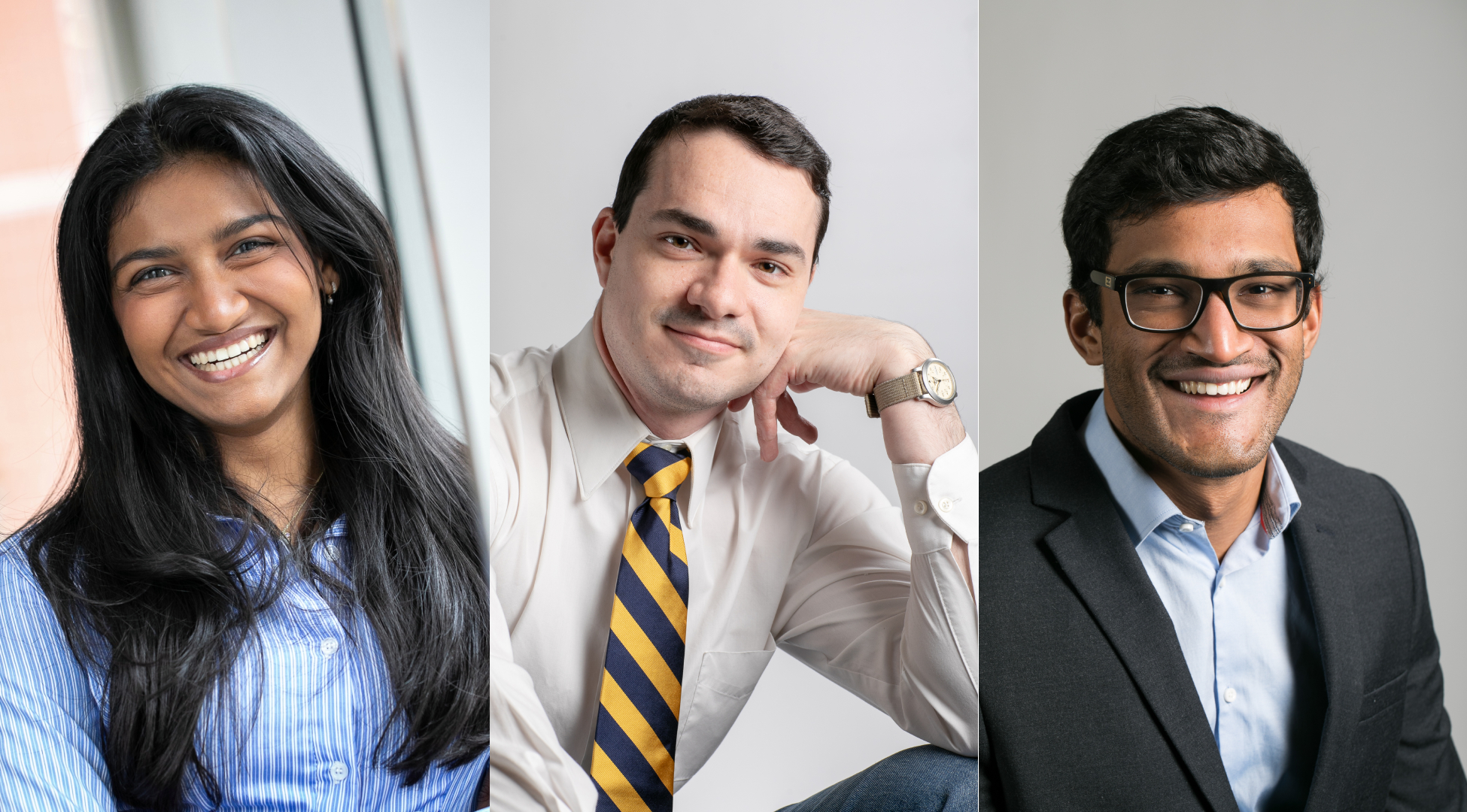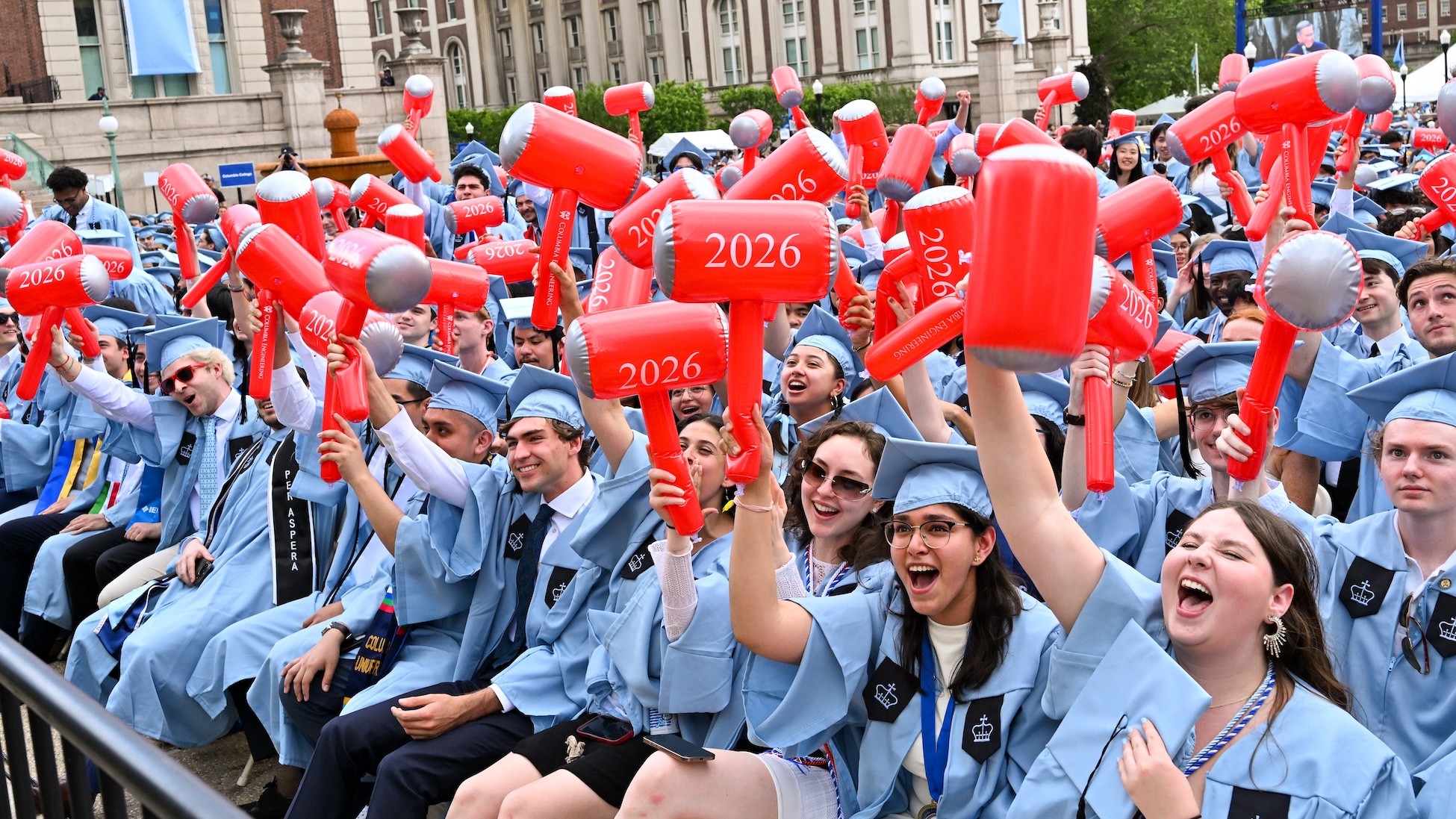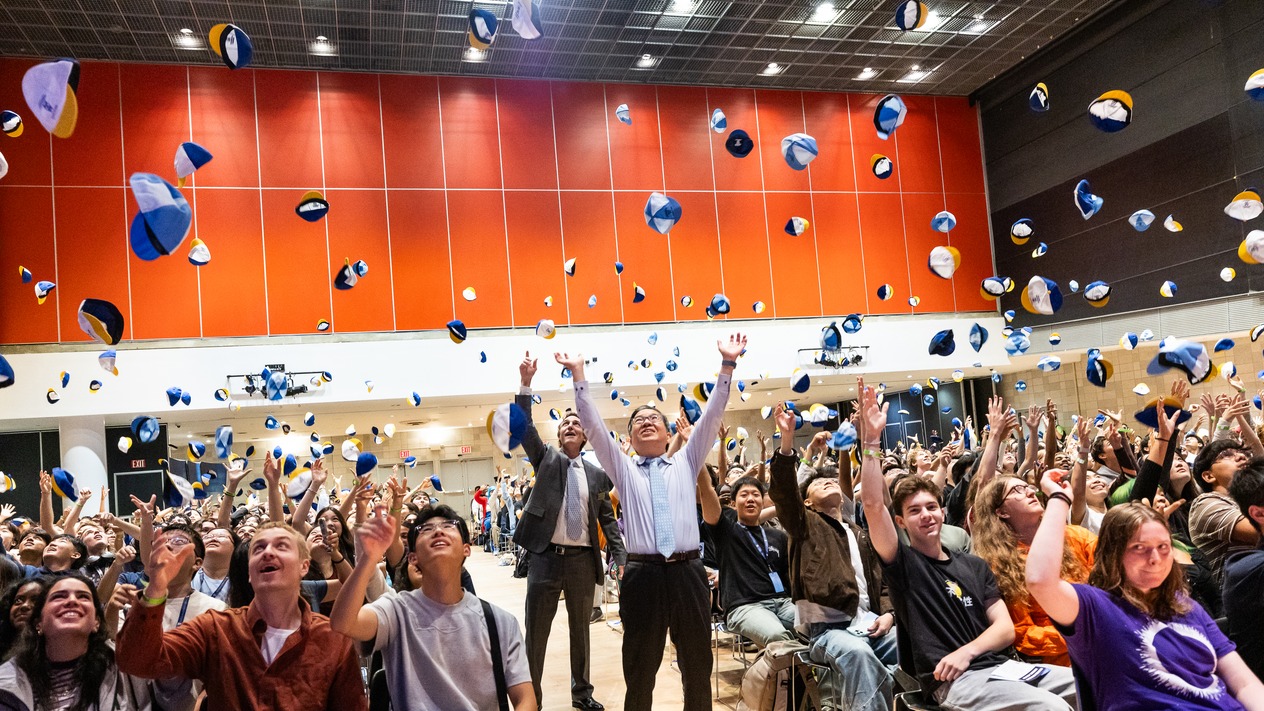
Snapshots from MLSS 2026
Credit: Brooke Slezak/Siobhan Mullan
3. Agentic AI is more than just a buzzword.
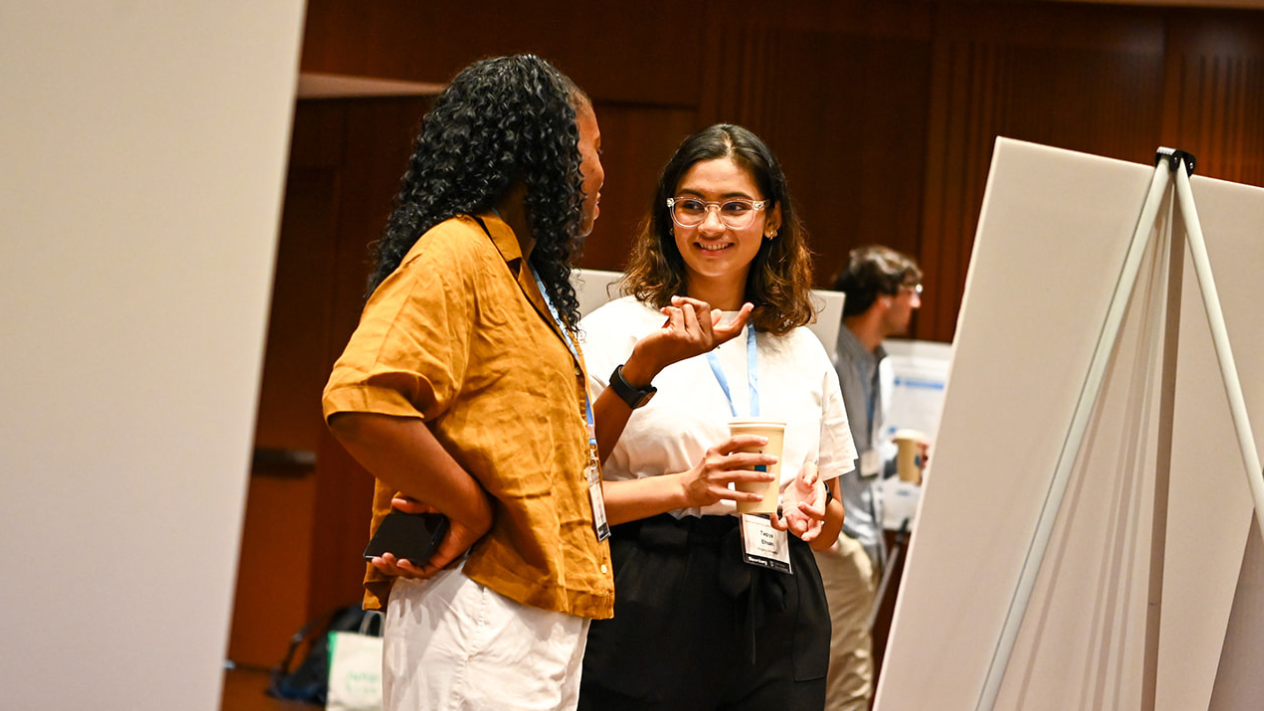
Taqiya Ehsan, a PhD candidate in electrical and computer engineering at Rutgers University, whose research collaborates with Columbia’s Center for Smart Streetscapes, said the sessions dedicated to agentic AI stood out as particularly useful.
"We hear the agentic AI buzzword everywhere. Most of us don't really know what it means," she said. The summer school addressed that gap head-on, bringing in experts who build these systems to explain exactly what agentic AI is and how it works in practice.
Specifically, a talk by Brendan Rappazzo Hogan – a Morgan Stanley representative of alphaLab – on the firm's agentic AI framework stood out to Ehsan, offering a rare look at how a major financial institution is putting these systems into practice outside the lab. "It was really, really helpful to get insight into exactly what AI agents are from the experts who are building it," she added.
4. AI research must be interdisciplinary.
Transformative breakthroughs in AI rarely come from just one discipline – and the summer school made sure participants understood the importance of drawing AI research from multiple backgrounds.
Zachary Laborde appreciated the strong emphasis on interdisciplinary research and the importance of these intersections beyond the lab. Coming in with a background in psychology, Laborde was drawn to the program specifically to understand how language models — tools largely outside his own research — were reshaping fields like robotics and embodied AI.
"My work doesn't involve natural language processing or large language models, but a lot of recent work has shown that in spaces like robotics and embodied AI, using language models leads to incredible results," he said. "I was hoping to better understand those components to be able to apply them to my work, or to work that I might do in the future."
For Emily Bejerano, what stood out most about the summer school was the sheer range of people and perspectives in the room. "I just thought it was a great opportunity to meet a lot of people from a variety of different areas with this overlapping interest in AI, and how we can leverage it to help our systems," she said. "I love meeting people from all around the world with various interests, hearing about their research, and sharing my research to get valuable perspectives from different people."
The 2026 Machine Learning Summer School delivered on the comprehensive view of the field that Columbia Engineering set out to showcase. From the theoretical promise of causal AI to the practical demands of interpretability, the agentic AI systems reshaping industries, and the deeply interdisciplinary nature of the work itself, participants left with more than just new technical knowledge – but a sharper sense of where the field is headed, and the responsibility that comes with building it.
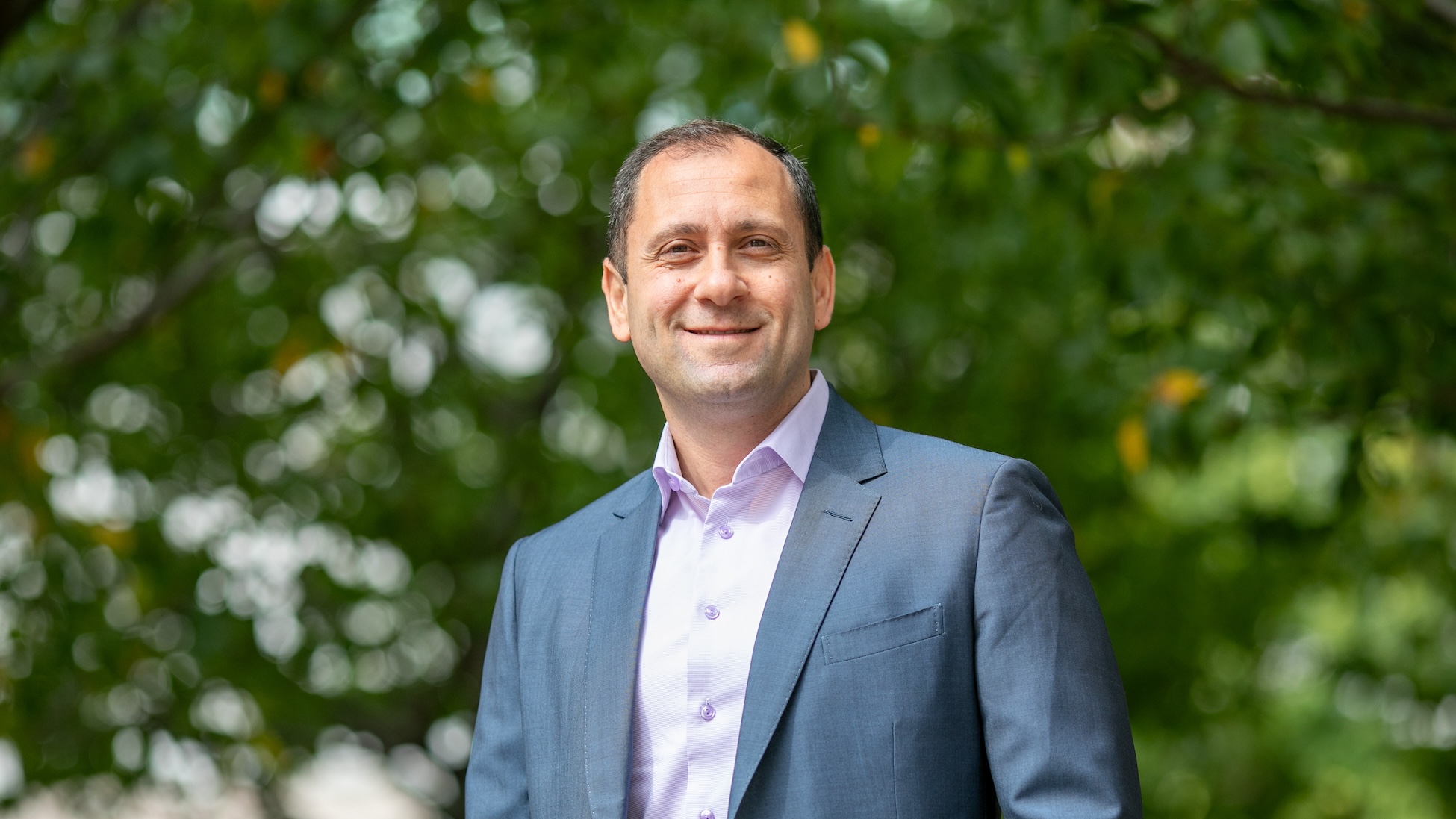
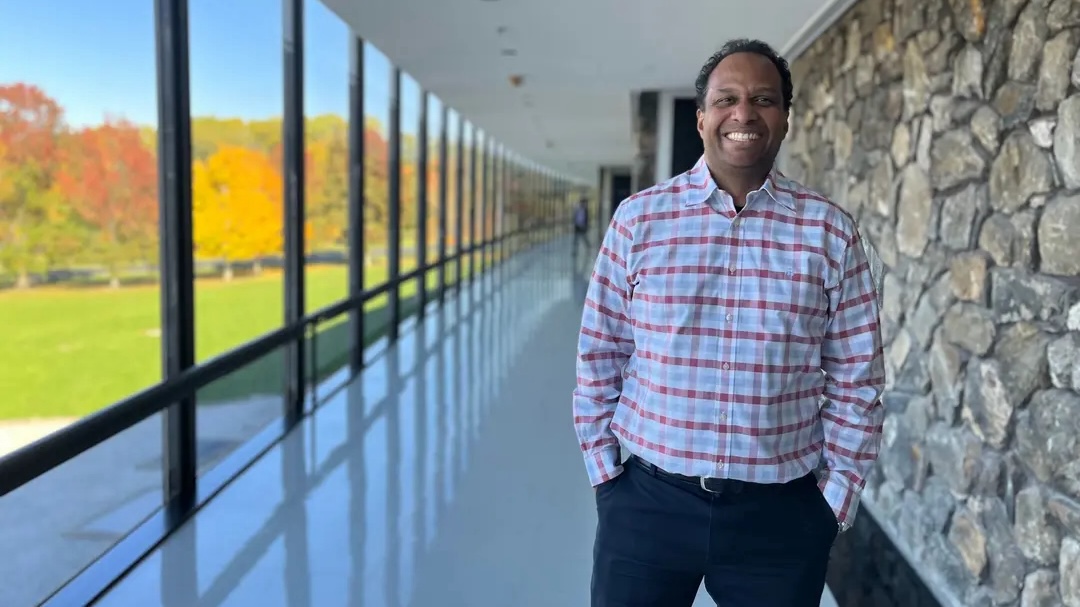
The construction manager of the future will not compete with AI, they will manage with AI.
Ibrahim Odeh
How is AI currently being used in construction?
AI is already being deployed in predictive scheduling, risk forecasting, cost estimation, safety analytics, image recognition for site monitoring, and automated document review. We are seeing machine learning models analyze historical project data to predict delays and cost overruns before they occur.
But the real transformation is not automation; it is decision augmentation. AI is enhancing human judgment. Construction management is fundamentally about structured decision-making under uncertainty. AI will increasingly provide scenario modeling, risk simulations, and optimization tools that improve strategic choices.
The construction manager of the future will not compete with AI, they will manage with AI.
What type of skills will construction managers need in the next five years?
In five years, the most valuable skills will not be software-specific, they will be cognitive and strategic.
Construction managers will need:
- Data fluency: ability to interpret analytics and AI outputs
- Systems thinking: understanding infrastructure as interconnected networks
- Financial sophistication: capital allocation, risk modeling, PPP frameworks
- Climate resilience literacy
- Executive communication and stakeholder alignment
The role is evolving from project supervisor to strategic infrastructure leader.
We know that sustainability plays a big role in construction management. How does climate risk relate to project planning?
Extreme weather is no longer a contingency scenario; it is a baseline planning assumption. Projects must now incorporate resilience modeling, adaptive design strategies, and long-term lifecycle risk assessments.
This shifts construction from a short-term delivery mindset to a lifecycle stewardship mindset. Planning must now integrate environmental forecasting, financing mechanisms tied to resilience performance, and regulatory adaptability.
This is where academia plays a critical role, preparing professionals who think in decades, not just project timelines.
More about Ibrahim Odeh
Beyond the classroom, Odeh serves as an advisor to global organizations, including his engagement as an industry expert member at the World Economic Forum, where he has actively contributed to the Future of Construction initiative. He collaborates with industry leaders across North America, Europe, and the Middle East on innovation, infrastructure strategy, and digital transformation.
His teaching and innovation have earned some of Columbia University’s highest honors, including the Presidential Award for Outstanding Teaching and the Columbia Engineering Distinguished Faculty Teaching Award. In 2023, he received the McGraw Hill Pathfinder Award for redefining education at a global scale.
Class Day 2026
Highlights from our Class Day ceremonies
Graduate Student Class Day
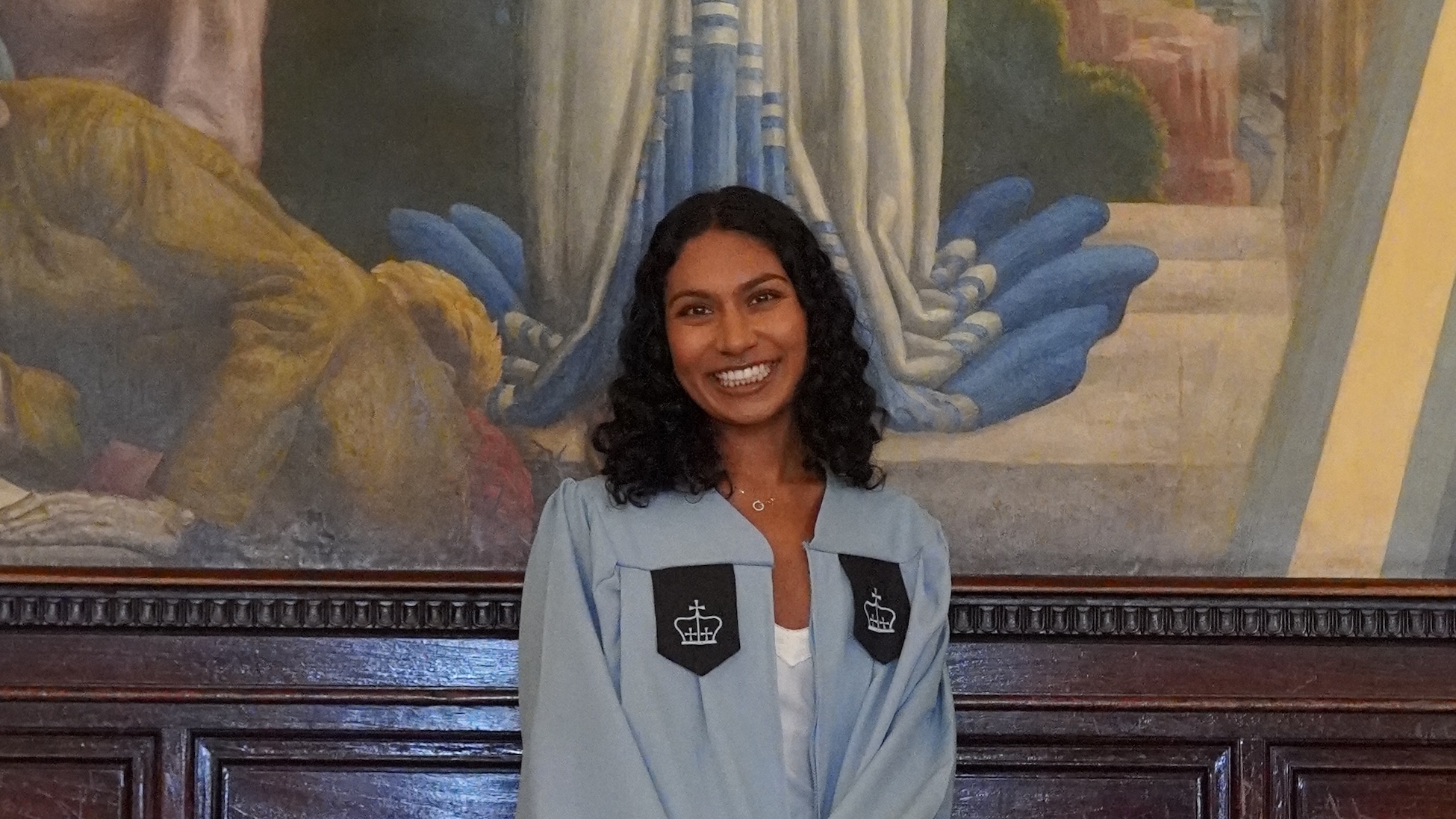
In the afternoon, the Engineering School celebrated the 2026 Graduate Class Day. Divyadarshini Thirugnanasambandan, an MS graduate in business analytics in IEOR, was selected by faculty and administration to be the student speaker. She emphasized how her fellow students collaborated and cooperated, each bringing their different strengths and perspectives to each task.
“At Columbia Engineering, I watched something beautiful unfold every single time a problem appeared in front of a group of us . . . There’s so many different instincts, different frameworks, different angles, all applied to the same mess, the same problem. And somehow, between all of these different approaches, a solution would emerge that none of us would have found alone. That moment is what Columbia Engineering is to me. Not the problem sets, not the late nights — but the instinct to turn towards each other when something goes wrong.”
Jagannaath Shiva Letchumanan and Bernard Steyaert, both PhD students in electrical engineering, were recognized as this year’s Graduate Student Life Award recipients.
Keynote speaker Tom Caulfield BS’82, MS’84, EngScD’86, chairman of the semiconductor company GlobalFoundries, emphasized how education can change lives. Caulfield, who was the first in his family to attend college, placed this year’s graduates in a larger narrative about how bringing together talented students from every part of the globe strengthens America’s competitive edge.
“Our willingness to embrace the mosaic of people, ideas, experiences, and ambitions from around the world has made this country a global leader in science, engineering, entrepreneurship, and discovery. And many of you sitting here today are now part of that story,” he said.
He also stressed being decisive, taking action, and viewing the engineering for humanity vision as a calling.
“Never forget who engineering is meant to serve,” he said. “People. Communities. Society. Humanity . . . Today, as you accept your degree, you are accepting more than a credential. You are accepting a responsibility. A responsibility to lead. A responsibility to build. A responsibility to solve problems that others cannot. And a responsibility to use your gifts in service of something larger than yourself.”
Later in the ceremony, Professor of Biomedical EngineeringTreena Arinzeh received the Janette and Armen Avanessians Diversity Award.
Dean Chang shared with the audience that on Wednesday, May 20, the Empire State Building would be lit up in Columbia Blue in honor of Columbia’s 2026 graduates.
Doctoral Hooding Ceremony
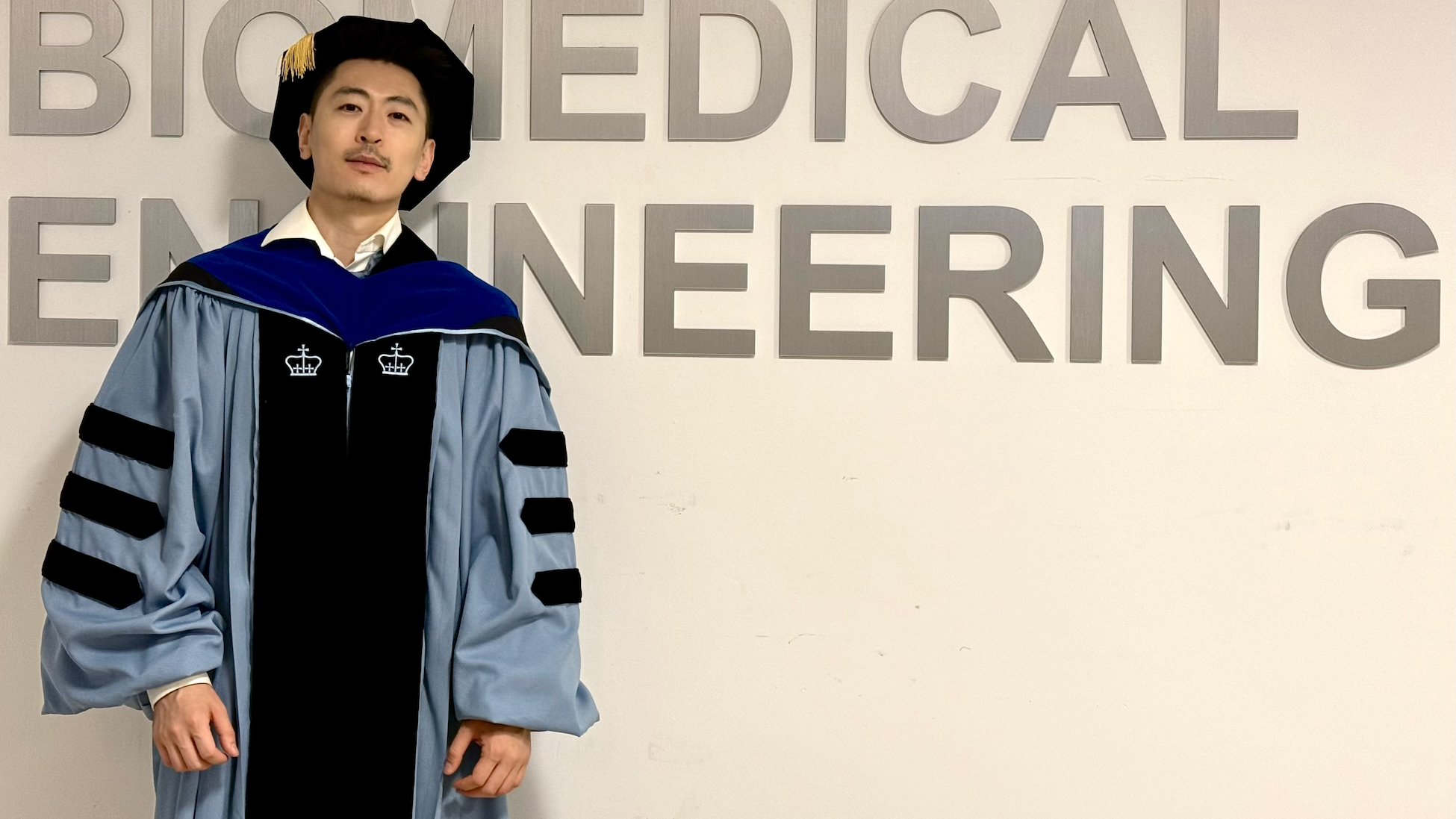
On Tuesday, May 19, Columbia Engineering held a special doctoral hooding ceremony for its PhD candidates. The ceremony was attended by approximately 100 recent recipients of, and candidates for, the degrees of Doctor of Philosophy and Doctor of Engineering Science.
The students heard remarks from Elisa Konofagou, Robert and Margaret Hariri Professor of Biomedical Engineering and Professor of Radiology (Physics) and of Neurological Sciences (in Neurosurgery), who was recently elected to the National Academy of Inventors, and from Michael Weinstein, professor of applied mathematics and of mathematics, who was recently elected to the American Academy of Arts and Sciences.
Senior Vice Dean Barclay Morrison recognized two student award winners: Cheng “Gavin” Gong, a doctoral candidate in biomedical engineering, for the Campbell Award, and Xiaoxiao Sun, also in biomedical engineering, for the Morton B. Friedman Memorial Prize for Excellence.
Afterward, students were “hooded” by faculty, with hoods to communicate the scholar’s home institution, Columbia University, and their discipline. Dark blue hoods represented the Doctor of Philosophy, and orange hoods represented the Doctor of Engineering Science.
University Commencement and Commissioning Ceremony
For the first time, on Wednesday, May 20, Columbia held two separate Commencement ceremonies, one for its graduate students and one for undergraduates. Degrees are officially conferred en masse at Commencement by the University President to graduates of all of Columbia’s 17 schools.
Speaking of the Engineering School’s students, Dean Chang told the audience, “These graduates are bringing engineering and applied science to every discipline and domain, and to every sector of society we can imagine.”
On Thursday, May 21, Columbia Engineering celebrated another milestone for graduates at the NROTC Commissioning Ceremony. This year’s officer candidates were both engineering graduates: Dana Clarke, a computer engineering student, and Paul Randall, an applied physics graduate.
Graduation Awards
STUDENT AWARD WINNERS
Zvi Galil Award for Improvement in Engineering Student Life
National Society of Black Engineers
Bernard Jaffe Prize for the Encouragement of Inventiveness in Engineering
Maierdan Yierfan
School of Engineering and Applied Science Scholar Athlete Award
Sarah Mikami
Campbell Award
Cheng “Gavin” Gong
School of Engineering and Applied Science Student Activities Award
Sarah Mikami
Thomas "Pop" Harrington Medal
Andre Villarente Perez
George Vincent Wendell Memorial Award
Andre Villarente Perez
Robert D. Lilley Award for Socially Responsible Engineering
Columbia University Science Olympiad
Morton B. Friedman Memorial Prize for Excellence
Xiaoxiao Sun
Graduate Student Life Awards
Jagannaath Shiva Letchumanan
Bernard Steyaert
Columbia Engineering Graduate Speaker
Divyadarshini Thirugnanasambandan
Valedictorian and Illig Prize
Danielle Maydan
Salutatorian
Samir Rami Farraj
FACULTY/ALUMNI AWARD WINNERS
CEAA Distinguished Faculty Teaching Awards
Lauren Marbella, Associate Professor of Chemical Engineering
Drew Youngren, Lecturer in the Discipline of Applied Mathematics
Presidential Award for Outstanding Teaching
Adam Elmachtoub, Associate Professor of Industrial Engineering and Operations Research
Faculty Mentoring Award
George Deodatis, The Santiago and Robertina Calatrava Family Professor of Civil Engineering and Engineering Mechanics, Professor of Earth and Environmental Engineering, Vice Dean for Research
Edward and Carole Kim Award for Faculty Involvement
Daniel Esposito, Associate Professor of Chemical Engineering
Janette and Armen Avanessians Diversity Award
Treena Arinzeh, Professor of Biomedical Engineering
Society of Columbia Graduates Great Teacher Award
Harry West, Professor of Professional Practice in the Department of Industrial Engineering and Operations Research
2026 Alumni Medalists
Shawn Edwards BS’90, MS’95, CTO, Bloomberg
Rumaasha Maasha BS’94, Aerospace Engineer, NASA Marshall Space Flight Center