Doctoral Programs
-
Plasma Physics Graduate Specialty
Columbia, one of the leading university centers for training in plasma physics, offers a graduate program leading to the Master of Science (MS), Master of Philosophy (MPhil), Doctor of Philosophy (PhD) and Doctor of Engineering Science (EngScD or DES) degrees. The program builds a foundation in the science and application of plasma physics and features a specialty in the high-temperature plasma physics needed for controlled fusion energy. Besides a sound basic training in relevant areas of applied physics, students develop expertise in experimental, theoretical, and computational plasma physics. This instruction provides the background needed to conduct research in Columbia University’s Plasma Research Laboratory and in other national plasma research facilities. Since its inception in 1960, the program at Columbia has granted more than 110 doctoral degrees with many of our graduates playing leading roles in all phases of plasma physics, including, in particular, the worldwide program to develop controlled fusion energy.
Degree Requirements for Master of Science (MS) in Applied Physics
- 30 points (usually 10 courses) of courses taken for a letter grade with a 3.0 Minimum GPA
- There are no specific course requirements for this degree, it is tailored to the student’s interests, but will usually include at least 5 core courses with an APPH designator and additional courses with PHYS/ELEN designators or advisor-approved courses from other departments.
- Students with an interest in Plasma Physics should take the following courses:
- APPH E4018: Applied physics laboratory (2 pts)
- APPH E4200: Physics of fluids (3 pts)
- APPH E4300: Applied electrodynamics (3 pts)
- APPH E6101: Plasma physics I (3 pts)
- APPH E6102: Plasma physics II (3 pts)
- APPH E9142 or APPH E9143, or equivalents taken at another university
Degree Requirements for Doctor of Philosophy (PhD) in Applied Physics: Plasma Physics
- Complete requirements for the MS with a 3.0 Minimum GPA (unless a Master’s Degree from another institution has already been earned, in which case students receive 30 points and 2 Residence Units of advanced standing) /li>
- Complete requirements for the Master of Philosophy (MPhil) Degree
- Written Qualifying Examination: Courses suggested for preparation at the level of the general, and solid state and optical physics parts of the written qualifying examination are listed in the qualifying examination memorandum.
- 30 points of courses and/or research (beyond MS) taken for a letter grade with minimum 3.0 GPA: Can be fulfilled with core and related courses of specialization not used for the MS degree as well as research points, but no more than 15 points of research can be applied to this 30 point requirement
- 6 Residence Units: Students who have earned the MS register for 1 Residence Unit per semester not including summer
- Oral Exam (usually Spring of 2nd year)
- Thesis proposal (usually Spring of 3rd year)
- Ethics requirements: Online ethics course during Fall of 1st, year, attend departmental ethics seminar during Spring of 1st and 2nd years
- Master of Philosophy Degree awarded
- Complete Dissertation
- Successful Defense
Degree Requirements for Doctor of Engineering Science (EngScD or DES) in Applied Physics: Plasma Physics
- Complete requirements for the MS with a 3.0 Minimum GPA (unless a Master’s Degree from another institution has already been earned, in which case student receives 30 points and 2 Residence Units of advanced standing)
- Written Qualifying Examination Courses suggested for preparation at the level of the general and plasma physics parts of the written qualifying examination are listed in the qualifying examination memorandum
- Ethics requirement Online ethics course during Fall of 1st year, attend departmental ethics seminar during Spring of 1st and 2nd years
- Oral Exam (usually Spring of 2nd year)
- 30 points of courses and/or research (beyond MS taken for a letter grade with 3.0 GPA Can be fulfilled with core and related courses of specialization not used for the MS degree as well as research points, but no more than 15 points of research can be applied toward this 30 point requirement
- 12 points of APAM E9800: Doctoral Research Instruction
- Thesis proposal (usually Spring of 3rd year)
- Complete Dissertation
- Successful Defense
Core Courses
- APPH E4018: Applied physics laboratory (2 pts)
- APPH E4100: Quantum physics of matter (3 pts)
- APPH E4112: Laser physics (3 pts)
- APPH E4200: Physics of fluids ( 3 pts)
- APPH E4300: Applied electrodynamics (3 pts)
- APPH E4301: Introduction to plasma physics (3 pts)
- APPH E6101: Plasma physics I (3 pts)
- APPH E6102: Plasma physics II (3 pts)
- APPH E9142-E9143: Applied physics seminar (3 pts)
- APAM E6650: Research project (1-6 pts)
- APMA E4200: Partial differential equations (3 pts)
- CHEM G4230: Statistical thermodynamics (4.5 pts)
- ELEN E6403 or PHYS G6092-G6093: Electromagnetic theory (4.5 pts)
- PHYS G4003: Advanced mechanics (3 pts)
Related Courses of Specialization
- APPH E4110: Modern optics (3 pts)
- APPH E6110: Laser interactions with matter (3 pts)
- APPH E4010: Introduction to nuclear science (3 pts)
- APMA E4204: Functions of a complex variable (3 pts)
- APMA E6209: Approximation theory (3 pts)
- APMA E6301: Analytic methods for PDE's (3 pts)
- APMA E6302: Numerical methods for PDE's (3 pts)
- APMA E6304: Integral transforms (3 pts)
- APMA E6901: Special topics in applied math (3 pts)
- APMA E8308: Asymptotic methods in applied math (3 pts)
- ASTR G6004: Stellar structure and evolution (3 pts)
- ASTR G4002: Astrophysics II
- ELEN E4405: Classical nonlinear optics (3 pts)
- ELEN E4420: Topics in electromagnetics (3 pts)
- ELEN E4501: Electromagnetic devices and energy conversion (3 pts)
- PHYS G4019: Mathematical methods in physics (3 pts)
- PHYS G6036: Statistical mechanics (4.5 pts)
- PHYS G6037-G6038: Quantum mechanics (4.5 pts)
Plasma Physics Faculty
Allen H. Boozer
Gerald A. Navratil
Elizabeth Paul
Carlos Paz-Soldan - AP Academic Program Coordinator
Ben ZhuResearch Scientists and External Advisors
Admitted students may work with scientific advisors external to the applied physics faculty, as long as student secures funding from said faculty. Examples of other researchers or faculty external to the department include:
Steven Sabbagh, Adjunct Professor & Research Scientist/PPPL -
Solid State & Optical Physics Graduate Specialties
Solid State Physics Graduate Specialty
This graduate specialty encompasses the study of the electrical, optical, magnetic, thermal, high-pressure, and ultrafast dynamical properties of solids, with an aim to understanding them in terms of the atomic and electronic structure. The field emphasizes the formation, processing, and properties of thin films, low-dimensional structures—such as one- and two-dimensional electron gases, nanocrystals, surfaces of electronic and optoelectronic interest, and molecules. Facilities include a microelectronics laboratory, high-pressure diamond anvil cells, a molecular beam epitaxy machine, ultrahigh vacuum systems, lasers, equipment for the study of optical properties and transport on the nanoscale, and the instruments in the shared facilities overseen by the Columbia Nano Initiative. There are also significant resources for electrical and optical experimentation at low temperatures and high magnetic fields. Specific course requirements for the solid-state physics doctoral specialization are set with the academic adviser, in consultation with the Committee on Materials Science and Engineering/Solid-State Science and Engineering.Optical Physics Graduate Specialty
This graduate specialty involves a basic training in relevant areas of applied physics with emphasis in quantum mechanics, quantum electronics, and related areas of specialization. Some active areas of research in which the student may concentrate are laser modification of surfaces, optical diagnostics of film processing, inelastic light scattering in nanomaterials, nonlinear optics, ultrafast optoelectronics photonic switching, optical physics of surfaces, and photon integrated circuits. Specific course requirements for the optical and laser physics doctoral specialization are set with the academic adviser.Degree Requirements for Master of Science (MS) in Applied Physics
- 30 points (usually 10 courses) of courses taken for a letter grade with a 3.0 Minimum GPA
- There are no specific course requirements for this degree, it is tailored to the student’s interests, but will usually include at least 5 core courses with an APPH designator and additional courses with PHYS/ELEN designators or advisor-approved courses from other departments.
- Students with an interest in Solid State Physics should take the following courses:
APPH E4018: Applied physics laboratory (2 pts)
APPH E4112: Laser physics (3 pts)
ELEN E4301: Introduction to semiconductor devices (3 pts)
ELEN E6331-2: Principles of semiconductor physics I and II (3 pts)
MSAE E4206: Electronic and magnetic properties of solids (3 pts) or their equivalent for solid stateStudents with an interest in Optical Physics should take the following courses:
APPH E4018: Applied physics laboratory (2 pts)
APPH E4100: Quantum physics of matter (3 pts)
APPH E4110: Modern optics (3 pts)
APPH E4112: Laser physics (3 pts)
APPH E6110: Laser interactions with matter (3 pts)
ELEN E9402: Seminar in quantum electronics (3 pts) or their equivalent for optical physicsDegree Requirements for Doctor of Philosophy (PhD) in Applied Physics: Solid State or Optical Physics
- Complete requirements for the MS with a 3.0 Minimum GPA
(unless a Master’s Degree from another institution has already been earned, in which case students receive 30 points and 2 Residence Units of advanced standing) - Complete requirements for the Master of Philosophy (MPhil) Degree
- Written Qualifying Examination
Courses suggested for preparation at the level of the general, and solid state and optical physics parts of the written qualifying examination are listed in the qualifying examination memorandum. - 30 points of courses and/or research (beyond MS) taken for a letter grade with minimum 3.0 GPA
Can be fulfilled with core and related courses of specialization not used for the MS degree as well as research points, but no more than 15 points of research can be applied to this 30 point requirement - 6 Residence Units - Students who have earned the MS register for 1 Residence Unit per semester not including summer
- Oral Exam (usually Spring of 2nd year)
- Thesis proposal (usually Spring of 3rd year)
- Ethics requirements
Online ethics course during Fall of 1st, year, attend departmental ethics seminar during Spring of 1st and 2nd years - Master of Philosophy Degree awarded
- Written Qualifying Examination
- Complete Dissertation
- Successful Defense
Degree Requirements for Doctor of Engineering Science (EngScD or DES) in Applied Physics: Solid State or Optical Physics
- Complete requirements for the MSwith a 3.0 Minimum GPA - (unless a Master’s Degree from another institution has already been earned, in which case student receives 30 points of advanced standing)
- Written Qualifying Examination - Courses suggested for preparation at the level of the general, and solid state and optical physics parts of the written qualifying examination are listed in the qualifying examination memorandum.
- Ethics requirement - Online ethics course during Fall of 1st year, attend departmental ethics seminar during Spring of 1st and 2nd years
- Oral Exam (usually Spring of 2nd year)
- 30 points of courses and/or research (beyond MS taken for a letter grade with 3.0 GPA - Can be fulfilled with core and related courses of specialization not used for the MS degree as well as research points, but no more than 15 points of research can be applied toward this 30 point requirement
- 12 points of APAM E9800: Doctoral Research Instruction
- Thesis proposal (usually Spring of 3rd year)
- Complete Dissertation
- Successful Defense
Core Courses
- APPH E4018: Applied physics laboratory
- APPH E4100: Quantum physics of matter
- APPH E4110: Modern optics
- APPH E4112: Laser physics
- APPH E6081-6082: Solid state physics, I, II
- APPH E6110: Laser interactions with matter
- APAM E6650: Research project
- CHAP E4120: Statistical mechanics or CHEM G4230: Statistical thermodynamics
- ELEN E4301: Introduction to semiconductor devices
- ELEN E4405: Classical nonlinear optics
- ELEN E4411: Fundamentals of photonics
- ELEN E6331-6332: Principles of semiconductor physics, I, II
- ELEN E6403 or PHYS G6092-6093: Electromagnetic theory
- ELEN E6412: Lightwave devices
- ELEN E9402: Seminar in quantum electronics
- ELEN E9403: Seminar in photonics
- MSAE E6220: Crystal physics
- MSAE E6241: Theory of solids
- PHYS G4018: Physics of the solid state
- PHYS G4019: Mathematical methods in physics
- PHYS G6036: Statistical mechanics
- PHYS G6037-6038: Quantum mechanics
Related Courses of Specialization
- APMA E4204: Functions of a complex variable
- APMA E6301: Analytic methods for PDE's
- APMA E6302: Numerical analysis of PDE's
- CHEM G4230: Statistical thermodynamics
- CHEM G4231: Chemical kinetics
- CHEM G6222: Quantum chemistry, II
- CHEM G8223: Quantum chemistry, III
- ELEN E4401: Wave transmission and fiber optics
- ELEN E4944: Principles of device microfabrication
- ELEN E6140: Gallium arsenide materials processing
- ELEN E6151: Surface physics and analysis of electronic materials
- ELEN E6331-6332: Principles of semiconductor physics
- ELEN E6413: Lightwave systems
- ELEN E6414: Photonic integrated circuits
- ELEN E9101: Seminar in physical electronics
- ELEN E9402: Seminar in quantum electronics
- ELEN E9404: Seminar in lightwave communications
- MSAE E6090: Nanotechnology
- MSAE E6221: Introduction to dislocation theory
- MSAE E6225: Techniques in x-ray and neutron diffraction
- MSAE E6229: Energy and particle beam processing of materials
- MSAE E6230: Kinetics of phase transformations
- MSAE E6240: Impurities and defects in semiconductor materials
- MSAE E6251: Thin films and layers
- MSAE E8235: Selected topics in materials science
- MSAE E8236: Anelastic relaxations in crystals
- PHYS G8048: Advanced quantum mechanics, II
- PHYS G8050: Advanced mathematical methods in physics
- PHYS G8066: Theoretical solid state physics, I
Solid-State Physics and Optical & Laser Physics Faculty
William E. Bailey
Siu-Wai Chan
Aravind Devarakonda
Alexander Gaeta
Oleg Gang
James S. Im
Chris A. Marianetti
I.C. Noyan
Latha Venkataraman
Nanfang Yu
Xueyue (Sherry) ZhangMultidisciplinary and External Advisors
Admitted students may work with scientific advisors external to the applied physics faculty, as long as student secures funding from said faculty.
Advising
Have a question? Feel free to contact our Student Services Coordinator or reach out to a 1st Year Doctoral Applied Physics Advisor.
Doctoral Program
Students wishing to pursue an MS degree which continues directly into a PhD program, should apply to the MS / PhD Track Program in Materials Science and Engineering in the Department of Applied Physics and Applied Mathematics. Students who have already earned an MS degree should apply to the Doctor of Philosophy (PhD) or the Doctor of Engineering Science (EngScD or DES) degree programs. Financial aid is available for students pursuing a doctorate. Fellowships, scholarships, teaching assistantships, and graduate research assistantships are awarded on a competitive basis.
For more information, please see the Columbia Engineering Bulletin: Materials Science and Engineering (EngScD, PhD)
-
Requirements for the PhD
At the end of the first year of graduate study in the doctoral program, candidates are required to take a comprehensive written qualifying examination, which is designed to test the ability of the candidate to apply course work in problem solving and creative thinking. The standard is first-year graduate level. There are two four-hour examinations over a two-day period. Candidates in the program must take an oral examination within one year of taking the qualifying examination. Within two years of taking the qualifying examination, candidates must submit a written proposal and defend it orally before a Thesis Proposal Defense Committee consisting of three members of the faculty, including the adviser. Doctoral candidates must submit a thesis to be defended before a Dissertation Defense Committee consisting of five faculty members, including two professors from outside the doctoral program. Requirements for the EngScD (administered by the School of Engineering and Applied Science) and the PhD (administered by the Graduate School of Arts and Sciences) are listed elsewhere in the SEAS bulletin.
- Complete requirements for the MS with a 3.0 Minimum GPA
(unless a Master’s Degree from another institution has already been earned, in which case students receive 30 points and 2 Residence Units of advanced standing) - PhD candidates are strongly encouraged to complete ENGI E6001–6004 and should consult their program for Professional Development and Leadership Course, ENGI E4000, as a graduation requirement.
- Complete requirements for the Master of Philosophy (MPhil) Degree:
- Written Qualifying Examination
Courses suggested for preparation at the level of the general and materials science parts of the written qualifying examination are listed in the qualifying examination memorandum. - Ethics requirement
Online ethics course during Fall of 1st, year, attend departmental ethics seminar during Spring of 1st and 2nd years - Oral Exam (usually Spring of 2nd year)
- 30 points of courses and/or research (beyond MS) taken for a letter grade with 3.0 GPA
Can be fulfilled with core and related courses of specialization not used for the MS degree as well as research points, but no more than 15 points of research can be applied to this 30 point requirement - 6 Residence Units
One per semester not including summer, takes 3 years without MS or 2 years with MS - Thesis proposal (usually Spring of 3rd year)
- Master of Philosophy Degree awarded
- Written Qualifying Examination
- Complete Dissertation
- Successful Defense
- Complete requirements for the MS with a 3.0 Minimum GPA
-
Requirements for the EngScD or DES
The requirements for the Doctor of Engineering Science ( EngScD or DES) in Materials Science and Engineering
- Complete requirements for the MS with a 3.0 Minimum GPA
(unless a Master’s Degree from another institution has already been earned, in which case student receives 30 points of advanced standing) - PhD candidates are strongly encouraged to complete ENGI E6001–6004 and should consult their program for Professional Development and Leadership Course, ENGI E4000, as a graduation requirement.
- Written Qualifying Examination
Specific course requirements are determined in consultation with the program adviser. Courses suggested for preparation at the level of the general and materials science parts of the written qualifying examination are listed in the qualifying examination memorandum. - Ethics requirement
Online ethics course during Fall of 1st year, attend departmental ethics seminar during Spring of 1st and 2nd years - Oral Exam (usually Spring of 2nd year)
- 30 points of courses and/or research (beyond MS) taken for a letter grade with 3.0 GPA
Can be fulfilled with core and related courses of specialization not used for the MS degree as well as research points, but no more than 15 points of research can be applied toward this 30 point requirement - 12 points of MSAE E9800: Doctoral Research Instruction
- Thesis proposal (usually Spring of 3rd year)
- Complete Dissertation
- Successful Defense
- Complete requirements for the MS with a 3.0 Minimum GPA
-
Specialty in Solid-State Science and Engineering
Solid-state science and engineering is an interdepartmental graduate specialty that provides coverage of an important area of modern technology that no single department can provide. It encompasses the study of the full range of properties of solid materials, with special emphasis on electrical, magnetic, optical, and thermal properties. The science of solids is concerned with understanding these properties in terms of the atomic and electronic structure of the materials in question. Insulators (dielectrics), semiconductors, ceramics, and metallic materials are all studied from this viewpoint. Quantum and statistical mechanics are key background subjects. The engineering aspects deal with the design of materials to achieve desired properties and the assembling of materials into systems to produce devices of interest to modern technology, e.g., for computers and for energy production.
The graduate specialty in solid-state science and engineering includes research programs in semiconductor nanocrystals; optics of semiconductors and nanomaterials; molecular beam epitaxy leading to semi-conductor devices; metamaterials and infrared optoelectronic devices (Prof. Nanfang Yu, Applied Physics and Applied Mathematics); and inelastic light scattering in low-dimensional electron gases within semiconductors); large-area electronics and thin-film transistors (Prof. James Im, Henry Krumb School of Mines/Applied Physics and Applied Mathematics); structural analysis and high Tc superconductors (Prof. Siu-Wai Chan, Henry Krumb School of Mines/Applied Physics and Applied Mathematics); X-ray microdiffraction and stresses (Prof. I. C. Noyan, Henry Krumb School of Mines/Applied Physics and Applied Mathematics); electronic and magnetic metal thin films; magnetic properties of thin films (Prof. William Bailey, Applied Physics and Applied Mathematics); the structure of nanomaterials); electronic structure calculations of materials (Prof. Chris Marianetti, Applied Physics and Applied Mathematics); ultrafast nonlinear optics and nanophotonics (Prof. Alexander Gaeta, Applied Physics and Materials Science and Engineering); and silicon photonics (Prof. Michal Lipson, Electrical Engineering and Applied Physics).
Program of Study
The applicant for the graduate specialty must be admitted to one of the participating programs: applied physics and applied mathematics, or electrical engineering. A strong undergraduate background in physics or chemistry and in mathematics is important.The doctoral student must meet the formal requirements for the EngScD or PhD degree set by the department in which he or she is registered. However, the bulk of the program for the specialty will be arranged in consultation with a member of the interdepartmental Committee on Materials Science and Engineering/ Solid-State Science and Engineering. At the end of the first year of graduate study, doctoral candidates are required to take a comprehensive written examination concentrating on solid-state science and engineering.
The following are regarded as core courses of the specialty:
APPH E4100: Quantum physics of matter (3 pts)
APPH E4110: Modern Optics (3 pts)
APPH E4112: Laser physics (3 pts)
APPH-MSAE E6081-E6082: Solid state physics, I and II (3 pts)
CHEM GU4230: Statistical thermodynamics (4.5 pts)or
CHAP E4120: Statistical mechanics (3 pts)
ELEN E4301: Introduction to semiconductor devices (3 pts)
ELEN E4944: Principles of device microfabrication (3 pts)
ELEN E6331-E6332: Principles of semiconductor physics (3 pts)
ELEN E6403: Classical electromagnetic theory (4.5 pts)or
PHYS GR6092: Electromagnetic theory, I (4.5 pts)
MSAE E4100: Crystallography (3 pts)
MSAE E4206: Electronic and magnetic properties of solids (3 pts)
MSAE E4207: Lattice vibrations and crystal defects (3 pts)
MSAE E6220: Crystal physics (3 pts)
MSAE E6240: Impurities and defects in semiconductor materials
MSAE E6241: Theory of solids
PHYS GR6018: Physics of the solid state
PHYS GR6037: Quantum mechanics -
Professional Degree: Metallurgical Engineer
For for engineers who wish to do advanced work beyond the level of the MS degree, but who do not desire to emphasize research, please learn more about our Professional Degree: Metallurgical Engineer
Advising
Have a question? Feel free to contact our Student Services Coordinator or reach out to the Materials Science & Engineering 1st Year Doctoral Advisor.
-
Doctoral Admissions
Applicants who already have a Master of Science degree or equivalent may apply directly to the doctoral degree program. All applicants are expected to have earned the bachelor’s degree in engineering or in a cognate scientific program.
Applications for admission with financial aid are due in December for the fall semester in the next academic year. All applications must be submitted by mid-February for the fall semester and by the beginning of October for the spring semester. Final decisions for fall admissions will be sent out the week of April 15.
Requirements
Please refer to the School of Engineering and Applied Science's Graduate Admissions website for full application details.
The Engineering School does not admit students holding the BS degree directly to doctoral studies; admission is offered either to the MS program or to the MS program/doctoral track. Admissions standards for the latter category are generally higher than for the former.
Applicants holding an appropriate MS degree from another institution may apply directly to the doctoral program. The Department of Biomedical Engineering also admits students into the 4-2 program, which provides the opportunity for students holding a bachelor’s degree from certain physical sciences to receive the MS degree after two years of study at Columbia.
Graduate Fellowships
All graduate students are strongly encouraged to apply for individual fellowships, such as those awarded by the National Science Foundation and the Department of Defense. Students in our department have been highly successful in obtaining these awards and some (but not all) opportunities are listed below. Once admitted, our graduate fellowship advisor, Professor Nandan Nerurkar can provide more information on applying for external fellowships.
Do not hesitate to contact your individual faculty advisor to discuss application support.- National Science Foundation Graduate Research Fellowships
- U.S. Department of Defense (DoD)
- Paul and Daisy Soros Fellowships for New Americans (For recent recipients of U.S. permanent residency status of citizenship)
- Fulbright Programs for Foreign Students
- Fulbright Programs for U.S. Students
- Further resources
Eligible master’s students from underrepresented minorities can apply for GEM Fellowships.
Every year, we elect several of our most outstanding new applicants to receive a Presidential Fellowship from the Office of the Dean of Engineering. This prestigious award covers stipend and full tuition for graduate studies within the Department for a minimum of four years. -
MS leading to PhD Program
The MS leading to PhD program provides an opportunity for bright students who have not yet received a Master's degree to apply to PhD studies at Columbia Biomedical Engineering. Once accepted, students will complete their MS degree requirements in conjunction with their PhD research with a faculty advisor in the lab.
-
Doctoral Committee and Thesis
Each student is expected to submit a research proposal and present it to a thesis committee that consists of at least three faculty members.
-
Doctoral Qualifying Examination
The Biomedical Engineering doctoral qualifying exam is an important evaluation of a student’s mastery of broad, coursework-based knowledge and their ability to analyze, synthesize, present, and discuss contemporary concepts in a specific area of research.
Requirements
-
Degree Requirements
To earn your PhD, you must:
- Only for students who have not yet earned an MS before their time in our program: Earn satisfactory grades in the four core courses (CHEN E4010 MATH METHODS IN CHEMICAL ENGIN, CHEN E4110 MECHANISMS OF TRANSPORT, CHEN E4330 ADVANCED CHEMICAL KINETICS, CHEN E4130 ADV CHEM ENGI THERMODYNAMICS/CHAP E4120 STATISTICAL MECHANICS AND COMP METHODS);
- pass a Qualifying Examination;
- pass a Proposal Examination within 12 months of passing the Qualifying Examination;
- pass a Dissertation Defense; and
- satisfy course requirements beyond the four core courses.
Requirements
-
Application Requirements
Mandatory requirements:
- Online application form
- MS and BS degrees from accredited institutions in engineering or a related science discipline, such as earth, climate, environmental science, chemistry, biology, physics, or hydrology.
- Transcripts from every post-secondary institution attended
- Three letters of recommendation
- Resumé or CV
- Personal statement
- $85 non-refundable application fee
- International applicants, or applicants whose undergraduate and/or master’s degree was received in a country in which English is not the official spoken language, must submit:
- Results of an English language test. Accepted tests include the Test of English as a Foreign Language iBT (TOEFL) - including TOEFL iBT Home Edition, International English Language Testing System Academic (IELTS), Pearson Test of English (PTE Academic), or Duolingo English Test (DET). The ETS School Code for the Fu Foundation School of Engineering and Applied Science is 2111.
- Translation of the official transcript(s) and degree/diploma certificate(s) if the institution(s) attended does not issue transcripts in English. The translation must be conducted by a reputable service provider.
Optional Requirements
- Any publications that you have written. Whilst this is not mandatory research, this experience is valued.
- Graduate Record Examination (GRE) General Test Scores (School Code: 2111)
- You may be invited to an interview
-
Degree Requirements
To earn your PhD, you must:
- Complete 60 credits, with up to 30 credits transferable from previous graduate coursework
- Pass a qualifying examination
- Successfully defend your research proposal
Department Faculty
Image
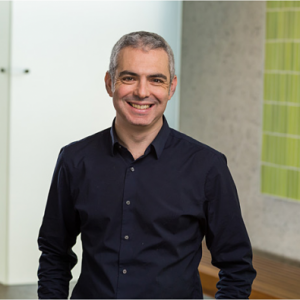
Daniel Steingart | Image

Ngai Yin Yip | Image

Shaina Kelly |
Why Earn Your EngScD in Operations Research at Columbia?
Columbia gives you a rigorous Ivy League education in the heart of a vibrant global city for unmatched opportunities and impact.
As a student, you’ll benefit from:
- New York City
There’s no better place to study operations research than New York City, a hub for some of the world’s largest and most complex enterprises. The department takes full advantage of this strategic location, drawing on expert practitioners for seminars, conference participation, research collaborations, and career connections for students.
- Outstanding Placement
From tenure track positions at prestigious global universities to senior roles at leading companies in technology and finance, your training and research opportunities at Columbia Engineering prepare you for leadership.
- Multidisciplinary Research Opportunities
Join experts across the university for a multifaceted approach to problems in operations research at the Center for the Management of Systemic Risk, the Center for Financial and Business Analytics, and the Columbia Business Analytics Initiative.
- Columbia University
With a PhD from Columbia, you’ll join one of the world’s most international, accomplished networks of researchers and alumni. Your Ivy League credential will open doors wherever you go and the relationships you build here will accelerate your career.
Why Earn Your EngScD in Mechanical Engineering at Columbia?
Columbia gives you a rigorous Ivy League education in the heart of a vibrant global city for unmatched opportunities and impact.
As a student, you’ll benefit from:
- New York City
Join top talent in one of the world’s most exciting and influential cities. Students choose Columbia Engineering over MIT, Berkeley, and others because of the New York City ecosystem of research and enterprise that can’t be found anywhere else.
- Unparalleled Opportunities for Research
Join faculty in advanced research projects at the forefront of mechanical engineering. Current areas of departmental focus include controls and robotics, energy and micropower generation, fluid mechanics, heat/mass transfer, mechanics of materials, manufacturing, material processing, microelectromechanical systems, nanotechnology, and orthopedic biomechanics.
- Unique Multidisciplinary Environment
Gain inspiration and insights from other areas of knowledge both within the College of Engineering and beyond. The department collaborates closely with other departments and centers of interdisciplinary research including Columbia University Medical Center and the Materials Research Science and Engineering Center.
- Columbia University
With a PhD from Columbia, you’ll join one of the world’s most international, accomplished networks of researchers and alumni. Your Ivy League credential will open doors wherever you go and the relationships you build here will accelerate your career.
Why Earn Your EngScD in Industrial Engineering at Columbia?
Columbia gives you a rigorous Ivy League education in the heart of a vibrant global city for unmatched opportunities and impact.
As a student, you’ll benefit from:
- New York City
There’s no better place to study industrial engineering than New York City, a hub for some of the world’s largest and most complex enterprises. The department takes full advantage of this strategic location, drawing on expert practitioners for seminars, conference participation, research collaborations, and career connections for students.
- Outstanding Placement
From tenure track positions at prestigious global universities to senior roles at leading companies in technology and finance, your training and research opportunities at Columbia Engineering prepare you for leadership.
- Multidisciplinary Research Opportunities
Join experts across the university for a multifaceted approach to problems in industrial engineering at the Center for Applied Probability and the Columbia Business Analytics Initiative.
- Columbia University
With a PhD from Columbia, you’ll join one of the world’s most international, accomplished networks of researchers and alumni. Your Ivy League credential will open doors wherever you go and the relationships you build here will accelerate your career.