Ask Us Anything: Pierre Gentine Highlights
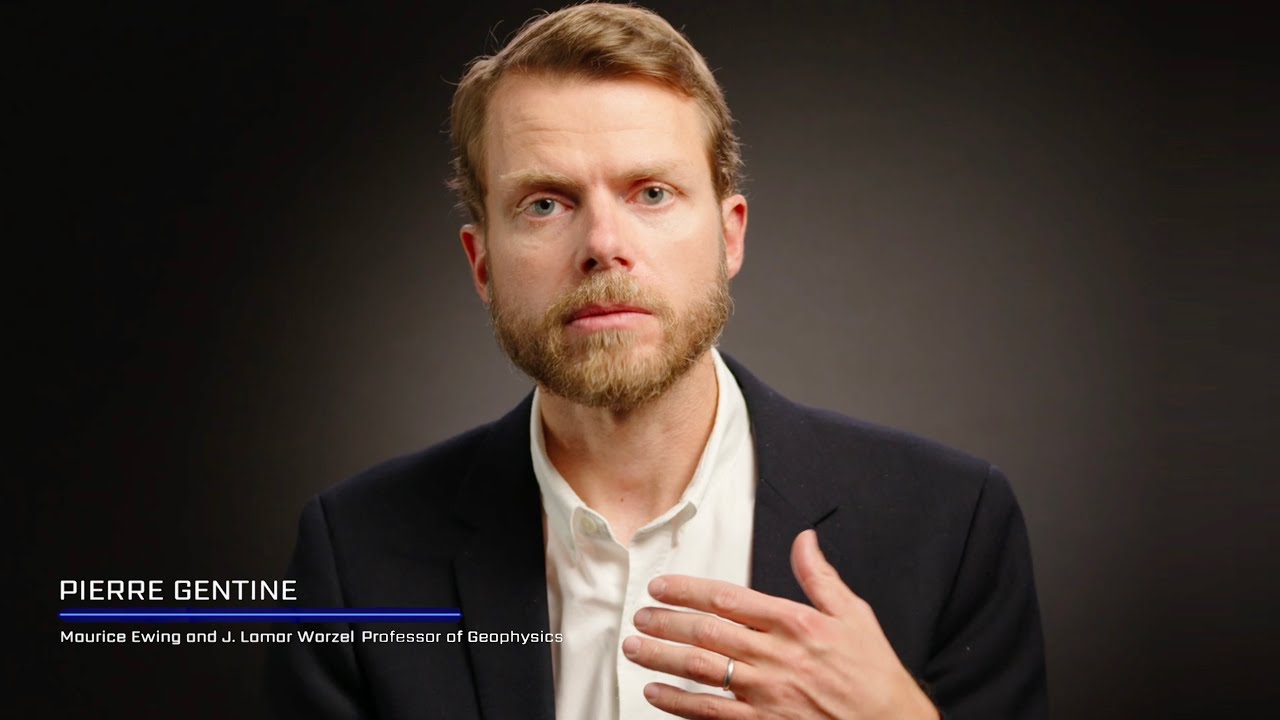
Learning the Earth with Artificial Intelligence and Physics (LEAP) center launched in 2021. What has been the core mission of the center?
LEAP’s mission is to increase the reliability, utility, and reach of climate projections by integrating climate and data science. Our primary strategy is to improve near-term climate projections by merging physical modeling with machine learning across a continuum, from expertise in climate science and climate modeling to cutting-edge machine learning algorithms. This will really help both the climate and data sciences communities--climate scientists and modelers struggle to fully integrate the plethora of existing datasets into their models, while machine learning algorithms have been good at emulating, such as ChatGPT, they are not so good at extrapolating or predicting extremes. By combining both approaches, we hope that LEAP will trigger a significant advancement in data science algorithms applied to physical problems. The center is incorporating physics and causal mechanisms into machine learning algorithms for better generalization and extrapolation, while optimally using the wealth of data available to climate science, in order to better predict the future.
Can you touch on some of the key projects LEAP has been focusing on? Any breakthroughs?
LEAP is working on different aspects of climate science and data science, covering not only research but also knowledge transfer and education. Some of the recent research breakthroughs in our center have shown that by using AI, we can discover new previously unknown physics (of clouds or ocean turbulence). We hope to use this “new” physics in climate models to improve their accuracy, especially of extremes. Essentially we’re using vast amounts of data, such as those from satellites, so that we can refine climate models and their evaluation and improve our predictions. It’s also critical that we share this information with the public and private sectors in a user-friendly way.
We also hope to break some of historic silos with climate research as climate research doesn't translate easily to the public or to the private sectors, as it is very technical and difficult to use. We are creating a cloud platform where we can provide climate data more widely, and also engage with our colleagues in the field and beyond to see what is actually useful to them. For instance, a business will want to know how much the frequency of flooding or heat waves will change in the future so they could adapt their business. With LEAP, we expect to be able to refine our models so that we can help offer more precise predictions.
There has been a lot of attention given to AI, and AI is currently being applied in your climate research and others. How has AI revolutionized climate modeling, and what’s the state of that today?
Over the last five years, there has been an explosion in the use of AI to better understand climate models and to better represent physical processes (such as clouds, ocean, and terrestrial carbon cycle or ocean turbulence). The next big push is how to integrate those AI algorithms within climate models that have historically used empirical equations.
The information we are predicting in the future is really uncertain. And there are many reasons for that, including the sheer complexity of all of those processes that we are trained to do when we build climate models. So we are focused on reducing and narrowing those uncertainties to give everyone, from policy makers to business leaders to educators, accurate climate projections to inform their own decision-making. For instance in the agricultural sector, being able to provide precise information on future climate could heavily impact crop productivity and yield.
The goal is to improve climate modeling so that we can say how many days a drought may last or what the likelihood of flooding is in New York City or any other specific low-lying area. These are questions that are really critical. Right now, the range of estimates is just so dramatic that it’s challenging to actually implement plans. We need to act now on this problem, and really then begin to fight climate change.
What excites you the most about where the field is headed and how LEAP's work will impact our future?
We are witnessing a true transformation and it’s centered around data – and the use of observation and simulation data to answer new hypotheses or questions that could not be addressed until now. Of course, as for any new field, we still need to be cautious and ensure that the results are sound and reproducible, but I am quite excited to see where the field is heading and witness the incredible pace of advances. I think that we are really witnessing a revolution in the climate sciences.
On this Earth Day 2023, what would you like to tell your children about how we are investing in our planet, how important climate change research is, and what you hope to leave to them and future generations?
What I tell my three kids is to think about others. We need to use fewer resources, to limit our footprint, to recycle, and to emit less. In other words, we need to mitigate climate change. But we also need to adapt. Climate change is now part of our everyday lives, as evidenced by the explosion in the number–and intensity–of recent extreme events (droughts, floods, etc). It’s clear we need to change as a society. This change has to be embraced by everyone and thus we need widespread support (government, policies) so that the entire country can adapt to those changes, not just a small fraction of our society. Otherwise, we will have failed as a society and country. Social justice and climate change are tightly connected–we need both to achieve our goals
Two Columbia Engineers Nerd Out on Complexity Theory

Xi Chen, associate professor of computer science, in conversation with Christos Papadimitriou, professor of computer science
“Chen, in particular, works across a really wide and impressive range of topics within theoretical computer science and does superb work as evidenced by his winning both of these prestigious awards,” Servedio adds. “The Gödel Prize is given to a small number of papers each year, and the Fulkerson Prize is awarded only every three years. Just a handful of people can proudly claim to receive both awards in the same year!”
Chen and Cai proved a deep and difficult result that provides the definitive word on an important class of problems in complexity theory, namely counting constraint satisfaction problems. In trying to answer the central question of whether the computational problem is easy or hard, Chen and Cai proved a dichotomy theorem, giving a particularly complete and thorough answer by characterizing every problem in the class of problems under consideration as either easy or hard. Their paper is the capstone of a major intellectual body of work that has been conducted by many top researchers over the course of 20 years.
Columbia Engineering sat down with Chen to find out more about the award-winning paper and his research process.
What are the things that you look for before deciding to pursue a research project?
The project needs to be well-motivated, either by real-world applications or connections with other theoretical problems people care about. You should also feel deeply attached to the problem. A good sign to me is that whenever the brain is idle (during a walk or when you are waiting for something), it is the first thing that jumps out.
What is your process when it comes to research?
I would start by digesting existing techniques, understanding their strengths and weaknesses. After internalizing them in my own language, the hope is to come up with conjectures to attack the problem. Usually conjectures during the first few (or many) rounds would be disproved, which in the process could help inform the formulation of new conjectures that lead to new lines of attack on the problem.
What do you like most about research?
I guess it has to be the Eureka moment. However, such moments are rare and they build on many hours of discussions and hard work. For some projects, they may never arrive.
What is your paper about? How would you describe it?
Imagine there is a big island full of flowers. Jin-Yi Cai and I set out to prove that every flower on this island is either red or yellow.
We were interested in a general family of counting problems where the two colors correspond to the two cases when a problem is either efficiently solvable (in polynomial time) or intractable.
Just like some flowers are neither red nor yellow in the world, we know there are problems that do not fall in any of these two cases (under standard complexity assumptions). However, it turns out that for this particular #CSP island, every problem can be classified into one of these two cases (either efficiently solvable or intractable).
How did you come up with the research?
We just finished working on a dichotomy theorem for the family of counting graph homomorphisms with complex weights (which can be viewed as special cases of #CSP with a single symmetric binary constraint). Jin-Yi and I believed that some of the techniques we developed in the graph homomorphism paper (jointly with my other long-time collaborator Pinyan Lu) for dealing with complex weights might help advance the line of work on #CSP from Boolean weights to complex weights. So, we looked at the research that has been done and figured out how we can advance it. In hindsight, I feel that my training in this area is mainly based on the writing of this very long (over 100 pages) graph homomorphism paper.
What do you hope to contribute to the field of complexity theory?
The paper, together with the other two papers that received the 2021 Gödel Prize, is the culmination of a large body of work on the complexity classification of #CSPs. Constraint satisfaction problems are of central importance in computer science. Our work gives a dichotomy theorem for the most general setting of their counting versions with complex weights. It covers a broad range of problems studied in not only computer science but also other sciences including statistical physics.
In Brief: Professors Chris Wiggins and Matthew Jones on "How Data Happened'
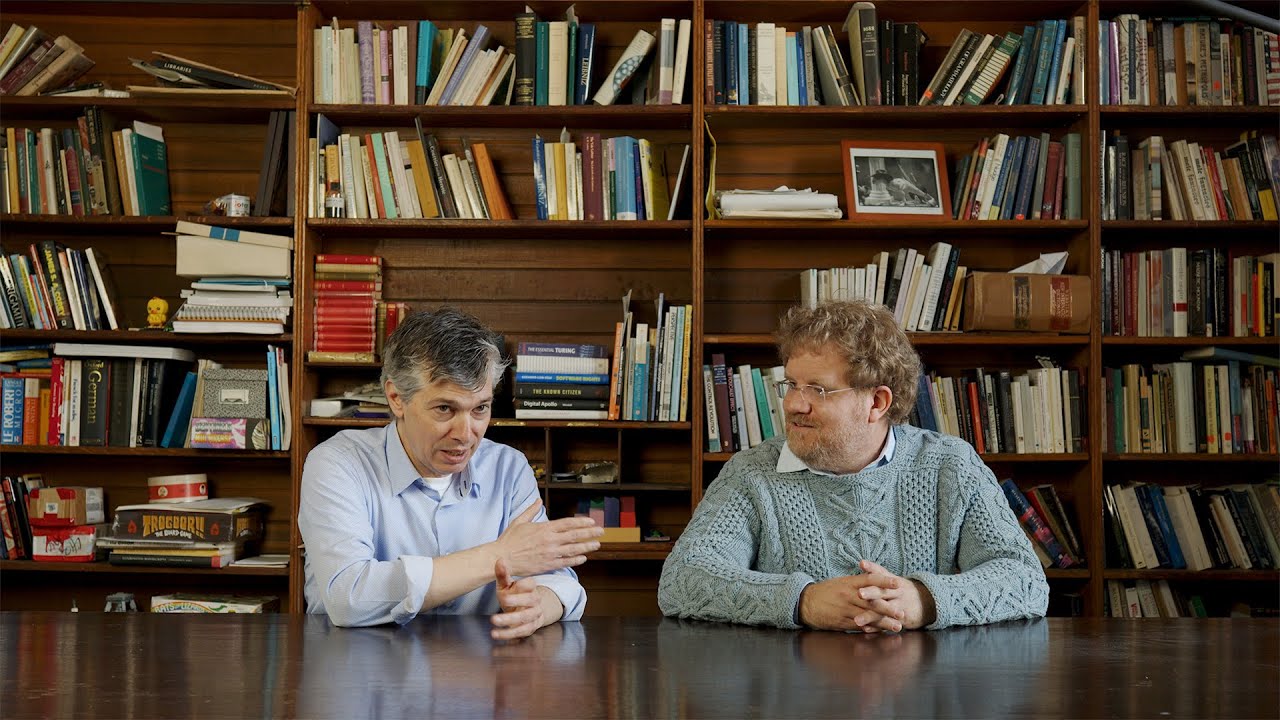
Two professors, two fields, two schools. A data scientist and applied mathematician teaching with an expert on the history of science and technology. One class, one book, one vision. We went behind the scenes with Columbia's two professors for a brief exchange on their book "How Data Happened" which emerged from their class "Data: Past, Present, and Future." (Photo Credit: Jane Nisselson)
While it is widely believed that data is an unbiased, objective numerical tool, Wiggins and Jones challenge this notion by using history to illustrate how data wields considerable power in shaping our perception of the absolute truth. “It was a realization for me, and I think for many other technologists over the last, let's say, six or seven years, that data and data science rearranges power,” Wiggins acknowledged. “Something we've talked about in class is how much of the history was shaped by people who had some interest, created some new capabilities, and every one of those capabilities rearranged power.”
“We begin the book at the end of the 18th century because that's when there's an explosion of the idea that somehow numerical data is more reliable; it might be more appropriate for understanding not just the natural world, like the movement of planetary bodies, but the economic world, the social world, the political world,” Jones added. “And the explosion of that idea, from the 19th century to the present, is one of the great transformations in how we even understand the world.”
The book encourages readers to become critical thinkers when it comes to data by understanding how it is embedded in particular power dynamics that affect our daily lives, such as socio-economic relationships.
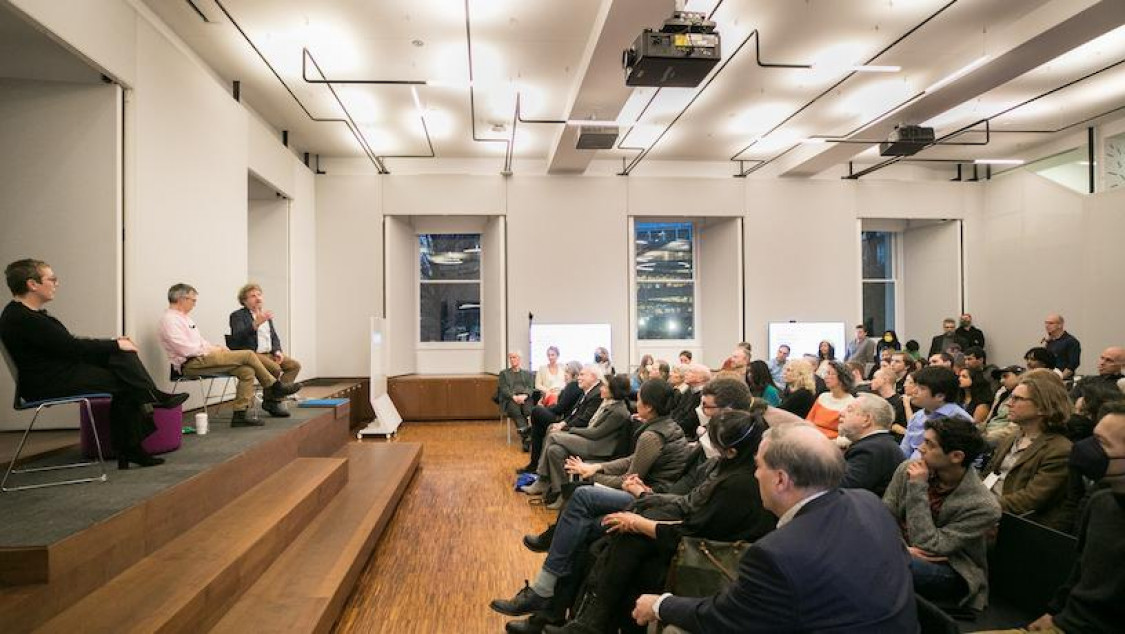
“Data comes from a Latin word that means ‘to give’,” said Wiggins, “and I liked the fact that it means given, because it speaks to the way that data doesn't really invite critique, right?”
Rather than presenting data as merely quantitative versus qualitative, the authors explore the inherent “unquestioned truthiness” people often associate with numbers and the belief that having numbers makes an argument more valid than one without them.
“We want to invite people to question by looking at things historically,” Wiggins said. “Part of what the book poses is: How do we maintain some critical abilities around data?”
Following the thought-provoking panel discussion, Wiggins and Jones participated in a lively question-and-answer session with an enthusiastic and packed audience. Afterwards, the two authors signed copies of their new book, leaving attendees inspired and eager to dive into its pages.
About Chris Wiggins
Wiggins is the chief data scientist at The New York Times, since 2014, and a founding member of Columbia’s Data Science Institute; his research applies machine learning to computational biology.
About Matthew Jones
Jones studies the history of science and technology, focusing on early modern Europe and on recent information technologies.