ABOUT THE STUDY

JOURNAL: Nature Chemical Biology

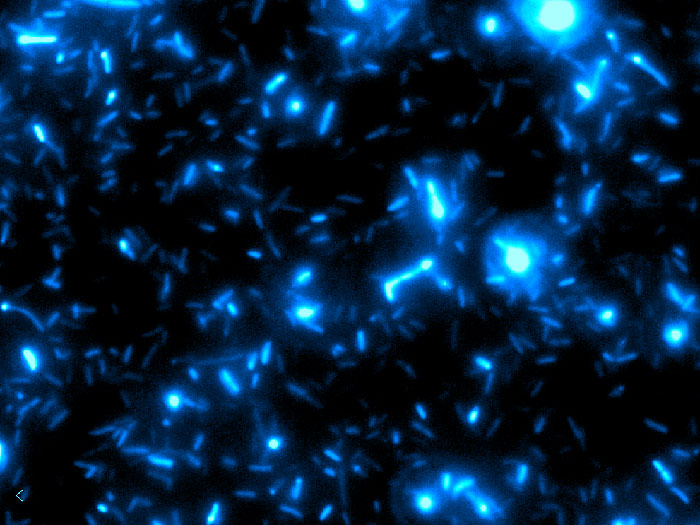
TITLE: "Engineered bacterial swarm patterns as spatial records of environmental inputs"

AUTHORS: Anjali Doshi (1), Marian Shaw (1), Ruxandra Tonea(1), Soonhee Moon (1) , Rosalia Minyety (1), Anish Doshi (2), Andrew Laine (1), Jia Guo (3,4) & Tal Danino (1,5,6)

  1. Department of Biomedical Engineering, Columbia University
  2. Department of Electrical Engineering and Computer Sciences, University of California, Berkeley
  3. Department of Psychiatry, Columbia University
  4. Mortimer B. Zuckerman Mind Brain Behavior Institute, Columbia University
  5. Herbert Irving Comprehensive Cancer Center, Columbia University
  6. Data Science Institute, Columbia University

FUNDING: This work was supported by an NSF CAREER Award (1847356 to T.D.), Blavatnik Fund for Innovations in Health (T.D.), and NSF Graduate Research Fellowship (A.D., Fellow ID 2018264757).

A.D., M.S., J.G., A.L. and T.D. are named as inventors on a provisional patent application that has been filed by Columbia University with the US Patent and Trademark Office related to all aspects of this work. The remaining authors declare no competing interests. 

ABOUT THE STUDY

JOURNAL: PNAS

TITLE: "The Montreal Protocol is delaying the occurrence of the first ice-free Arctic summer"

AUTHORS: Mark R. England (1) and Lorenzo M. Polvani (2)

  1. Department of Earth and Planetary Sciences, UC Santa Cruz; now at the University of Exeter
  2. Department of Applied Physics and Applied Mathematics, and Lamont Doherty Earth Observatory, Columbia University

FUNDING: This research was funded by a grant from the US National Science Foundation to Columbia University. The authors declare no financial or other conflicts of interest.

ABOUT THE STUDY

JOURNAL: PNAS

TITLE: "Implicit learning of convective organization explains precipitation stochasticity"

AUTHORS: Sara Shamekh, Kara Lamb, Yu Huang, Pierre Gentine

Department of Earth of Environmental Engineering, Columbia University, New York, NY, USA

FUNDING: The study was supported by: SS and PG acknowledge funding from European Research Council grant USMILE, from Schmidt Future project M2LiNES and from the National Science Foundation Science and Technology Center (STC) Learning the Earth with Artificial intelligence and Physics (LEAP), Award 2019625 - STC. KDL acknowledges support from LEAP and DOE Grant DE-SC0022323 ``Discovering Physically Meaningful Structures from Climate Extreme Data."

The authors declare no financial or other conflicts of interest.

Subscribe to Research