ABOUT THE STUDY
JOURNAL: Nature
TITLE: “Indefinite and Bidirectional Near Infrared Nanocrystal Photoswitching”
AUTHORS: Changhwan Lee (1), Emma Z. Xu (1), Kevin W. C. Kwock (2), Ayelet Teitelboim (3), Yawei Liu (3,4), Hye Sun Park (5), Benedikt Ursprung (1), Mark E. Ziffer (6), Yuzuka Karube (7), Natalie Fardian-Melamed (1), Cassio C. S. Pedroso (3), Jongwoo Kim8, Stefanie D. Pritzl (9,10), Sang Hwan Nam (8), Theobald Lohmueller (9), Jonathan S. Owen (7), Peter Ercius (3), Yung Doug Suh (11,8,12,13,*), Bruce E Cohen (3,14,*), Emory M Chan (3,*), P. James Schuck (1,*)
- Department of Mechanical Engineering, Columbia University, New York, NY, United States
- Department of Electrical Engineering, Columbia University, New York, NY, United States
- The Molecular Foundry, Lawrence Berkeley National Laboratory, Berkeley, CA, USA.
- State Key Laboratory of Rare Earth Resource Utilization, Changchun Institute of Applied Chemistry, Chinese Academy of Sciences, Changchun, China
- Research Center for Bioconvergence Analysis, Korea Basic Science Institute (KBSI), Cheongju, South Korea
- Department of Physics, Columbia University, New York, NY, United States
- Department of Chemistry, Columbia University, New York, NY, United States
- Laboratory for Advanced Molecular Probing (LAMP), Korea Research Institute of Chemical Technology (KRICT), Daejeon, South Korea
- Chair for Photonics and Optoelectronics, Nano-Institute Munich, Ludwig-Maximilians Universitat Munchen, Germany
- Department of Physics and Debye Institute for Nanomaterials Science, Utrecht University, Utrecht, The Netherlands
- Department of Chemistry, Ulsan National Institute of Science and Technology (UNIST), Ulsan, South Korea
- School of Energy and Chemical Engineering, Ulsan National Institute of Science and Technology (UNIST), Ulsan, South Korea
- Center for Multidimensional Carbon Materials(CMCM), Institute for Basic Science(IBS), Ulsan, South Korea
- Division of Molecular Biophysics and Integrated Bioimaging, Lawrence Berkeley National Laboratory, Berkeley, CA, USA
FUNDING: The study was supported by the Global Research Laboratory (GRL) Program through the National Research Foundation of Korea (NRF) funded by the Ministry of Science and ICT (number 2016911815), and KRICT (KK2261-12, SKO1930-20); the Office of Science, Office of Basic Energy Sciences, of the US Department of Energy under contract number DE-AC02-05CH11231; the Defense Advanced Research Project Agency (DARPA) Enhanced Night Vision in Eyeglass Form (ENVision) program (number HR00112220006); the National Science Foundation under Grant No. DMR-2019444; the NSF Graduate Research Fellowship Program; the DOE NNSA Laboratory Residency Graduate Fellowship program (No. DE-NA0003960); Programmable Quantum Materials, an Energy Frontier Research Center funded by the US Department of Energy (DOE), Office of Science, Basic Energy Sciences (BES), under award DE-SC0019443IBS-R019-D1; 2022 UNIST Research Fund (1.220108.01); seed funding support from Columbia University's Research Initiatives in Science & Engineering competition; the European Union's Horizon 2020 research and innovation program under the Marie Sklodowska-Curie grant agreement No 893439; the Fulbright Scholarship Program; the Zuckerman-CHE STEM Leadership Program; and the ISEF Foundation; the National Science Foundation under Grant No. CHE-2203510. S.D.P; the German Research Foundation (DFG) through the Collaborative Research Center 1032, Project no. 201269156, A8).
The authors declare no financial or other conflicts of interest.
ABOUT THE STUDY
JOURNAL: Joule
TITLE: "The Role of Electricity Market Design for Energy Storage in Cost-Efficient Decarbonization"
AUTHORS: Xin Qin (1), Bolun Xu (*2), Ioannis Lestas (1), Ye Guo (3), and Hongbin Sun (4,5)
- University of Cambridge, Department of Engineering, Cambridge, CB2 1PZ, UK
- Columbia University, Earth and Environmental Engineering, New York, NY 10027, USA
- Tsinghua University, Tsinghua-Berkeley Shenzhen Institute, Shenzhen, 518055, China
- Tsinghua University, Department of Electrical Engineering, Beijing, 100084, China
- Taiyuan University of Technology, College of Electrical and Power Engineering, Taiyuan, 030024, China
FUNDING: B. Xu was supported in part by the US National Science Foundation under grant ECCS-2239046. Y. Guo was supported in part by the National Natural Science Foundation of China under grant 51977115. H. Sun was supported in part by the National Natural Science Foundation of China under grant U22A6007.
B. Xu is a technical advisor to Storylitcs, a company working on simulation modeling of grid-scale energy storage, and Sensai Analytics, a company working on data analytics and machine learning solutions for grid-interactive batteries.
Innovators in Science Award: AI Powered Cancer Research

Professor Elham Azizi was the 2024 Innovators in Science Award Early-Career Scientist winner. The 2024 award focus was cancer immunology.
ABOUT THE STUDY
JOURNAL: Nature Communications
TITLE: “Photooxidation Driven Formation of Fe-Au Linked Ferrocene-Based Single-Molecule Junctions”
AUTHORS: Woojung Lee (1), Liang Li (1), Maria Camarasa-Gomez (2), Daniel Hernangomez-Perez (2) , Xavier Roy (1), Ferdinand Evers (2*) Michael S. Inkpen (3*), Latha Venkataraman (1,4*)
- Department of Chemistry, Columbia University
- Institute of Theoretical Physics, University of Regensburg, Germany
- Department of Chemistry, University of Southern California, Los Angeles
- Department of Applied Physics and Applied Mathematics, Columbia Engineering
FUNDING: This work was supported in part by the National Science Foundation MRSEC grant on Precision-Assembled Quantum Materials (DMR-2011738) and the National Science Foundation under grant DMR-2241180. M.S.I. was supported by a Marie Sklodowska Curie Global Fellowship (MOLCLICK: 657247) within the Horizon 2020 Programme and University of Southern California (USC) startup funds. We thank the NSF (DBI-0821671, CHE-0840366, CHE-1048807) and the NIH (S10 RR25432) for USC-based analytical instrumentation. M.C.-G., D.H.-P., and F.E. acknowledge financial support from the German Research Foundation (DFG) through Research Training Group (GRK) 1570 and Collaborative Research Center (SFB) 1277 - Project ID 314695032 (subprojects A03, B01). We thank Brandon Fowler and Nils Rotthowe for help with Mass-Spectroscopy, Giacomo Lovat for help with STM-BJ data acquisition, and Rachel Austin for discussions.
COI: The authors declare no competing financial or non-financial interests.
Ask Us Anything: Paul Sajda
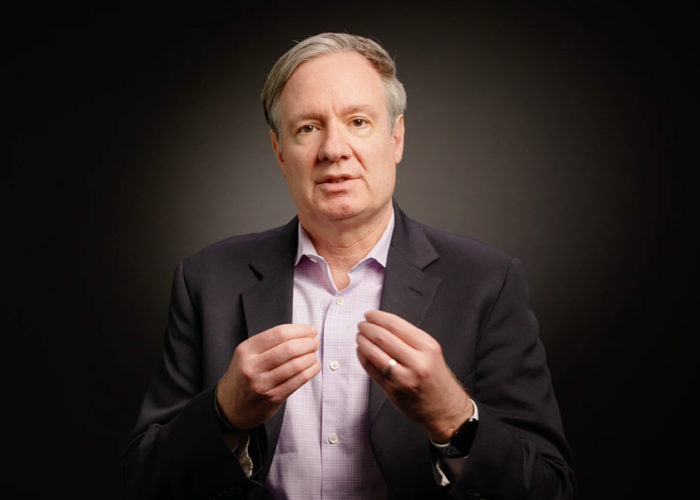
Paul Sajda is the Vikram S. Pandit Professor of Biomedical Engineering and a professor in electrical engineering and radiology. His research is interested in what happens in our brains when we make a rapid decision and, conversely, what processes and representations in our brains drive our underlying preferences and choices, particularly when we are under time pressure.
Traumatic stress can have devastating effects on people, in particular those in the military, including mental illness, substance abuse, post-traumatic stress disorder, family violence, and suicide. Developing effective approaches to prevent suicide and improve treatments is a top priority within the U.S. Department of Defense (DOD).
New DARPA program
A new program from DARPA (Defense Advanced Research Projects Agency), the DOD’s central research and development organization, has awarded $12 million to a multi-institutional team led by Paul Sajda, department chair and Vikram S. Pandit Professor of Biomedical Engineering at Columbia Engineering, to advance critical research in major depressive disorder (MDD) and suicide.
An interdisciplinary team
Sajda will be working with an interdisciplinary group that includes engineers, neuroscientists, and clinicians at the Medical University of South Carolina (MUSC), the University of Wisconsin-Madison, and the University of Oklahoma. The team is a close-knit one -- many of them have been working together for more than 10 years, including collaborating on clinical trials that link precision neurostimulation therapy to clinical outcomes.
The grant is one of three research projects funded by DARPA’s STRENGTHEN program, Strengthening Resilient Emotions and Nimble Cognition Through Engineering Neuroplasticity, which aims to build on recent advances in neuroscience and clinical practice to increase well-being and prevent or mitigate the effects of traumatic stress leading to behavioral health disorders and suicidality.
Brain stimulation techniques for treatment-resistant depression
The researchers are building on NIH-funded work aimed at developing brain stimulation techniques to treat cases of treatment-resistant depression disorder. They recently completed a six-week-long clinical study that used repetitive transcranial magnetic stimulation (rTMS), triggered by electroencephalography (EEG), to synchronize brainwaves, to induce a brain state known as “entrainment.” The study demonstrated that patients with better entrainment had greater treatment improvement, spotlighting the strong potential for EEG-informed rTMS therapy in cases of resistant MDD.
A new generation of psychiatric treatment
“The psychiatric field needs new ways to tackle treatment-resistant major depressive disorder, which does not respond to existing drug therapy or psychotherapy,” says Sajda, who is also affiliated with Columbia’s Data Science Institute. “Our team has decades of experience using innovative brain stimulation methods and multi-modal imaging in psychiatry. We expect our revolutionary approach in delivering individualized internal and external interventions to entrain brain networks will result in neuroplastic changes that improve clinical outcomes.”
His lab has decades of experience using innovative brain stimulation methods and multi-modal imaging in psychiatry. The DARPA-funded project — Realigning Emotion and COgnition Via prEcision Regulation of networkS (RECOVER) — is focused on developing a new generation of psychiatric treatment to guide the brain’s neuroplasticity, its natural ability to form new neural connections.
The clinical study will be run at MUSC, under the lead of co-PI Lisa McTeague, associate professor in the Brain Stimulation Division of the Department of Psychiatry and Behavioral Science at MUSC. Dr. McTeague is also a practicing clinical psychologist in the PTSD Clinical Team at the Ralph H. Johnson VA Health Care System. She and her group at MUSC have been working with Sajda for 10 years.
Promoting brain’s cognitive flexibility and emotional regulation to overcome depression and process trauma
The team hopes to reduce clinical symptoms of depression, anxiety, and suicidality by promoting cognitive flexibility (CF) -- the mental ability to switch between thinking about two different concepts according to the context of a situation -- and emotional regulation (ER) -- a conscious or nonconscious strategy to start, stop, or otherwise modulate the trajectory of an emotion. Together, CF and ER are essential to overcoming depression and processing trauma.
The researchers posit CF and ER are strongly influenced by patterns of electrical activity in the brain, called alpha oscillations. They believe that tweaking alpha oscillations using transcranial magnetic stimulation can improve a patient’s cognitive flexibility and emotional regulation by encouraging neuroplasticity. When combined with interventions such as cognitive-behavioral therapy, this new approach has tremendous potential to transform mental health.
Applying functional magnetic resonance imaging, electroencephalography, and transcranial magnetic stimulation
Their approach brings together a suite of familiar techniques that noninvasively image and manipulate the brain. By simultaneously using functional magnetic resonance imaging (fMRI), electroencephalography (EEG), and transcranial magnetic stimulation (TMS), the researchers hope to develop an entirely new approach for treating this debilitating mental disorder.
The team also hopes to translate their findings and build a less expensive and more widely available system based on simultaneous functional near-infrared spectroscopy (fNIRS), EEG, and TMS. This part of the project will be co-led by the Investigator Han Yuan, associate professor at the University of Oklahoma’s Stephenson School of Biomedical Engineering.
“The clinical trials we have completed, funded by NIH and done at MUSC, have shown to be very promising, and this new DARPA award will help us extend the approach even further, adding hybrid treatments as well as expanding our approach to addressing other forms of mental illness, such as PTSD and suicidality,” says Sajda. “We will build on recent advances in neuroscience and clinical practice to increase well-being and prevent or mitigate the effects of traumatic stress leading to behavioral health disorders and suicidality.”