DAPLab Workshop: AI Agents for Work
David Dini/Columbia Engineering
Pooling our insights
The second half of the workshop focused on these collaborations between academic research and industry partners, with a panel discussion and lightning talks focused on reporting back from real-world attempts to implement AI agents.
Michael Morris, Chavkin-Chang Professor of Leadership, welcomed the attendees to Columbia Business School by observing that academia and industry each account for roughly half of the research that happens in the United States.
“We really ought to be pooling our insights,” he said. “Business schools can play a natural role in facilitating industry-academia cooperation — I’m hoping the DAPLab will be one of many ways we do this.”
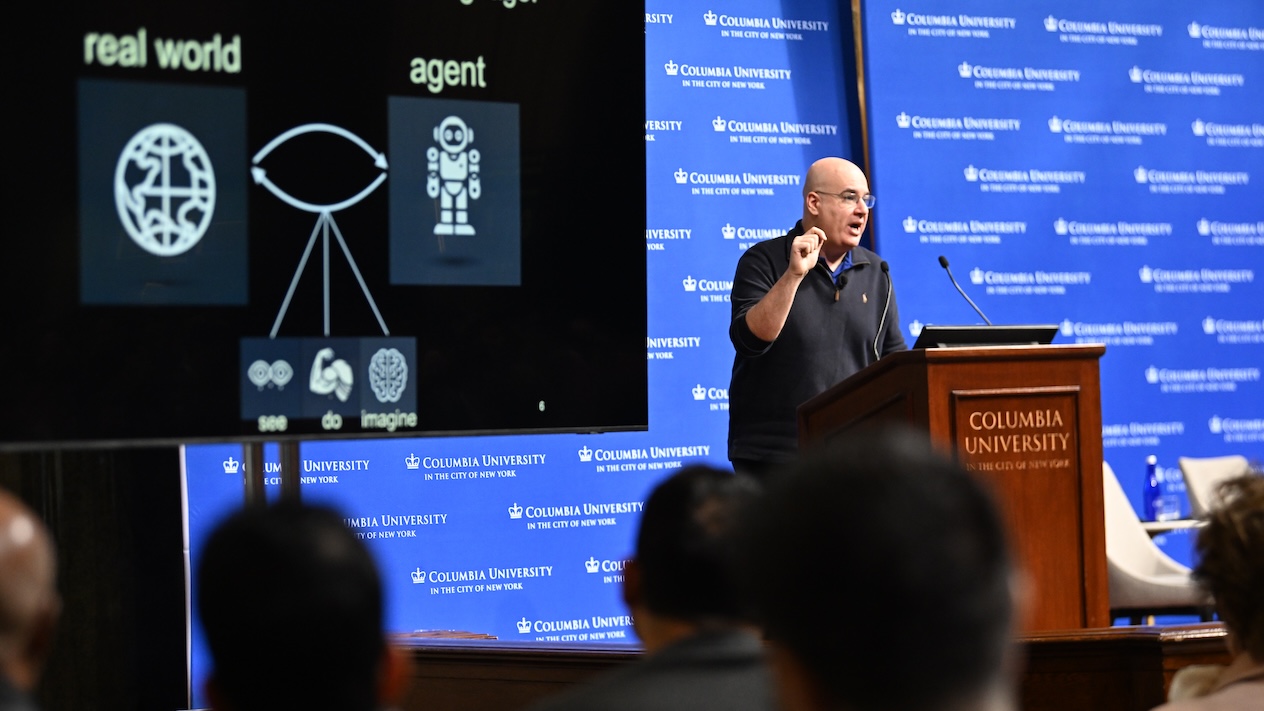
In her keynote address, cognitive scientist Danielle Perszyk described how her team at Amazon AGI leverages insights from human intelligence to refine its efforts to build reliable AI systems.
“It's one thing for an agent, whether a human or an AI, to be able to do the same thing like click on an icon or type in a text field in the same environment every time,” Perszyk said. “But the digital world is ever-evolving, and we can't assume that it's going to stay the same even for short periods of time.”
She described how research into the evolution of human intelligence frames the questions necessary to develop agents that are robust in fast-changing environments.
In closing the day, Chilton described the journey to building and deploying these technologies as “a business problem, a sociology problem, and a cognitive science problem that draws from history, science, language arts, visual arts, and interaction.”
For her, AI agents won’t just automate tasks — they will open entirely new sources of value, the same way databases, the internet, and the cloud have.
“Every faculty member involved in DAPLab has deep collaborations throughout the university,” she said. “We also have a strong track record of delivering results for industry problems through sponsored research.”
The DAPLab is currently identifying partners to work together on a shared research agenda to develop next-generation systems to support reliable, safe, and efficient agent automation. To learn more, visit DAPLab’s website or contact co-directors Eugene Wu or Zhou Yu.
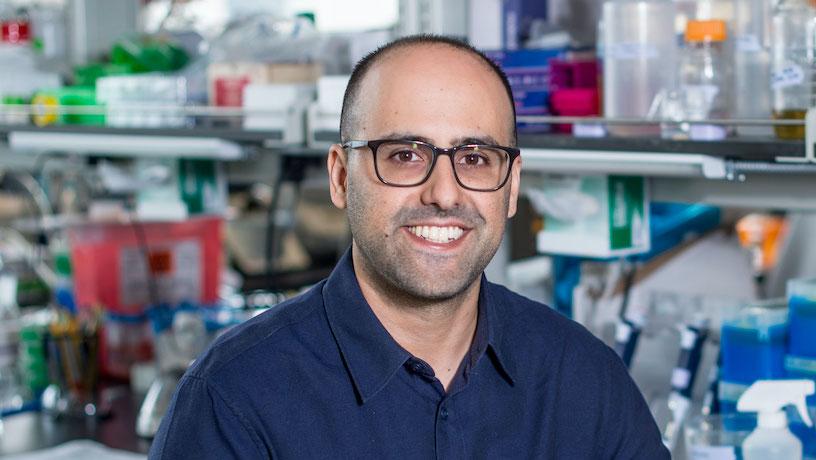
Lead Photo Caption: Zhou Yu, associate professor of computer science and co-director of DAPLab
Lead Photo Credit: David Dini/Columbia Engineering
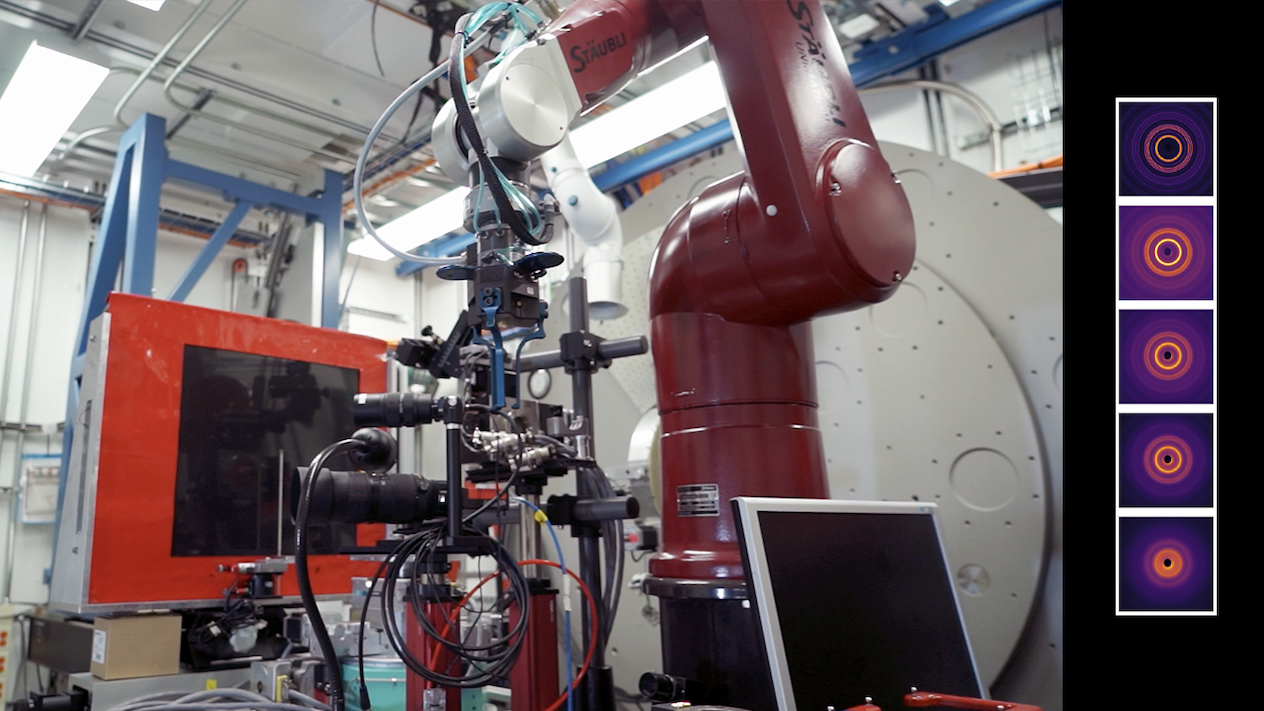
Inside Columbia Engineering’s Demo Session
Video Credit: Jane Nisselson
Ethics of AI in Urban Tech
The Center for Smart Streetscapes (CS3) hosted a panel on the ethical dimensions of collecting data in the physical world. The experts discussed the problem of insufficient privacy laws and the potential for cutting-edge solutions through better data governance.
“We’ve had data collection for many years, but rapid advancement in AI has caused the scale of collection to increase tremendously,” said privacy researcher Roxana Geambasu, who leads the center’s research on security and privacy. “To protect privacy, you have to be very careful about what you collect in the first place.”
The following Columbia Engineering faculty also participated in the session:
- Henning Schulzrinne, Julian Clarence Levi Professor of Mathematical Methods and Computer Science; professor of electrical engineering
- Andrew Smyth, Robert A. W. and Christine S. Carleton Professor of Civil Engineering and Engineering Mechanics
- Roxana Geambasu, associate professor of computer science
Watch the session.
The Columbia Class of 2035: Will We Need To Reinvent Higher Education?
In this interactive session, Vishal Misra and colleagues from across the University led a discussion that considered how AI may change the teaching and learning landscape in higher education.
In recorded remarks, Dean Shih-Fu Chang focused the conversation by emphasizing the importance of using AI as a tool, not a replacement for thought.
“The key question is: How do we use AI not to hinder or replace collaboration, but to enhance creativity, cooperation, and efficiency between humans and machines?” he said.
From Chaos to Code: How AI Can Tame the Climate Crisis
Climate disasters are rarely isolated. From urban firestorms to inland flooding, extreme weather events set off cascading failures that compromise built infrastructure and socio-economic systems, as well as natural ecosystems. Researchers from Columbia Engineering sat alongside experts in public policy, ecology, and climate science to consider how AI is emerging as a useful tool in supporting disaster preparedness and building resilience.
George Deodatis, vice dean for research at Columbia Engineering, Santiago and Robertina Calatrava Family Professor of Civil Engineering and Engineering Mechanics, and professor of earth and environmental engineering, pointed to the importance of AI in assisting to understand risk under changing conditions of uncertainty.
With climate change making it “an order of magnitude” more difficult to assess the risk of hazards, we are relying on artificial intelligence approaches in order to establish models that can quantify — in a probabilistic way — the occurrence and intensity of these extreme events over time,” he said.
The following Columbia Engineering faculty also participated in the session:
- Bolun Xu, assistant professor of earth and environmental engineering
- Adam Sobel, professor of applied physics and applied mathematics and of earth and environmental sciences.
Watch the session or read more.
ChatCEO: How AI is Influencing Leadership and Labor
Business leaders increasingly leverage AI tools for everything from automating rote tasks to supporting vital decisions. In this panel, computer scientist Lydia Chilton joined leaders in business, journalism, economics, and international affairs to examine what AI means for leadership and labor markets in an increasingly complex global economy.
Chilton emphasized the rapid pace of improvement, noting that she had rarely used AI tools in her own work until the release of DeepSeek.
“The goal with AI is that a user can get the computer to do what they want just by expressing intent,” she said, noting that the goal won’t be achieved for some time.
“Disruption just is, and we get to live with it,” she said. “Try to be the one creating it rather than the one living with it.”
Watch the session or read more.
Closing Keynote: Sami Haddadin
In his keynote address, roboticist and AI researcher Sami Haddadin shared his vision for an advanced robotic brain capable of sensing and responding to the dynamic physical world, interacting safely and intelligently, and learning from experience.
“We are entering an era where AI is no longer confined to screens and datasets but will actively contribute to discoveries in the physical world,” he said. “Just as telescopes and microscopes expanded our ability to observe the universe, embodied AI could be the next great tool to extend human potential.”
Watch the keynote or read an excerpt from Dean Chang’s conversation with Haddadin.