
Forging a Legacy, Giving Back
After the death of her husband, Alan Kaganov EngScD’74, Carol Kaganov continues his commitment to supporting innovation in biomedical research.
By Allison Elliott
When Carol Kaganov first met her husband, Alan, in 1966, it was far from the bustle of Manhattan and the major cities where they would spend their life together.
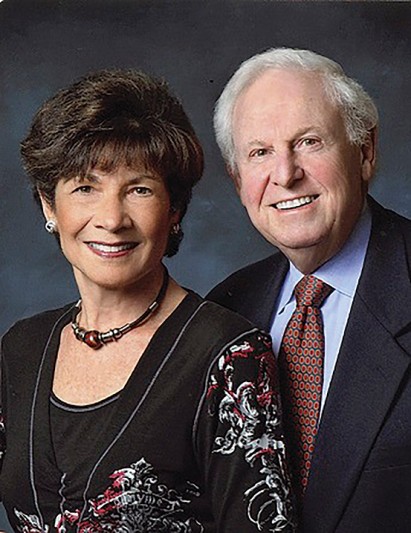
It was on a beach in Nantucket. “He was with a group of friends, and I was with a group of friends, and I knew one of the men he was with,” Carol remembers. “They were playing beach volleyball and making a lot of noise, and he was sitting on a blanket doing the New York Times crossword puzzle — that’s the guy for me,” she thought.
Their meeting sparked not just a lifelong love of doing the crossword puzzle together but also a commitment to advancing health, medicine, and educational philanthropy.
When the Kaganovs started dating, Carol was working in Manhattan as a copy editor and writer at publications including Seventeen magazine and Harper’s Bazaar, while Alan was working for Johnson & Johnson in New Jersey as a packaging engineer. Already armed with a degree in mechanical engineering from Duke and an MBA from New York University, he became more curious about the medical side of engineering. “He decided he wanted to know more about the product, not the packaging,” says Carol.
Road to Columbia
With the guidance of a mentor, he applied to doctoral programs and chose Columbia, where he received support with a prestigious Career Fellowship from the National Institutes of Health (NIH). Though Columbia had no formal biomedical engineering program at the time, Alan was able to devise a curriculum with courses from different areas, effectively creating his own program and establishing himself as a trailblazer in the emerging field. The novel plan resulted in him needing to take three separate doctoral exams to obtain his degree: in chemical engineering, mechanical engineering, and anatomy and physiology.
Carol fondly remembers the six years they spent living on Riverside Drive while Alan pursued his degree.
“Our view was looking down to the Hudson and the cathedral there,” she says. “We would sit and look at the view of the sunset like we were watching TV. It was fantastic.”
With a Columbia Engineering degree in hand, Alan was able to pursue his interest in the burgeoning field of health-related technologies and rise to senior management positions at several major companies. His career took the couple all over the country — from Danbury, Connecticut, to Chicago to San Francisco to Boston and back to the West Coast again. It was in San Francisco where he became embedded in the venture capital community.
Alan’s career was about creating new medical products and doing medical research and mentoring entrepreneurs who were starting medical device companies. And I always shared his enthusiasm for the products and the projects."
Carol Kaganov
After serving as vice president of corporate development and strategic planning at Boston Scientific, he became a partner at U.S. Venture Partners in Menlo Park, California. Over the course of a long and successful career, he obtained 15 patents and developed many effective medical devices for treating a host of conditions, including heart arrhythmia and spinal and circulatory diseases, as well as drug delivery systems.
A shared passion for innovation and giving
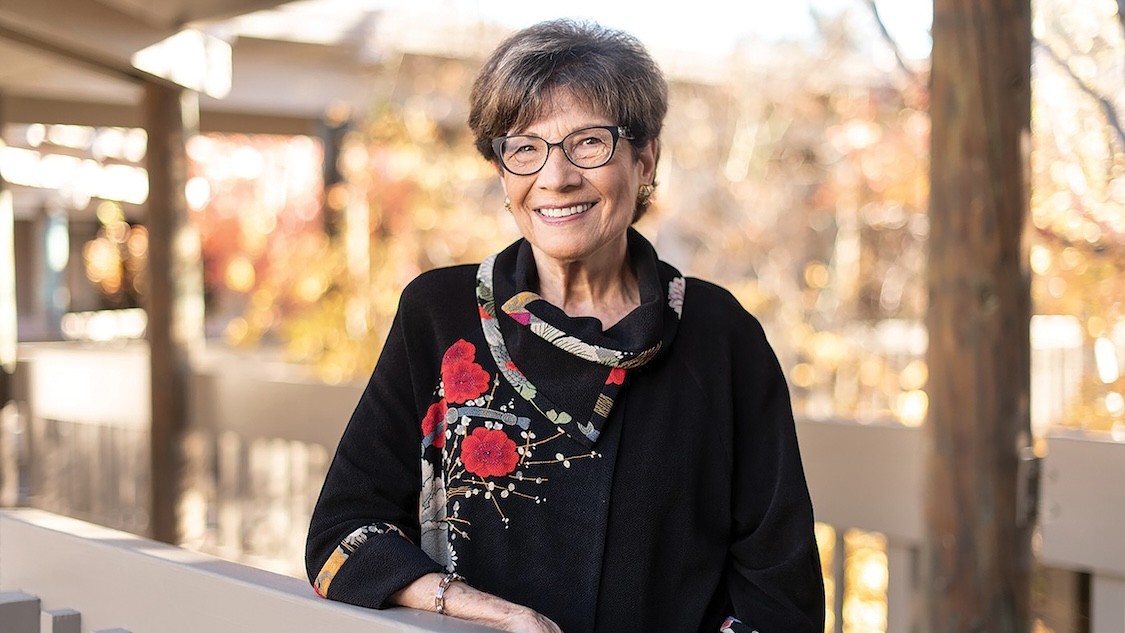
As residents of the Bay Area, the Kaganovs had been involved with and supported the local arts and culture. Today, Carol sits on the board of a San Francisco Symphony League and supports local theater and ballet companies, as well as several volunteer groups at nearby Stanford University. After her husband’s death in 2019, Carol wanted to continue their shared project of giving to people and programs they believed in.
“I’m not a scientist, and I really didn’t share in his work, but I did share his excitement of the work and his love of discovering new things,” she says. “His career was about creating new medical products and doing medical research and mentoring entrepreneurs who were starting medical device companies. And I always shared his enthusiasm for the products and the projects.”
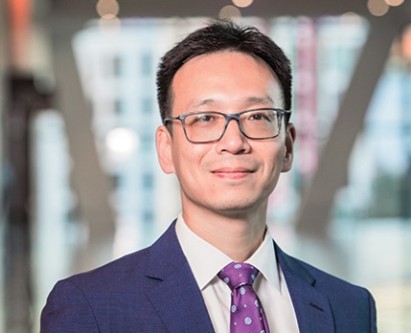
In 2023, Columbia welcomed Ke Cheng, a noted expert in pulmonary bioengineering, to the faculty, and in 2024, he was named the Alan L. Kaganov Professor of Biomedical Engineering. The professorship was created by Carol to honor her late husband and supports outstanding scholars in biomedical engineering. With its special focus on pulmonary and/or cardiovascular systems, the professorship aligns with Cheng’s lifelong research interests.
At Columbia, Cheng runs the BioTherapeutics Lab and serves as chair of the NIH Biomaterials and Biointerfaces study section. His research focuses on regenerative medicine and the clinical application of stem cells and exosomes.
He has also founded biotech companies for stem-cell drugs and extracellular vesicles to advance lung and heart regeneration, cancer therapy, and drug delivery.
“We are so grateful to Carol and Alan for their support of learning, research, and scholarship at Columbia Engineering,” says Dean Shih-Fu Chang.“
Alan Kaganov had an inspiring Columbia journey, from studying biomedical engineering before it was a formal program to then supporting world-class research in an area where attention is sorely needed — in cardiovascular and the lesser studied area of pulmonary bioengineering. He was a true pioneer, but more importantly, a husband, mentor, and friend known for his kindness and generosity.”
Alan’s legacy was recognized in November at the Archimedes Dinner, an event that celebrates faculty who have recently been honored as named chairs and the donors who support professorships.
She also endowed the Alan L. and Carol M. Kaganov Doctoral Fellowship which will be held by Weihang “Savannah” Zhang who is a doctoral student in the Ke Cheng lab.
“[Alan] was kind of at the beginning of bioengineering, and we were excited to be part of that, and he had an amazing network of people,” Carol says. “To this day, I hear from people who knew him and thanked him for helping them in their careers. Because we didn’t have children, we wanted to help finance other people’s children if they needed the support.”