Faculty & Staff
Columbia Engineering Welcomes New Faculty
Meet the newest professors and lecturers driving advances in quantum cryptography, machine learning, soft robotics, sustainable energy, biomolecular therapeutics, and more.
This fall, Columbia Engineering welcomes 18 new faculty whose expertise cuts across a range of interdisciplinary areas. The newest cohort of researchers and lecturers is pioneering breakthroughs in research domains related to AI and computation, health and medicine, operations, quantum, and new materials, as well as applying innovative methods to teaching and learning computer and data science.
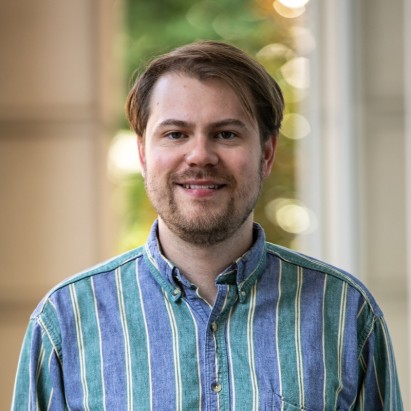
JAMES BARTUSEK
James Bartusek joined the Department of Computer Science as an assistant professor in July 2025.
Bartusek studies the foundations of secure communication and computation, with a particular interest in quantum information processing. Currently, he is investigating how quantum information enables strong forms of security that do not exist in a classical world, and how tools from cryptography can be utilized to test quantum behavior and verify quantum computation.
He received his BS and MS from Princeton in 2016 and 2019, respectively, and his PhD from the University of California, Berkeley in 2024.
Research areas: Quantum cryptography, quantum information processing
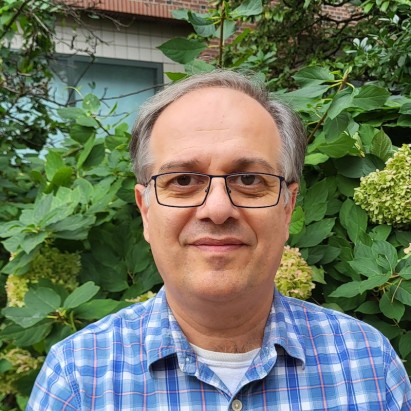
HOMAYOON BEIGI
Homayoon Beigi joined the Department of Mechanical Engineering as a professor of practice in January 2025.
The author of the first and only comprehensive textbook on Speaker Recognition, for over three decades, Beigi has been involved in research and development in learning-adaptive control, neural network learning, biometrics, pattern recognition, speech, speaker, face, object, emotion, and language recognition, as well as Internet-Commerce, and more. He has developed the award-winning RecoMadeEasy® Recognition Engine, and the multiple-award-winning CommerceMadeEasy® software. He taught as an Adjunct Professor at Columbia from 1995 to 2024, teaching graduate-level courses in speaker, speech, handwriting, and applied signal recognition.
He was a Research Staff Member at the IBM T.J. Watson Research Center from 1991 to 2001, working on speaker recognition, automatic speech recognition, natural language processing, search, online handwriting recognition, control, and NN Learning. He developed the SAFE Audio ANSI standard and was an active liaison in the US delegation of the ISO/SC37-JTC1-WG3 and the VoiceXML Forum on Speaker Biometrics. His other research activities include Structural Health Prognosis, Image Compression, Kinematics, Financial Optimization, and Zero-Gravity Fluid Dynamics. His 1000+ page textbook, "Fundamentals of Speaker Recognition," has been downloaded more than 100,000 times and was voted by Book Authority as one of the top 100 Computer Science books of all time. He is the recipient of three best paper awards from IEEE and the Society of Experimental Mechanics, has issued 13 patent, and has peer-reviewed over 100 publications. He is a Senior Member of IEEE and on the Advisory Board of IEEE Spectrum. Beigi earned his Bachelor's, Master's, and Doctorate from Columbia University in 1984, 1985, and 1991, respectively.
Research areas: Signals, information, and data.
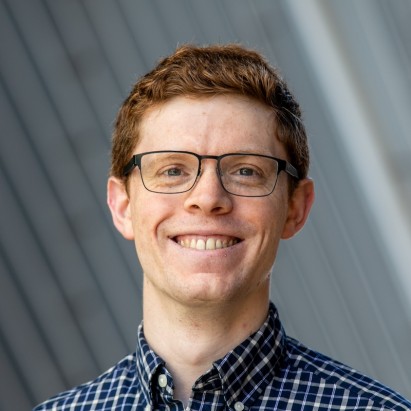
ADAM BLOCK
Adam Block joined the Department of Computer Science as an assistant professor in July 2025.
Block’s research interest lies in machine learning, to bridge theory and practice by designing algorithms with provable guarantees. An NSF Graduate Research Fellowship supported his graduate studies.
Block graduated from Columbia University with a BA in mathematics in 2019 and received his PhD from Massachusetts Institute of Technology (MIT) in 2024. At MIT, he was affiliated with the Laboratory for Information & Decisions Systems and the Statistics and Data Science Center. He was a postdoc at Microsoft Research NYC.
Research areas: Theory/Machine Learning
CHAOQUN DONG
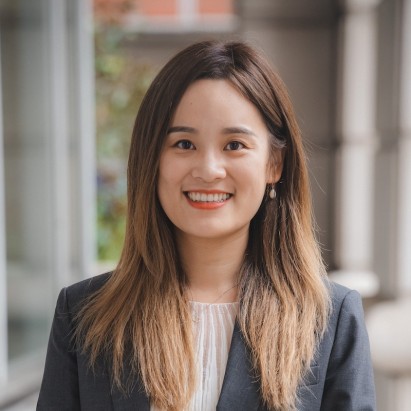
Chaoqun Dong joined the Department of Mechanical Engineering as an assistant professor in July 2025.
Dong’s research focuses on developing soft intelligent bioelectronics for advanced neural interfaces. By integrating innovations in functional materials and soft robotic actuators with bioelectronics, Dong creates soft multifunctional devices that can morph their shape and sense conditions within the human body. The devices enable intimate, adjustable, and minimally invasive neural interfaces and high-precision, closed-loop neuromodulation. Her interdisciplinary research brings together techniques from materials science, mechanical engineering, electrical engineering, microengineering, and neural engineering.
Dong received her PhD in the Institute of Materials from École Polytechnique Fédérale de Lausanne (EPFL) in 2021. She then joined the Department of Electrical Engineering at the University of Cambridge as a postdoc fellow. She was awarded a Swiss National Science Foundation (SNSF) Early Postdoc Mobility Fellowship in 2021 and a Marie Sklodowska-Curie Postdoctoral Fellowship in 2023.
Research areas: Soft functional materials, bioelectronic medicine, and soft robotics
GREESHMA GADIKOTA
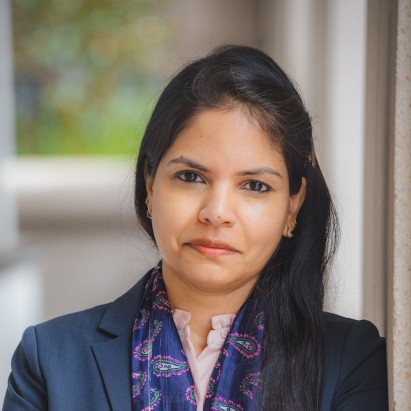
Greeshma Gadikota joined the Department of Earth and Environmental Engineering as a professor in July 2025. She is also the Lenfest Earth Institute Professor of Climate Change at the Columbia Climate School.
She directs the Sustainable Energy and Resource Recovery Group and her research is focused on 1) sustainable energy and metal recovery—developing new technologies to recover sustainable energy and critical metals by harnessing unconventional resources, and 2) sustainable subsurface energy—creating sustainable energy solutions by harnessing subsurface resources.
Gadikota received her MS degrees in chemical engineering and operations research and PhD in chemical engineering—all from Columbia University. She held postdoctoral research associate appointments at Princeton University and Columbia University, and a research associate appointment at the National Institute of Standards and Technology (NIST). Her BS degree in chemical engineering and economics is from Michigan State University. Previously, Gadikota was an associate professor and Croll Sesquicentennial Fellow in the School of Civil and Environmental Engineering with a field appointment in the Smith School of Chemical and Biomolecular Engineering at Cornell University. She is a recipient of the DOE, NSF and ARO CAREER Awards, Sigma Xi Young Investigator Award, Cornell Engineering Research Excellence Award, Inaugural Cornell Rising Women Innovator Award, AICHE Sabic Award for Young Professionals from the Particle Technology Forum, and the ACS Women Chemists Committee Rising Star Award.
Research areas: Sustainable energy and metal recovery, sustainable subsurface energy
JOHN HEWITT
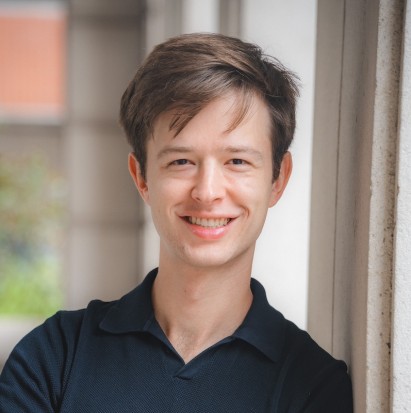
John Hewitt joined the Department of Computer Science as an assistant professor in July 2025.
His interests are in neural representations of language, language models, and interpretability. His long-term goals are to design systems that learn many of the world’s languages and provide interfaces for controlling and understanding their behavior. He was a visiting researcher at Google DeepMind.
Hewitt received a BSE from the University of Pennsylvania in 2018 and received his PhD from Stanford in 2024. He was an NSF Graduate Fellow and received an Outstanding Paper Award at ACL 2023, a Best Paper Runner-Up at EMNLP 2019, an Honorable Mention for Best Paper at the Robustness of Few-Shot Learning in Foundation Models Workshop (R0-FoMo) at NeurIPS 2023, and an Outstanding Paper Award at the Workshop on Analyzing and Interpreting Neural Networks for NLP (BlackBoxNLP) at EMNLP 2020.
Research area: Natural Language Processing
ALEKSANDER HOŁYŃSKI
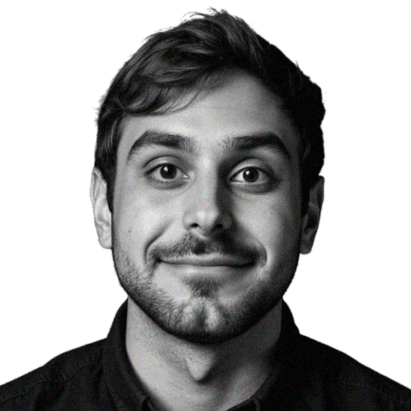
Aleksander Hołyński joined the Department of Computer Science as an assistant professor in July 2025.
His research is in the area of vision/generative AI. Hołyński received a BS from the University of Illinois at Urbana-Champaign in 2014 and completed his PhD studies at the University of Washington in 2022. Before Columbia, he was a postdoctoral scholar at the University of California, Berkeley and a research scientist at Google DeepMind, where he worked on large visual generative models, including Veo and Genie. His research has received best paper awards at ICCV 2023, CVPR 2024, and CVPR 2025.
Research area: Vision/Generative AI
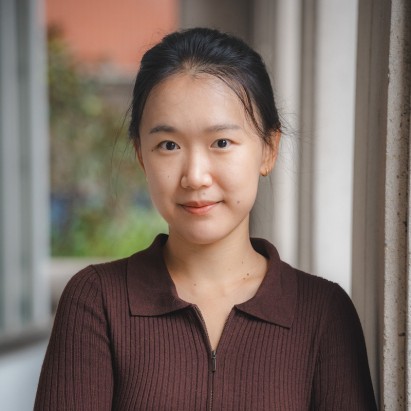
YINING LIU
Yining Liu joined the Department of Computer Science as a Lecturer in Discipline in July 2025.
She is passionate about teaching and strives to create an engaging, well-structured learning environment that supports students in exploring their academic curiosity. She will teach E4800: Data Science Capstone(Sections 001 and 002) in the fall.
Liu holds a BA from the University of California, Berkeley (2020) and a PhD from Columbia University (2025).
Research area: Data science instruction
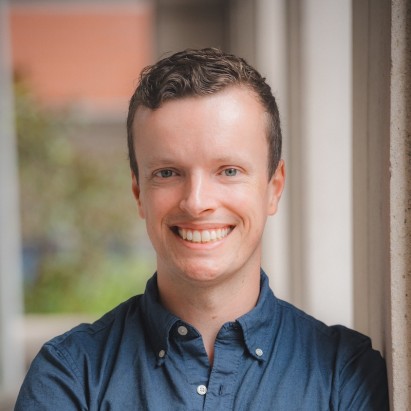
CURTISS LYMAN
Curtiss Lyman joined the Department of Applied Physics and Applied Mathematics in July 2025 as a Ju Tang Chu and Wui Ping Chu Assistant Professor.
He received his PhD in mathematics from the University of Washington in 2025, and a BSc in psychology from Tulane University in 2012 and an MS in mathematics from Western Washington University in 2017.
Outside of academia, Lyman also worked in workforce development for the Seattle Colleges and as a data science consultant for the online dating site Coffee Meets Bagel. Lyman's research focuses on partial differential equations arising from condensed matter physics and the study of quantum materials. Recently, he has been interested in how Floquet-Bloch theory, spectral theory, and representation theory can be used to reduce the dimension of such problems when there are symmetries involved, and the impact this has on the physical behavior of the corresponding waves. This fall, Lyman will be teaching APMA2000E: Multivariable Calculus.
Research areas: Partial differential equations, representation theory, condensed matter physics, quantum materials
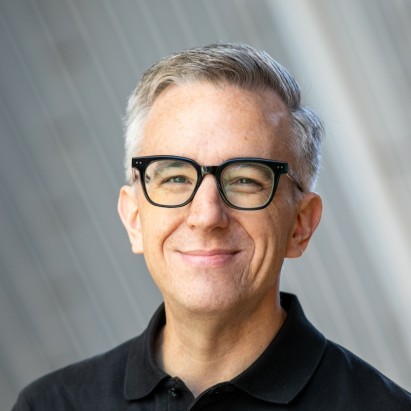
CHRIS MURPHY
Chris Murphy joined the Department of Computer Science as a Senior Lecturer in Discipline in July 2025.
Murphy is a teaching faculty member teaching courses on software quality, introductory programming, and software development. His current academic interests include student mental health; diversity, equity, inclusion, and accessibility in computer science; software engineering education; and software testing. He will be teaching COMS 3107 Clean Object-Oriented Design in the fall and organizing the Emerging Scholars Program.
He received his BS from Boston University in 1995 and his PhD from Columbia Engineering in 2010. He previously served as a member of the faculty at the University of Pennsylvania and at Bryn Mawr College, where he earned teaching awards in 2019 and 2023, respectively. He was also a visiting faculty member at Swarthmore College and has worked as a professional software developer in Boston, San Francisco, and London.
Research areas: Software quality, introductory programming, software development
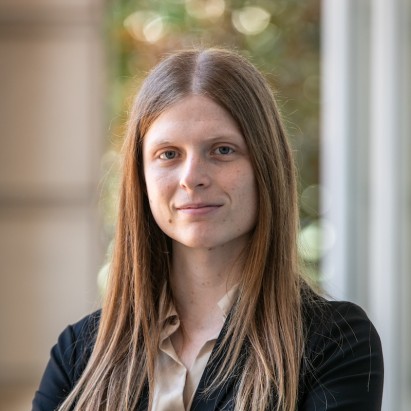
SILVIA SELLÁN
Silvia Sellán joined the Department of Computer Science as an assistant professor in July 2025.
Sellán specializes in computer graphics and geometry processing. Their research seeks to broaden the application realm of computer graphics by quantifying the uncertainty of 3D geometric tasks. This has yielded groundbreaking results in geometry processing, computer graphics, and related fields. The primary focus of Sellán’s research is reinterpreting common geometric synthesis frameworks like modeling and reconstruction from a statistical perspective, an approach that can greatly improve the accuracy of established methods and enable completely new, uncertainty-aware algorithms with valuable applications in medicine, security, autonomous driving, and more.
Sellán completed undergraduate studies at the University of Oviedo in 2019 and obtained a PhD from the University of Toronto in 2024. They were a Vanier Doctoral Scholar, an Adobe Research Fellow, and the 2021 University of Toronto Arts & Science Dean’s Doctoral Excellence Scholarship winner. Sellán was a School of Engineering Distinguished Postdoctoral Fellow in electrical engineering and computer science at MIT and interned twice at Adobe Research and the Fields Institute of Mathematics. Sellán is also a founder and organizer of the Toronto Geometry Colloquium and a member of WiGRAPH.
Research area: Graphics
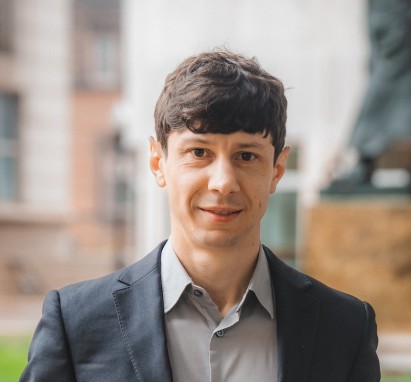
MICHELE SIMONCELLI
Michele Simoncelli joined the Department ofApplied Physics and Applied Mathematicsas anassistant professor in January 2025.
His group's research ranges from quantum theories to real-world technologies, and is structured around three core streams: the formulation of equations that relate the quantum behavior of atoms to macroscopic experimental observables; the development of physics-aware AI simulation methods to quantitatively predict material properties from first principles; and the combined application of these approaches to design and discover materials for the storage and management of information or energy.
Prior to joining Columbia in January 2025, he held the Gonville & Caius Research Fellowship in the physics department at the University of Cambridge (2021–2024), where he developed fundamental quantum theory and computational methods to describe the emergence of hybrid crystal-glass properties in materials with controlled degrees of atomistic disorder. He received his PhD from EPFL (Nicola Marzari's group) in 2021, presenting in his thesis novel microscopic and mesoscopic theories of thermal transport in solids: the Wigner transport equation, generalizing the semiclassical Peierls-Boltzmann equation, and the viscous heat equations, generalizing Fourier's law.
His work has been recognized with the Charles Haenny Prize for Physics (2025), the Swiss Physical Society Computational Physics Award (2023), the EPFL Doctorate Award (2022), and the Chorafas Award from the Weizmann Institute of Science (2020).
Research areas: Condensed-matter physics, computational physics, quantum transport, sustainability
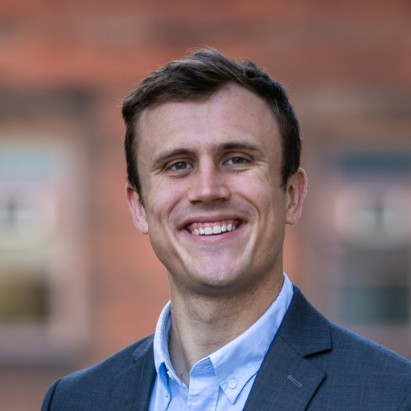
ERIC STRATMAN
Eric Stratman joined the Department of Industrial Engineering and Operations Research as a Lecturer in Discipline in July 2025.
He is passionate about teaching topics in operations research, simulation, data-driven systems analysis, and healthcare system management. His research focuses on personalized resource allocation and data-driven decision-making in service systems, with a specialization in healthcare settings. Recent applications include emergency medical service systems, where he developed insights on how to improve patient-centered care through system design.
Stratman earned his BS from the University of Pittsburgh (2018) and his PhD from the University of Wisconsin–Madison (2025). He previously worked as a professional industrial engineer and consultant.
Research areas: Operations research, simulation, data-driven systems analysis, healthcare system management
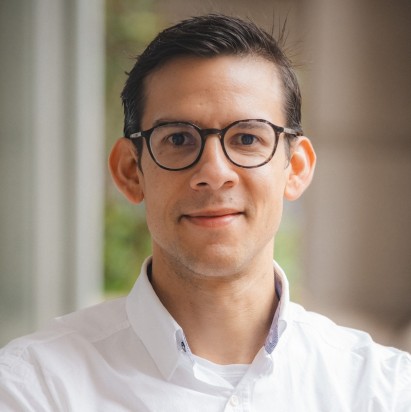
ADRIAN BUGANZA TEPOLE
Adrian Buganza Tepole joined the Department of Mechanical Engineering as an associate professor in July 2025.
His lab will investigate how the mechanical form and function of living systems emerge across scales, from modeling cell mechanobiology and regulatory networks to the tissue-level mechanical behavior. Tepole develops new mathematical models and numerical methods, including new machine learning tools and uncertainty quantification frameworks, in order to capture the unique multi-scale multi-field phenomena of living tissues. His research uses the theory of mechanics and computational systems biology to characterize tissue response. To enable application to relevant medical problems, Tepole uses simulation and machine learning tools that can accelerate inference and prediction under the uncertainty inherent to population variability and available clinical data.
Tepole previously taught at Purdue University in the School of Mechanical Engineering and the Weldon School of Biomedical Engineering and was a Faculty Fellow in the Donald T. Harrington Fellows Program at the University of Texas at Austin. He was a Miller Institute Visiting Professor at the University of California, Berkeley in 2022 and received the Y.C. Fung Early Career Award from the American Society of Mechanical Engineers in 2024. He received his BS from Universidad Panamericana in Mexico in 2010 and his PhD from Stanford University in 2015.
Research areas: Soft tissue mechanics, Machine Learning and AI methods for computational mechanics, digital twins for biomechanics
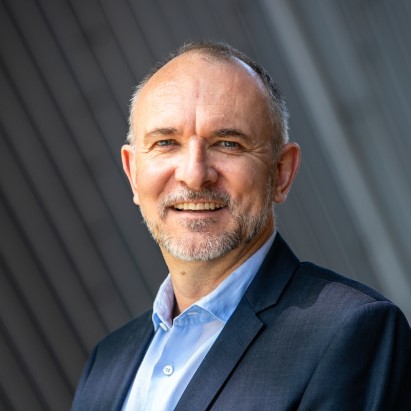
HUGH THOMAS
Hugh Thomas joined the Department of Industrial Engineering and Operations Research as a professor of practice in July 2025.
Thomas is a serial entrepreneur and teacher, with over 30 years of experience in international technology companies as a corporate leader. He has founded and run 4 startup companies of his own, and as a 4x CEO, he has raised multiple rounds of investment capital, grown teams from 1 to over 150 employees, built and sold many successful products (software and semiconductors), and grown revenues from zero to tens of millions of dollars in annual sales. He has been through all phases of the technology company lifecycle, from company formation, fundraising, product development, sales and marketing, organization growth, through to company acquisition.
Thomas joined Columbia Engineering as associate director for Innovation, Design, and Entrepreneurship. Previously, he worked at Duke University as professor of practice in the Department of Computer Science and taught classes in Mobile Applications Programming, Cybersecurity and Entrepreneurship for Engineers at the undergraduate and graduate level. He received a BSc in Computer Science from the University of Kent at Canterbury, UK in 1987.
Research areas: Engineering entrepreneurship
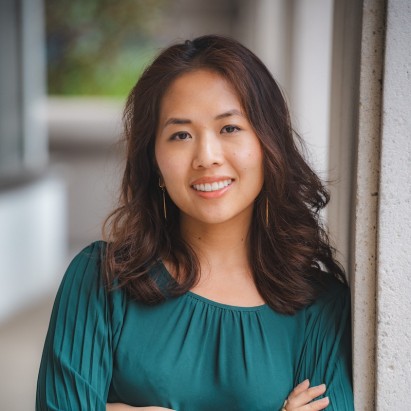
LILY XU
Lily Xu joined the Department of Industrial Engineering and Operations Research as the Sun-Wu Assistant Professor in July 2025.
Her research develops methods across machine learning, optimization, and causal inference for planetary health challenges, with a focus on biodiversity conservation. She aims to enable practitioners to make effective decisions in the face of limited data, taking actions that are robust to uncertainty, effective at scale, and future-looking. Lily partners closely with NGOs and startups to bridge research and practice. Since 2020, she has co-organized the EAAMO research initiative, committed to advancing Equity and Access in Algorithms, Mechanisms, and Optimization.
Xu received an AB from Dartmouth College (2018), a PhD from Harvard University (2024), and was a postdoctoral fellow at the University of Oxford with the Leverhulme Centre for Nature Recovery. Her research has been recognized with IFAAMAS dissertation award runner-up, AAAI best paper runner-up, the INFORMS Doing Good with Good OR award, a Google PhD Fellowship, and a Siebel Scholarship.
Research areas: Machine learning and analytics, optimization, operations
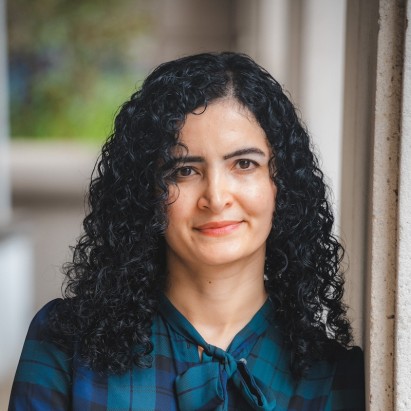
PARISA YOUSEFPOUR
Parisa Yousefpour joined Columbia University’s Department of Biomedical Engineering as an Assistant Professor in January 2025. She is also a member of the Tumor Biology and Microenvironment Program at the Herbert Irving Comprehensive Cancer Center (HICCC).
Yousefpour's research lies at the intersection of immunoengineering, synthetic biology, protein engineering, and biomaterials, with a focus on developing advanced RNA- and protein-based therapeutics. By engineering platforms that precisely modulate immune responses, her team aims to create next-generation biomolecular therapeutics that improve efficacy while minimizing adverse effects. These efforts span applications in cancer, infectious diseases, and beyond.
Yousefpour earned an Integrated BS–MS from the University of Tehran in 2010 and a PhD in biomedical engineering from Duke University in 2018. She completed her postdoctoral training at the Massachusetts Institute of Technology, where she was awarded the Ludwig Cancer Research Fellowship and the NIH/NIAID Kirschstein-NRSA Postdoctoral Fellowship (F32). In 2023, she was named a Rising Star in Engineering in Health by Cornell, Columbia, and Johns Hopkins.
Research areas: Designing biomolecular therapeutics with synthetic biology, engineering vaccine delivery platforms, and exploiting endogenous pathways for therapeutic innovation
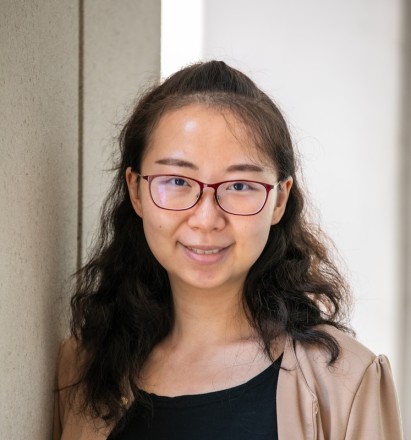
XUEYUE (SHERRY) ZHANG
Xueyue (Sherry) Zhang joined the Department of Applied Physics and Applied Mathematics as an assistant professor in January 2025.
Her lab leverages the unique advantages of qubit-photon interactions to advance the frontiers of quantum science and technology. They focus on introducing new capabilities, such as high levels of connectivity, into superconducting circuits and solid-state spin platforms by integrating these qubits with microwave waveguides and silicon photonics. This foundation enables the Zhang lab to explore novel possibilities in basic science, such as many-body quantum simulation and quantum topological photonics, as well as pushing the boundaries of quantum computing and networking technologies.
Zhang earned her BEng from Tsinghua University in 2017 and PhD from Caltech in 2023. She then joined the University of California, Berkeley as a Miller Postdoctoral Fellow.
Research areas: Quantum devices and their applications, superconducting qubits, solid state spins, quantum light-matter interaction, metamaterials, quantum many-body dynamics, topological photonics, quantum information, quantum networking