Campus
Critical Minerals, New Energy Sources, and the Race for Resilience
Climate Week at Columbia Engineering kicked off with a symposium convening members of government, industry, and academia to examine critical mineral supply chains and emerging energy sources.
On Tuesday, September 22, the Columbia Lenfest Center for Sustainable Energy (LCSE) held a symposium, “Sustainable Energy, Resource and Environmental Solutions.” The event consisted of two expert panels from government, industry, finance, and academia who shared their insights into two of the United States’ most important industries: mining and energy.
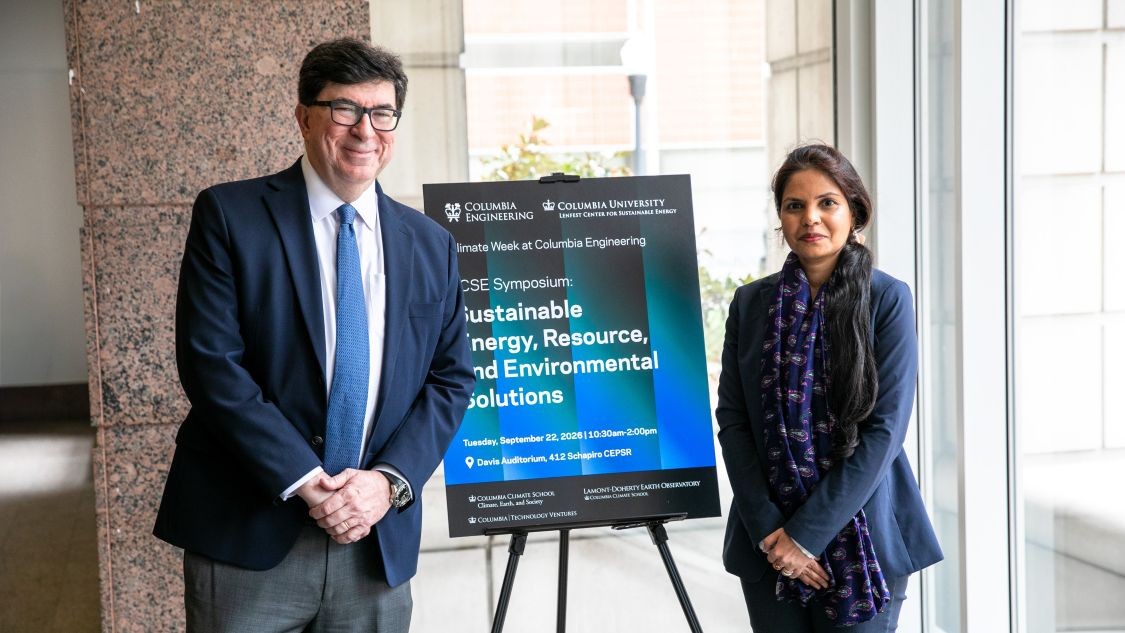
George Deodatis, senior vice dean of research at Columbia Engineering, delivered the opening remarks.
“Columbia has the oldest mining program in the nation,” Deodatis told the audience. “We continue to build that legacy by integrating some new areas into this very traditional field, like artificial intelligence, automation, and advanced materials.”
Deodatis was joined by John Gallagher, senior advisor and deputy chief of staff to the Deputy Secretary of War at the Department of War (DOW). He explained the importance of industrial resilience for U.S. national security, sharing that this national security priority means the federal government “deeply respects the industry partnerships that are possible and we think the outcomes are worthy of everyone's attention.”
“We’re building a new era,” Gallagher said.
Mining for a sustainable future
The first panel covered the mining industry and the critical minerals that are at the core of U.S. technology. The U.S. lists 60 critical minerals that are used across industry and national security, for example, gallium, which is used in semiconductors, and lithium, which is used in batteries. The panel, moderated by Brian Hanrahan, director of research development and engineering at The Aviary Group, explained that these minerals remain the bedrock of nearly all industries.
“These materials have to come out of the ground,” said Mike Kopp, acting director of the Office of Arctic Energy at the U.S. Department of Energy. “We want to control where they come from because we can do it in a better fashion, maintaining environmental regulations and workforce standards.”
Kopp and Gallagher spoke about the role of the government in securing critical minerals. Their fellow speakers came from the private sector, but all agreed that the future of mining and efficient supply chains requires transparency between the government and private partners.
“If we work with the industry to better publicize what they truly need, in coordination with the United States Government, we can find out what the market really needs, instead of having to rely on price manipulation from a very siloed market,” said Tripp Hornick, the principal at Quince Street Strategy.
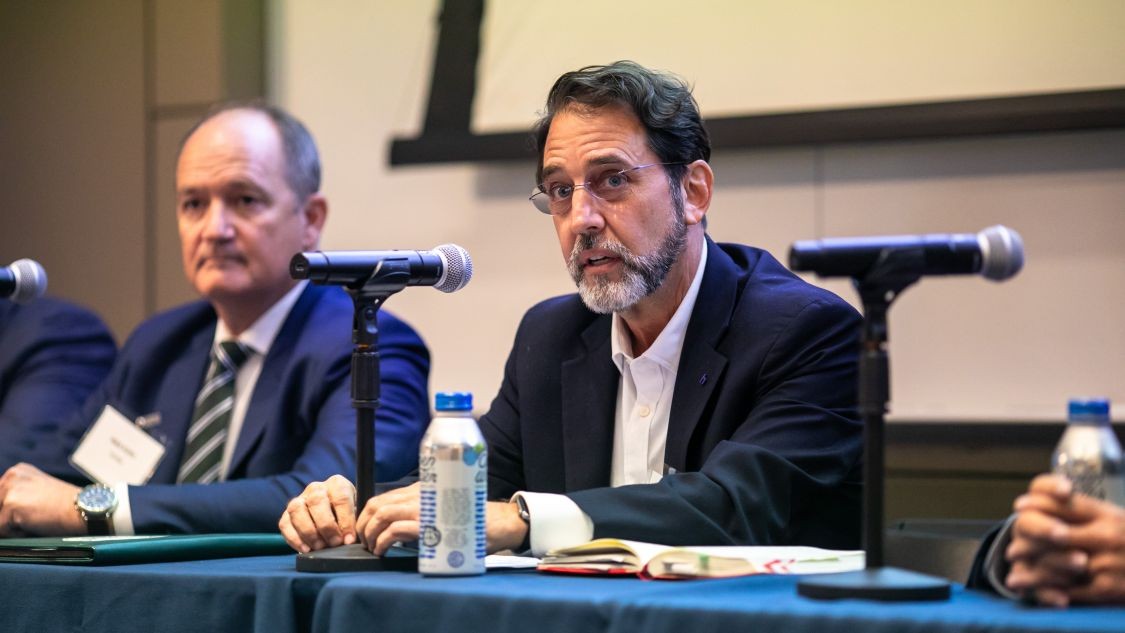
John Eleoterio, managing director at Goldman Sachs, spoke about the importance of investing in U.S. engineering capabilities, saying it would lead to a more sustainable outcome for future generations. “In the U.S., we’re seeing growth and reindustrialization, as well as re-engineering. The universities are contributing to that workforce,” he said. “We’re going to see the impact of that on the engineering readiness and capability ten years down the road; that’s an investment in our future.”
Their panel largely focused on the partnerships between government and industry that are needed now, but ended with a discussion on the game-changing technology that could someday revolutionize the mining industry. Harvey Kaye, executive chairman at U.S. Critical Materials Corp, said he sees promise in new tools that can process ore for multiple products, which could improve efficiency across mining.
“The ability to process multiple sources of ore and being able to adapt that process to that particular ore by using, possibly, AI to analyze the ore, is something we’re working on,” Kaye and Osterman added.
Sustainable energy resources
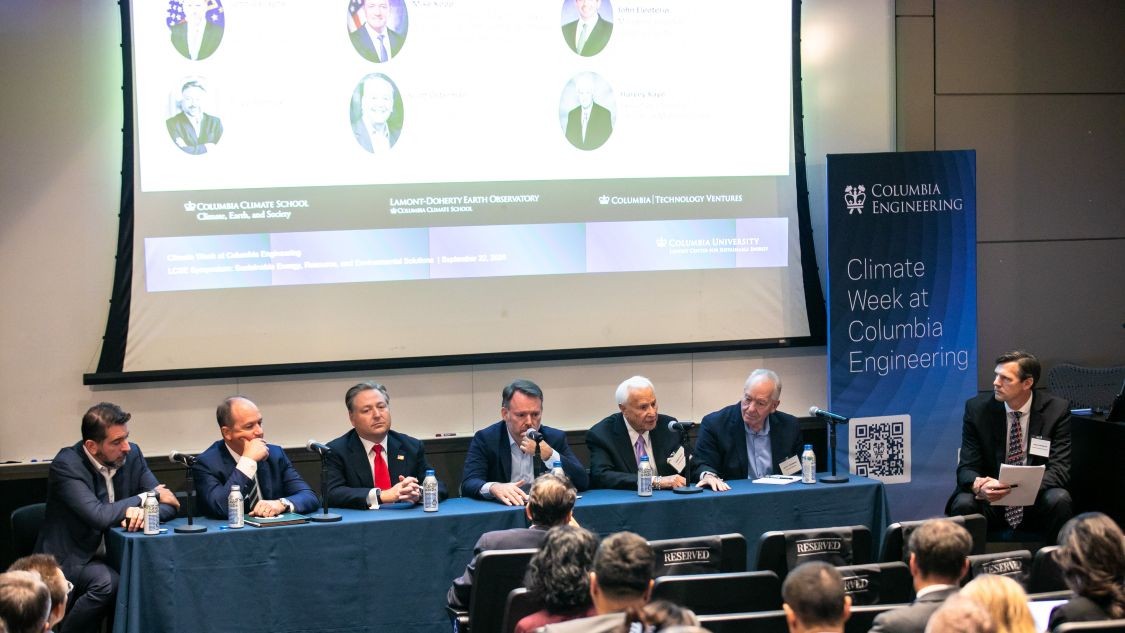
The second panel covered the future of U.S. energy, focusing on how government-industry partnerships are crucial for improving the existing electricity grid and harnessing new sources of sustainable energy.
“There is an energy emergency. Look at the state of the electric grid here in the United States of America. This is a very large, complex machine that takes years to work on,” said Mike Kopp, who also joined the second panel, adding that his role at the DOE is to bring more energy to the country.
Panel moderator Greeshma Gadikota, the Lenfest Earth Institute Professor of Climate Change and professor of earth and environmental engineering at Columbia Engineering, asked the four panelists how industry and government are bringing energy solutions into practical use.
Eleoterio, who also spoke on the second panel, said that the government can encourage industry to participate in sustainable solutions by demonstrating long-term returns. “Previously, the challenge we’ve dealt with was projects were too dependent on environmental benefits and subsidies. Projects have to have long-term contracts and capable returns. Businesses need to see a return on the investment from a capital perspective.”
Jim Lyons is chief technologist at Capricorn Investment Group. He works with dozens of companies that partner with the DOE, and agreed that the government plays a critical role in getting new solutions to be bankable. He spoke about a highly successful DOE grant program he has observed as an industry partner. “These grants were targeted in a way that helped those people get just to the threshold of bankability, and that's where other private sector partners can come in, and I happen to know that's happened in many cases.”
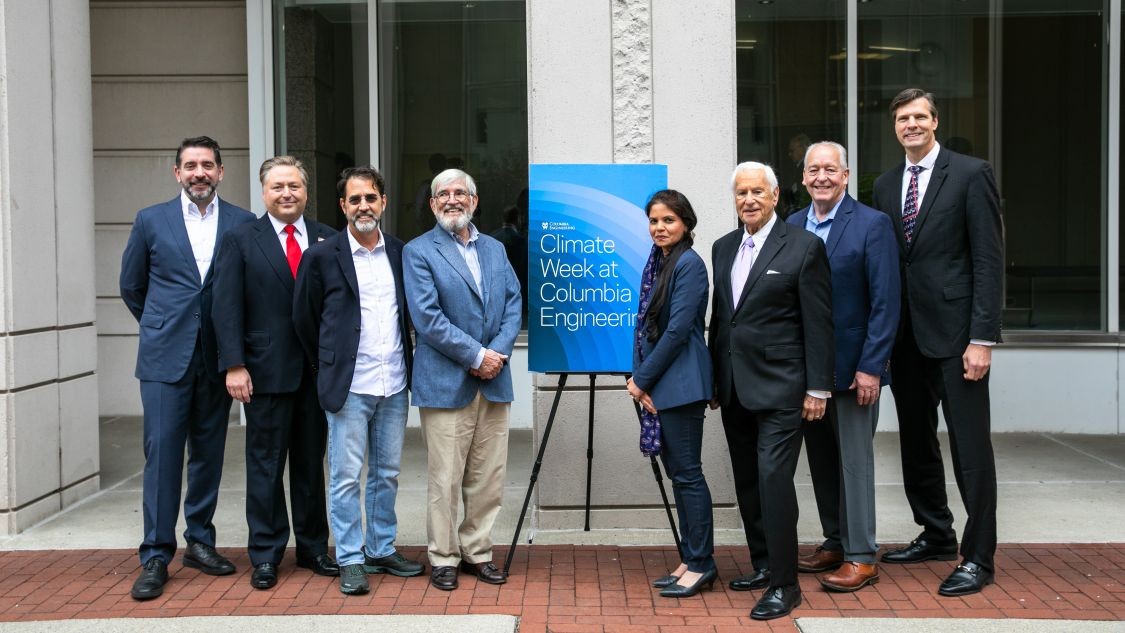
The panel later switched gears to talk about future sources of energy, including geothermal and nuclear power. They said they were observing a renaissance in alternative power sources, driven by data centers’ need for massive amounts of power.
“Energy is critical, so building them adjacent to energy sources makes sense. That's why you're seeing a number of data centers go where the natural gas is, or where the fuel is, or where the geothermal is,” said Eleoterio.
Richard Hartman, chief operating and strategy officer at the U.S. Air Force Office of Energy Assurance, spoke about the energy needs of the U.S. military, saying they are looking into ways to get off the grid and onto other forms of power. He said they were especially interested in geothermal power, and are leading the nation in research and development. He added, “The area that I'm most excited about, and I know this is a moonshot, is geologic hydrogen. I think we're getting closer.”
He ended the panel with a message for the students in the audience, saying they were a crucial part of government-industry partnerships, and would develop the sustainable energy programs of the future.
“I care about ensuring that I have a good plan for everybody else,” he said. “You're the future. I'm not the future right now, but we're here to support you all, either from a financial perspective or from a policy perspective.”