Students
Preparing Engineers for an AI-Driven World
The Professional Development and Leadership program is equipping students with a framework they need to capitalize on AI advances
AI is on everyone’s mind — according to a recent Gallup study, 46% of all U.S. employees use AI at their jobs, and 12% use AI daily. And when you look at technology sector workers, those numbers are even higher: 77% of employees use it in some capacity, and 33% report using it every day. For engineers, big questions about how AI should (and shouldn’t) be used are being worked out in real time. Through the Professional Development and Leadership (PDL) program, Columbia Engineering is helping students make smart and strategic decisions about AI, and giving future engineers the foundation to evaluate where these tools can drive innovation and what their ethical and practical limits are, and not just for engineering.
That broader commitment is also reflected in the launch of a new Master of Science in Artificial Intelligence (MSAI) program this month. The robust new program pairs core AI courses in computer science and engineering with a broad range of concentrations, offering specialized training in a range of disciplines from medicine to architecture.
“AI is no longer a specialized tool reserved for a subset of engineers. It’s becoming a foundational layer of how work gets done across every discipline. What feels urgent about this moment is not just the pace of technological change, but the gap between what AI can already do and how thoughtfully we’re preparing people to work with it,” said Nicolas Chikhani, adjunct professor of industrial engineering and operations research at Columbia Engineering and PDL instructor.
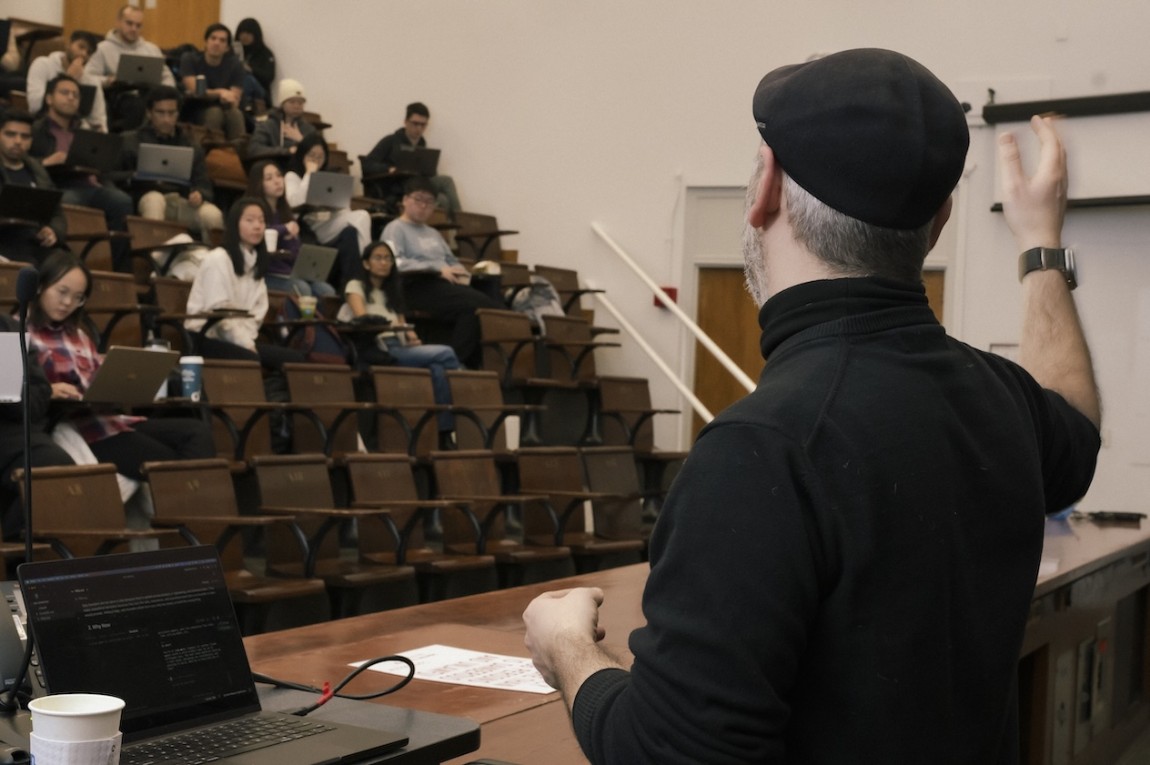
Giving engineering students a real-world framework for using and thinking about AI is a critical part of the PDL program’s mission to enhance the Columbia Engineering education with meaningful developmental opportunities. A zero-credit degree requirement for all Columbia Engineering Master’s of Science students, PDL hosts more than 250 workshops each year to support MS students' success in graduate school, the job search, and beyond. Over one recent week, students dove into four major lessons of applying AI, each the subject of its PDL workshop.
What AI can — and can’t — do
The first session of the series on Feb. 4, “Under the Hood of the AI Engine: From Data In to Decisions Out”, is designed to get students thinking deeply about what AI is, and what it isn’t.
“We are overusing, misusing, abusing AI and treating it as ‘data in, miracles out.’ That is not how reliable AI works—especially in high-stakes settings,” said Ali Hirsa, professor of professional practice in the Department of Industrial Engineering and Operations Research and director of the Center for AI in Business Analytics & FinTech. Hirsa teaches in the PDL course. “A chain is only as strong as its weakest link—this is doubly true for AI platforms. Every component must be robust and remain robust over time. If one piece breaks, the whole platform can fail.”
The session, which explores the Robust Rolling (R2) framework, gives students an inside look at why data quality matters, and what they take away are the skills to critically assess AI tools, current and future.
How AI systems work
A robust “AI Day” on Feb. 6 kicked off at 10am with “Applied AI Foundations & Workflow Design”, a deep dive into how AI models fit into real-life research and projects, with a hands-on component that gives students firsthand experience they can build on. Taught by Chikhani, the class covers commonly used tools and practical concepts such as developing useful prompts and framing questions. Students also get to use NotebookLM as well as a low-code automation tool so that they can experiment with building their own workflows.
As an added surprise, the MS students arrived to find themselves learning alongside Columbia Engineering Dean Shih-Fu Chang and IEOR Professor Hardeep Johar (the latter of whom also directs the MS programs in Business Analytics, Management Science & Engineering, and Artificial Intelligence). One of Columbia Engineering and PDL’s core tenets is a commitment to lifelong learning.
Where AI fits in the decision-making process
A third PDL, “Designing, Growing, and Evaluating Biomaterials with AI”, focuses on how AI can enhance decision-making in the biomaterials field, helping engineers navigate uncertainty, clarify risks, and identify which experiments are worth running and which variables will most impact a project. In this class, taught by tech executive Orkan Telhan, who serves as board president of the Biodesign Challenge, students collaborate on a guided simulation that lets them make operational, economic, and experimental decisions in realistic simulated biomanufacturing situations.
When not to use AI
The day wrapped up with “Product Management with AI”, which examines the major transformation AI tools have helped drive in product management, collapsing the distance between idea and product. But knowing where AI can speed up a project, and where it might introduce faulty information, is crucial.
In this class, taught by Mahir Yavuz, adjunct professor of industrial engineering and operations research at Columbia Engineering and PDL instructor (who most recently was also head of Engineering for Search, Recommendations, and Ads at Etsy), the focus is on determining where AI adds provable value in engineering decision-making. Students will learn firsthand that the most successful project managers in the future won’t be the ones with the best grasp on AI — they’ll be the ones who use it to sharpen their own judgement and deepen their own empathy.
As AI tools flourish, Columbia Engineering is giving engineers the critical framework to evaluate and put the technology to use in smart, innovative ways, while remaining clear-eyed about what they can and cannot do. These four PDL sessions, covering an array of fields from biomaterials to product management and engineering decision-making to tech leadership, are an important step forward in supporting future engineers on that path. Together with the launch of the new Master of Science in Artificial Intelligence program, these efforts reflect a broader approach to AI education at Columbia Engineering—combining rigorous technical training with the judgment needed to apply AI responsibly.
As Chikhani said, “My hope is that students leave these sessions not just more fluent in AI tools, but more confident in how to frame problems, exercise judgment, and lead in environments where human insight and machine intelligence increasingly work side by side.”
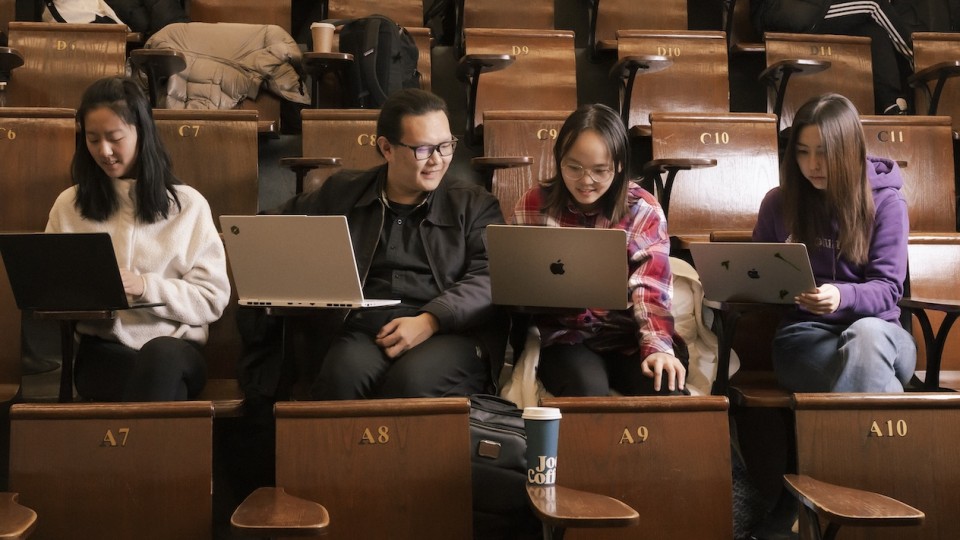
Lead Photo Caption: Students in Mahir Yavuz's PDL session, Product Management with AI
Lead Photo Credit: Ricky Day