Students
A Small CubeSat, One Giant Leap for Columbia Students
Columbia Space Initiative launches Roaree, the University’s lion mascot, into orbit, marking a key milestone in the club’s CubeSat mission and setting the stage for a future satellite that will bring space science to New York City classrooms.
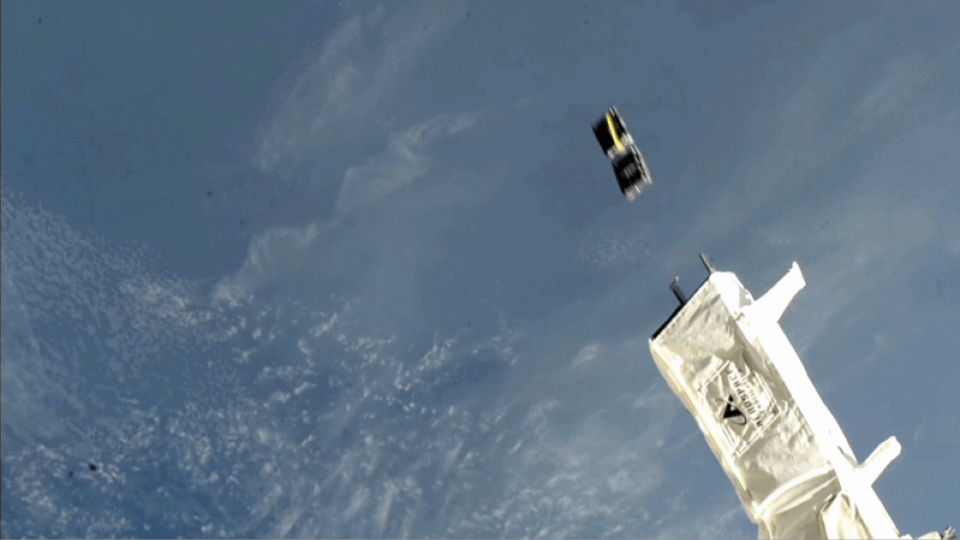
Lions are land mammals, but on July 2, a 2D resin-printed Roaree figurine (Columbia University’s lion mascot) was deployed into space and snapped for a photo in the successful finale of Columbia Space Initiative’s LionCub CubeSat project.
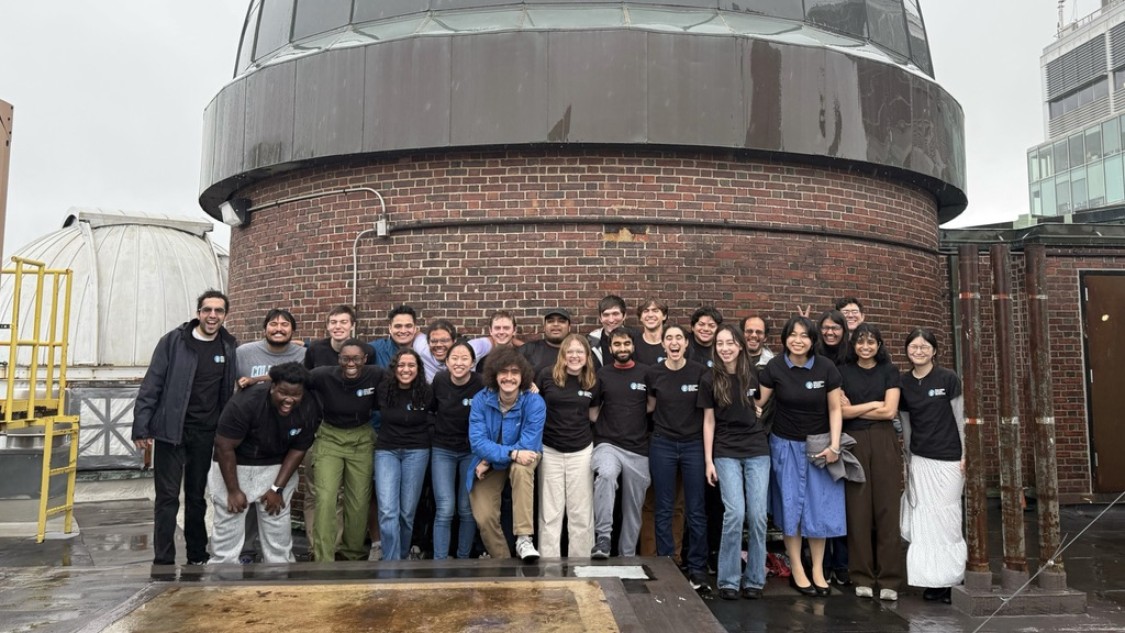
Roaree’s low-Earth orbit portrait represents the culmination of a multiyear project by the students in the Columbia Space Initiative (CSI), the largest engineering club at Columbia, comprising students from across the University. CSI boasts more than 250 active members, all dedicated to the pursuit of knowledge in near-space, space, and beyond.
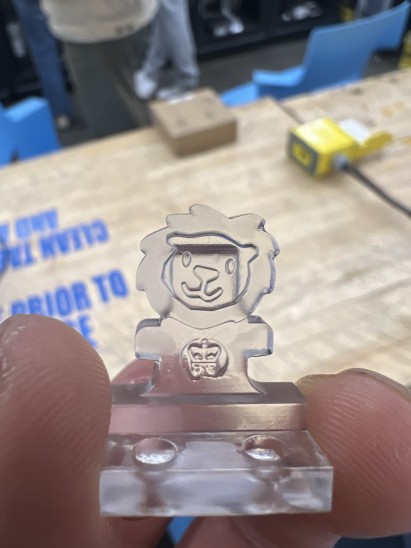
LionCub, his ride to space, is a nanosatelite, a 10cm modular cube designed to hitch a ride on a larger rocket. Its successful launch is a massive first step for one of the club’s most ambitious projects: the 2027 launch of LIONESS, the first satellite designed by Columbia undergraduates that will collect data from beyond the atmosphere and support both important research goals as well as bring science education from space directly to New York City middle schoolers.
The voyage LionCub undertook started when it was launched into space on a SpaceX rocket on April 11, with two team members on hand at the Florida launch site and many more watching the livestream together back at Columbia. (Originally scheduled for an April 1 launch, space enthusiasts will appreciate the reason it was pushed back: Its slot was given to NASA’s Artemis II mission.) The LionCub CubeSat was docked with the rocket at the International Space Station (ISS) until July 2, when it was deployed.
“That was our trial run,” said graduate team lead Moises Mata ’26CC. “This is the first satellite launch from the university to space.”
It’s a major milestone.
“I am so proud of our CSI LionCub team. Preparing a satellite for launching into space is a huge undertaking, and is an example of the great things that Columbia students can achieve. Godspeed LionCub!” said CSI faculty adviser Mike Massimino, professor of professional practice in the Department of Mechanical Engineering at Columbia and former NASA astronaut.
CSI mission for science education
Launching a CubeSat into space has been a CSI mission for years. In 2023, a CSI proposal led by former CSI Co-Presidents Matthew Werneken BS’24 and Bruno Rergis BS’23 was accepted by NASA’s CubeSat Launch Initiative, which provides flight opportunities for educational and nonprofit organizations.
That project, LIONESS, will photograph light emitted from gas atoms, with the data gathered helping support a current research initiative led by David Schiminovich, professor of astronomy and co-director of the Columbia astrophysics laboratory. The mission and its learnings will also be used to create curriculum and help support CSI and Columbia Engineering Outreach’s longtime partnership with the Sophie Gerson Healthy Youth nonprofit to bring extracurricular science education to more than 500 students in underserved New York City middle schools.
The LionCub story, a collaborative effort
A year after the LIONESS mission’s approval, the LionCub mission was born. Before launching LIONESS, the club wanted to get some hands-on CubeSat learning. The goal was to get more experience with not just the tangible elements of building a satellite but the operational, logistical, and administrative processes that are critical to putting it in space.
LionCub was the result. CubeSat team members joined a CubeSat launch project spearheaded by California State Polytechnic University, Pomona, and worked as part of the collaborative group with clubs from Northeastern University, UC Santa Cruz, and Texas State University. CSI workshopped and made valuable connections with other students in the field. They also created LionCub, a functional nanosatellite that would serve as a trial run for LIONESS.
Launching LionCub into space was a critical way to “give CSI some heritage,” as Mata said. As an organization made up of almost exclusively undergraduates (and a handful of grad students), means CSI as a whole and the CubeSat teams in particular have new people coming in and older, more experienced team members graduating out every year over the course of the multiyear mission.
Building institutional knowledge and hands-on satellite experience is essential to maintain continuity and keep the larger mission on track.
The mission continues, along with invaluable hands-on experience
“We handed [LionCub] off at the end of [winter] semester, so we’ve been reflecting on that, figuring out on how we can continue documentation, making sure this knowledge lasts past the individual members' graduation,” Mata said.
It’s a point that resonates strongly with him.
“The current group of seniors were freshmen when the initial LIONESS idea was drafted and accepted, so there’s a wave of excitement there: It’s come full circle,” he said.
“Launching a CubeSat isn’t something you can do every year, or even every other year, so especially as project leads, a big focus of ours was making sure to document,” agreed fellow graduate and CubeSat lead Nidhi Shah BS’26, who recently graduated from the Engineering School with a mechanical engineering degree.
The hands-on experience, she said, has not only given current club members first-person context and learnings they’ll need to carry on the work, it’s inspired her and others.
“This has very directly impacted the things I’m interested in and want to go into,” she said. “It’s just very cool to see a rocket launch, and knowing that something we built is on there is really, really cool.”