
Acceleration Fund Recipients for 2026-2027
Find a summary of each project and short bios of the principal investigators below.
Project 1: Engineering Immune Control of Endometrial Regeneration
-
Abstract
The endometrial lining of the uterus is an extraordinary model of regeneration. Uniquely to humans and very few animals, it undergoes programmed breakdown and repair, rebuilding itself without scarring through tightly regulated epithelial-immune signaling. This process is essential for uterine health and pregnancy, yet when its coordination fails, dysregulated inflammation contributes to reproductive disorders including endometriosis, fibroids, placental insufficiency, and preeclampsia. Despite detailed knowledge on uterine immune populations, we still lack the mechanistic knowledge of how hormonal and inflammatory signals interact in real time or experimental systems that can rewire them to restore normal tissue repair.
We propose to combine synthetic biology, stem cell engineering, and organ-on-chip technology to build a new experimental framework for studying and programming immune-guided regeneration in women’s health. Our collaboration brings together a chemical engineer (Simunovic), with expertise in stem cell-derived organoid systems and microphysiological platforms, and a developmental immunologist (Mace), with expertise in functional interrogation of human immune cells. Together, we will integrate pluripotent stem cell-derived immune cells carrying CRISPR-based molecular recorders and programmable synNotch/miniCAR circuits into a vascularized, hormone-responsive endometrial organoid-on-chip platform. This system will allow us to trace how endocrine and inflammatory signals are coordinated during cyclical uterine repair and to test whether engineered immune circuits can respond to local tissue context and deliver regenerative signals under dysfunction. This interdisciplinary project will establish a new bioengineering framework for decoding and directing regenerative immune programs.
-
Principal Investigators
Image

Mijo Simunovic is an Assistant Professor of Chemical Engineering. He designs in vitro models of embryogenesis using pluripotent stem cells, to study how the early embryo directs placenta development, how embryo implantation evolved across mammals, and how we can leverage synthetic biology to create specific human tissues in a lab.
The first days of animal embryo development are perhaps the most remarkable example of tissue self-organization in all of biology. This process comprises several key developmental milestones, including implantation, the separation of the embryo from the placenta, and gastrulation, which establishes the coordinate system on which all the future organs will form. Perhaps one of the oldest questions in biology is how, despite tremendous conservation in embryonic pathways, we develop into completely different-looking organisms — a human always looks like a human, and a mouse always looks like a mouse. If we understand these phenomena in great detail, we can harness them and faithfully mimic organ formation in a lab. At the interface of chemical engineering, developmental biology, and biophysics, Simunovic uses pluripotent stem cells to elucidate the molecular details and the biomechanics underlying early human embryogenesis and organogenesis, with goals to advancing reproductive and regenerative medicine and to faithfully modeling complex human diseases.
Professor Simunovic received a Ph.D. in Theoretical Chemistry from the University of Chicago and a second Ph.D. in Condensed Matter Physics from the Curie Institute and the University of Paris 7. As a Junior Fellow of the Simons Society of Fellows, Professor Simunovic did postdoctoral work at The Rockefeller University, establishing one of the first 3D organoid models of the human embryo. In 2021, Professor Simunovic received the NIH Director's New Innovator Award, the Science/AAAS & SciLifeLab Prize for Young Scientists in Cell and Molecular Biology in 2017, the Chancellor’s prize from the Sorbonne Universities in 2016, among others. Professor Simunovic is a NYSCF Robertson Stem Cell Investigator, a Pew Biomedical Scholar, an Allen Distinguished Investigator, and a Schaefer Research Scholar.
Image
Emily Mace, Ph.D. is an Associate Professor of Pediatrics at Columbia University Irving Medical Center. In addition to strong scientific and research strengths in cell biology, Dr. Mace has a longstanding commitment to promoting equity and inclusion in the field of cell biology. They serve as co-chair of the American Society for Cell Biology’s Women in Cell Biology committee, are a member of Columbia’s Pediatric Diversity & Inclusion Council, and are a former member of the Committee for the Promotion of Women for the Biophysical Society.
Dr. Mace’s lab studies how immune cells help control and eliminate cancer cells and protect the body against cancer malignancy. They are also an expert in high-and super-resolution imaging and the application of these technologies to the study of human immune cell function and development. They were among the first researchers to use super-resolution microscopy to probe the immunological synapse and have more recently focused on the application of high-resolution imaging and image analysis to dynamic cellular processes including cell migration and proliferation. Dr. Mace has authored or co-authored over 100 scientific publications which have appeared in major journals such as Nature Communications. Dr. Mace completed a Ph.D. in Genetics at the University of British Columbia and postdoctoral training in Immunology at the Children’s Hospital of Philadelphia and Baylor College of Medicine.
Project 2: Engineering Programmable Self-Amplifying RNA Therapeutics
-
Abstract
Self-amplifying RNA (saRNA) enables sustained, high-level protein expression from low doses, making it a promising platform for vaccines and therapeutic protein delivery. However, during cytoplasmic replication, saRNA generates double-stranded RNA intermediates that activate innate immune pathways, including ADAR-mediated RNA editing and PKR-driven translational suppression. How these host RNA surveillance mechanisms shape saRNA sequence integrity and expression remains poorly understood, limiting the rational design of RNA therapeutics. This project will define how ADAR editing and PKR sensing regulate saRNA function and leverage these pathways to engineer programmable RNA therapeutics.
First, we will characterize saRNA expression, innate immune activation, and transcriptome-wide A-to-I editing across wild-type, ADAR knockout, and PKR knockout human cell lines, generating single-nucleotide resolution maps of editing on full-length saRNA replicons. Second, we will engineer editing-responsive and editing-resistant saRNA constructs in which endogenous ADAR activity is harnessed or excluded at defined sites to enable cell-type-dependent control of translation, RNA stability, and immune activation. By integrating genetic perturbation, RNA sequencing, and synthetic RNA engineering, this work will establish design principles for next-generation saRNA therapeutics that predictably engage or evade host RNA editing machinery. These findings will enable programmable, cell-selective RNA expression without requiring targeted delivery and will lay the foundation for future applications in vaccines, cancer immunotherapy, and protein replacement therapies.
-
Principal Investigators
Image
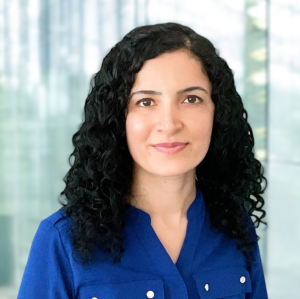
Parisa Yousefpouris an Assistant Professor of Biomedical Engineering. Her research interests lie at the intersection of immunoengineering, synthetic biology, protein engineering, and biomaterial science, focusing on the development of advanced therapeutics.
Dr. Yousefpour designs and engineers RNA- and protein-based platforms to finely modulate immune responses, enhancing therapeutic efficacy while minimizing adverse effects. Her team develops next-generation biomolecular immunotherapies by integrating approaches from protein engineering, synthetic biology, and biomaterial science to address treatment challenges across various indications, including cancer and infectious diseases. Key research areas include engineering gene circuits for precise immunotherapy, developing controlled-release vaccine platforms, and investigating how endogenous biological mechanisms interact with biomolecular therapeutics to leverage these systems for enhanced efficacy.
Dr. Yousefpour holds a Ph.D. in Biomedical Engineering from Duke University and completed her postdoctoral training at the Massachusetts Institute of Technology.
Image
Hachung Chung is an Assistant Professor of Microbiology and Immunology at the Columbia University Irving Medical Center focusing on understanding how self-RNA sensing shapes human immune responses.
Decades of research in innate immunity has unraveled how the host uses pattern recognition receptors (PRRs) to detect microbial DNA and RNA to mount an immune response that counteracts infection. However, these findings raise an intriguing question: How does the host suppress immune responses to their own DNA or RNA? This is a fundamental question in biology and a topic of high clinical relevance as we start to recognize how self-nucleic acid sensing by our immune system can cause autoimmune diseases, and also be used for immunomodulatory therapies for diseases such as cancer.
How our immune system suppresses immune responses to our own RNA (self-RNA) still remains mostly a mystery. Using human cell culture models, we have demonstrated that ADAR1 (Adenosine Deaminase Acting on RNA) - an RNA editing enzyme responsible for Adenosine (A) - to - Inosine (I) editing of double stranded RNA - plays a major role in preventing self-RNAs from activating PRRs. We are just at the tip of the iceberg in understanding how ADAR1 suppresses autoinflammation. There are two main areas of research in Chung’s lab: First, they would like to elucidate the mechanism by which ADAR1 suppresses self-RNAs from triggering autoinflammation and further understand how these mechanisms are regulated in different cell types (e.g. neural cells). Second, they would like to investigate how self-RNA sensing shapes human immune responses during health and disease.
Hachung, a native of South Korea, received her B.S. in Biochemistry from Stony Brook University and her Ph.D. in Microbiology and Molecular Genetics from Harvard University. She conducted her post-doctoral studies at The Rockefeller University. Hachung is a recipient of the NIH Ruth L. Kirschstein National Research Service Award (2014 ~2017) and a Searle Scholar Award (2020).
Project 3: Beat-to-Beat Blood Pressure Monitoring Using a Wearable and Transformer Transfer Learning
-
Abstract
Hypertension remains the leading modifiable cardiovascular risk factor, yet continuous blood pressure (BP) monitoring outside the clinic is still an unsolved problem. Wearable photoplethysmography (PPG) offers a promising noninvasive sensing modality, but prior cuffless BP models — which rely on handcrafted features or locally-focused deep learning — have repeatedly failed to outperform simple baselines in rigorous benchmarking, in part because BP is encoded not in any single waveform landmark but in the long-range morphological and rhythmic context of many successive beats. Transformer models, the architecture behind large language models and breakthroughs such as AlphaFold2, are uniquely well-suited to this structure: by using self-attention to learn dependencies across extended sequences, and by transferring representations learned on large corpora to data-limited downstream tasks, they offer a principled path beyond the limitations of prior approaches.
We propose to adapt a transformer backbone pretrained on the MIMIC-IV critical care waveform database to a custom upper-arm multiwavelength PPG (mwPPG) wearable developed in our lab, fine-tuned with a single brachial cuff calibration measurement to enable personalized, beat-to-beat BP estimation.
-
Principal Investigators
Image

Samuel Sia is a Professor of Biomedical Engineering at Columbia Engineering and Vice Provost for the Fourth Purpose and Strategic Impact. He develops technologies for point-of-care blood tests, wearable sensors, and implantable devices, both in an academic and industry setting.
He co-developed a point-of-care blood test for prostate cancer which is being commercialized and has garnered FDA approval, and is co-founder of Rover Diagnostics which is developing rapid and low-cost detection of DNA and RNA. Sia’s research has garnered coverage from Nature, Science, JAMA, Washington Post, Science News, Popular Science, Chemical and Engineering News and has been featured on the BBC, NPR, and Voice of America. MIT Technology Review named him as one of the top world young innovators in 2010, and he is an inducted fellow of the American Institute for Medical and Biological Engineering.
Sia is the founder of Harlem Biospace, a biotech incubator facility in New York City (developed with the NYC mayor’s office) that has hosted over fifty biotech companies. He also currently co-directs the entrepreneurship initiative for Columbia University’s School of Engineering and Applied Sciences.
In 2022, Sia was appointed Vice Provost for Fourth Purpose and Strategic Impact, a new office within the Provost's Office to advance the University's mission on the Fourth Purpose and make a positive impact on the world. In this role, Sia is building University infrastructure and partnerships to help Columbia leverage scholarly knowledge to benefit the public good. The office builds mechanisms for internal collaborations, dissolves institutional barriers to partnerships, and works with external partners to transform innovation to community and global impact.
Sia has a B.Sc. in Biochemistry from the University of Alberta and a Ph.D. in Biophysics (with a HHMI predoctoral fellowship) from Harvard University. He completed a postdoctoral fellowship in chemistry and chemical biology at Harvard University.
The Blavatnik Fund for Engineering Innovations in Health
The Blavatnik Acceleration Funds are one part of the Blavatnik Fund for Engineering Innovations in Health, which plays a key role in supporting Columbia Engineering’s mission to build a healthier world by providing resources that accelerate discovery and translate transformational ideas into tangible impact.