
Blavatnik Doctoral Fellows: 2024-2025 Cohort
Vivian Lu, Department of Biomedical Engineering
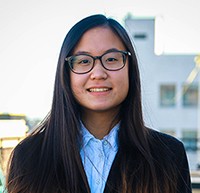
Vivian is an incoming M.S./Ph.D. student in the Department of Biomedical Engineering. She graduated from the University of California, Berkeley with a B.S. in bioengineering, electrical engineering, and computer science, where she conducted research on alternative splicing at the Innovative Genomics Institute. After graduating, Vivian studied genetic and epigenetic changes in glioma progression using single-cell genomics at the New York Genome Center in the Landau Lab. At Columbia, Vivian will be joining the lab of Professor José McFaline-Figueroa, where she will leverage computational tools to improve therapeutic treatments for tumors.
Saachi Munot, Department of Biomedical Engineering
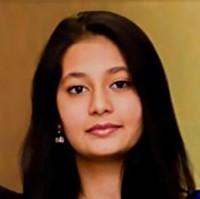
Saachi is from Mumbai, India. She received a B.S. in Neuroengineering, an individually designed major, with honors and distinction and her coterminal (master’s) degree in applied and engineering physics from Stanford University. Saachi is already an accomplished researcher, having worked as a Research Assistant in the Stanford Ultrasound Imaging & Instrumentation Lab and at the University of North Carolina’s Pinton Lab. Her research interests include signal processing and physics based beamforming techniques with application to transcranial blood flow imaging. She is looking forward to starting in the fall as an M.S./Ph.D. student in the Department of Biomedical Engineering under the guidance of Elisa Konofagou.
Neo Nyoni, Department of Biomedical Engineering
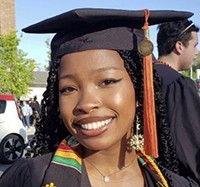
Neo graduated from Northeastern University with a B.S. and M.S. in bioengineering and is entering the Cellular Engineering Laboratory under Dr. Clark Hung as a Ph.D. student. She has worked on both the development of novel gene therapies and the design of assistive medical devices. For her senior project, she developed an adjustable transradial myo-control prosthetic arm under the supervision of the Shirley Ryan Ability Lab, with the aim of making myo-controlled technology more accessible and affordable. Under the guidance of Dr. Hung, she hopes to aid in the development of tissue substitutes and continue the progress towards biocompatible knee replacements. She is also interested in further bridging the gap between engineers and clinicians to improve patient outcomes.
Abhishek Potdar, Department of Biomedical Engineering
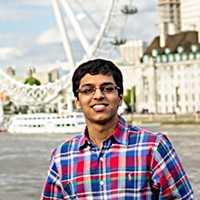
Abhishek is thrilled to enter the Department of Biomedical Engineering as an M.S./Ph.D. student this fall. Previously, he worked as a Research & Design Engineer at Elixir Medical in the Bay Area where he developed next-generation implantable medical devices for coronary and vascular disease. He graduated with his Master's degree (M.S.E.) in biomedical engineering from the University Texas Austin where he also served as a Research Assistant in the Biophotonics Laboratory and the Laboratory of Biomaterials, Drug Delivery, and Bionanotechnology. There, he specialized in biomedical instrumentation and imaging for his degree due to his passionate interest in medical devices. Already, he has co-authored a review paper published in Advanced Functional Materials on “Recent Advances in Smart Biomaterials for the Detection and Treatment of Autoimmune Diseases.” He will continue his drive for research under Samuel Sia.
Riki Shimizu, Department of Biomedical Engineering
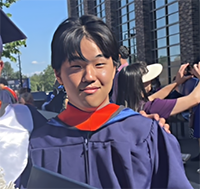
Riki will start in the fall as an M.S./Ph.D. student in the Electrical Engineering Department. He graduated from Duke University in May 2024 with a B.S. in biomedical engineering, electrical and computer engineering, and mathematics. As an undergraduate, he worked on research projects involving neural signal processing, including simulation of transcranial direct current stimulation, machine learning for P300 speller, and novel algorithm building for sleep spindle detection. At Columbia, he will join Professor Nima Mesgarani’s Neural Acoustic Processing Lab to research how language is processed in human brains. In the long run, he aims to develop a novel brain-computer interface to assist people with neurological diseases.