Image

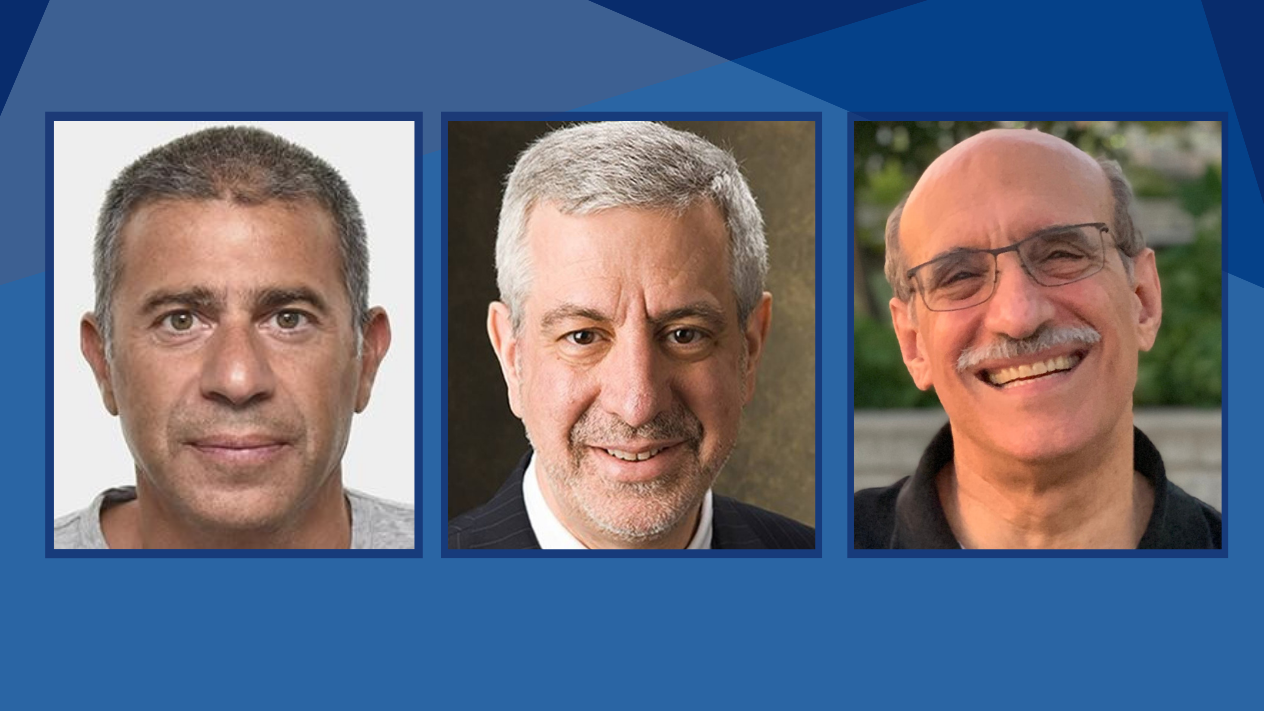
Raimondo Betti

Professor of Civil Engineering and Engineering Mechanics
Image

Julius Chang

Senior Lecturer in the Discipline of Construction Engineering and Management

The construction manager of the future will not compete with AI, they will manage with AI.

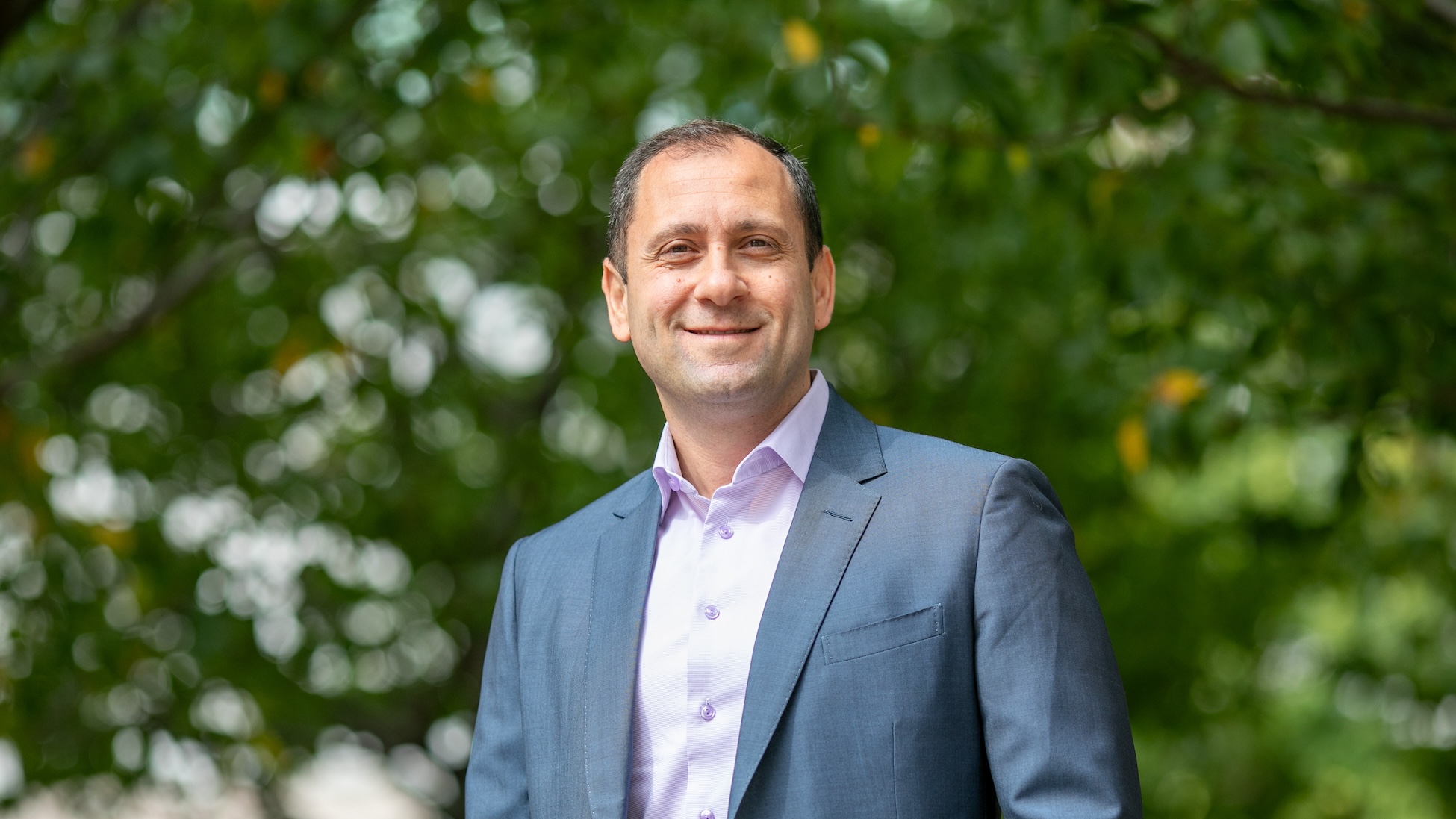
Ibrahim Odeh

How is AI currently being used in construction?

AI is already being deployed in predictive scheduling, risk forecasting, cost estimation, safety analytics, image recognition for site monitoring, and automated document review. We are seeing machine learning models analyze historical project data to predict delays and cost overruns before they occur.

But the real transformation is not automation; it is decision augmentation. AI is enhancing human judgment. Construction management is fundamentally about structured decision-making under uncertainty. AI will increasingly provide scenario modeling, risk simulations, and optimization tools that improve strategic choices.

The construction manager of the future will not compete with AI, they will manage with AI.

What type of skills will construction managers need in the next five years? 

In five years, the most valuable skills will not be software-specific, they will be cognitive and strategic.

Construction managers will need:

  • Data fluency: ability to interpret analytics and AI outputs
  • Systems thinking: understanding infrastructure as interconnected networks
  • Financial sophistication: capital allocation, risk modeling, PPP frameworks
  • Climate resilience literacy
  • Executive communication and stakeholder alignment

The role is evolving from project supervisor to strategic infrastructure leader.

We know that sustainability plays a big role in construction management. How does climate risk relate to project planning? 

Extreme weather is no longer a contingency scenario; it is a baseline planning assumption. Projects must now incorporate resilience modeling, adaptive design strategies, and long-term lifecycle risk assessments.

This shifts construction from a short-term delivery mindset to a lifecycle stewardship mindset. Planning must now integrate environmental forecasting, financing mechanisms tied to resilience performance, and regulatory adaptability.

This is where academia plays a critical role, preparing professionals who think in decades, not just project timelines.

More about Ibrahim Odeh

Beyond the classroom, Odeh serves as an advisor to global organizations, including his engagement as an industry expert member at the World Economic Forum, where he has actively contributed to the Future of Construction initiative. He collaborates with industry leaders across North America, Europe, and the Middle East on innovation, infrastructure strategy, and digital transformation. 

His teaching and innovation have earned some of Columbia University’s highest honors, including the Presidential Award for Outstanding Teaching and the Columbia Engineering Distinguished Faculty Teaching Award. In 2023, he received the McGraw Hill Pathfinder Award for redefining education at a global scale.

Many of the projects in this year’s expo integrated AI with custom hardware. The Clinical Handwashing Coach, which tracks handwashing sessions, is being tested at a hospital in Pasadena, California. The team of electrical engineering students designed an AI system to ensure that medical professionals comply with handwashing protocols. Other teams from the department used AI to create noise-canceling headphones with real-time language detection and translation (team ANURA) and a wearable device that inexpensively creates digital transcriptions (CLACS).

A couple of projects tackled wheelchair comfort and mobility autonomy. The Mechanical Engineering team STAR (Self-Transfer with Automated Reversing) Lift made moving in and out of a wheelchair easier for wheelchair users with upper-body mobility, allowing them to transfer themselves to a bed without assistance. Team Wheel-E created a specialized seat cushion for wheelchair users that helps alleviate the painful symptoms of prolonged sitting. 

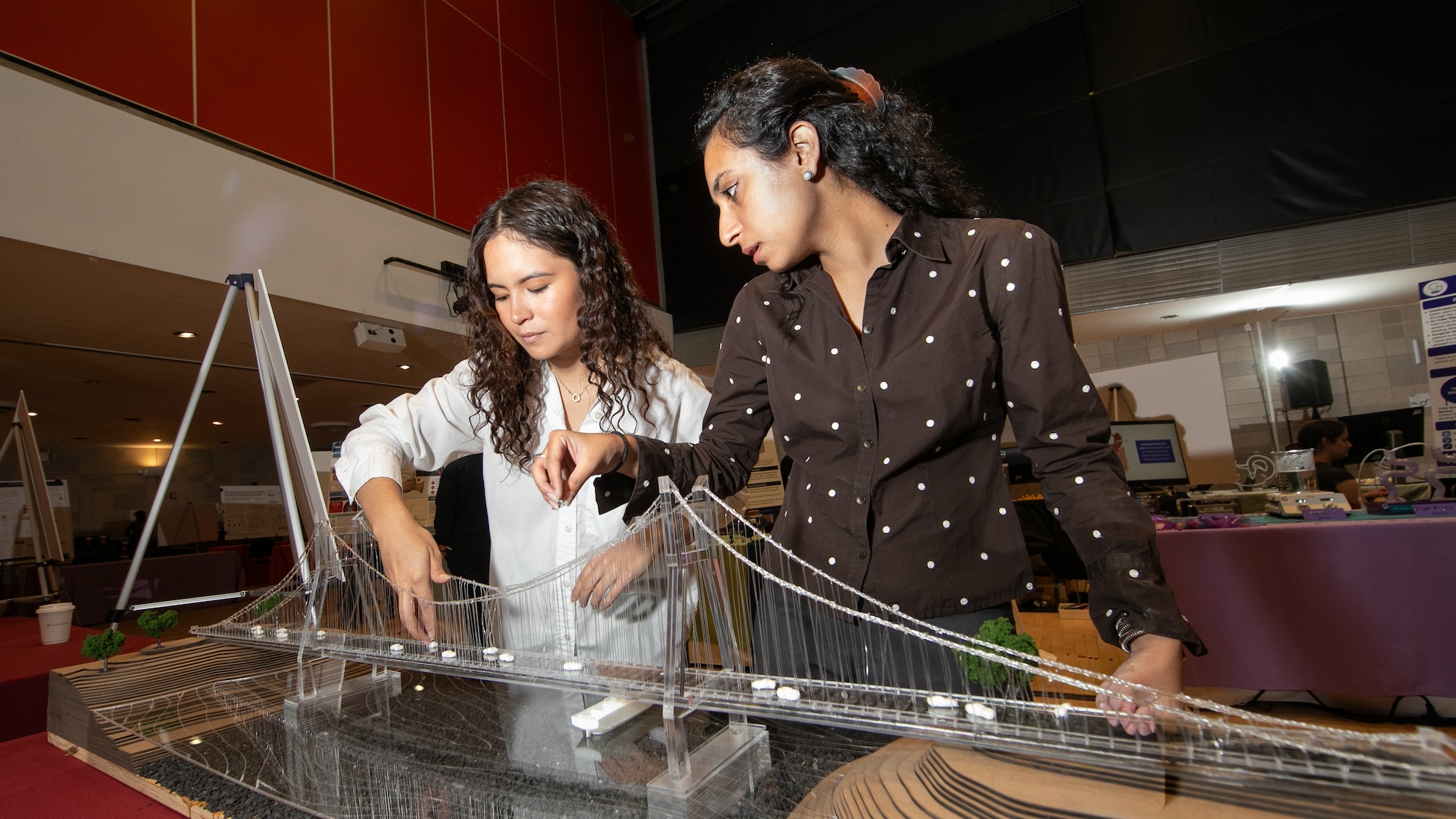
Urban green infrastructure was the main theme for many projects in the Department of Civil Engineering and Engineering Mechanics. The Morningside Park Rehabilitation Project reimagined the local neighborhood park by proposing two new community centers for public use and an upgraded drainage system that can handle heavier rainfall runoff. 

From AI devices to reimagining a neighborhood park, the Class of 2026 proved that the best engineering goes beyond the classroom and makes an impact in the world.

Dean Shih-Fu Chang recognized Raymond P. Daddazio BS'75, MS'76, EngScD'82 with the Thomas Egleston Medal for Distinguished Engineering Achievement. Daddazio is chairman of the Thornton Tomasetti Foundation and former president of Thornton Tomasetti. Dean Chang also recognized Azmi T. Mikati BS'94, the CEO of M1 Group, with the Samuel Johnson Medal for Distinguished Achievement Beyond Engineering and Applied Science.

Over the weekend, alumni and guests attended lectures from Columbia Engineering faculty, including a talk on AI and neural intelligence with Richard Zemel, Trianthe Dakolias Professor of Engineering and Applied Science and professor of computer science; as well as a presentation on energy, transition, and mining with Dan Steingart, Stanley-Thompson Professor of Chemical Metallurgy, professor of chemical engineering, and chair of the Department of Earth and Environmental Engineering

On Friday, attendees toured the Plasma Physics Lab and the Robotics and Rehabilitation (RoAR) Lab. They also mingled at a general All Class Reception and recognized classes celebrating their 50- and 25-year anniversaries. Members of the Class of 1976 received Golden Lions pins, while the Class of 2001 members received Silver Lions pins to commemorate the milestone and their entry into the Golden and Silver Lions Societies. The day ended with a Reunion Lawn Party for alumni of Columbia Engineering, Columbia College, and the School of General Studies. 

Image
Harry West stands behind a podium in a bright room with large windows, speaking between two tall banners featuring carved lion figures during a Columbia Engineering alumni reunion program.
Professor Harry West was recognized with the Great Teacher Award by the Society of Columbia Graduates. Credit: Brandon Vallejo

Dean Chang gave attendees an overview of Columbia Engineering news highlights and research updates on Saturday at the Dean’s Breakfast. The Engineering School also hosted a special reception for alumni of its master’s and doctoral programs. The Society of Columbia Graduates sponsored the Great Teacher Awards reception to recognize the 2026 honorees. Harry West, professor of professional practice in the Department of Industrial Engineering and Operations Research, received the Great Teacher Award for the Engineering School. Caterina Pizzigoni, associate professor of history, was the Columbia College recipient. The day closed with receptions and dinners for the classes and a Starlight Celebration on Low Plaza featuring a live band, dessert, and champagne.

In the Media

Subscribe to Civil Engineering and Engineering Mechanics