A New Hub for Learning and Community
Photos by Diane Bondareff/Columbia Engineering
“We’re adapting to respond to the needs of students today,” said Luca Carloni, professor and chair of the Department of Computer Science. “Computer Science continues to play a key role at Columbia and is foundational to our academic offerings. Our faculty are also integrating AI into teaching and research and students are seeking out these courses.”
Carloni noted the popular AI in Context course taught by Teaching Professor of Computer Science Adam Cannon, Associate Professor of Applied Mathematics Chris Wiggins, Vice Dean of Computing and AI Vishal Misra, Associate Professor of Computer Science Lydia Chilton, in collaboration with faculty in humanities and other fields. The department is also expanding and, this year, hired six new faculty, two of whom recently presented at the Lecture Series in AI.
“We are taking a very proactive approach and a very exploratory one–that’s the role of this community and this learning center,” said Carloni. “It’s a hub for us to really build a strong student community and integration of emerging content such as AI into student activity and teaching and learning.”
“We are continuing to explore opportunities to enhance student learning experiences and community connections throughout the School and in collaboration with partners across the University,” added Dean Chang.
Columbia Engineering plans to open another student collaboration space in the Schapiro Center for Engineering and Physical Science Research (CEPSR) building in the summer. The significant expansion of the Maker Space to its current location is another example that has demonstrated a significant impact on the learning experience for Engineering students, as well as a large number of students from across the whole university.
The location of the new learning center in Schermerhorn serves as a natural extension and bridge to other engineering and computer science spaces in the Mudd Building and Engineering Terrace. The fourth floor of Schermerhorn is also being renovated as additional space for faculty and student interaction and will open later this summer.
Besides scheduled office hours and recitations, the CS Student Learning Center has already started hosting “Coffee and Questions” sessions from 2 to 4 p.m., Tuesday through Thursday, with more programming to come.
“We have many activities and more that we are planning,” said Carloni. “Recitation groups, discussion groups, design challenges, hackathons, career panels–we will have alumni come back to talk about entrepreneurship, career placement, and so on. Students can come to learn here and to collaborate.”
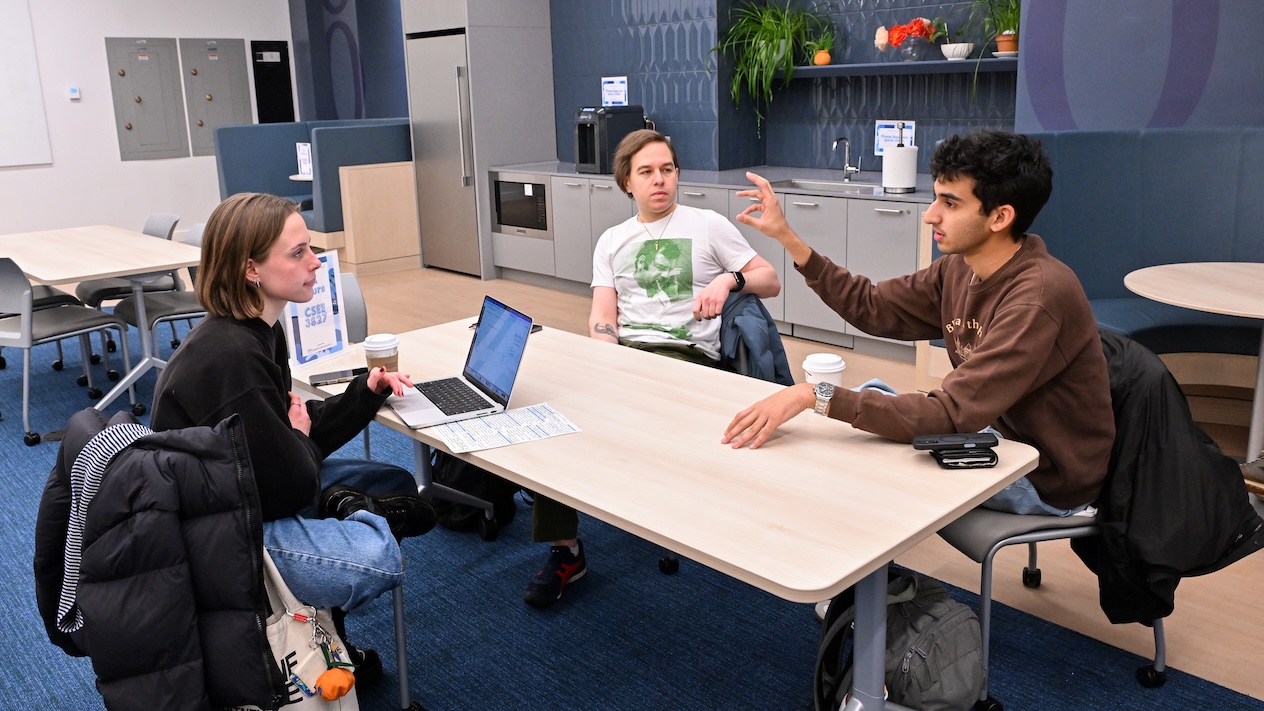
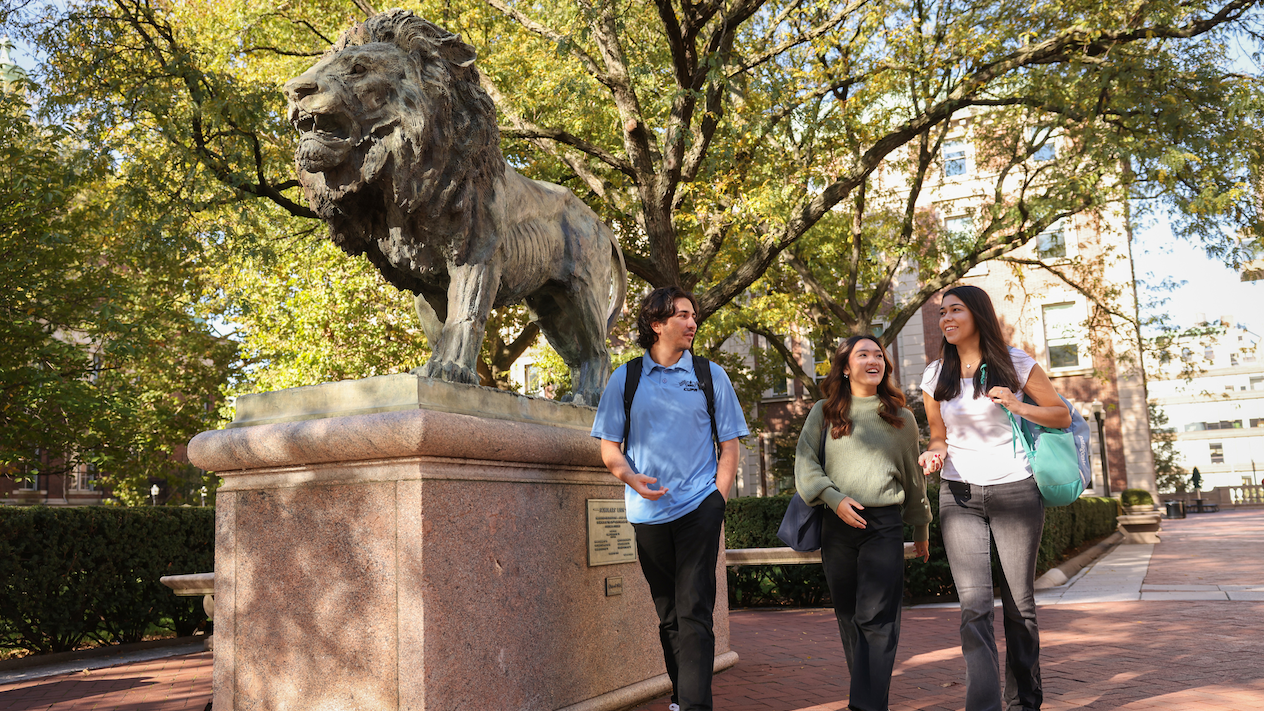
Lead Photo Caption: Students working in the newly opened Computer Science Student Learning Center located on the third floor of Schermerhorn Building
Lead Photo Credit: Diane Bondareff
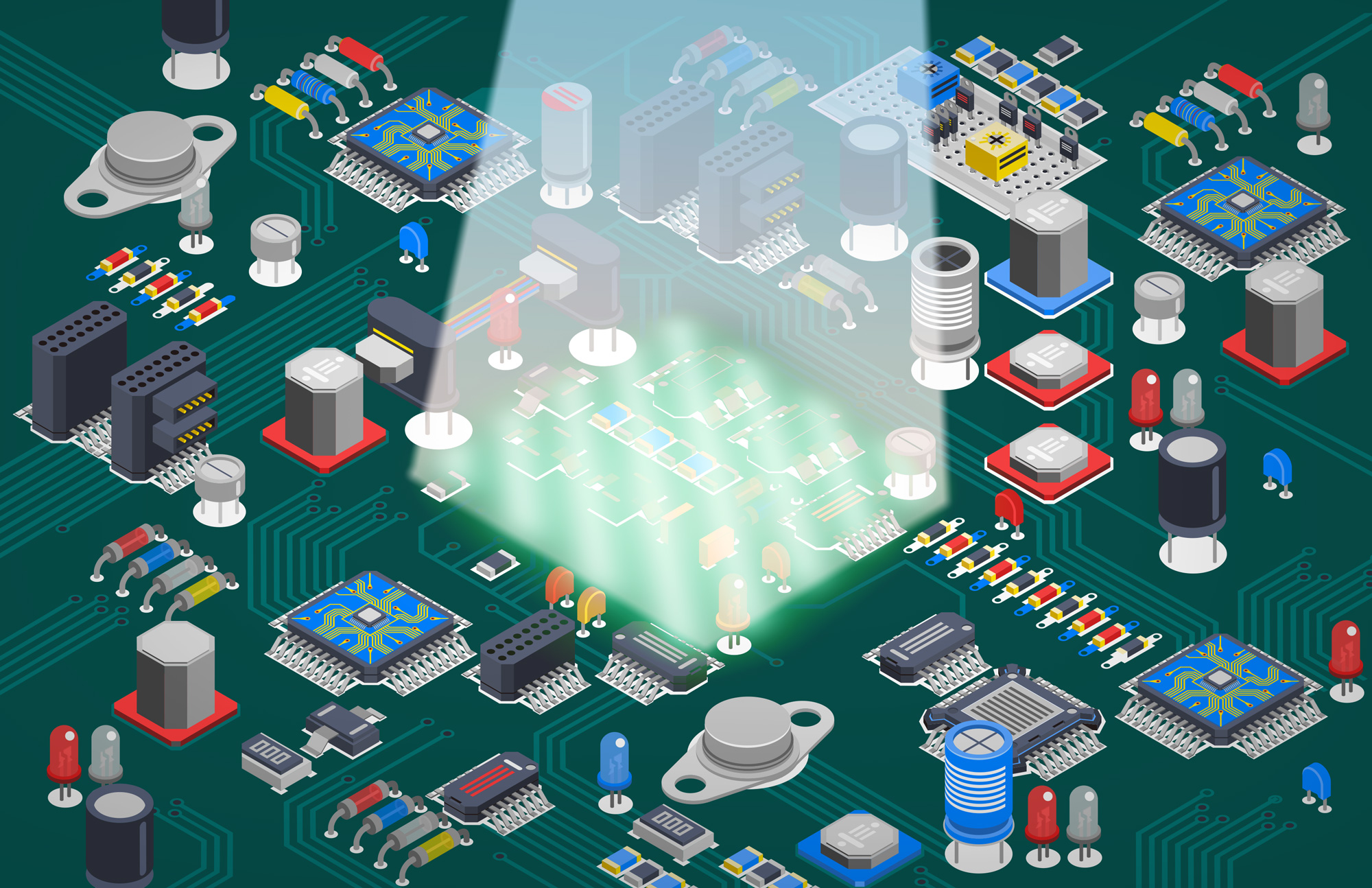
Columbia’s Micro Phase Shifting 3D imaging method in action in a visual inspection system developed by Omron
Dr. Masaki Suwa, the head of corporate research and development at Omron, and the president and CEO of OMRON SINIC X Corporation, said, “Our Automated Optical Inspection (AOI) solutions play a central role in ensuring the quality of printed circuit boards. Because Columbia’s MPS technology is robust to spurious reflections when inspecting mirror-like surfaces such as solder joints, dies, and chip surfaces, it has proved essential to reliable 3D inspection. As electronic components continue to miniaturize, a technology like MPS that can capture 3D shapes with high precision will become increasingly important to printed circuit board manufacturing.”
It is rare for a technology developed in a university laboratory to achieve large-scale adoption in a fast-moving and highly demanding field such as factory automation.
“The successful commercialization of Micro Phase Shifting underscores both the strength of Columbia’s creative fundamental research and the value of close collaboration between academia and industry to bring breakthrough innovations into real-world manufacturing environments,” said Ofra Weinberger, director of Columbia Technology Ventures at Columbia University.
”When we began this research project, we were motivated by a fundamental question: How do you recover accurate 3D information when light behaves in complex and non-ideal ways?” said Gupta. “We showed that by coding light smartly, one could separate the true 3D signal from the noise due to interreflections — a long-standing open problem in 3D imaging. Seeing that idea evolve into a method deployed at scale to help ensure the reliability of critical technologies has been a career highlight.”
By creating an approach adopted by industry, the researchers demonstrated the value of academic research in bringing fresh ideas and rigorous thinking to business.
“Academic researchers explore a wide spectrum of problems, ranging from theoretical questions that seek to advance the knowledge base of the field to novel solutions to known practical problems,” Nayar said. “It is exciting to see one of our innovations solving a critical problem in the manufacturing of products we use on a daily basis.”
For more information about MPS technology, please visit the project page.
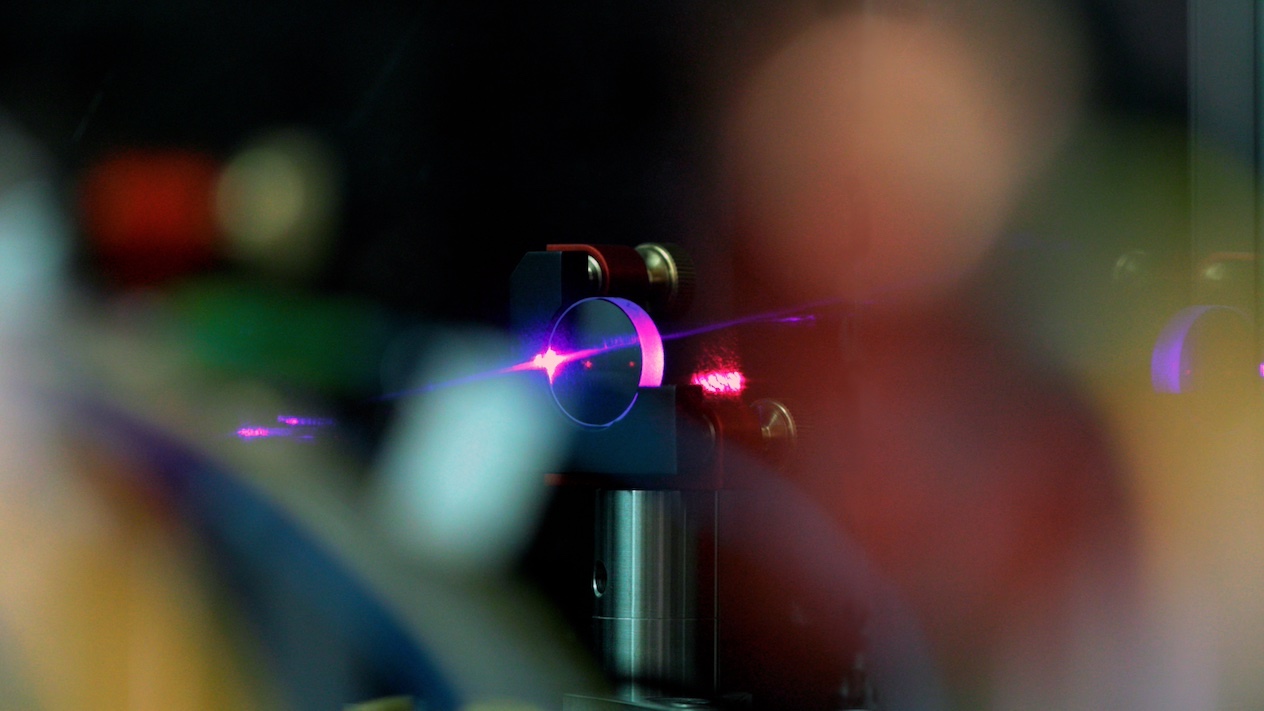
Lead Photo Caption: An artist’s rendering of micro phase shifting.
Lead Photo Credit: Anna Collevecchio/Columbia Engineering