Available Programs


  • CS@CU MS Bridge Program in Computer Science

    The CS@CU MS Bridge Program in Computer Science is a well-established pathway for students without a formal undergraduate background in computer science. The program provides comprehensive preparation in programming, data structures, discrete mathematics, and core computing concepts.

    Students apply directly to the Bridge Program and, upon successful completion of the required coursework and GPA benchmarks, transition into the MS in Computer Science.

    Program structure

    • Part-time, non-degree Bridge program
    • Apply to the CS@CU MS Bridge Program via the graduate application
    • Transition to the MS upon successful completion
    • Not eligible for F-1 visa sponsorship during the Bridge phase
  • IEOR MS Bridge Program

    The IEOR MS Bridge Program is designed to equip students for success in the Master of Science in Business Analytics (MSBA) or the Master of Science in Management Science and Engineering (MS&E) programs. The Bridge Program provides a clear and structured pathway for students who may lack some of the quantitative, coding, or data science skills required for direct admission.

    Business Analytics MS Bridge Program

    The MS in Business Analytics Bridge Program is designed for students with strong academic or professional potential who need additional preparation in quantitative methods, computing, or data science before transitioning into the Master of Science in Business Analytics.

    Students apply directly to the Bridge Program and, upon successful completion, transition into the MS in Business Analytics.

    Program structure

    • Part-time, non-degree Bridge program
    • Apply to the Business Analytics MS Bridge Program via the graduate application
    • Transition to MS after Bridge completion
    • Not eligible for F-1 visa sponsorship during the Bridge phase

    Management Science and Engineering MS Bridge Program

    The Management Science and Engineering Program prepares students from non-engineering or partially quantitative backgrounds for advanced study in management science, optimization, analytics, and systems engineering prior to transitioning into the MS&E MS curriculum.

    Students apply directly to the Bridge Program and, upon successful completion, transition into the MS in Business Analytics.

    Program structure

    • Part-time, non-degree Bridge program
    • Apply to the Management Science and Engineering MS Bridge Program via the graduate application
    • Transition to MS after Bridge completion
    • Not eligible for F-1 visa sponsorship during the Bridge phase
  • Electrical Engineering MS Bridge Program

    The Electrical Engineering MS Bridge Program supports students from related quantitative or scientific backgrounds who lack formal electrical engineering training. Students complete targeted foundational coursework aligned with their intended area of specialization before transitioning fully into MS-level study.

    Program structure

    • Part-time, non-degree Bridge program
    • Apply to the Electrical Engineering MS Bridge Program via the graduate application
    • Transition to MS after successful completion
    • Not eligible for F-1 visa sponsorship during the Bridge phase
  • Biomedical Engineering MS Preparation Pathway

    The Master of Science in Biomedical Engineering welcomes high-achieving students from a range of academic backgrounds, including other engineering disciplines (e.g., mechanical, electrical, civil) and allied sciences (e.g., biology, chemistry, physics, computer science). While Biomedical Engineering does not offer a formal Bridge Program, admitted students may be required to complete additional coursework—beyond the standard MS curriculum—if specific foundational gaps are identified during the admissions review.

    Program structure

    • Full-time or part-time MS enrollment
    • Apply directly to the Biomedical Engineering MS program. If additional preparatory coursework is required, it will be specified in the admission offer.
    • Eligible for F-1 visa sponsorship
  • Civil Engineering and Engineering Mechanics MS Bridge Program

    The Civil Engineering and Engineering Mechanics MS Bridge Program supports students without a civil engineering undergraduate degree by providing focused preparation in mechanics, fluids, structures, and related areas. Bridge requirements are determined at admission and completed prior to or alongside graduate coursework.

    Program structure

    • Full-time or part-time MS enrollment
    • Bridge coursework integrated into MS program
    • No separate Bridge application is required. Apply directly to the Civil Engineering and Engineering Mechanics Master of Science program.
    • Eligible for F-1 visa sponsorship
  • Chemical Engineering Scientist-to-Engineer (S2E) Program

    The Scientist-to-Engineer (S2E) program is an integrated pathway within the MS in Chemical Engineering for students without an undergraduate degree in chemical engineering.

    Students complete an intensive, accelerated set of undergraduate-level chemical engineering courses during their first semester, covering core concepts needed for success in the graduate curriculum. Degree completion is typically achieved in three semesters.

    Program structure

    • Full-time or part-time MS enrollment
    • Bridge coursework completed within the MS program
    • No separate Bridge application is required. Apply directly to the Chemical Engineering Master of Science program.
    • Eligible for F-1 visa sponsorship
  • Mechanical Engineering MS Bridge Program (Coming Soon)

    The Mechanical Engineering MS Bridge Program prepares students without an undergraduate degree in mechanical engineering to enter the MS in Mechanical Engineering curriculum with confidence. The program emphasizes core areas such as mechanics, thermal fluids, design, and materials.

    Bridge requirements are assigned upon admission to the MS program and are completed prior to or alongside graduate coursework.

    Program structure

    • Full-time or part-time MS enrollment
    • Bridge coursework integrated into MS program
    • No separate Bridge application is required. Apply directly to the Mechanical Engineering Master of Science program.
    • Eligible for F-1 visa sponsorship
       
  • Computer Engineering Bridge Program

    The Columbia Computer Engineering MS Bridge program will enable students with undergraduate degrees in fields other than electrical engineering, computer engineering, and computer science to take preparatory courses before enrolling in the CE MS degree program. The Computer Engineering Bridge Program offers two distinct tracks, enabling students to acquire the essential foundational skills tailored to their specific interests within the MS curriculum. One track is designed for students aiming to specialize in Computer Systems (Track A), while the other prepares students for specializing in Computer Chip Design (Track B). Students complete targeted foundational coursework aligned with their intended area of specialization before transitioning fully into MS-level study. 

    Program structure

    • Part-time, non-degree program
    • Apply to the Computer Engineering MS Bridge Program via the graduate application
    • Transition to the Computer Engineering MS after successful completion
    • Not eligible for F-1 visa sponsorship during the bridge program

Frequently Asked Questions


  • Who should consider an MS Bridge Program?

    MS Bridge Programs are ideal for students with strong academic or professional records who may be missing specific undergraduate coursework required for direct entry into an engineering MS program.
     

  • Do Bridge Programs lead to a degree?

    Yes, the goal is the students complete the corresponding Master’s of Science program they have been admitted to. Note that the Computer Science, Electrical Engineering, Business Analytics, and Management Science + Engineering bridge programs are not degree-granting on their own. These serve as a pathway into a Columbia Engineering MS program, after which students complete degree requirements. The Biomedical Engineering, Chemical Engineering, Civil Engineering and Engineering Mechanics, and Mechanical Engineering bridge programs are integrated into the MS program, and thus are degree-seeking programs. 

  • Are Bridge students eligible for student visas?

    This will vary by program. Students enrolled directly in the Biomedical Engineering, Chemical Engineering, Civil Engineering and Engineering Mechanics, and Mechanical Engineering bridge programs are eligible for F-1 visas

    Students in the Computer Science, Electrical Engineering, Business Analytics, and Management Science + Engineering bridge programs are not eligible for F-1 visa sponsorship until they transition into the MS.

  • Can Bridge requirements be waived?

    In many programs, previously completed coursework may be reviewed for possible waivers, typically requiring a minimum grade of B or higher.

  • When are application deadlines?

    The priority deadline for most Bridge Programs is February 15. Applicants are encouraged to review individual program pages for the most up-to-date information.

  • What materials are required to apply?

    The following materials must accompany the online application for on-campus graduate programs. 

    • Transcripts
    • Three Letters of Recommendation
    • Personal Statement
    • Resumé or Curriculum Vitae
    • Video Interview
    • Graduate Record Examination (GRE) General Test Scores (optional)
    • English Language Exam Scores (TOEFL, IELTS, Duolingo) required for applicants educated in a country other than Australia, Canada, Ireland, New Zealand, Singapore, the UK, Ghana, Nigeria, Kenya, and the United States of America.
    • $85 non-refundable application fee (payable by a major credit card through the online application system)
  • How do I apply?

    Interested students should apply using the On-Campus MS and PhD Programs application found here.

In 1925, Max Born coined “quantum mechanics” to explain, under one theory, the growing number of observations that were physics. Its basic tenets: quantum objects are simultaneously particles, with masses, charges, and discrete amounts of energy called quanta, and waves, with given frequencies and wavelengths. These quantum objects, which include electrons and photons of light, can combine in unique and often counterintuitive ways.

Though scientists in Europe initially developed the theory, Columbia has had a part in quantum history since its earliest days. In 1909, Max Planck brought the concept of energy quanta — the idea that would eventually lend the field its name — to North America in a series of lectures at Columbia. In the coming decades, as theory gave way to applications, Columbians made several Nobel Prize-worthy quantum discoveries that led to now commonplace technologies, including:

  •  I.I. Rabi’s observations of magnetic resonance, which led to today’s magnetic resonance imaging (MRI).
  • Charles Townes’ amplified electromagnetic waves; the result, lasers, are just about everywhere.
  • Louis Brus’s connection between a particle’s size and the color of light it emits; these quantum dots have found applications in LED displays, solar panels, and biological sensors.

Today, Columbia’s researchers are creating entirely new materials with unique quantum properties, controlling individual photons of light and entangling them together, and developing theories to guide quantum research into its second century. So, what’s to come? Columbia Engineers share where they think the (quantum) world is heading:

Image
Alexander Gaeta headshot

“One hundred years is a pretty long time. Perhaps we will have a quantum computer with a wide variety of applications — ones we aren’t even thinking about now. Quantum sensors may also become ubiquitous, all linked through a network and with capabilities we haven’t even dreamed of yet. I think a lot of it will hinge on these technologies that we’re working on here.”

Alexander Gaeta

David M. Rickey Professor of Applied Physics and Materials Science, Professor of Electrical Engineering, and co-lead of the Columbia Quantum Initiative.

Gaeta studies how laser light interacts with matter.


Image
Aravind Devarakonda headshot

“We’ve been studying quantum systems for several decades already, but it’s been remarkable to see how quickly the field has grown recently. I’m particularly excited about using present-day quantum devices to simulate complex quantum materials and resolve long-standing, fundamental questions about how many electrons interact to create complex emergent behavior. There’s a lot of synergy here that could help us discover materials that revolutionize how we store energy, perform classical computing, and more in this century.”

Aravind Devarakonda

Assistant Professor of Applied Physics and Applied Mathematics Devarakonda combines physics, chemistry, and materials science to create and study quantum materials.

Image
Henry Yuen headshot

In the next 100 years, the way we vote, earn, spend, negotiate, medicate, dress, compute, communicate, sense, and think will rely on harnessing the counter-intuitive laws of quantum mechanics. Just as the steam engine and electricity have transformed civilization, there will be no aspect of everyday life untouched by the fact that nature is quantum mechanical.”

Henry Yuen

Srivani Family Associate Professor of Computer Science. Yuen studies the theoretical foundations of quantum computing.

Image
James Hone headshot

We’ve seen the story before with quantum dots, and lasers, and other quantum advances: a curiosity in the lab becomes a breakthrough that becomes routine and used everywhere. We’re in the earliest stages with new kinds of quantum materials and what they will enable, but some of our lab curiosities will translate and scale into real devices.”

James Hone

Wang Fong-Jen Professor of Mechanical Engineering. Hone studies the fundamental properties of 2D materials and their potential applications.

Image
Sherry Zhang headshot

The next 100 years will likely be the most exciting time for quantum technology as we build the promises from decades ago into a reality. Quantum sensing, simulation, and computing will transition from initial demonstrations to useful technologies and beyond. In the end, quantum science may stop being ‘quantum’: it will just be technology, like semiconductors or AI today.

Sherry Zhang

Assistant Professor of Applied Physics and Applied Mathematics

Image
James Schuck headshot

“While quantum computing currently gets much of the attention, quantum sensing may ultimately prove equally, if not more, impactful. The so-called quantum advantage originates from coherent states and quantum- entangled systems, enabling, for example, deep-brain imaging with photons that never touch the sample and detection of gravitational waves. By reducing noise and increasing precision by orders of magnitude, quantum sensing will become critical to fields spanning medical diagnostics to space travel. We have only begun to scratch the surface.”

Jim Schuck

Professor of Mechanical Engineering. Schuck builds tools that can control single photons and electrons.


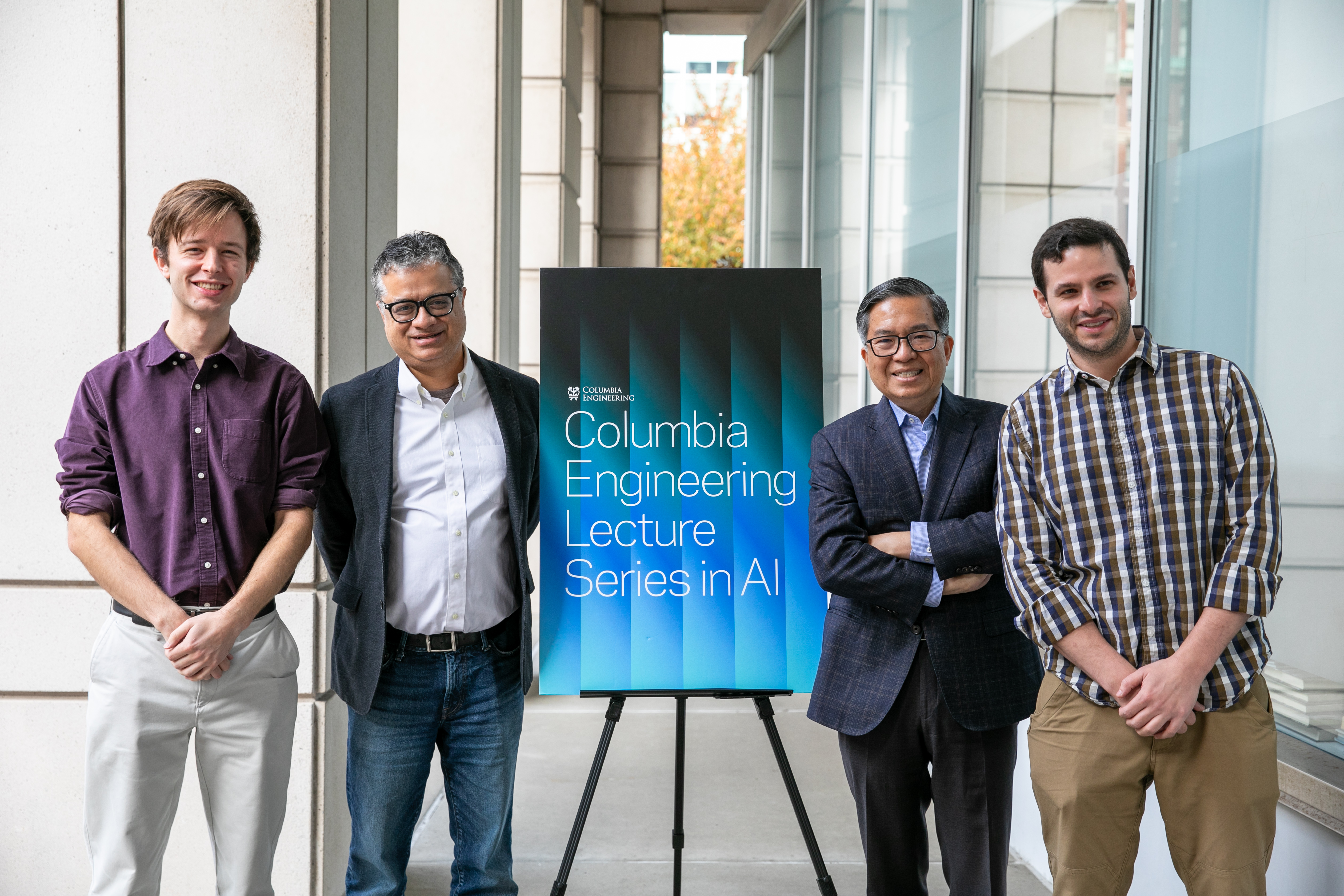
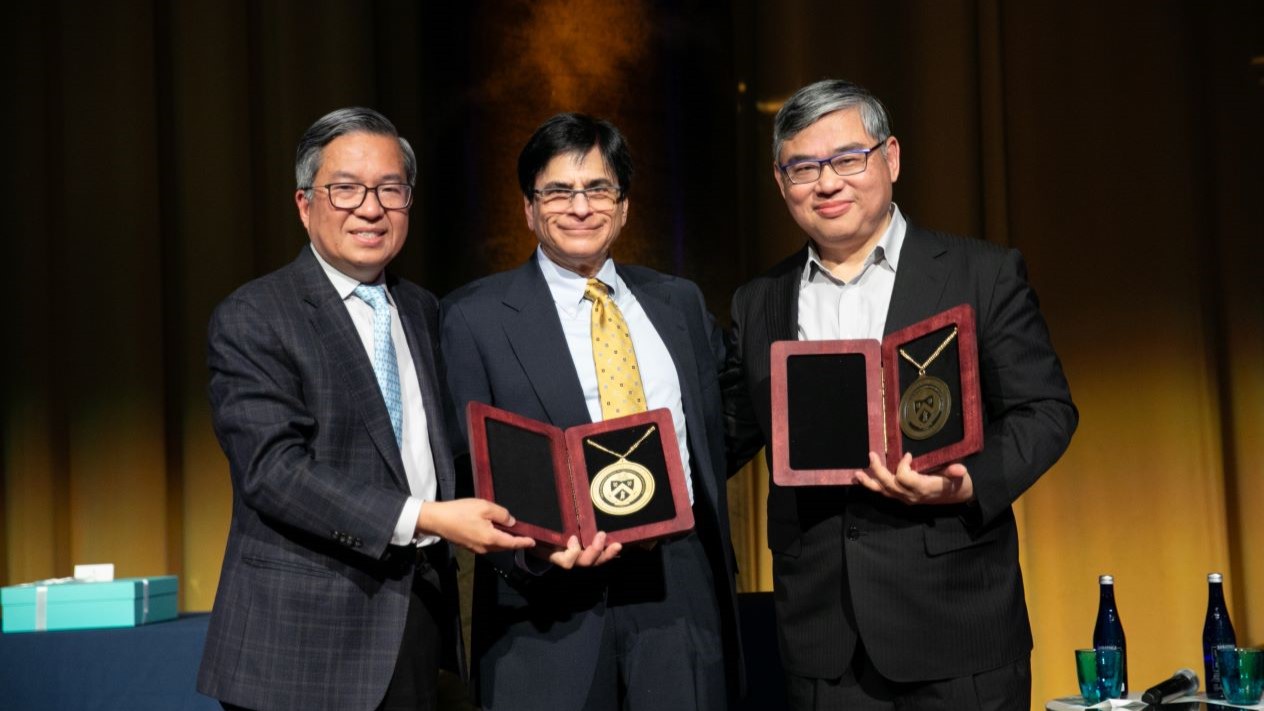
Lead Photo Caption: Left to right: Shih-Fu Chang, Steven Feiner, Fermi Wang.

Subscribe to Computer Science