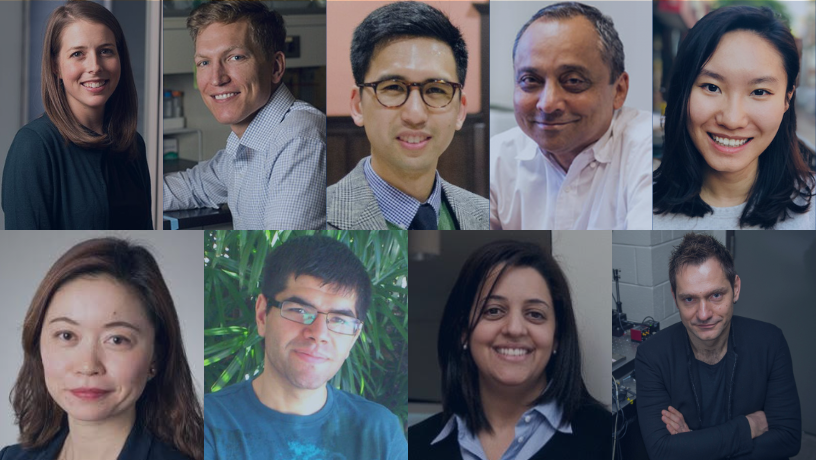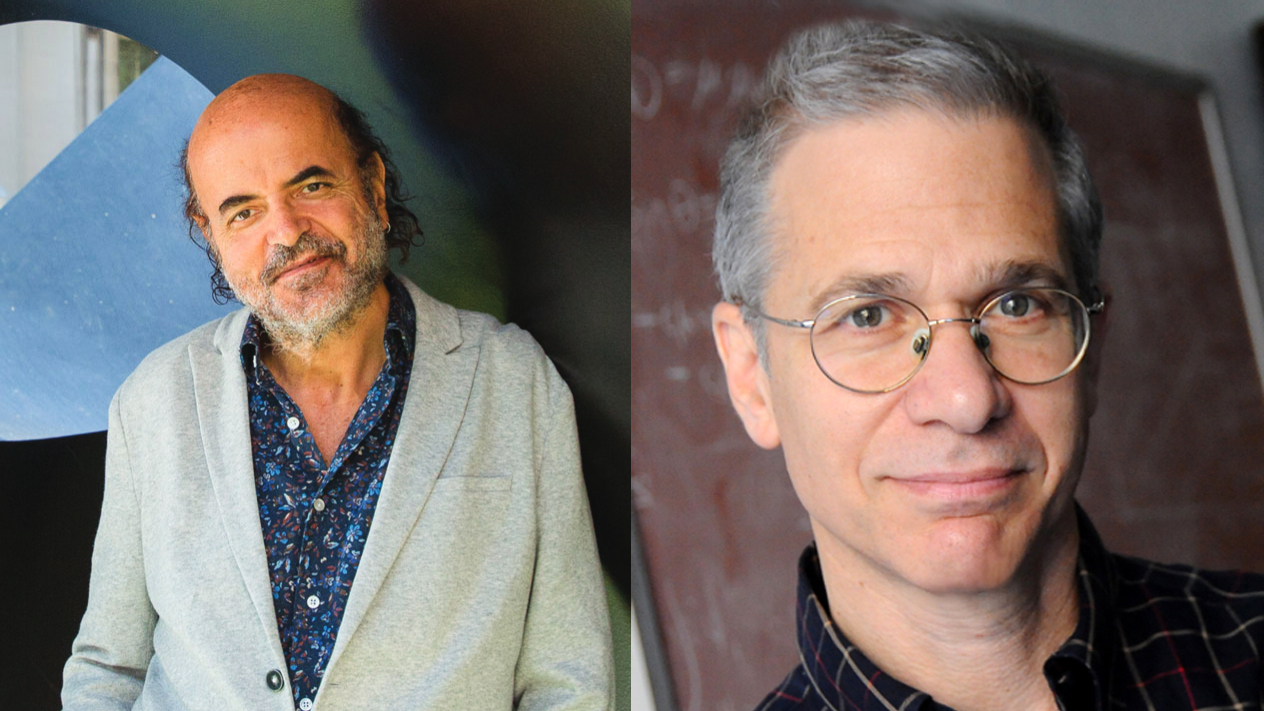
Lead Photo Caption: Guest speaker Eric Xing, president at Mohamed bin Zayed University of Artificial Intelligence

Lead Photo Credit: April Renae/Columbia Engineering

Pooling our insights

The second half of the workshop focused on these collaborations between academic research and industry partners, with a panel discussion and lightning talks focused on reporting back from real-world attempts to implement AI agents. 

Michael Morris, Chavkin-Chang Professor of Leadership, welcomed the attendees to Columbia Business School by observing that academia and industry each account for roughly half of the research that happens in the United States.

“We really ought to be pooling our insights,” he said. “Business schools can play a natural role in facilitating industry-academia cooperation — I’m hoping the DAPLab will be one of many ways we do this.” 

In her keynote address, cognitive scientist Danielle Perszyk described how her team at Amazon AGI leverages insights from human intelligence to refine its efforts to build reliable AI systems. 

“It's one thing for an agent, whether a human or an AI, to be able to do the same thing like click on an icon or type in a text field in the same environment every time,” Perszyk said. “But the digital world is ever-evolving, and we can't assume that it's going to stay the same even for short periods of time.” 

She described how research into the evolution of human intelligence frames the questions necessary to develop agents that are robust in fast-changing environments. 

In closing the day, Chilton described the journey to building and deploying these technologies as “a business problem, a sociology problem, and a cognitive science problem that draws from history, science, language arts, visual arts, and interaction.” 

For her, AI agents won’t just automate tasks — they will open entirely new sources of value, the same way databases, the internet, and the cloud have.

“Every faculty member involved in DAPLab has deep collaborations throughout the university,” she said. “We also have a strong track record of delivering results for industry problems through sponsored research.”

The DAPLab is currently identifying partners to work together on a shared research agenda to develop next-generation systems to support reliable, safe, and efficient agent automation. To learn more, visit DAPLab’s website or contact co-directors Eugene Wu or Zhou Yu


Lead Photo Caption: Zhou Yu, associate professor of computer science and co-director of DAPLab

Lead Photo Credit: David Dini/Columbia Engineering


Lead Photo Caption: Ion Stoica during his Mar. 28 visit to Columbia Engineering as the guest speaker for the School’s Lecture Series in AI

Lead Photo Credit: Brandon Vallejo/Columbia Engineering

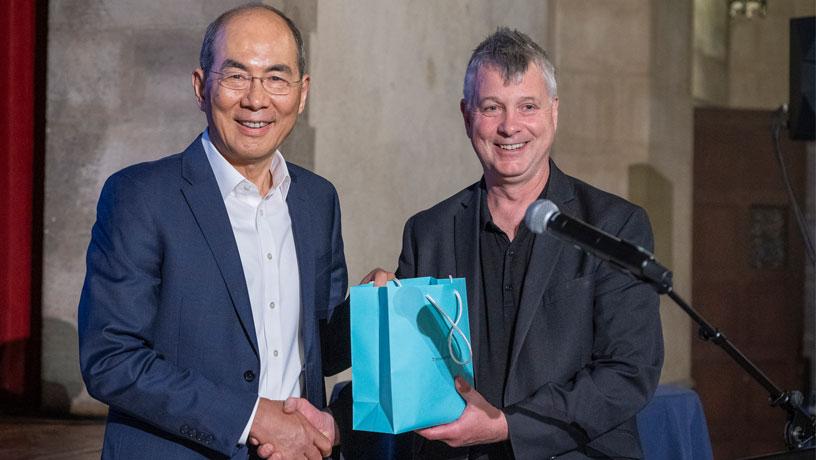
Recognizing the importance of open conversations about career journeys, Columbia Engineering Dean Shih-Fu Chang and Columbia University Interim President Katrina Armstrong, both joined the event; Dean Chang gave introductory remarks and President Armstrong kicked off the discussion and shared her own experience as a woman in STEM. 

Armstrong talked about her unconventional career path– from studying architecture as an undergraduate to completing medical school and ultimately rising through the ranks in higher education in leadership roles at the University of Pennsylvania, Harvard, and now, at Columbia. She encouraged attendees to regularly check in with themselves, emphasizing the importance of making changes before reaching burnout. She also highlighted the value of finding what works for each individual. She shared a personal anecdote about how she became known for letting her kids sleep in their school clothes instead of pajamas—a simple adjustment that made hectic mornings a little easier.

“The best advice I ever received was to be yourself because you're not going to change who you are,” Armstrong said. “And if you try to be somebody else, you're going to be so much less effective than just being who you are.”

Building connections

The second half of the event consisted of breakout sessions between small groups of students and women faculty members from across Columbia. With cups of coffee in hand, students and professors–women in STEM– exchanged stories, laughter, and insights. 

A common theme professors shared with students was the importance of advocating for yourself and pursuing what you're passionate about. University Professor and Mikati Foundation Professor of Biomedical Engineering Gordana Vunjak-Novakovic emphasized that when you truly love what you do, it never feels like work—even when challenges arise. Christine Hendon, associate professor of electrical engineering, encouraged students to believe in themselves, even when others doubt their ideas. 

"If someone says it won’t work, figure it out, run some simulations, test for tolerance analysis, and if it looks feasible—go for it," Hendon said. "When you finally get to the point where it works, it’s the best feeling ever.”

In this relaxed setting, conversations flowed and what started as casual chats soon turned into meaningful discussions about careers, research, and personal experiences. 

“This event showcases the magic of Columbia,” said Githika, “and how there is a community that wants to not just collaborate with each other, but grow with each other.”


Lead Photo Caption: Columbia faculty, students and staff gathered in Carleton Commons March 7 for a special networking opportunity for women in STEM. 
Lead Photo Credit: Diane Bondareff/Columbia University

Subscribe to Computer Science