Image
Upmanu Lall

Can you tell us a bit more about compound rain clusters and why is this happening?

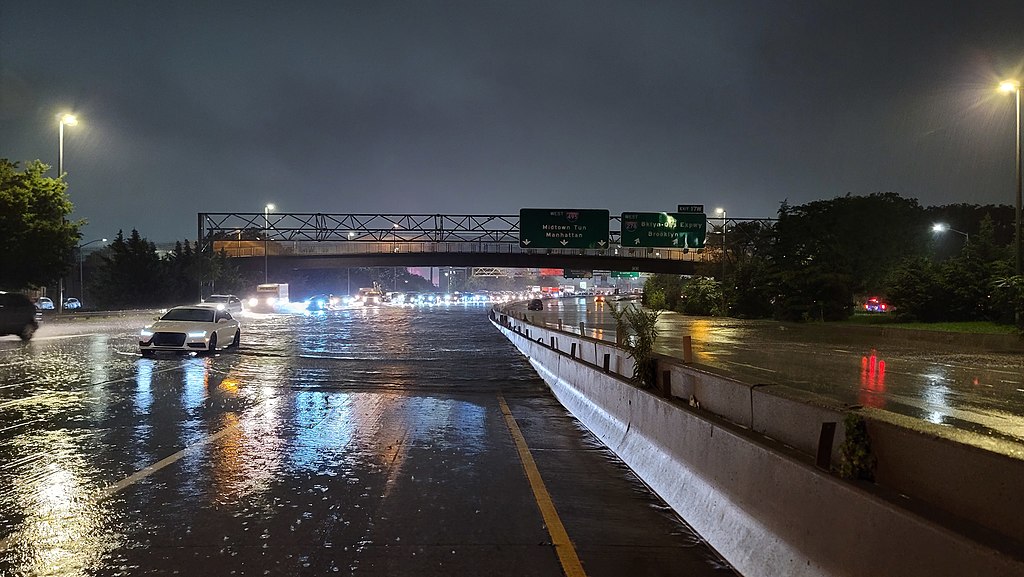
An open question has been whether the climate will become “stickier” or more random as it warms - stickier meaning that the wind patterns just persist for longer periods of time, random meaning things get disorganized. It seems that there are modest but detectable changes -- at least over the United States -- where the incidence of persistent patterns in which waves of moisture are repeatedly directed to the same places is increasing. Each wave brings rain that starts to fill up dams and then, if a bigger rain event happens and the reservoir is vulnerable, there is the potential for failure.

Our study is the first analysis of rainfall sequences and events associated with recent

hydrologic failures of 552 dams in the U.S. We found that persistent atmospheric circulation patterns that lead to recurrent rainfall events, rather than just more moisture in the atmosphere, are a possible reason. The probability of these compound precipitation risks has increased across part of the country. With over 90,000 aging dams still in service, the increasing likelihood of intense rainfall sequences raises urgent concerns about future dam failures.

What are the near-term solutions?

We need to visit the portfolio of more than 90,000 dams in the U.S. and check not just their state of maintenance but also how they are being operated to decide which ones should be demolished, which ones repaired, and which ones given better strategies to hold on to water they already contain while we improve our predictions of floods or droughts. We need to improve the near-term prediction of persistent rainfall patterns. It’s urgent that we do a portfolio risk analysis that considers the climate, fragility, and operational risk factors with a mapping to potential impacts from dam failure so that we can better understand the collective risk of cascading failure of critical infrastructure that would be triggered by dam failure and its socio-economic impacts.

Is this happening across the globe, not just in the U.S.?

Yes, we see similar behavior in the data in many places around the world, especially in the higher latitudes (>30), where the storm tracks organize and then persist. But a more comprehensive study is needed.

What have been some of the successes out of this collaboration to date? 

Our work has generated the first air pollution data from highly populated cities such as Kinshasa, Democratic Republic of the Congo. We are leading the state of the science in low-cost sensor applications, building relationships with local decision makers and informing policy in India, and increasing capacity among thousands of local practitioners on air quality management and air pollution science. 

Dams in which areas of the U.S. are more prone to collapsing and why?

We have concerns with older dams that are not being maintained; these are primarily concentrated in the Northeast, Upper Midwest, and Southeast. And while Western dams tend to be newer and larger, in 2017 the tallest U.S. dam operated by the State of California -- Oroville -- nearly failed, and 200,000 people had to be evacuated. Persistently high, but not extraordinarily high, rainfall was implicated. The reservoir was full because the operators wanted to hang on to the water in case they lapsed back into drought, and a modest amount of rain forced them to use the overflow spillway (which was in poor repair), and it failed - the concrete just ripped off as the water went over it. They switched to the emergency spillway, which also failed.

Are hurricanes playing a major role in these scenarios? 

Hurricanes are really concerning since the amount of water that they can drop could easily overwhelm the capacity of local reservoir managers to cope with. In 2015, 52 dams failed in South Carolina in just one hurricane event–Hurricane Joaquin. With Hurricane Harvey, the Addicks and Barker Reservoirs in Houston were very vulnerable to failure, and a last-ditch effort to release water from them and flood downstream areas– in the middle of the night–prevented a more catastrophic failure. 

There has been a concern that hurricanes will be more frequent and stronger with global warming, and evidence has been presented in favor of and against this argument. Harvey persisted in place and kept on raining longer than any prior hurricane in the region, so the emerging question is whether we will see more of that. If we do, the vulnerability of dams may go way up since they may not be able to handle the resulting deluge.

What do you think about all this?

This seems to be a silent crisis so far. Since 2000, we’ve had a dam failure due to overtopping, on average every two weeks in the U.S. Luckily, most of these have been small dams, and the loss of life and immediate impact have not been catastrophic. But if a large dam were to fail above a major population center or a power plant or a super fund site or a bridge, the impacts could be devastating and long-lasting. The silence would be broken with a bang.


Lead Photo Credit: Kirk Fisher/Shutterstock

We know air pollution is a global problem. Are there particular areas in the world where it’s worse? Is it just around cities or is it spreading beyond?

Air pollution is a global problem. Today, air pollution levels are the most severe in areas of the Global South that are undergoing rapid economic development while at the same time developing air quality management strategies.

For the Clean Air Toolbox, you are the lead in India, and Dan Westervelt is the co-lead in Africa. What are you focused on now as part of this initiative?

Although our initiative is interdisciplinary and not only tech-focused, a lot of our most impactful work keeps coming back to data. A lack of data can hold back progress towards clean air at several stages of the process. In several African countries where Dan is working, there was previously little to no data on the ground that characterized background air pollution levels. Without that information, you can’t quantify the cost of inaction in order to motivate investment in clean air or evaluate whether actions taken locally are actually having an impact.

In India, our work is extending the government monitoring network that has been growing since 2016 to provide neighborhood-level information and insights into priority sources. Side by side with our technical work, we are working to build local capacity in air quality science and air quality management, and helping to establish a knowledge base of best practices for getting high-value, trustworthy data from low-cost sensors.

What about other areas of the world? 

The Clean Air Toolbox is focusing on cities in the Global South so we hope to include South America someday. Dan and I do more U.S.-focused work in our other research: for example, Dan has been measuring air quality around New York City and Columbia’s Lamont-Doherty Earth Observatory, and I have collaborations with the U.S. EPA focused on improving their air quality modeling.

The Clean Air Toolbox Columbia faculty aren’t just scientists and engineers they’re lawyers, doctors, and policymakers, too. How is the group working together?

The work our group does crosses disciplinary boundaries the scientists are deeply involved in policy discussions and public health and policy specialists are helping design air pollution data collection, and we are all working with our local partners to build their capacity. Specific examples of contributions outside engineering and air quality science include work by members of our group from the Sabin Center for Climate Law who have done analyses of environmental laws in India to look for opportunities for the Kolkata Municipal Corporation to contribute to air pollution reduction. We also have several members from the Mailman School of Public Health who look at connections between air pollution exposure and health outcomes in women and children in Ghana, India, and elsewhere. And some of our group members have developed economic strategies to encourage the adoption and sustained use of clean cookstoves. The close collaborations that have formed among Clean Air Toolbox researchers with completely different disciplinary viewpoints have been both productive and rewarding, and make me think differently about my research priorities.

What have been some of the successes out of this collaboration to date? 

Our work has generated the first air pollution data from highly populated cities such as Kinshasa, Democratic Republic of the Congo. We are leading the state of the science in low-cost sensor applications, building relationships with local decision makers and informing policy in India, and increasing capacity among thousands of local practitioners on air quality management and air pollution science. 

How can we as individuals contribute to improving air quality while combating climate change?

Making choices to use public transportation, for example, can definitely help reduce emissions and contribute to cleaner air. However, systemic changes such as transitioning to cleaner energy for electric power and industry are also needed for major change. 

What continues to inspire and motivate your work in air quality and climate change?

Air quality is a problem that affects everyone who breathes air, which is to say, all of us! I personally have asthma, and so does my son, so I have experienced this issue in a way that is more personal and immediate than many have. The health burden of air pollution is borne disproportionately by women, children, and those of lower socioeconomic status worldwide. I think that all humans have a right to breathe clean air, and I hope our work pushes things in this direction.

Are you optimistic about the future?

I am optimistic about clean air in the future. In my lifetime we’ve seen major improvements in air quality in the U.S., thanks to the Clean Air Act and subsequent amendments. China invested heavily in addressing their environmental issues throughout the 2010s and things are turning the corner there. We are also seeing changes in India and across the African continent since 2019 when we founded the Clean Air Toolbox, and there are a lot of exciting opportunities for cities and countries in the Global South to learn from one another’s success stories.

Subscribe to Earth and Environmental Engineering